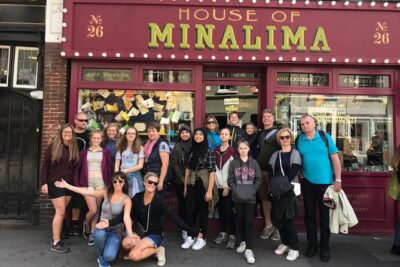
Five Sunday markets in just three hours.
This walk-style tour is built for a proper Sunday in London: you hit well-known markets and the neighborhoods around them, with a local guide (Rich) who adds street-level stories and practical tips along the way. You also get pauses to wander inside each market, so the time feels like exploring, not sprinting from stall to stall.
I especially liked two parts. First, the guide brings personal stories and funny, interactive commentary that makes the streets feel lived-in, not like a checklist. Second, you come away with clear food and shopping recommendations so you know where to grab a bite and what to browse for after the tour ends.
One thing to consider: it is a walking tour, with multiple market-to-market stretches, so wear comfortable shoes and plan for steady movement. If you hate walking on weekends, this might not be your style.
In This Review
- Key highlights to expect
- Price and pacing: is this Sunday market tour good value?
- Starting at Cambridge Heath: what you’ll do in the first half hour
- Broadway Market: breakfast, street food, and handmade crafts
- Hackney City Farm: community-built East London life
- Columbia Road Flower Market: London’s Sunday street-with-a-purpose
- Brick Lane: vintage, thrift halls, and the best cheap eats
- Spitalfields Market E1: fruit-market roots, shopping now
- Why the guide experience is the real difference
- Walking comfort: what to wear and how to plan your morning
- Who this tour suits best
- Should you book this London Sunday markets tour?
- FAQ
- How long is the London Sunday markets walking tour?
- What are the start and end points?
- What time does the tour begin?
- Is food included in the price?
- How much free time do I get at each market?
- How big is the group?
- Is there a cancellation option for a full refund?
Key highlights to expect
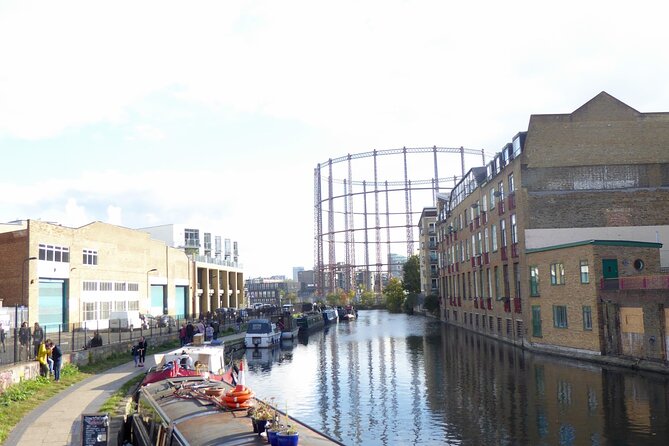
- Local-feeling Sunday route: several major markets clustered into one morning walk
- Rich stories from Rich: personal neighborhood history and on-the-ground context
- Real free time in each market: 15–20 minutes to explore on your own
- Food stalls you can sample: street food stops paired with nearby shopping
- Small group size: up to 20 people, so the pace stays friendly and human
- Easy transit access: start near Cambridge Heath Station and finish near Old Spitalfields
Price and pacing: is this Sunday market tour good value?
For $34.24 per person, you’re paying for three things: a local guide, a tight route that links multiple markets, and guidance that helps you shop and eat smarter. You’re also paying for convenience. Instead of figuring out which markets fit together on a Sunday and how much time to give each one, you get a ready-made path with a reasonable rhythm.
The tour lasts about 3 hours, but the experience feels longer because you’re not rushing the markets. You’ll have 15–20 minutes free time in each stop, plus short walking segments between them (roughly 10–15 minutes at a time). That structure matters. It turns the tour into a mix of guided context and your own wandering time—exactly how Sunday markets should feel.
Quick note on expectations: snacks and drinks are not included. The good news is that the route runs through places where you can buy what you want—so you can choose what fits your tastes and budget.
You can also read our reviews of more tours and experiences in London.



Starting at Cambridge Heath: what you’ll do in the first half hour
The tour meets at Cambridge Heath Station Forecourt (Hackney Rd, Cambridge Heath, London E2 9HD) at 10:00 am. You end at Old Spitalfields Market (16 Horner Square, London E1 6EW), which is a nice finish because you can keep exploring after the guided portion without crisscrossing the city.
You’ll start with the first market quickly, then settle into the walking loop through East London. The vibe is informal: you’ll be on foot, and the guide’s commentary helps you connect the dots between markets, streets, and local life. This also means you get a practical benefit even if you only care about one or two stalls: you’ll learn where you are and why the neighborhood has the character it does.
Broadway Market: breakfast, street food, and handmade crafts
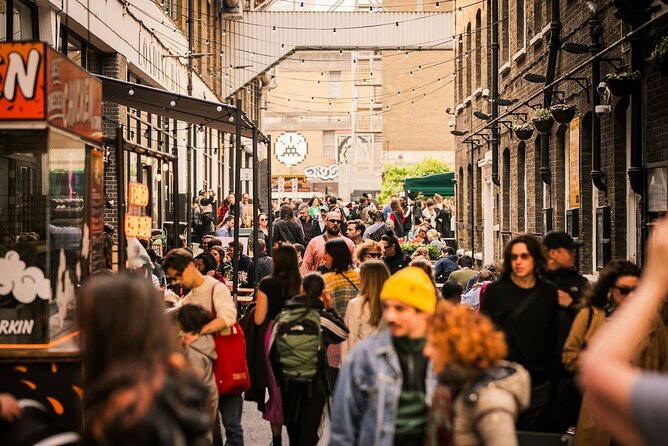
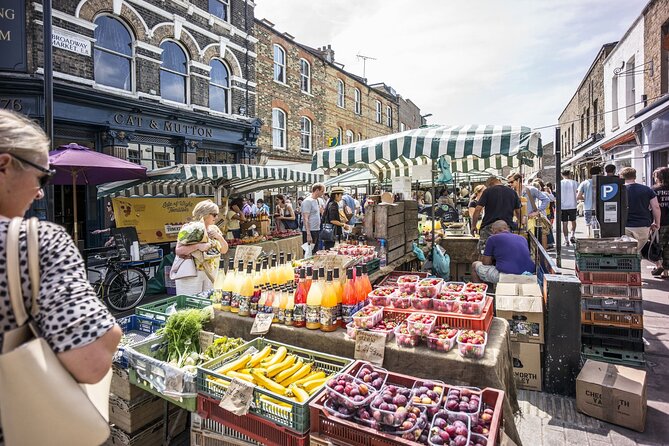
Your first stop is Broadway Market, specifically the Broadway Sunday Street food and craft market. This is the kind of place where the morning can start casually—grab breakfast, sample some street food, and browse handmade crafts.
What makes this stop work is the balance. You’re not only looking at food; you’re moving between food stalls and craft stalls, which helps the time stay interesting even if you’re traveling with someone who eats fast but shops slowly (or vice versa). It’s also a strong “orientation” moment. As you take in the craft and street-food mix, you get a feel for the market energy that carries through the rest of the route.
Practical tip: since food isn’t included, decide early what you want most—breakfast, snacks, or crafts first—so you don’t lose time bouncing between stalls.
Hackney City Farm: community-built East London life
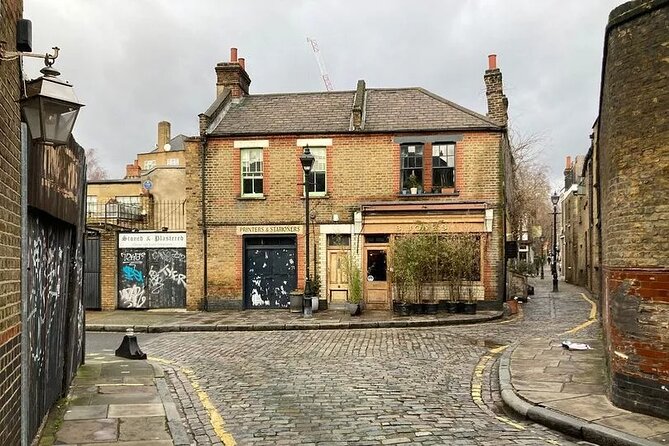
Next up is Hackney City Farm. This stop has a different mood from the rest of the markets. It’s described as an inner-city charm built by and for the community, which you’ll feel in how it sits in the neighborhood compared to more commercial shopping areas.
This is the moment when the tour shifts from “shopping streets” to “London as a place with institutions and people.” Even if you’re not planning to buy anything here, it’s a useful pause. It breaks the pattern of browsing stalls and gives you a calmer look at how local initiatives can shape a neighborhood.
Time here is shorter—around 20 minutes—so treat it as a quick reset. Ask the guide questions if you want more context. This is the kind of stop where a bit of conversation can make the place click.
Columbia Road Flower Market: London’s Sunday street-with-a-purpose

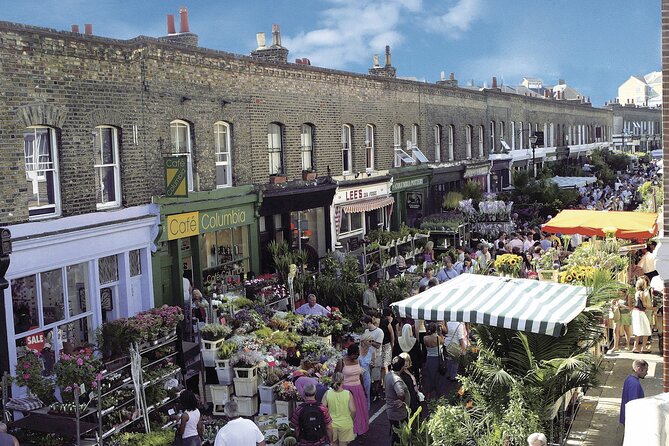
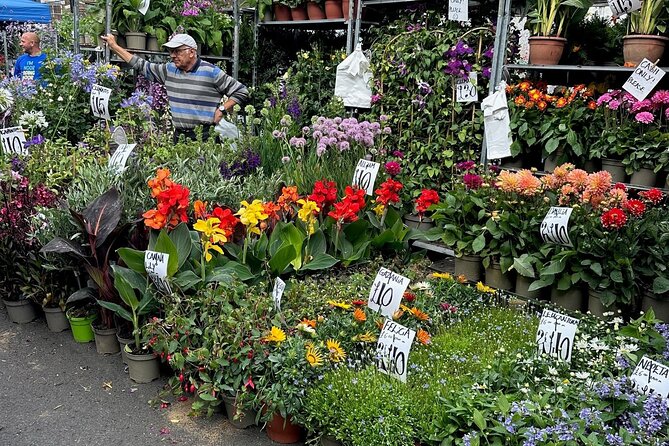
Then you land at Columbia Road Flower Market, described as London’s only flower market, wrapped in quirky shops and Victorian streets. Even if flowers aren’t your main priority, this stop is worth it because it’s about the street itself: what happens on it, how people shop, and how the market energy changes the whole block.
You’ll have about 25 minutes here, which is usually long enough to:
- scan the stalls and see the range of flowers
- notice the small shops nearby
- grab a few photos in the street setting
It’s also a good stop for people who love atmosphere more than buying stuff. If you plan to buy later, you can use this time to observe prices, styles, and what looks appealing to you.
Small consideration: because it’s a flower market on a Sunday, the flow of people can get active. Keep that in mind if you prefer quiet shopping.



Brick Lane: vintage, thrift halls, and the best cheap eats
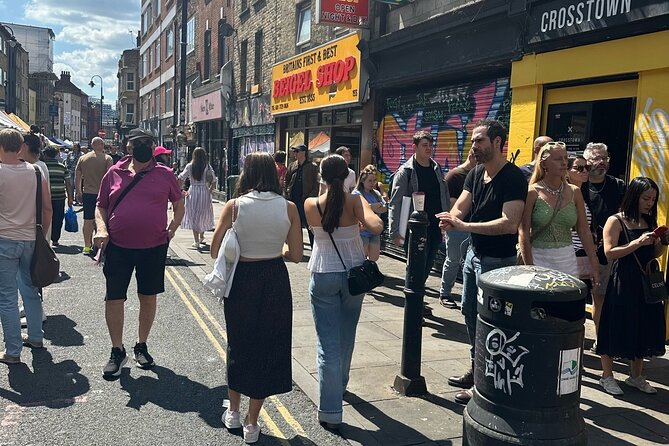
From flowers to fashion: Brick Lane is your vintage and thrift stretch. The tour frames it as a vintage and thrift paradise, with time to walk through London’s vintage market and the market halls.
This stop also has a food angle. The tour includes the idea of grabbing one of London’s best cheap eats at the oldest bagel shop in town. Whether bagels are your thing or not, the bigger value is that the guide steers you toward a specific option instead of making you wander until you’re hungry and indecisive.
Here’s why this stop is a highlight for many people: it feels like London layers on layers. You’re not only shopping; you’re walking through an area where style, street culture, and commerce overlap.
You’ll spend about 25 minutes at this point. If you’re the type who finds one perfect item fast, you’ll likely enjoy this stop. If you like slow browsing, don’t try to do everything inside the time window—pick your priority (vintage clothing, thrift browsing, or food) and commit.
Spitalfields Market E1: fruit-market roots, shopping now
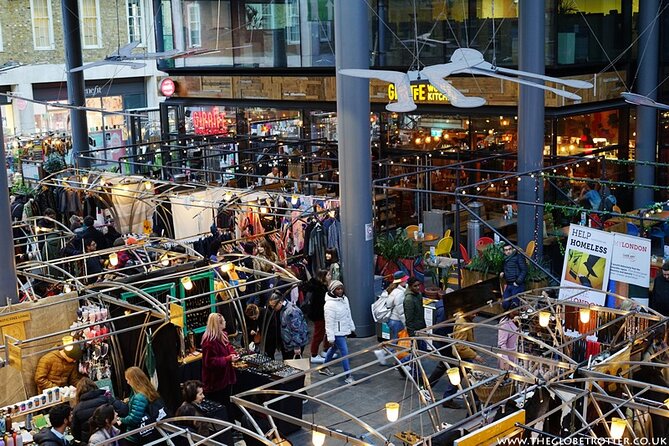
Next is Spitalfields Market E1, built on older market roots. The tour notes it started as London’s old fruit and veg market and has been turned into a shoppers paradise, with clothes and food stalls and something for different tastes.
This is a strong final “browsing” stop because it’s varied. Even if you already bought something earlier (or you skipped purchases at earlier markets), you’ll still likely find something that fits: a snack, a small clothing find, or a last look at the market scene.
Time here is about 20 minutes, and you also finish at Old Spitalfields Market. That matters. Instead of ending the tour at a random corner, you end in the middle of an area you can keep exploring on your own if you still have energy.
If you’re into photos, this is also a good time to slow down. The mix of food stalls and clothing gives you plenty of visual variety in a compact space.
Why the guide experience is the real difference
A lot of market tours are just route-planning. This one has a stronger human element because your guide is part storyteller, part local translator.
In particular, you should expect interactive walking, with personal neighborhood stories and real talk about where to eat and what to look for. The guide’s humor also shows up as part of the pacing, which is why the tour tends to feel relaxed rather than rushed.
People also highlight that the guide shares best places for specific bites—like bagel recommendations—and adds family or personal connections to the areas you walk through. You don’t just get facts. You get context you can use when you’re hungry, looking for a bargain, or trying to decide between two stalls.
Walking comfort: what to wear and how to plan your morning
This is not a “sit and watch” experience. You’ll move between five stops, and each transfer includes a walk (10–15 minutes). Add the market time, and you’re looking at a full morning of steady movement.
So I’d plan like a local:
- wear comfortable shoes you can walk in for a couple hours
- dress for the weather since London Sundays can swing fast
- keep a small buffer for your own wandering
One review-style note that’s worth listening to: in colder months, dress warmly. You’re outside for long enough that comfort matters.
Also remember: no snacks or drinks are included. Bring water if you like, or plan to buy as you go based on what looks good at each market.
Who this tour suits best
This tour is a good match if you want:
- multiple Sunday markets without planning the route yourself
- a local guide’s perspective (Rich is the name to remember)
- time to shop and snack at your own pace inside a guided structure
- a finish in a market area so you can keep exploring after
If you’re traveling with kids who can’t handle steady walking, or if you dislike crowds, you’ll need to weigh your tolerance for busy market streets. But if you’re comfortable walking and you enjoy shopping that feels casual and street-level, you’ll likely have a fun, easy morning.
Should you book this London Sunday markets tour?
I’d book it if your goal is to get the “East London Sunday” feeling—markets, street food, vintage shopping, and neighborhood stories—packed into about three hours without stress. The small group size (up to 20) helps keep the pace friendly, and the mix of guided talking plus time to explore on your own is exactly how you avoid the most common market-tour problem: feeling herded.
I’d skip it if you hate walking, want a tour with guaranteed food included, or are looking for a very quiet experience. Since snacks aren’t included and the route involves steady walking, it’s better suited to people who are okay planning their own bites.
FAQ
How long is the London Sunday markets walking tour?
The tour runs for about 3 hours.
What are the start and end points?
It starts at Cambridge Heath Station Forecourt, Hackney Rd, Cambridge Heath, London E2 9HD, and ends at Old Spitalfields Market, 16 Horner Square, London E1 6EW.
What time does the tour begin?
The start time is 10:00 am.
Is food included in the price?
No. Snacks and food and drink are not included, so you’ll want to buy what you want at the market stalls.
How much free time do I get at each market?
The guide allows about 15–20 minutes of free time in each market.
How big is the group?
The tour has a maximum of 20 travelers.
Is there a cancellation option for a full refund?
Yes. You can cancel up to 24 hours in advance for a full refund. If you cancel less than 24 hours before the start time, the amount paid is not refunded.