REVIEW · LONDON
Buckingham Palace, St James Palace & Tea at Kensington Palace
Book on Viator →Operated by Top Tasting Tours · Bookable on Viator
Royal London, two hours, and tea included. This small-group route strings together the palace districts around St James’s and ends at Kensington Palace for a proper British high tea.
I especially like the way the walk steers you off the busiest paths, with quiet passageways and little-used back streets where the stories make more sense. I also love the payoff: sandwiches, scones, and cakes at the Orangery, served at a private table, with a guide who weaves in the tea-drinking background while you eat.
The main catch is that it’s still a walking tour in a short time window, so plan for a steady pace. Also, palace interiors aren’t guaranteed unless you choose the State Rooms option at checkout.
In This Review
- Key things I’d focus on
- From Green Park to Kensington: A tight, efficient royal loop
- Green Park: starting away from crowds
- St James’s quarter: back streets, power, and political-era clubs
- Spencer House: a Diana connection you can actually picture
- The Mall and St James Palace: what you can see, and when
- Clarence House vs. St James’s Palace: the comfort politics of royalty
- Buckingham Palace area: the Tyburn story runs under your feet
- Wellington Arch and Apsley House: power in stone, then power in interiors
- Bomber Command Memorial: a respectful pause in the middle of royal sights
- Royal Albert Hall and Albert Memorial: royal commemoration with a cathedral-sized venue
- Kensington Palace: George II’s last morning (and why the details stick)
- Tea at the Orangery: sandwiches, scones, cakes, and tea history
- What you’ll actually see inside vs outside
- Price and value: why $173.45 can make sense
- Who this tour is best for
- Should you book Buckingham Palace, St James Palace & Tea at Kensington Palace?
- FAQ
- How long is the tour and how much walking is involved?
- What is included in the high tea?
- Can I request dietary options?
- Is palace entry included?
- How large is the group?
- Where does the tour start and end?
- Do I need transit fare for this tour?
- Is there a child tea option?
- What is the cancellation policy?
Key things I’d focus on
- Small group size (max 10): typically 4–6 people, so questions and pacing feel human.
- Tea as a real event: a private table at Kensington Palace plus a guided tea history.
- Back-street royal context: St James’s isn’t just big buildings; you learn how power lived there.
- A one-day royal sweep: Buckingham Palace area plus St James’s and Kensington Palace in about 2 hours.
- Great match for limited time: you get orientation fast, without trying to cover everything solo.
From Green Park to Kensington: A tight, efficient royal loop
This is a 2-hour walking experience built for people who want the palace zone highlights without spending your whole day sorting tickets and maps. The tour starts at Green Park (near Piccadilly) and finishes at Kensington Palace, at the Orangery, where your afternoon tea is served.
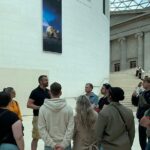
You’ll get a mobile ticket and a guided walk in English, with the group kept small. The format also matters: it’s not a rushed cattle-line tour, and you’re not tied to a huge group. That’s a big deal in London, where crowds can turn a “quick look” into a frustrating wait.
One practical note I like: a contactless or Oyster card is mentioned for local transit if needed. And the tea portion includes dietary support if you request it ahead of time (gluten-free, vegetarian, vegan, and halal are offered on prior request).
You can also read our reviews of more tours and experiences in London.


Green Park: starting away from crowds
The tour begins in Green Park, formally known as Upper St James Park. Instead of diving straight into the most obvious photo angles, you head away from crowds to find calmer corners and discreet passageways.
Why that matters: Green Park’s openness can make it feel easy to get disoriented, especially if you’re used to visiting sights one by one. This first segment helps you get your bearings fast—then your guide uses the surroundings to point out how the royal areas relate to each other.
This stop is short (about 10 minutes), so treat it as the warm-up: it sets the tone for the rest of the walk, which stays focused on context rather than just scenery.
St James’s quarter: back streets, power, and political-era clubs
Next you move into St James’s, which the guide frames as the main aristocratic quarter of London. The key idea is how social life and politics blurred together—landed gentry and political classes mixing in chocolate houses and taverns that later became prestigious clubs in the seventeenth century.
You’ll stroll along little-used back streets rather than only the broad, iconic routes. That choice is smart, because those side lanes are where you can actually absorb the feel of “this is where decision-making happened.”
This segment repeats once more as part of the loop, so you get to revisit the area with different landmarks in view. Both times the stop runs around 5–10 minutes, so the focus stays on short, high-impact learning.
Spencer House: a Diana connection you can actually picture
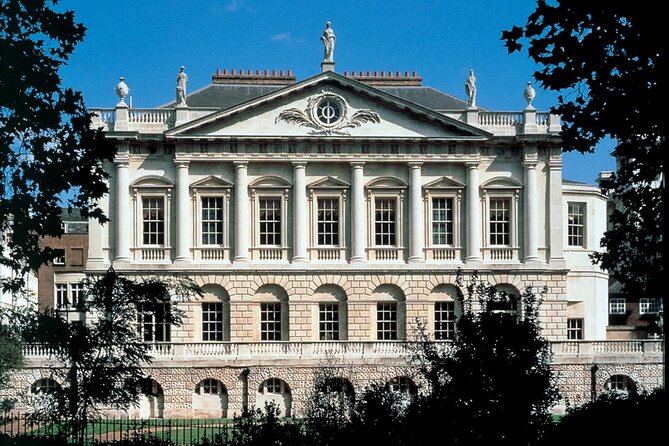
At Spencer House, you’re looking at London’s finest surviving eighteenth-century town house. It was built between 1756 and 1766 for John, the first Earl Spencer—an ancestor of Diana, Princess of Wales.
This is one of those stops where the name alone might sound like a stately mansion, but the details give it weight. You’re not just hearing a random royal fact; you’re getting a real family link that connects the eighteenth century to modern royal memory.
The stop is brief (about 5 minutes), so if you want photos, keep your camera ready as you approach. The value here is the story and the sense of scale—this house is smaller than palace grounds, but it carries enormous historical status.
The Mall and St James Palace: what you can see, and when
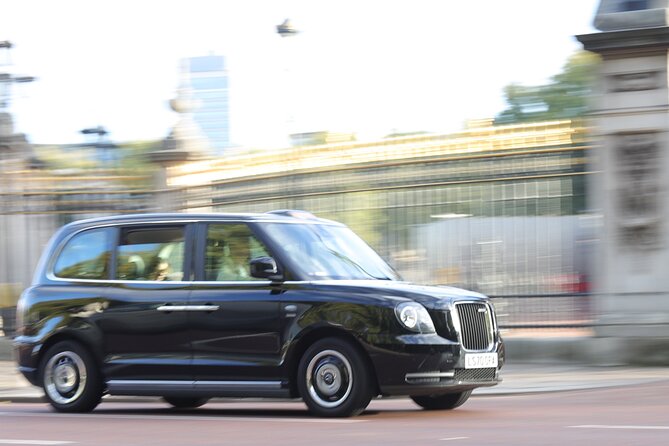
You’ll pass by The Mall with St James Palace in mind. St James Palace is described as the official London royal palace, and it’s not regularly open to visitors.
However, there’s a practical detail that helps you plan if your dates happen to align: the public can attend Sunday services at the Chapel Royal and the Queen’s Chapel.
So, even when the gates are closed, the palace still has a living role. Your guide uses that to explain what the palace means today versus what it meant in earlier centuries—an important distinction if you dislike “history as a museum display” and prefer history as something still used.

Clarence House vs. St James’s Palace: the comfort politics of royalty
Another stop that stands out for me is Clarence House. It was built between 1825 and 1827 to a design by John Nash. The commission came from the Duke of Clarence, who became King William IV in 1830 (reigned 1830–1837).
The reason Clarence House matters in this tour is very specific: William IV lived there in preference to the adjacent St James’s Palace, which he found too cramped.
That tiny detail changes how you look at the two royal buildings. Instead of thinking of them as equals in the skyline, you start to understand how daily comfort influenced royal living choices—architecture as a personal decision, not just a grand backdrop.
Buckingham Palace area: the Tyburn story runs under your feet
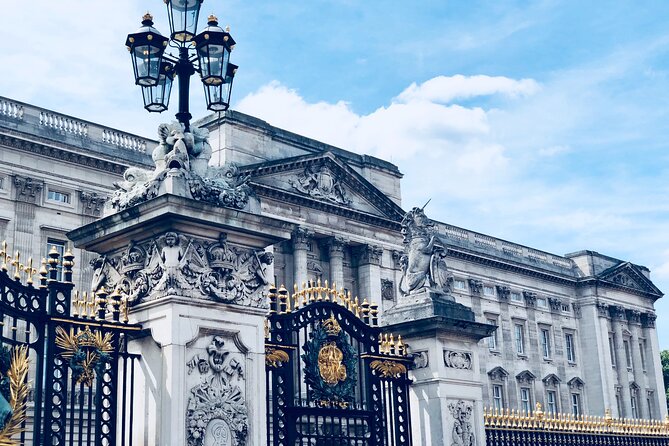
Then you reach Buckingham Palace, and the tour gives you a story that doesn’t rely only on paintings and ceremonies. The site traces back to the Manor of Ebury (also called Eia). The marshy ground was watered by the river Tyburn, which still flows below the courtyard and south wing of the palace.
The tour also references where the river was fordable (at Cow Ford), leading to the village of Eye Cross. Ownership changed over time, with figures like Edward the Confessor and his queen consort Edith of Wessex, and after the Norman Conquest, William the Conqueror.
If you like your palace facts grounded in geography, this stop gives it to you. Knowing the Tyburn connection helps you understand why the palace stands where it does—because it’s tied to water, land, and settlement patterns, not only royal ambition.
Wellington Arch and Apsley House: power in stone, then power in interiors
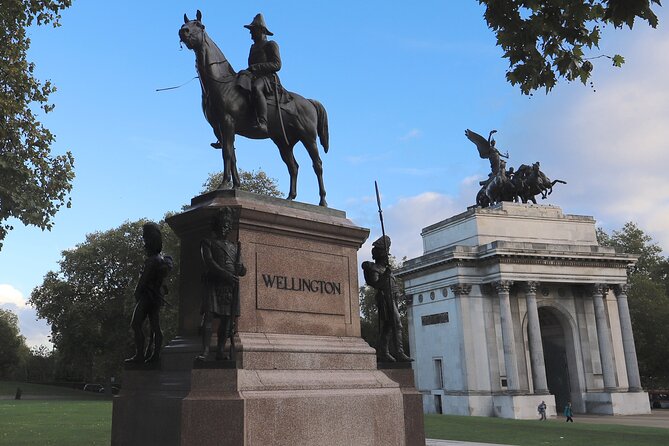
At Wellington Arch, you cross to the Decimus Burton structure (1828). The details include a 4-horse chariot with a figure of peace added in 1912, and the Central Passage reserved for royalty.
You’re not just seeing a monument—you’re learning how the route through it was designed for privilege. That’s a theme you’ll notice repeatedly on this walk: access matters, and it was built into the design.
From there you go to Apsley House, originally built in red brick by Robert Adam between 1771 and 1778 for Lord Apsley (Lord Chancellor). Some Adam interiors survive, including the Piccadilly Drawing Room with its apsidal end and an Adam fireplace. The Portico Room behind the giant Corinthian portico was added by Wellington.
This is a short stop, but the guide’s job is to point you toward what makes these buildings distinct. Apsley House becomes more than a name when you hear that some of the original interior work still exists, while the exterior announces Wellington’s influence.
Bomber Command Memorial: a respectful pause in the middle of royal sights
One stop you’ll be glad exists is the Bomber Command Memorial, located on the south side of Piccadilly facing Hyde Park Corner.
This memorial commemorates the crews of RAF Bomber Command who embarked on missions during the Second World War. The tour data specifically highlights the scale of sacrifice: 55,573 aircrew from Britain, Canada, Australia, New Zealand, Czechoslovakia, Poland, and other allied countries, plus civilians of all nations killed during raids.
I appreciate tours that don’t keep everything inside the royal bubble. Even in a day heavy with palaces, this stop adds emotional balance and helps London feel fully human, not only ceremonial.
Royal Albert Hall and Albert Memorial: royal commemoration with a cathedral-sized venue
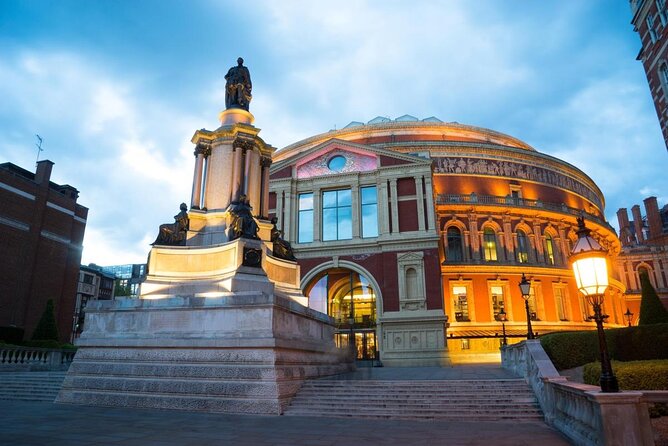
Next comes Royal Albert Hall, a concert hall on the northern edge of South Kensington with a seating capacity of 5,272. Since opening in 1871 by Queen Victoria, it has hosted leading artists from many performance genres.
Then you move to the Albert Memorial in Kensington Gardens, one of the most ornate monuments there. It commemorates Prince Albert, who died of typhoid in 1861.
The pairing works well: one is about public performance at a massive scale, the other is memorial art designed to carry meaning for generations. Together, they help you see that royal influence isn’t only about palaces with guards—it also shaped cultural institutions and public space.
Kensington Palace: George II’s last morning (and why the details stick)
The tour ends with Kensington Palace and the lead-in to your tea at the Orangery.
One of the most striking pieces of information you get is the account of George II’s death. The guide notes that George II was blind in one eye and hard of hearing. On 25 October 1760, he rose at 6:00 am, drank a cup of hot chocolate, and then suffered a collapse alone in his room. His valet was the one who discovered him after a crash, and Princess Amelia was sent for. Before she arrived, he died.
The post-mortem is stated as a thoracic aortic dissection. He was succeeded by his grandson George III and buried at Westminster Abbey on 11 November. The guide also notes George II left instructions for his and his wife’s coffins to be removed so their remains could mingle, and that he is the most recent monarch to be buried in Westminster Abbey.
Even if you’re not a royal-history person, this kind of specific, human moment makes Kensington feel personal. It turns the palace grounds into something you can picture, not just something you walk past.
Tea at the Orangery: sandwiches, scones, cakes, and tea history
Now the best part: high tea at the Orangery at Kensington Palace.
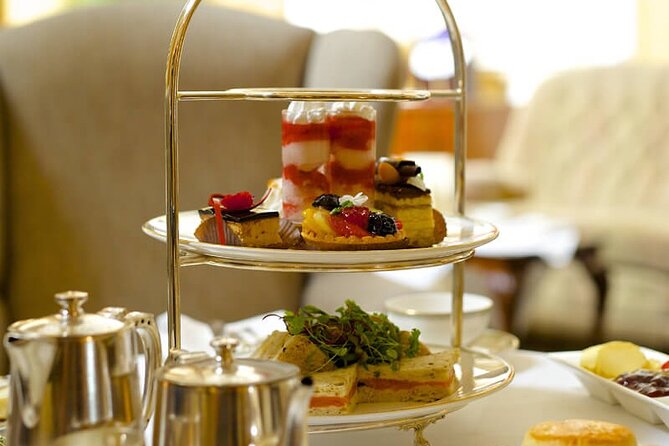
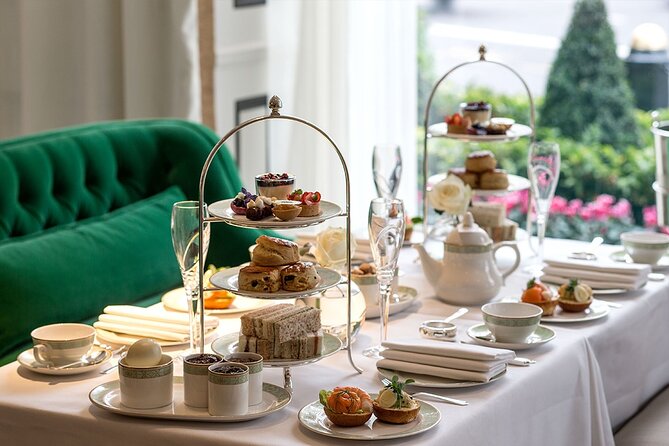
You get afternoon tea featuring delicate finger sandwiches, Welsh scones (with and without raisins), clotted cream and strawberry jam, and a selection of royal cakes depending on the time of year. The menu details are laid out clearly, which helps you decide if the tea fits your taste.
This portion also includes the history of tea drinking in England, so the meal isn’t treated as a simple bonus. It’s part of the experience flow, with your guide linking royal-era life and British tea culture.
You also get dietary support if you requested it ahead of time (gluten-free, vegetarian, vegan, and halal). Alcohol can be purchased during the tea service, but it’s not required.
One small practical win: you’re given a private table at the tea venue. After two hours of walking and stopping, having one place where you can sit without crowd pressure feels like a reset button.
What you’ll actually see inside vs outside
This is mainly a walking tour focused on palace areas and key landmarks. Your tour data also says there’s no entrance to palaces or the walking tour unless selected at checkout.
That said, entrance to the State Rooms is listed as included if selected at check out. So your ideal scenario is simple: choose that option if you want interior viewing. If you don’t, you’ll still get the palace stories, but your experience will stay centered on exteriors, architecture, and the guide’s interpretation.
If you’re hoping for heavy inside time at multiple palaces, I’d adjust expectations. Two hours plus tea is designed for orientation and storytelling, not marathon museum duty.
Price and value: why $173.45 can make sense
At $173.45 per person, this isn’t a budget-only stroll. But the value case is clear when you look at what’s bundled.
You’re paying for:
- a small-group guided walk with royal and neighborhood context
- included afternoon tea (sandwiches, scones, and cakes)
- a private table for the tea portion
- on-the-ground pacing that prevents time-wasting with directions
You also aren’t paying for private transport. Bus fare is not included, and the tour data recommends bringing a contactless card or Oyster card (noted as £1.75 per person). That’s a normal London add-on.
One other value check: the group size is capped at 10 travelers (with a typical range of 4–6). When you get a small ratio, the guide’s explanations land better, and you’re more likely to get your questions answered without the tour turning into a lecture you can’t interrupt.
Booked on average about 81 days in advance, which hints at steady demand. If you’re traveling during peak periods, getting a spot earlier is smart, especially since the tea setup likely depends on headcount.
Who this tour is best for
This tour is a good fit if you want:
- Royal London highlights without managing multiple tickets on your own
- a guided walk that explains why buildings are where they are
- the “palaces and then tea” day plan that feels classic and easy
It’s also a strong choice if you like learning through story. The guide names that show up in feedback include Simon, David, and Tom, and the common thread is that people liked how the guide makes the details stick and keeps the tone friendly and engaging.
One possible drawback to keep in mind: the walk is short per stop, but the day still includes lots of moving between sites. If you’re sensitive to walking time, pack comfortable shoes and expect a steady rhythm.
Should you book Buckingham Palace, St James Palace & Tea at Kensington Palace?
I’d book this if you want a time-smart royal day that ends with real food, in a real royal setting, with guided context along the way. The included high tea is a tangible value anchor, and the route through St James’s and Kensington Palace gives you a “more than postcards” view.
Skip it if your top priority is lots of palace interior time across multiple sites, or if walking for a couple of hours sounds unpleasant. You can still learn a lot on this tour, but it’s built for pacing and orientation, not slow wandering.
If you’re on the fence, here’s my decision rule: if the included tea and small-group walk sound like your kind of London day, you’ll likely feel it was worth the money.
FAQ
How long is the tour and how much walking is involved?
The tour runs about 2 hours. It’s a walking route with short stop times, so you should be ready for steady movement even though each landmark pause is brief.
What is included in the high tea?
High tea includes delicate finger sandwiches, Welsh scones (with and without raisins) with clotted cream and strawberry jam, and a royal cake selection that varies by season.
Can I request dietary options?
Yes. The tour data says gluten-free, vegetarian, vegan, and halal options are available on prior request.
Is palace entry included?
Not automatically. The data says there is no palace entrance unless selected at checkout, but entrance to the State Rooms is included if you choose that option at check out.
How large is the group?
The tour has a maximum of 10 people. The typical group size is 4–6.
Where does the tour start and end?
It starts at Green Park Underground Ltd, Piccadilly (W1J 9DZ) and ends at Kensington Palace, Kensington Gardens (W8 4PX) at the Orangery where high tea is hosted.
Do I need transit fare for this tour?
Bus fare is not included, and the tour notes you should bring a contactless card or Oyster card, listing £1.75 per person.
Is there a child tea option?
Child tea is typically for 11 years and younger, according to the tour data.
What is the cancellation policy?
Cancellation is free up to 24 hours before the experience starts, with a full refund if you cancel at least 24 hours in advance. If you cancel less than 24 hours before, the amount is not refunded.