REVIEW · LONDON
Private Sightseeing Walking Tour of The City Of London
Book on Viator →Operated by Tours Of The UK · Bookable on Viator
A great walk through London starts with the City’s details. This private sightseeing tour is built for people who want the big icons plus the lesser-known corners that explain how London became London. You’ll cover at least 16 landmarks on foot, with a guide who keeps the pace friendly and the stories practical.
I especially like that the tour gives you both photo-worthy stops and real context—Roman Londinium, the Great Fire, and the City’s money and power. I also like the guide style (for example, Dewi’s mix of humor and deep knowledge, plus being flexible with requests), because it turns sightseeing into something you actually remember. The main drawback to factor in is that there isn’t time to go inside the Tower of London—you’ll learn its history from outside.
If you want a 3-hour hit of the City’s highlights with enough background to guide your own exploring afterward, this is a smart choice. Just plan for mostly outdoor walking and some stops where you’ll be standing for brief moments.
In This Review
- Key Things I’d Focus On Before Booking
- Why the City of London Walk Feels Different From Typical Tours
- Price and Value for a Private Tour (Up to 15 People)
- Getting Ready: Timing, Meeting Point, and Walking Pace
- Trinity Square and the Merchant Navy Memorial: Port Power at Eye Level
- St Dunstan in the East and Leadenhall Market: Church Ruins and Film-Set Splendor
- London Bridge, HMS Belfast, and the Great Fire: The City Rebuilt in Real Time
- St Magnus the Martyr and the London Stone: When Small Stops Hit Hard
- The Tower of London Area Without Entry: Stories From Outside the Walls
- Bank of England, Mansion House, Royal Exchange, and the City’s Power Map
- Ye Olde Watling, One New Change Views, and College of Arms
- St. Paul’s Cathedral Finale: What You Can Do After the Tour
- Who This Tour Fits Best
- Should You Book This Private City of London Walking Tour?
- FAQ
- How long is the private sightseeing walking tour of the City of London?
- What is the price of the tour?
- Where does the tour start and where does it end?
- Is this tour private?
- Is Tower of London included inside?
- Is St. Paul’s Cathedral admission included?
- Is free cancellation available?
Key Things I’d Focus On Before Booking
- Private guide time so you can ask questions and move at a comfortable pace
- At least 16 landmarks packed into a 3-hour City walk
- St Paul’s Cathedral is the finale, but entry isn’t included
- Great Fire storytelling plus a few surprise angles on well-known places
- Views without rushing, including the Thames panorama from the London Bridge area and the St Paul’s view from One New Change
Why the City of London Walk Feels Different From Typical Tours
The City of London can be confusing if you’re on your own. It’s not just skyscrapers and busy streets. It’s a compact layer cake of eras—Roman street-level history, Wren rebuilding after the 1666 fire, and centuries of finance and law forming the modern skyline.
That’s why I like this format: you get a guided route that connects the dots. You don’t just see St. Paul’s and move on. You learn why a Roman relic like the London Stone still matters, why a church ruin like St Dunstan in the East exists where it does, and how London’s port activity shaped world connections. The private setup also helps if you have specific interests, since the guide can steer conversation where you care most.
Also, the tour ends outside St. Paul’s. That matters because St. Paul’s is a place you’ll want to linger at your own pace afterward.
You can also read our reviews of more walking tours in London



Price and Value for a Private Tour (Up to 15 People)

The price is $171.09 per group for up to 15 people, and it runs about 3 hours. That pricing can be great value if you’re traveling as a family or small group, because the cost doesn’t explode the way per-person tours often do.
Here’s the practical way to judge it: divide the group price by your headcount. Then add the value of what’s included. The tour lists local guide and the stops are mainly free to access, with only St. Paul’s Cathedral noted as admission not included. So you’re paying mostly for guide time and route planning—less for ticket costs.
If you’re traveling solo or as a couple, it can still be worth it, but the value depends on whether you want someone to explain the City’s layers as you walk rather than doing it via apps and guidebooks.
Getting Ready: Timing, Meeting Point, and Walking Pace
The tour starts at The Monument (18 Fish St Hill, London EC3R 6DB) and finishes outside St. Paul’s Cathedral in St. Paul’s Churchyard (London EC4M 8AD). You can also choose from multiple morning or afternoon departures, which helps if you’re trying to line up the walk with your other plans.
Physical pace is described as moderate physical fitness. That’s a good sign for most visitors, but you’ll still want comfortable shoes. This is a walking-and-standing tour: short stops, lots of points on the route, and time spent soaking in details rather than sitting in a vehicle.
One more small but real win: the tour uses a mobile ticket, and it offers hotel pickup on request (when available). That can save time when you don’t want to think too hard about where to start.
Trinity Square and the Merchant Navy Memorial: Port Power at Eye Level
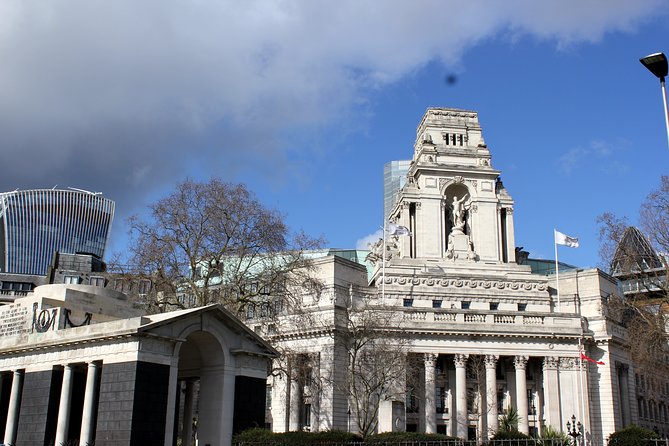
The walk begins in the City’s riverside orbit, moving you toward Trinity Square. From here, you’ll be able to view 10 Trinity Square, a former home of the Port of London Authority. The neat twist is that it links local shipping history with global events—this is also where the United Nations held its inaugural reception.
Right there, you’ll also see the memorial to the Merchant Navy. It honors Merchant Navy crews who suffered heavy casualties in both the First and Second World Wars. I like this stop because it reframes the City: yes, it’s finance now, but the City’s strength has always depended on moving goods and people. Your guide can connect that story to how supply lines still matter today.
This is a great beginning because it sets the “why” before the “what.” You start to understand London’s power isn’t magic—it’s systems.
St Dunstan in the East and Leadenhall Market: Church Ruins and Film-Set Splendor
Next up is St. Dunstan in the East, a unique City public garden with 12th-century church ruins. It’s also known for its tower added by Sir Christopher Wren (late 17th/early 18th century). What I like about this stop is the mix of beauty and survival: you get ruined stone, serious history, and plenty of chances for photos.
Because the ruins sit at the center of City redevelopment stories, your guide will point out how London evolved after fires, floods, and bombings. You’ll see how “destruction” didn’t erase the City—it reshaped it.
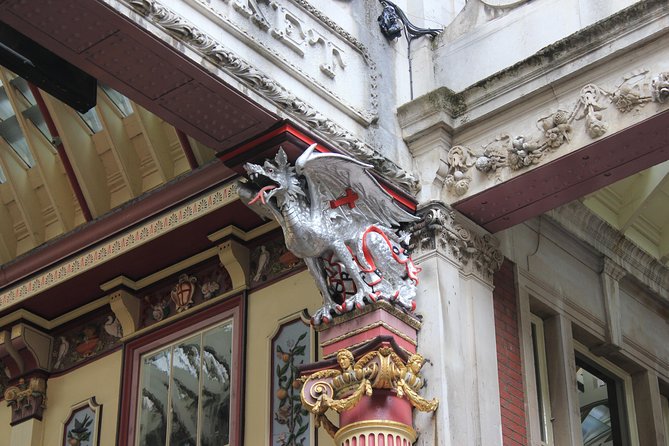
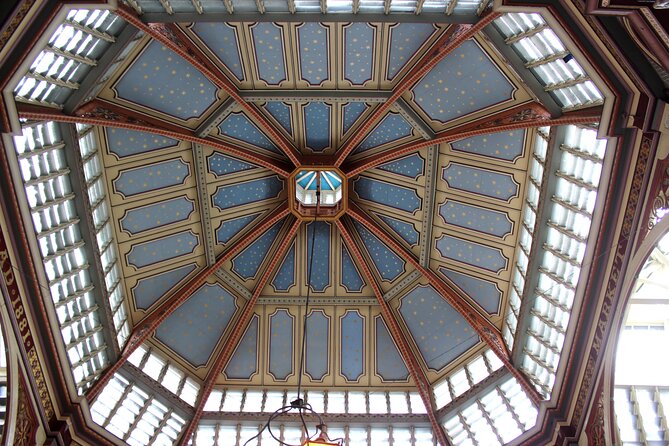
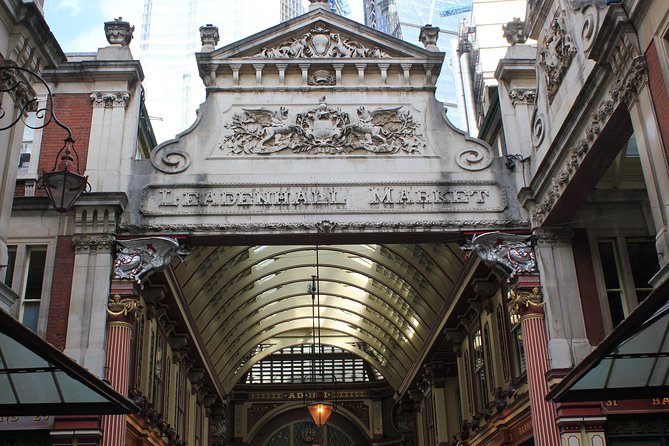
Then comes Leadenhall Market, a Neo-Gothic market that sits on the footprint of the ancient Roman forum in Londinium. It’s named for its lead roofed hall, and it’s designed with dramatic colors—crimsons, greens, golds, and silvers. If you’re a Harry Potter fan, this is the market that shows up in the filming of Harry Potter and the Philosopher’s Stone. The guide explains how it was used, which makes you look at the space differently.
The potential drawback here is time. Each stop is brief. If you love markets and want to browse, you’ll likely want to come back later. Still, the guided context makes that easy.
You can also read our reviews of more city tours in London





London Bridge, HMS Belfast, and the Great Fire: The City Rebuilt in Real Time
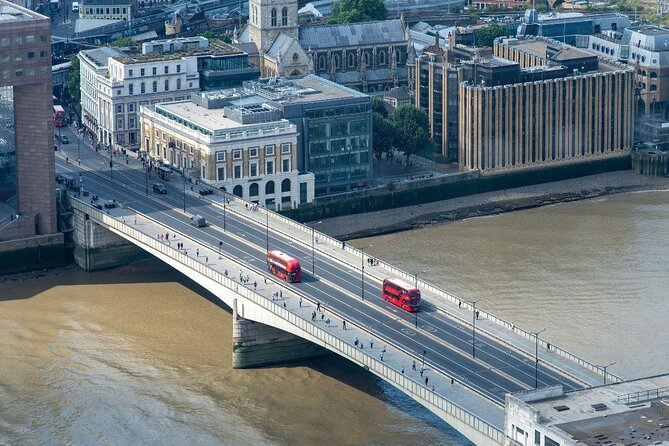
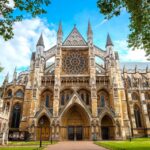
When you reach London Bridge, you’ll get Thames views that help you place everything: the river, the skyline, and landmarks aligned in your line of sight. The tour notes that for centuries London Bridge was the only bridge across the Thames, and it even connects back to Roman times when bridges supported invasions.
From this area, you’ll have panoramic views including the Tower of London, Tower Bridge, and HMS Belfast, a former Royal Navy cruiser tied to the D-Day landings and the Korean War. One of the most practical bits here is how the guide explains why HMS Belfast is part of the UK’s Historic Fleet—it’s not just a ship sitting there. It has a role in public memory and preservation.
After that, you’ll stop at the Monument to the Great Fire of London. This is one of those places that feels famous even if you haven’t spent time with it. Your guide will cover what sparked the fire, why it took hold, and even the conspiracy theories that circle it. You’ll also learn a nursery rhyme tied to the Great Fire—exactly the kind of detail that makes a stop stick.
If you’re prone to info overload, the tradeoff is that the Great Fire storyline is packed. The good news is the tour keeps moving. You’ll feel your understanding sharpen rather than drown.
St Magnus the Martyr and the London Stone: When Small Stops Hit Hard
St. Magnus the Martyr is a Wren-era rebuild after the Great Fire, supervised by Sir Christopher Wren and rebuilt under master mason George Dowdeswell. It’s noted for stunning interiors, and the tour includes reasons you’ll recognize it from literature—your guide points out connections to Dickens’s Oliver Twist.
Here’s a detail I really value: the church contains a replica of the old London Bridge. That’s a smart way to understand why navigating the old bridge was hard. Instead of just hearing about it, you can visualize it during your stop.
Then you’ll see the London Stone, described as the oldest surviving treasure in London. It’s from the Roman city heart of Londinium, where Roman citizens came for proclamations and important moments. It’s also famous in British legend—once believed to be the stone from which Arthur drew Excalibur—and it has been a visitor attraction for at least 500 years.
But here’s the practical consideration: the London Stone is easy to miss unless someone points it out. Your guide helps with exactly that, which is why I think this stop works better with a guide than on your own.
The Tower of London Area Without Entry: Stories From Outside the Walls
This tour doesn’t plan time to go inside the Tower of London. Instead, you’ll stop outside and learn the place’s different roles over time. Your guide covers it as a royal palace, a site of execution, a jail, and a high-security spot for important valuables like the Crown Jewels.
You’ll also hear some unexpected connections. The tour notes links to London Zoo, and it mentions the Kray Twins as some of the last people imprisoned there. In World War II history, it also references Rudolf Hess and explains how the Deputy Fuhrer came to be imprisoned here during the war’s height.
This approach is a good fit if you want context fast. If you’re specifically hoping for interior tours and galleries, you’ll need to plan St. Paul’s and Tower of London time on separate days.
Bank of England, Mansion House, Royal Exchange, and the City’s Power Map
One of the tour’s strengths is that it doesn’t treat the City as only a museum. It shows you how power works.
At Mansion House, you’ll view one of the finest Georgian palaces in London, home to the Lord Mayor of London. The tour mentions the Chancellor of the Exchequer gives an annual Mansion House speech there. The interior is off-limits, but the exterior is still impressive—and your guide will explain what the building represents.
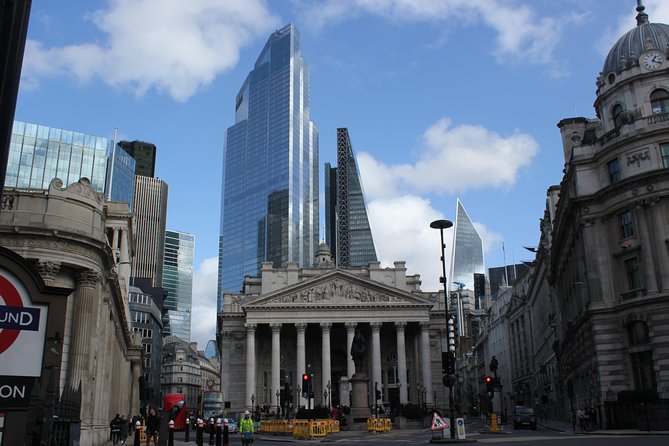
From Mansion House, you’ll view the Royal Exchange, opened by Elizabeth I. Your guide explains how it was one of the oldest stock exchanges in the world and is also described as the oldest shopping mall in the world that still functions today. That combination—old finance space now mixed with retail—helps you understand why the City keeps changing without losing its identity.
Then there’s the Bank of England. This stop is short, but it hits major ideas: it houses the UK’s central bank and stores an astronomical amount of gold in vaults. Your guide will share a story about the vault being broken into by accident and how the vault is locked using old and new technology. You’ll also hear about the Bank’s role in managing the UK’s economy.
If you’re the type of person who likes to connect politics and economics to real streets, this portion is a highlight.
Ye Olde Watling, One New Change Views, and College of Arms
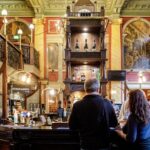
A 17th-century pub stop might sound random, but it’s not. Ye Olde Watling is built for builders working on St. Paul’s Cathedral nearby. The tour also suggests connections to Sir Christopher Wren—it’s believed he had a drawing-room association and that the pub was built by Wren, which would make it one of the few public houses linked with him. Even if you don’t care about pub lore, it’s a good pause between bigger landmarks.
Then comes a modern-looking City moment: One New Change. This shopping mall has a roof terrace that’s noted as free to access, and it’s one of the best ways to grab a St. Paul’s view without waiting for a specific cathedral tour. From up there, you can see St. Paul’s plus landmarks including The Shard, Tate Modern, The Globe, and the River Thames.
Your guide will also help with a group photo from this terrace. I like that because it avoids the usual scramble to find the right angle and the right person to take your picture.
Finally, you’ll reach the College of Arms, described as the oldest heraldic college in the world. It’s founded by Richard III and specializes in genealogical research and creating new coats of arms. Your guide will explain how it creates new arms for new peers and the role it plays in the James Bond film On Her Majesty’s Secret Service. The surrounding area is also connected to film and TV locations, including James Bond, Doctor Who, Mission Impossible, and Harry Potter.
This is a fun stop if you like symbols, family stories, and the way modern pop culture borrows older institutions.
St. Paul’s Cathedral Finale: What You Can Do After the Tour
The tour ends at St. Paul’s Cathedral, with about 20 minutes at the final stop. The cathedral’s admission is not included, so think of this as guided arrival plus orientation—not a full-length inside visit.
Even without ticket access, the guide’s Wren connection sets you up to notice the design choices yourself. And ending outside the cathedral lets you decide what to do next: go in for longer, grab coffee nearby, or keep walking toward the Thames.
If St. Paul’s is the main reason you’re coming, I’d plan a separate chunk of time after the walk. You’ll get more value than trying to do everything in the last 20 minutes.
Who This Tour Fits Best
This is a strong choice for people who want to:
- Get oriented fast in the City of London
- Learn how the City’s Roman, medieval, and post-Great Fire stories connect
- Appreciate a private guide who can tailor the pace and answer questions (the tour is known for guides like Dewi, who bring humor and lots of detail)
- Prefer walking routes that end near a major landmark you can keep exploring
It’s not ideal if you only want inside ticket tours at every major site, because Tower of London entry isn’t included, and St. Paul’s admission isn’t part of the tour.
Should You Book This Private City of London Walking Tour?
Yes, if you want an efficient, story-driven walk through the City that gives you enough context to explore on your own right after. The private format, the focus on major landmarks plus the “how did this place get here” stops, and the St. Paul’s finale add up to good value for a group.
I’d book it especially if you like connections: Roman Londinium to modern London finance, Great Fire losses to Wren-era rebuilding, and street corners to world events like the UN’s inaugural reception at 10 Trinity Square. If your priority is only ticketed interiors—then you might pair this with separate Tower of London and St. Paul’s Cathedral time.
FAQ
How long is the private sightseeing walking tour of the City of London?
It runs for about 3 hours.
What is the price of the tour?
The tour costs $171.09 per group, up to 15 people.
Where does the tour start and where does it end?
It starts at The Monument, 18 Fish St Hill, London EC3R 6DB. It finishes outside St. Paul’s Cathedral at St. Paul’s Churchyard, London EC4M 8AD.
Is this tour private?
Yes. It’s a private tour, and only your group participates.
Is Tower of London included inside?
No. The tour does not have time to go into the Tower of London, though your guide explains its history from outside.
Is St. Paul’s Cathedral admission included?
No. St. Paul’s Cathedral admission is not included, though you’ll spend time at the cathedral during the tour.
Is free cancellation available?
Yes. Free cancellation is available up to 24 hours in advance for a full refund.