REVIEW · LONDON
e-Scavenger Hunt London: Explore the City at Your Own Pace
Book on Viator →Bookable on Viator
Your phone turns London into a game. This self-guided GPS walk lets you choose your pace, then feed you fun, oddball history as you go—so you can spend more time where you actually care and less where the crowds pile in. You’ll also get those classic “I’m really here” sights along the route, including a photo moment near Buckingham Palace and viewpoints along the River Thames.
My two favorite parts are the freedom to stop and start on your schedule and the way the clues push you toward photo-worthy stops you might skip on a normal walk. One thing to plan for: you need a working smartphone and data for the app, and you’ll want to manage battery because the whole hunt runs through your phone.
In This Review
- Key points to know before you start
- How the e-Scavenger Hunt actually feels on the ground
- Price and value for $36.07 per group up to 6
- Start and end: Big Ben to Big Ben
- The route logic: Thames views, royal stops, and major squares
- Tower Bridge and the Thames: the instant photo payoff
- Hyde Park to Buckingham Palace: royal scenery without the crowding pressure
- Trafalgar Square, Piccadilly Circus, and the city’s attention economy
- Museums and art stops: when you want one place to matter
- Westminster Cathedral and St Paul’s: two different kinds of awe
- The London Eye and Kensington Palace: engineering meets royal living
- Harrods and the Hogwarts-style pop culture clue
- Imperial College London: a science stop on a classic sightseeing walk
- Westminster Abbey and Clarence House: ceremonial London
- The Tower of London: fortress, palace, prison, mint, museum
- Borough Market: finish with something real to snack on
- App tips that make the hunt smoother (and save you time)
- Who this hunt suits best
- Should you book this e-Scavenger Hunt?
- FAQ
- How long does the e-Scavenger Hunt London take?
- Where does the hunt start?
- Does it end at the same place it starts?
- How much does it cost?
- Is it guided by a person?
- What’s included with the activity?
- What do I need to bring?
- When is it available?
- Is this activity private for my group?
- What’s the cancellation policy?
Key points to know before you start
- Self-guided, app-led pacing: stop for photos, walk slower, or speed up without waiting on a group.
- GPS-based clues: your phone helps you find each spot and answer the questions.
- Big landmarks, light effort: you hit famous names like Tower Bridge, Buckingham Palace, and Trafalgar Square on foot.
- Royal-and-arts mix: royal residences, cathedrals, and museums show up in the same hunt.
- Worth it for a group: $36.07 per group up to 6 can work out to a low per-person cost if you split it.
How the e-Scavenger Hunt actually feels on the ground
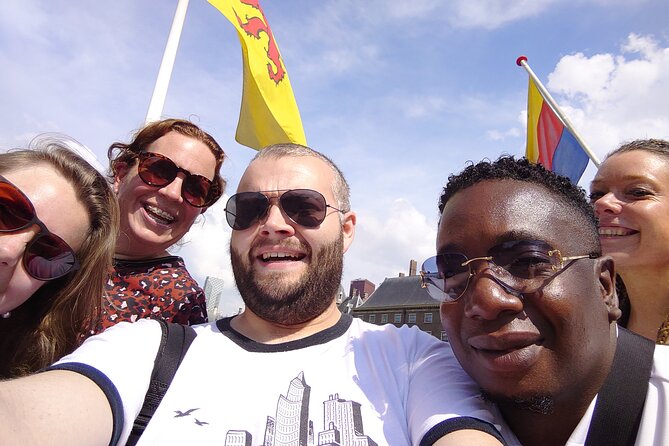
This is not a sit-and-listen tour. It’s a scavenger hunt where your phone acts like a guide that talks when you’re ready. You’ll follow GPS prompts, reach a landmark, and then answer questions that connect what you’re seeing to stories that are a lot more specific than the usual “this is old” blurbs.
What I like about that for London is simple: London is huge, and walking is the best way to make it feel manageable. A self-guided route lets you do the one thing group tours often don’t: linger. If you want a slow Thames moment or a second look at a facade, you can. If you’d rather get moving, you can do that too.
You can also read our reviews of more city tours in London



Price and value for $36.07 per group up to 6
The price is $36.07 per group (up to 6 people). If you’re traveling as a small crew, that’s the core value: you’re not paying per person for the “guide part.” You’re basically paying for access to the app and the route design.
Duration is listed at 2 to 4 hours, which is a sweet spot in London. You can fit it into a day with museums, parks, or dinner plans without feeling like you booked half your trip into one activity. The private setup also helps. It’s just your group, so you don’t have to negotiate pace with strangers.
Start and end: Big Ben to Big Ben

The hunt starts at Big Ben (London SW1A 0AA) and ends back at the meeting point. That matters more than it sounds. You get a clear “home base,” and you’re less likely to finish somewhere inconvenient. It also makes it easier to pair with other plans, like dinner nearby or hopping on public transport at the end.
The activity is available every day during the long listed window, with hours listed as 12:00 AM to 11:59 PM. So you can pick a time that matches your energy and the light you want for photos.
The route logic: Thames views, royal stops, and major squares
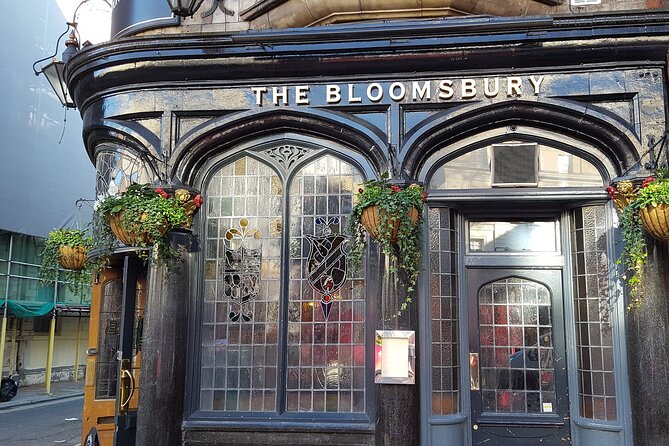
Even without a formal guide walking beside you, the route has a smart rhythm. It strings together sights that people recognize instantly, then adds a clue that explains why each one matters. You’ll go from the big showpieces to quieter, more specific landmarks, and that mix keeps the walk from turning into a checklist.
Expect long stretches where your phone is doing the “left-right” work for you. That’s handy because in London, turning around to confirm directions can burn time. GPS helps you keep moving and stay focused on what’s around you.
Tower Bridge and the Thames: the instant photo payoff

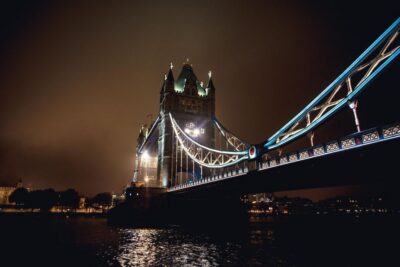
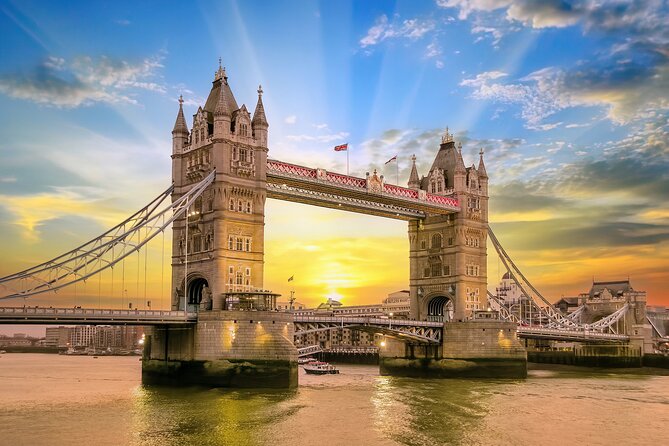
Tower Bridge is the first major anchor on the route. You learn that it was officially opened by the Prince of Wales, and that it’s been tied to London’s identity for more than 120 years. This is the kind of fact that makes your first look feel less like a postcard and more like something you’re actually interpreting.
Why this section works well in a self-guided format: Tower Bridge photos are easiest when you can pause without feeling rushed. You also get those “walking along the river” benefits—wide views, lots of visual cues, and a calmer pace than inside some of the most crowded areas.






Hyde Park to Buckingham Palace: royal scenery without the crowding pressure
Hyde Park shows up with a surprising angle. You’ll learn Henry VIII appropriated it as a hunting ground in 1536, and that before that it belonged to Westminster Abbey. That’s a fun clue type because it reframes a place you might otherwise treat as just a big park.
Then the hunt turns toward Buckingham Palace, focusing on the fact that it’s the official residence of the British monarch in Westminster and that the royal standard flutters on the center pavilion when the Queen is present. Whether or not you catch the standard, the clue makes your look sharper, like you’re reading the building instead of just seeing it.
Trafalgar Square, Piccadilly Circus, and the city’s attention economy
Trafalgar Square enters with its namesake story: it was named after the Battle of Trafalgar (1805). That kind of anchor gives you context for sculptures and the general layout, which is great when you’re moving fast.
Later, Piccadilly Circus returns in a similar way: it’s framed as a major transport hub, meeting point, and tourist attraction. The point isn’t just that it’s famous. It’s that you’re walking through London’s “people magnet” zones, and the hunt keeps you from floating through them on autopilot.
Museums and art stops: when you want one place to matter

One segment focuses on a major museum with one of the world’s largest collections of art objects and over 6 million visitors per year. Even if you’re not planning to go inside, the clue helps you understand why the building pulls so many people.
Another art stop is the National Gallery, where you’re told it’s a museum of painting on the north side of Trafalgar Square and offers a very complete overview of Western European painting. If you like art but don’t want a museum day to swallow your afternoon, this is a good “taste and keep walking” setup. You can look from outside, decide if the building is for you, then keep going with the hunt.
Westminster Cathedral and St Paul’s: two different kinds of awe
The hunt brings in Westminster Cathedral, described as the Catholic cathedral church of the Catholic Ecclesiastical Province of Westminster. It’s also the seat of the Archdiocese of Westminster. That information is practical because it tells you what you’re looking at beyond “big church.”
And yes, there’s a clear reason to take a few extra minutes here. A cathedral on this route is one of the best “wait, go inside” moments of the hunt. If the doors are open, I’d treat it as a mini detour rather than a stop you speed through.
Later, St Paul’s Cathedral comes with its specific role: it’s the seat of the Anglican Bishop of London. That makes it easier to see the cathedral as an institution, not only a landmark. If you like understanding what buildings do in a city, this is a satisfying clue type.
The London Eye and Kensington Palace: engineering meets royal living
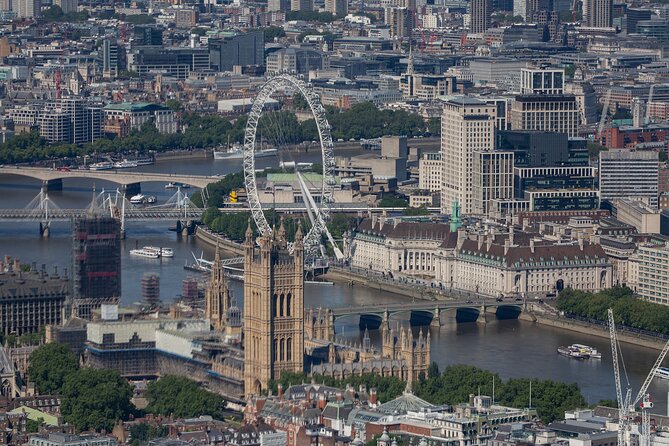
You’ll also get a deep-detailed London Eye clue set. You’re told it’s 135 meters high, 120 meters in diameter, it weighs 1,700 tons, and has 32 closed capsules. It was built in 1998 and was the largest Ferris wheel in the world when it opened. That’s the kind of specific detail that turns a simple viewpoint into a moment you can actually explain to someone later.
Right after, the route shifts to a royal residence story. The hunt notes that from the 17th century this was home to the British royal family, and since 2013 it’s been the official residence of William, Duke of Cambridge. Even if you don’t tour the interior, you’ll get a clearer sense of why this neighborhood feels tied to modern royalty.
Harrods and the Hogwarts-style pop culture clue
Shopping fans will like the route’s inclusion of Harrods. You’re given a founding story: Harrods department store on Brompton Road in Knightsbridge was founded in 1849 by Charles Henry Harrod. That’s a useful fact because Harrods isn’t just a store. It’s part of London’s commercial history.
Then there’s a delight for Harry Potter fans: a clue points to the moment Harry first took flight on his Nimbus 2000 broom over the Hogwarts quidditch pitch in Harry Potter and the Philosopher’s Stone. It’s the kind of crossover detail that makes the hunt feel playful, not just educational.
Imperial College London: a science stop on a classic sightseeing walk
The hunt also includes Imperial College London, framed as a focused institution for science, engineering, medicine, and business. You’re told it was ranked 7th in the QS World University Rankings 2022.
This is a nice break from pure monuments. If your London plan includes big historic buildings, this science anchor gives your brain a different angle—still very Central London, but with a different kind of importance.
Westminster Abbey and Clarence House: ceremonial London
The clue about Westminster Abbey focuses on ceremonies: it’s traditionally where coronations and funerals of members of the British royal houses take place, and where royal family marriages happen too. That helps you notice the building as a setting for major national moments.
Clarence House shows up next, described as one of the official London residences of the British Court on The Mall. It notes that the British state property has been the residence of Crown Prince Charles since 2002 and that it’s next to St. James’s Palace. Even if you’re just looking from the sidewalk, you get the sense of what this place represents in the royal geography.
The Tower of London: fortress, palace, prison, mint, museum
The hunt’s Tower stop frames the Tower complex as a long-lived power center. Over the centuries it’s served as a fortress, royal palace, state prison, mint, garrison, museum, and arsenal.
That one clue set does a lot of work. When you know the building changed roles so many times, your walk past it becomes more than photo time. You start imagining the layers: the fear, the administration, the commerce, the later museum role.
Borough Market: finish with something real to snack on
Finally, the route leans into food and everyday life with Borough Market. You’re told it’s a partially covered market in Southwark on the right bank of the Thames, serving both wholesalers and individuals. This is a strong ending because you can actually use the city around you after the “facts and photos” stretch.
Even if you don’t plan a full meal, having a market at the finish line makes the hunt feel like a complete outing, not just walking for walking’s sake.
App tips that make the hunt smoother (and save you time)
This hunt depends on your phone. Here’s how to make sure you don’t spend the best parts of London debugging technology.
1) Bring a charged battery. You’ll be using GPS and probably a lot of screen time.
2) Don’t rely on spotty mobile data. Data use isn’t included, so plan for coverage or Wi-Fi when you can.
3) Give yourself breathing room at tricky clue points. One experience came with a “letter mismatch” situation where the map cue looked like E but should have been M. If you see something like that, don’t freeze—use the location and move forward.
4) If a selfie instruction feels hard to find, widen your search area. A selfie location task and a “walk of fame” style hands detail were reported as difficult to spot. Take a second pass, try a slightly different angle, and don’t assume you missed it instantly.
Who this hunt suits best
I think this is a great pick if:
- you want famous landmarks but dislike crowd schedules
- you like history facts mixed with photo breaks
- you’re traveling with up to 6 people and want one shared activity that doesn’t drag
- you prefer learning in small hits, one clue at a time, rather than a full lecture
It’s also a smart option if you’ve already done a bus tour and want a more human-scale way to feel how London connects street to street.
Should you book this e-Scavenger Hunt?
If your goal is a flexible walking plan that still hits the big names, I’d book it. The value works especially well for groups, and the GPS format is perfect for seeing London at the speed you actually travel.
I’d also think twice if your phone battery is usually a problem or if you don’t want to manage data. When you’re set up with power and signal, the self-guided pace is the whole point—and it’s the part that makes the hunt feel fun instead of rushed.
FAQ
How long does the e-Scavenger Hunt London take?
It’s listed at approximately 2 to 4 hours.
Where does the hunt start?
The starting point is Big Ben, London SW1A 0AA, UK.
Does it end at the same place it starts?
Yes. The activity ends back at the meeting point.
How much does it cost?
It costs $36.07 per group, up to 6 people.
Is it guided by a person?
No. It’s self-guided and played on your phone using an online app.
What’s included with the activity?
You get an online app to play the game on your phone.
What do I need to bring?
You’ll need your smartphone and data. Use of smartphone and data is not included.
When is it available?
It’s listed as available daily from 01/02/2022 to 06/17/2026, with hours shown as 12:00 AM to 11:59 PM.
Is this activity private for my group?
Yes. It’s a private activity, and only your group will participate.
What’s the cancellation policy?
Free cancellation is available if you cancel at least 24 hours in advance for a full refund. If you cancel less than 24 hours before the start time, the amount paid is not refunded.