REVIEW · LONDON
Frameless – Immersive Art Experience in London
Book on Viator →Operated by Frameless · Bookable on Viator
Big paintings. Moving light. No quiet museum vibes. Frameless London puts world-famous works from artists like Van Gogh, Monet, Dalí, and Rembrandt all around you, floor to ceiling, across four themed galleries.
What I really liked is how you control your pace once you’re inside. There are no time restrictions on the galleries, so you can sit down, stand up, and circle back when something clicks. The second big win for me is the variety of effects: motion tracking where your movement becomes part of the art, plus room-sized scenes that wrap you in wide city and sea views.
One thing to keep in mind: even without strobe lighting, the show uses moving images and changing light, and some room sections may feel less exciting depending on your taste. Also, expect to stand a lot—comfortable shoes matter.
In This Review
- Key points before you go
- Frameless London: famous art, re-tuned for your senses
- Price and timing: what your ticket really buys
- Stop 1: Four galleries inside Frameless London
- Beyond Reality: dreamlike, otherworldly art all around you
- Colour in Motion: move, and the art responds
- The World Around Us: 360-degree cityscapes and seascapes
- The Art of Abstraction: digital maze energy and fabric-panel visuals
- What to expect on the floor: standing, sitting, and turning around
- The café bar break: included access, and a practical reset
- Light, sound, and who should plan carefully
- Who Frameless London is best for
- Should you book Frameless London?
- FAQ
- How long does the Frameless London experience take?
- What’s included with the ticket?
- Are there time restrictions once I’m inside?
- Is there strobe lighting?
- Can I cancel for a refund?
- Are service animals allowed?
Key points before you go
- Four galleries included with one ticket: You’ll see all four themed rooms as part of your entry.
- You can move how you want: Sit, stand, walk between projections, and linger without a strict countdown.
- Motion tracking is a real crowd-pleaser: Your movements can affect what happens in the Colour in Motion area.
- 360-degree scenes do the heavy lifting: Cityscapes and seascapes are designed to surround you.
- Light changes happen often: No strobe lighting, but moving visuals and brightness shifts are part of the experience.
- Families and art skeptics both fit: It’s built to be fun and understandable, not only for museum regulars.
Frameless London: famous art, re-tuned for your senses
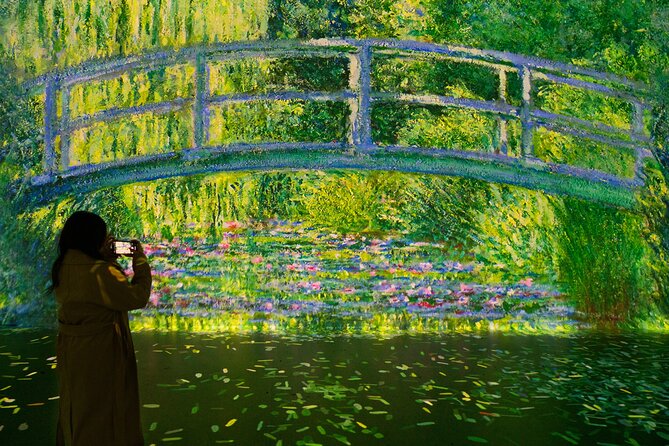
Frameless is a London plan that feels more like stepping into a living visual artwork than walking through a traditional gallery. You’re not just looking at paintings behind glass. Instead, the artworks and themes are projected so you’re surrounded by them—on walls, around you, and sometimes across the floor.
The show is built around four sections. You’ll rotate through different moods and styles, from dreamlike scenes to tech-forward effects. And it’s not only about the famous names. The experience is designed to get your body involved: where you stand, when you move, and how long you stay in a given space all shape what you notice.
For me, that’s the heart of the value. You’re paying for a full, ticketed show where the art changes in front of you, not a passive viewing. At $38.14 per person, that can feel like a steal if you like entertainment with substance—and like an overpay if you want a quiet, slow museum format.
You can also read our reviews of more tours and experiences in London.



Price and timing: what your ticket really buys
Your ticket is priced at $38.14 per person, and the experience is listed at about 1 to 2 hours. That range makes sense because you can move through at a quick pace—or slow down and spend extra minutes in the rooms that grab you.
A useful detail: the experience is structured as four galleries, and multiple people describe each gallery as running roughly 20–25 minutes. The overall ticket still lets you take your time. In other words, think of it like four short shows plus a lot of personal wandering time between the highlights.
I also like that you don’t need to plan your whole day around exact entry times in the way you do for some timed museum tickets. Once you’re in, the galleries are yours to explore at leisure. Still, since it’s a popular London activity and is often booked ahead (an average of about 9 days in advance), you’ll generally have an easier day if you lock in your slot early.
You’ll also want to plan for comfort: you’ll be standing more than you expect. Bring good shoes. Even if you’re fine standing for an hour, the way the rooms encourage you to look up, turn around, and reposition can add up.
Stop 1: Four galleries inside Frameless London

Frameless London is the whole experience—one stop, four rooms, and you’re free to enjoy them in your own order as the show is designed for wandering. The artworks are tied to specific themes, and the tech is used to make those themes feel physical, not just visual.
Here’s what you can expect from each gallery, in plain terms.
Beyond Reality: dreamlike, otherworldly art all around you
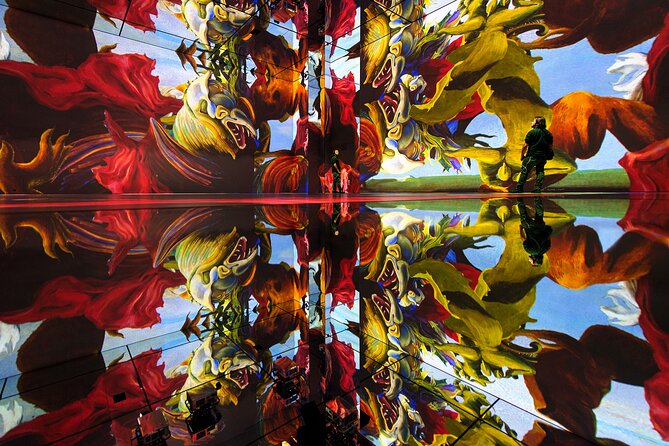
The Beyond Reality gallery is built for that surreal, dreamlike feeling—art that looks like it’s pulled past the limits of normal space. If you love the moment when paintings stop being flat and start behaving like environments, this is usually the first place people get hooked.
This room leans into scale. With projections filling the space, you’re not scanning for details the way you would in a museum. Instead, you’re watching how the imagery behaves across a full surround area. That makes it a good match if you like the emotional punch of recognizable masterpieces, but you also enjoy a bit of abstraction and mood.
Possible drawback: not every room hits equally for every person. Some people love the surreal sections more than the others, while others find one part feels slower or less exciting compared with the strongest segments. If you’re the type who wants maximum payoff fast, you may want to time this earlier in your day while you’re fresh.
Colour in Motion: move, and the art responds
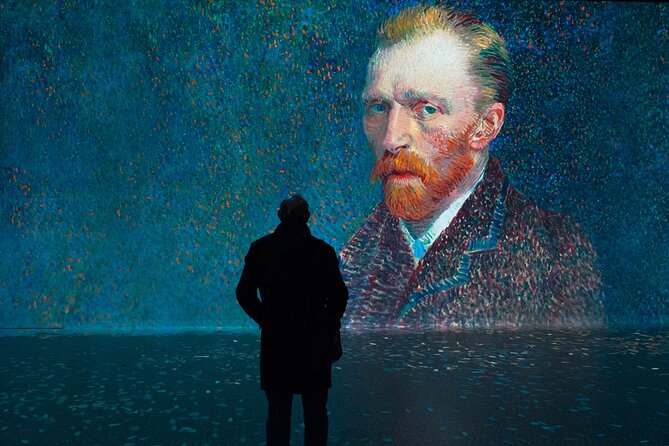
This is the “wait, I can do something here” gallery. Colour in Motion uses advanced motion tracking so your movement can recreate or change the artwork on display. The result is less about reading a label and more about participating in the visual effect.
This room is great for:
- Kids, because it’s immediately interactive
- Adults, because it turns a museum habit into play
- Anyone who learns best by doing, not just watching
In practice, this means you’ll likely spend extra minutes here. You’ll test what your body does to the visuals, then try again when you realize you’re getting a different effect. If you’re traveling with mixed ages, this is the room that helps everyone feel included without needing an art degree.
Tip that matters: don’t assume you can stay still. You’ll enjoy it more if you’re willing to step into the space and try moving a bit.



The World Around Us: 360-degree cityscapes and seascapes
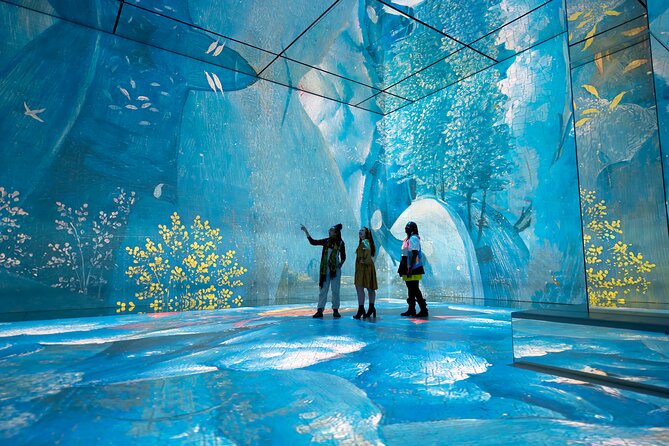
If you want the show to feel like travel, this is the gallery. The World Around Us is built around 360-degree cityscapes and seascapes, with scenes that can shift from crashing ocean energy to bustling city textures, plus softer pastoral or more dramatic volcanic-style imagery.
This is also one of the easiest rooms to love because it’s immersive in the normal sense of the word: you’re surrounded by a wide view. Your brain reads it as a place, not just a picture. That changes how famous works feel too—suddenly they connect to environment and motion.
One practical note: because the gallery uses large visual changes and light effects, it’s not the place to go if you’re sensitive to brightness shifts or motion on screens. No strobe lighting is used, but the show does use moving images and changing light, which can still be enough to affect some people.
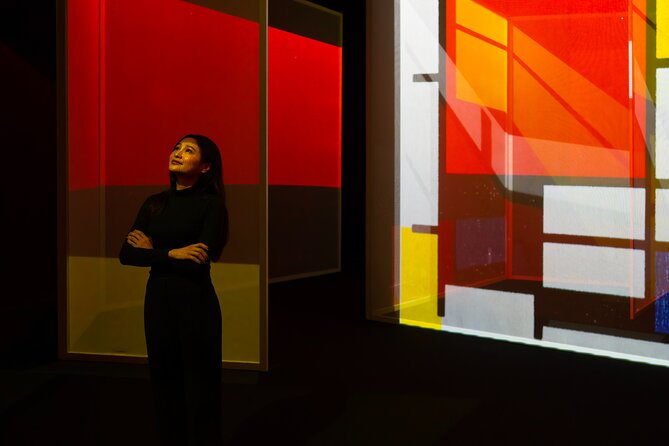
The Art of Abstraction: digital maze energy and fabric-panel visuals
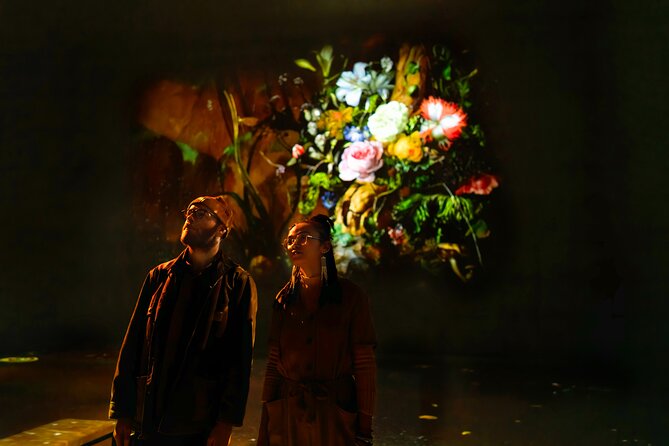
The Art of Abstraction leans techy and geometric. It’s described as a digital maze where abstract compositions move and dance, with shapes and forms bleeding through fabric panels to create an ongoing flow of abstraction.
This section is often the one that feels most like a modern digital art installation. If you like thinking about how art is constructed—how shapes become patterns, how color behaves, how surfaces interact with light—this will probably reward you.
That said, abstraction doesn’t always land for everyone. Some people love it instantly. Others find it less emotional or slower than the more story-like rooms. One common complaint from the experience is that not every segment feels equally strong, including at least one room where the soundtrack didn’t work for some visitors.
How to make it better for yourself: in this kind of room, try switching your focus. Instead of scanning the whole time, pick one spot for 30–60 seconds and watch how it changes. It helps you feel the motion rather than getting distracted by it.
What to expect on the floor: standing, sitting, and turning around
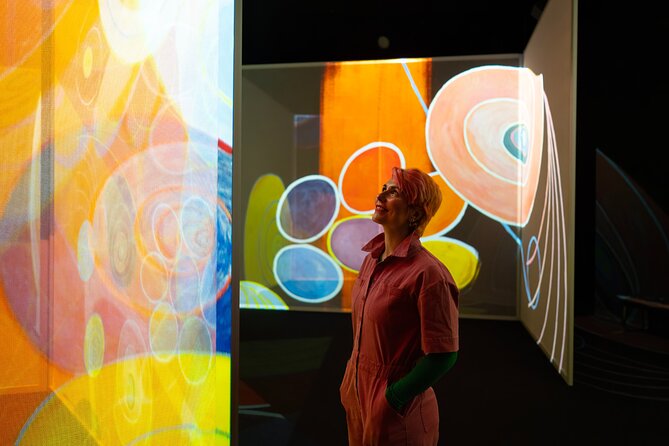
A lot of the magic comes from how the show is set up for bodies, not just eyes. In multiple parts of Frameless, you can sit on the floor, stand close to projections, and walk around so you’re viewing the art from different angles. That’s why your experience can feel different from person to person.
It also explains why good shoes matter. If you’re planning a London day that includes a lot of walking already, you may want to treat Frameless as a centerpiece activity rather than squeeze it in at the end when your feet are already done.
A nice bonus: the venue has lots of staff on hand. You can ask for help and explanations about what you’re seeing in the different sections, which is useful if you want context without doing a formal guided museum tour.
The café bar break: included access, and a practical reset
Your ticket includes access to the in-house Café Bar. Food and drink aren’t included, so you’ll still pay for anything you order. But having the option to stop matters. The show is visually intense, even when it feels calm and relaxing.
If you’re going with children, the café can be a lifesaver for a reset. If you’re an adult who likes breaks, use it to step out, hydrate, and come back with fresh eyes. That small pause can change how much you enjoy the last gallery.
There’s also a shop area mentioned as an extra place to browse. It’s not the main reason to go, but if you like taking something small home, it’s worth a look.
Light, sound, and who should plan carefully
This matters more than people think. Frameless specifically notes that there is no strobe lighting in any galleries. Still, the experience includes moving images and changes in light, which can affect some people.
If you’re prone to migraines, have epilepsy concerns, or are sensitive to brightness shifts, treat this as a serious factor—not a footnote. If you’re unsure, you can decide to pass or choose a time when you feel best and take breaks during the show.
Also remember sound. Multiple reviews highlight that the music and sound design can be a big part of the experience, and at least one section’s soundtrack wasn’t liked by everyone. If you’re sensitive to audio, consider bringing earplugs.
Who Frameless London is best for
Frameless works for more people than you might expect.
- Families: You’ll get movement, color, and interactive effects. Kids often enjoy the chance to walk around and engage with the room design.
- Art fans who want a new angle: If you know the big names, it’s fun to see familiar styles behave differently on the walls.
- Art skeptics: This doesn’t rely on deep label reading. The show is designed to be understandable through visuals and interaction.
- People who like calm entertainment: Some visitors describe the experience as relaxing, peaceful, and a place to take your time.
If you prefer quiet, text-heavy museums, you might find certain rooms slower or the projection strategy inconsistent. And if you want nonstop energy from start to finish, you may wish you could pick only the best segments—because all four galleries are part of the ticket.
Should you book Frameless London?
I’d book it if you want a London activity that’s easy to understand, built for different ages, and gives you a fresh way to experience famous art—especially if you like motion, sound, and looking from different angles.
I’d skip it if you’re worried about light and moving visuals, hate crowds and bright rooms, or you only want traditional museum viewing with minimal stimulation.
If you’re on the fence, here’s my practical decision rule: if you’re traveling with people who don’t all agree on museums, Frameless usually gives everyone something to enjoy. And if you’re going alone and you’re curious about how tech can reinterpret well-known works, this is a straightforward way to spend about one to two hours in London.
FAQ
How long does the Frameless London experience take?
It’s listed as about 1 to 2 hours. The galleries are designed as separate sections you can take your time with.
What’s included with the ticket?
Your ticket includes entry to all four galleries and access to the in-house Café Bar. Food and drink are not included.
Are there time restrictions once I’m inside?
No. The galleries can be enjoyed at your leisure with no time restrictions mentioned.
Is there strobe lighting?
No strobe lighting is used, but there are moving images and changes in light that may affect some people.
Can I cancel for a refund?
Yes. You can cancel up to 24 hours in advance for a full refund.
Are service animals allowed?
Yes. Service animals are allowed.