REVIEW · LONDON
London: Guided Bike Tour of Central London
Book on GetYourGuide →Operated by The London Bicycle Tour Company · Bookable on GetYourGuide
A bike tour is one of the best ways to feel London move. This guided ride threads together major landmarks and classic neighborhoods in a smooth 3.5 hours along the Thames and West End.
I especially like the way you get landmark views without long waits—think Houses of Parliament and Westminster Abbey from the saddle. And I love that the route also includes quieter, very London moments like Archbishop’s Park and a courtyard visit by Westminster Abbey School.
The one thing to consider: this isn’t a slow, car-free cruise. You’ll face some cycling in busier stretches, so comfortable bike control matters.
In This Review
- Key things to know before you pedal
- Meeting in Lambeth: where the tour starts and how to feel ready
- Archbishop’s Park and Lambeth Palace: a calm start before the monuments
- Westminster Abbey School courtyard and the Thames crossing moment
- Horse Guards Parade, St. James’s Park, and space to breathe
- Constitution Hill to Mayfair: the ride feels like London’s showpiece
- Carnaby Street, Soho music roots, and the theatre-at-the-street level ending
- Waterloo Bridge to Banksy Tunnel: views, then street art under your tires
- Pace and bike comfort: what to do if you’re not a confident rider
- Value check: does $60.55 feel fair for this mix of sights?
- Who should book this guided central London bike tour?
- Should you book it?
Key things to know before you pedal
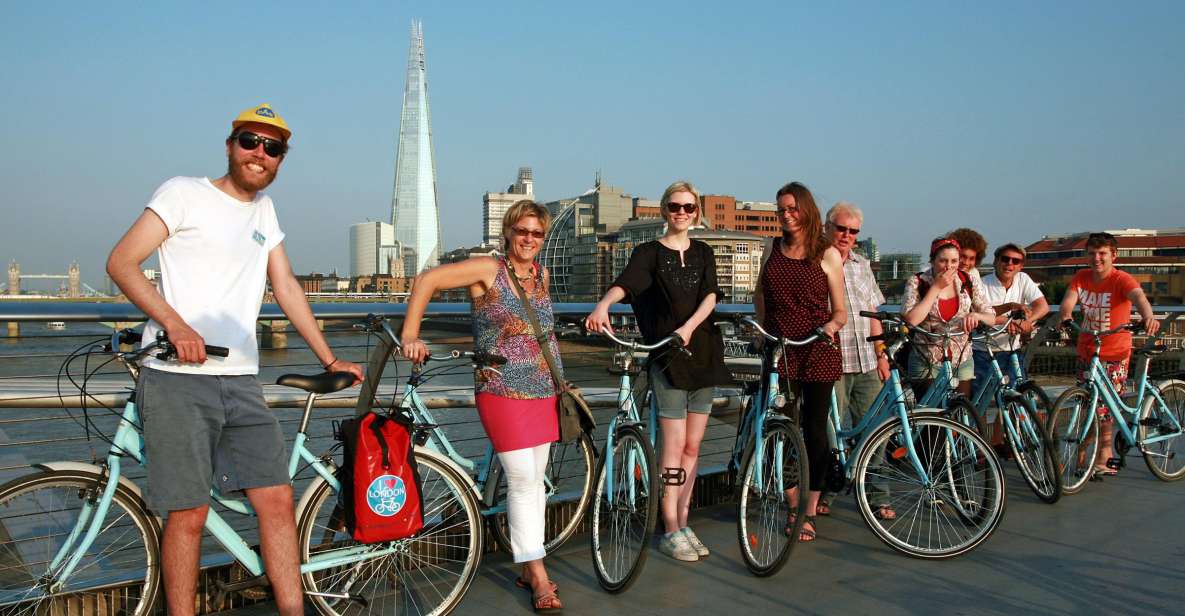
- 3.5 hours of guided riding with breaks and photo stops, built for seeing a lot without rushing
- Meet at 74 Kennington Rd in Lambeth, near Lambeth North Underground
- Bike rental + helmet + a live English guide are included
- Stops blend big sights with real neighborhoods, from Mayfair to Soho to Covent Garden
- Expect some busier road segments where bike lanes may not fully remove traffic pressure
- Minimum age is 10+ for open tours, and the tour needs at least 2 customers to run
Meeting in Lambeth: where the tour starts and how to feel ready
Your tour begins at 74 Kennington Rd, Kennington, London SE11 6NL in Lambeth. The meeting spot is at the cycle hire and tour centre, and it’s described as being a stone’s throw from Lambeth North Underground station, so you shouldn’t have to stress about getting across London before the ride.
This tour runs about 3.5 hours, and you’ll come back to the same starting point at the end. That loop matters. It means you can plan an afternoon with confidence—then walk, shop, or go for dinner once you’re back on the southern side of the river.
Included gear is simple and helpful: bike rental and a helmet, plus a live English guide. Hotel pickup and drop-off aren’t part of this experience, so plan your arrival and departure like a local: get to Lambeth North, hop on the bike, and you’re set.
One practical tip if you’re trying to maximize the day: wear something you can pedal in, and don’t count on having a lot of time to stop and change your mind. The tour includes break time and photo pauses, but it’s still a ride-first experience.
You can also read our reviews of more cycling tours in London
Archbishop’s Park and Lambeth Palace: a calm start before the monuments
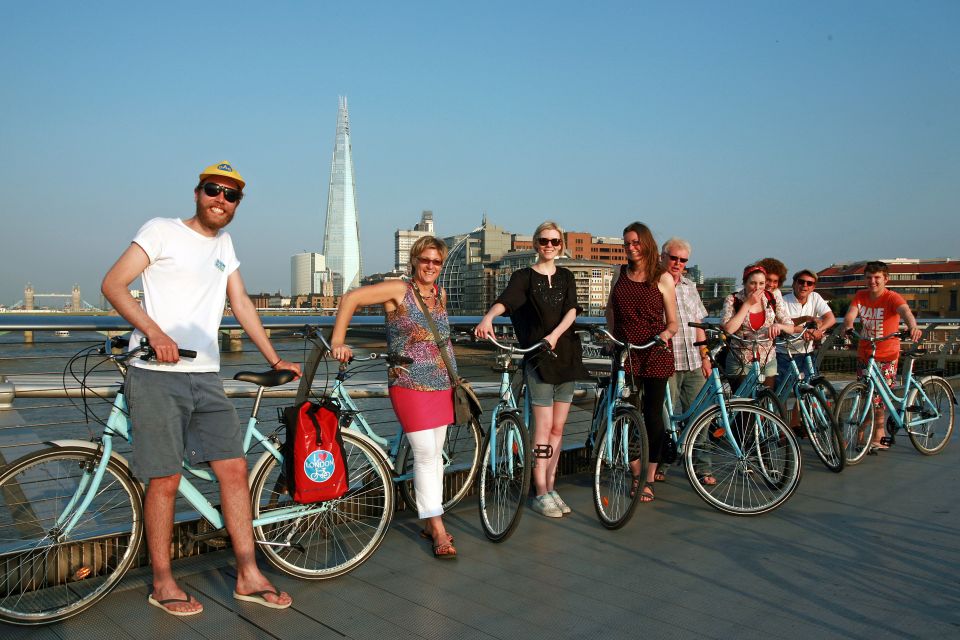
The tour kicks off with a green, quieter reset at Archbishop’s Park. This is a back-to-nature moment that sits against the bigger power and pageantry of the area. The park is described as a secluded spot that backs onto Lambeth Palace, home to the Archbishop of Canterbury since the 13th century. That detail gives you a sense of place right away: you’re not just cycling past buildings, you’re moving through London’s layers.
Why I think this opening works: it’s a gentle way to get your legs and breathing under control. If you’re a newer cyclist, starting in a calmer area helps you settle before you hit the more famous street scenes.
You’ll also get a guide-led approach rather than wandering. That matters in London, where the difference between seeing a landmark and understanding it can be as simple as where your guide tells you to look and what to notice while you’re moving.
Westminster Abbey School courtyard and the Thames crossing moment
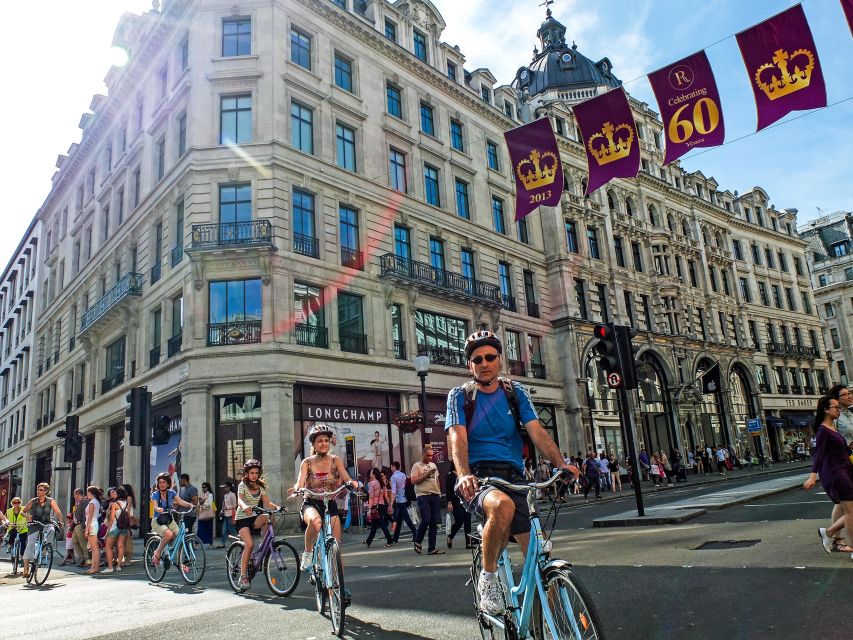
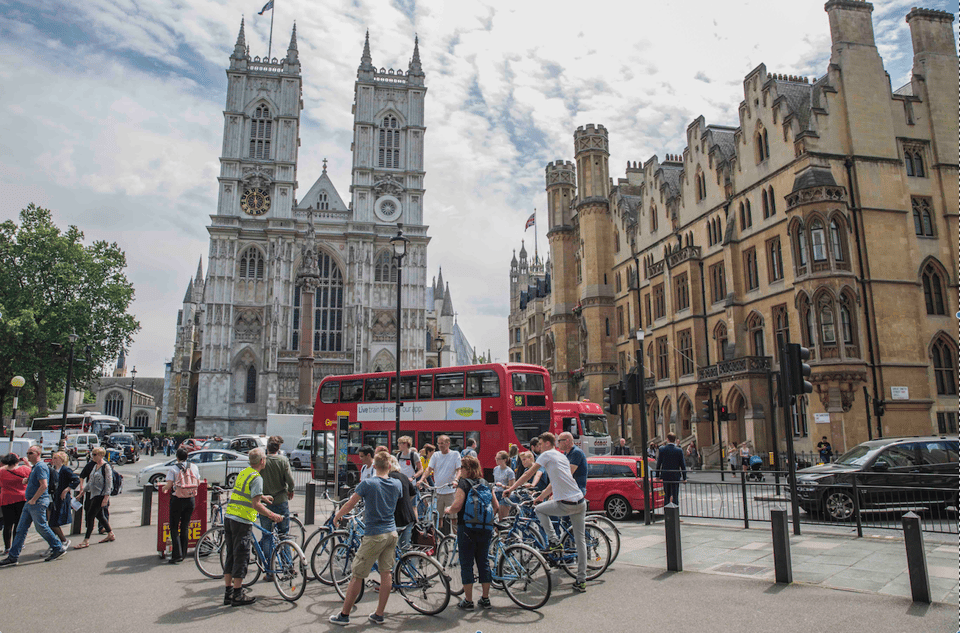
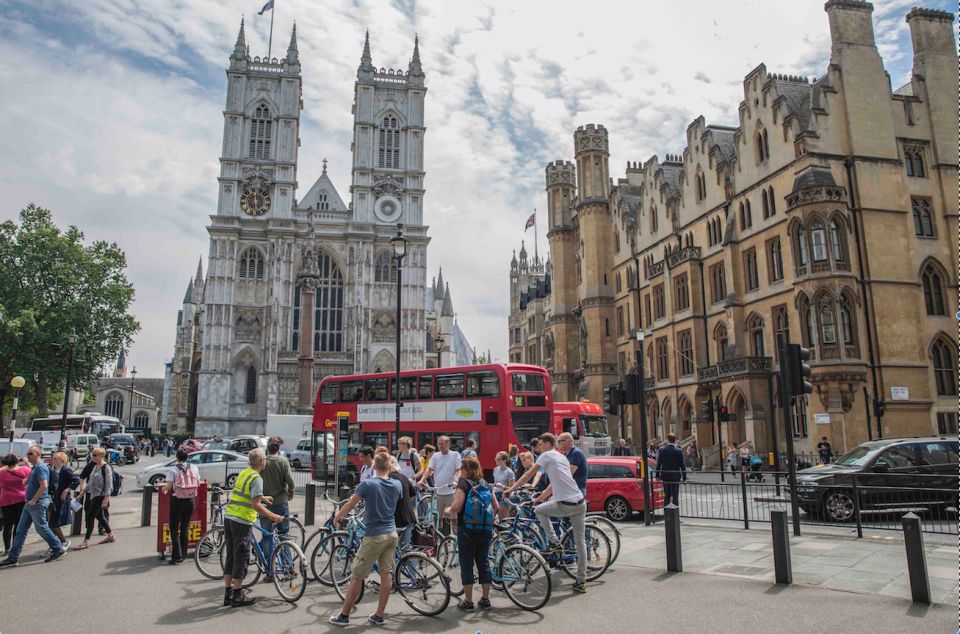
Next comes the river crossing, and then a stop that feels like a privileged angle rather than a standard roadside photo: the courtyard of Westminster Abbey School. From there, you get a view of Westminster Abbey and some hidden corners you might not notice on your own.
This part is one of the reasons a bike tour can beat a bus for value. You’re close enough to feel the scale, but you’re also moving through the area as part of a story: the guide’s route helps connect the big monuments to the smaller institutions around them.
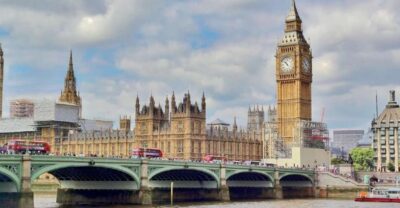
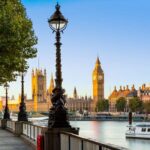
Along this stretch, you also cycle past London’s most photographed political architecture—including the Houses of Parliament—and the broader Westminster Abbey area. The point isn’t that you’ll memorize dates. It’s that you’ll train your eye. After this, you’ll understand why these buildings sit where they do and how they shape the riverfront mood.
The Thames itself is the quiet star here. Even when you’re not stopping to admire the water, the fact that you’re crossing and re-crossing the river changes the way London looks. You feel the city’s north-south rhythm.
Horse Guards Parade, St. James’s Park, and space to breathe
From Westminster, you head toward Horse Guards Parade, described as an historic sporting ground where Henry VIII once hosted jousting tournaments. Even if you’re not a medieval-history person, a guide can make this kind of spot click by pointing out how the open space works as part of London’s public life.
Then the tour includes a ride through Hyde Park—not just as a generic famous park stop, but with context. Hyde Park is described as Henry himself’s former private hunting ground. Again, it’s the guide framing that turns a park from scenery into meaning.
After that, you pass through leafy St. James’s Park, and the description calls out the fact that it’s famous enough to have you sharing the path with the local fauna. Yes, ducks and squirrels are part of the picture. The good news is that park pacing gives your eyes a rest from architecture and traffic pressure.
One practical consideration here: parks are where a casual rider can feel confident. The surface tends to be more forgiving, and you can focus on the ride and the guide’s storytelling instead of constantly thinking about where cars are.
Constitution Hill to Mayfair: the ride feels like London’s showpiece
Now comes the stretch you can feel in your legs: Constitution Hill. The route includes a pedal up that way, then continues past Buckingham Palace toward Mayfair.
This is the section that makes the tour feel like more than a checklist. A slope in a bike tour gives you a physical sense of effort and momentum, and that makes the palace area more memorable. It’s also a smart use of timing. You get views as the scenery builds instead of arriving after you’ve already seen everything else and feeling underwhelmed.
Mayfair is where the mood shifts. The tour description frames it as a luxury-shop and gallery zone with gentlemen’s clubs and a reputation for being one of the city’s most expensive areas. On a bike, you don’t just pass that label—you see the street geometry and the pace of the neighborhood, which is exactly the kind of feel you miss when you only hop off at major stops.
If you like your London with a little variety—monuments, parks, and then the polished edges of the West End—this is where the tour delivers.
You can also read our reviews of more guided tours in London





Carnaby Street, Soho music roots, and the theatre-at-the-street level ending
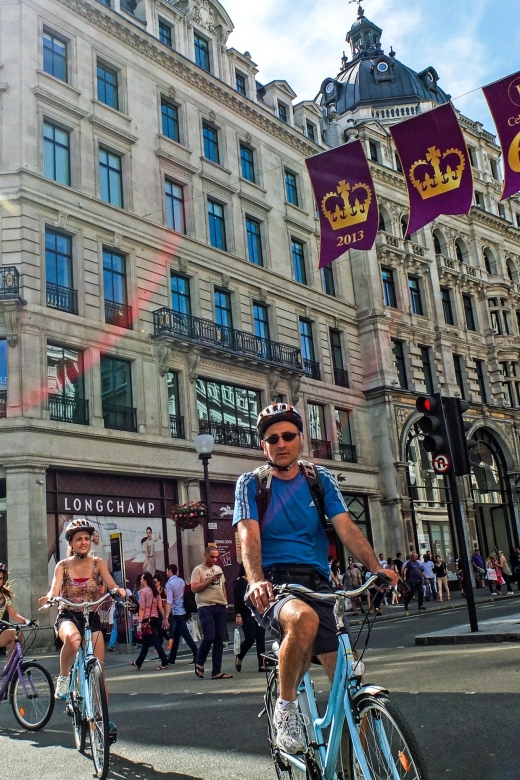
Next up, you head into the cultural spine of the West End.
Carnaby Street is called out for its connection to Swinging London from the 1960s. That matters because this isn’t just a trendy street name on a map. The route connects it to the broader idea of music, fashion, and street culture that still echoes in the area.
From there, you ride into Soho, which the description links to mod and hippie scenes and to British bands like The Rolling Stones and The Beatles. You don’t need to be a superfan to enjoy this part. The guide’s job here is to connect what you see—street energy, venues, and the layout of the neighborhood—to why it became famous.
Near the end, you reach Covent Garden, described as London’s theatreland with cobbled streets, plus restaurants and live street performers. This is the end-of-tour vibe shift: you’re not just moving through. You’re landing in the part of town where people linger, look up, and take in the atmosphere.
A couple of guide-related details from guest feedback make this section even more appealing. Some tours come with guides known for keeping the group upbeat and tuned in—like guides such as Ollie and Chris, who were described as fun and energetic, and who could make a short run of streets feel quick through humor and music. That’s not guaranteed, of course, but it’s a real pattern that can make the day feel lighter.
Waterloo Bridge to Banksy Tunnel: views, then street art under your tires
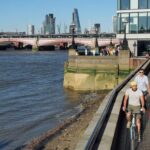
As the tour draws toward its close, you cross Waterloo Bridge, and you’re treated to views across London’s East and West. This is the moment where the riverfront framing pays off. A bike tour is great at compressing distance, but the bridge view gives you breathing room for the imagination. You can see how far the city stretches and where your earlier landmarks fit into the whole map.
Then you hit a very specific stop: a hidden underground tunnel, sometimes called Banksy Tunnel, described as a passage filled with ever-changing street art. The tunnel part is memorable because it’s a sensory shift. You’re riding somewhere few casual walkers would pick, and you’re seeing street art as part of a built route rather than a detached attraction.
Once you emerge, you return to daylight in Waterloo, described as red-brick streets from the 1830s, then you head into Lower Marsh, a market street connected with filmmakers and full of listed buildings. The description also points to lunchtime cheap eats and hip cafés.
This is an underrated way to end a tour. You don’t finish in front of a souvenir shop. You finish in a neighborhood with real day-to-day life where you can actually keep the afternoon going.
Pace and bike comfort: what to do if you’re not a confident rider
This tour sounds relaxed, and it is in the sense that it includes breaks and keeps the focus on sightseeing, not grinding miles. But you should plan for real city riding.
The route includes sections where you may cycle on busier streets and do lane changes. Bike lanes may exist, but you may still need to navigate how traffic flows around you. The guide leads the group, which helps, but the physical requirement stays: you should be comfortable controlling a bike at city pace.
So here’s the simple advice I’d give you:
- If you can ride confidently in traffic, you’ll likely enjoy the tour a lot.
- If you only feel okay on quiet roads, take a hard look at your comfort level before booking.
Also note the stated age limit for open tours: not suitable for children under 10. If you’re traveling with younger kids, you’d need to look at private options instead.
If you’re going to bring a teen or an adult who’s new to cycling, this route might still work, but it will depend on their confidence. The best move is to be honest about your own riding level.
Value check: does $60.55 feel fair for this mix of sights?
At $60.55 per person, you’re paying for more than a bike. You’re paying for (1) the bike rental, (2) a helmet, (3) a guide, and (4) a route that strings together big landmarks and neighborhood details in a single afternoon.
Here’s the value logic in plain terms:
- Self-guided cycling around central London costs more in your time planning a safe route and paying for gear if you don’t already have it.
- A guided route saves you the guesswork of where to look and what connection matters, especially around places like Westminster and the way the river shapes the city.
- The tour also gives you a structured end point at Waterloo, which helps you avoid the usual London problem of finishing somewhere random.
The duration—3.5 hours—is also a value element. You can fit it between other plans without losing half your day. And because the tour loops back to 74 Kennington Rd, you’re not stuck figuring out how to get home after an adventure.
On top of that, the experience is built around variety: parks like Archbishop’s Park and St. James’s Park, monument areas like Westminster, and West End streets like Carnaby and Covent Garden. In that sense, you’re not paying to see one viewpoint—you’re paying for multiple story beats.
Who should book this guided central London bike tour?
I’d recommend this tour if you:
- want a fast, structured way to see key West End sights without trying to walk them all
- enjoy getting city context from a guide, not just snapping photos
- feel comfortable cycling on some busier streets
I’d be more cautious if you:
- are new to bike riding and can’t handle sudden traffic movement
- are traveling with children under 10, since open tours have that minimum age rule
It also works well for solo travelers who want a social day, since bookings can be made by single people—though the tour needs at least 2 customers for it to run.
Should you book it?
If you want London in one afternoon—Westminster, Mayfair, Soho, Covent Garden, plus river views and a tunnel full of street art—this bike tour is a strong choice. The biggest deciding factor is your bike comfort. If you can handle a few busier segments, you’ll likely find the time flies, the route makes sense, and you leave with that rare feeling of having seen a lot without feeling trapped on a crowded bus.