REVIEW · LONDON
Thames Beachcombing
Book on Viator →Operated by Culture Seekers Tours · Bookable on Viator
Mud in London, history in your hands. This guided Thames mudlarking walk takes you onto the foreshore at low tide to search for washed-up objects, from ceramics to clay pipe fragments, with a guide helping you identify what you spot. I especially like that you’re not just hearing about London’s past—you’re doing the hands-on searching and learning as you go. I also like the small-group feel: you get time with the guide, and at the end they help explain what your finds might be and how old they could be, with Robert named in multiple experiences as the kind of host who can make your discoveries click.
One thing to consider is that this is a real foreshore walk. It can be stony and muddy, and the exact timing and meeting spot changes with the season and tide, so you’ll want proper wellington boots or hiking boots and a bit of comfort getting your hands dirty.
In This Review
- Key highlights if you love hands-on history
- What Thames mudlarking really is (and why it feels special)
- Price and time: good value for a two-hour real-world hunt
- Meeting up on the Thames: expect a changing spot and plan to adapt
- Dressing for the stony, muddy foreshore
- The two-hour Thames search: how the time usually works
- What you might find: ceramics, clay pipes, roof tiles, and more
- Getting value from the guide: turning scraps into stories
- Who should book this Thames mudlarking tour (and who might pass)
- Should you book Thames Beachcombing? My quick decision guide
- FAQ
- How long is the Thames mudlarking tour?
- What is included in the price?
- What should I wear?
- Where do we meet for the tour?
- How big is the group?
- Can children join the tour?
- How do you identify the finds?
- Is the tour canceled for bad weather?
- What’s the cancellation refund rule?
Key highlights if you love hands-on history
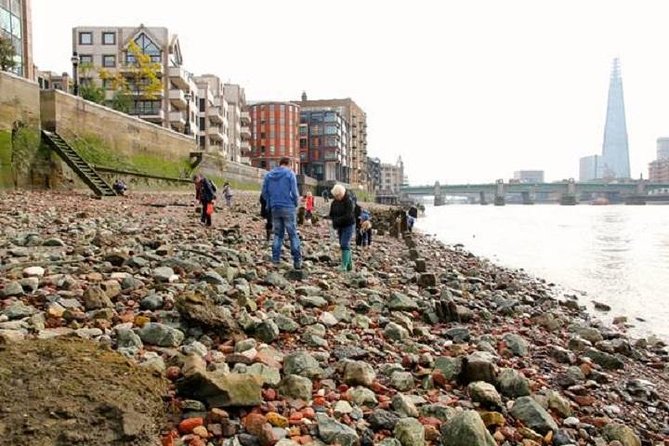
- Low-tide mudlarking on the Thames foreshore, where objects sometimes wash up
- Small group size so you can ask questions and keep searching at a human pace
- Gloves and plastic bags provided, so you can focus on looking instead of gear
- Finds identification at the end, with historical context tied to what you collect
- 2 hours on the riverbank, long enough to hunt, short enough to keep it fun
What Thames mudlarking really is (and why it feels special)
Mudlarking is basically beachcombing with a London twist: you walk the river foreshore at low tide and look for items that centuries of river traffic have carried and dropped. The fun part is the mix of patience and surprise. You might start by scanning with your eyes only, then suddenly something familiar shows up—tile edges, pottery curves, the mottled look of older materials.
This kind of activity also changes how you see the city. Instead of treating London history like something behind glass, you’re seeing the river as a working archive—an ever-changing layer of ordinary life, dumped and reappearing. Even if you don’t find a mind-blowing treasure, you’ll still leave with a better sense of what the Thames has been moving around for a long time.
And yes, it can feel a little surreal to be out there hunting for objects no one has labeled for you. It’s the opposite of a museum script, and that’s why it works.
You can also read our reviews of more tours and experiences in London.



Price and time: good value for a two-hour real-world hunt
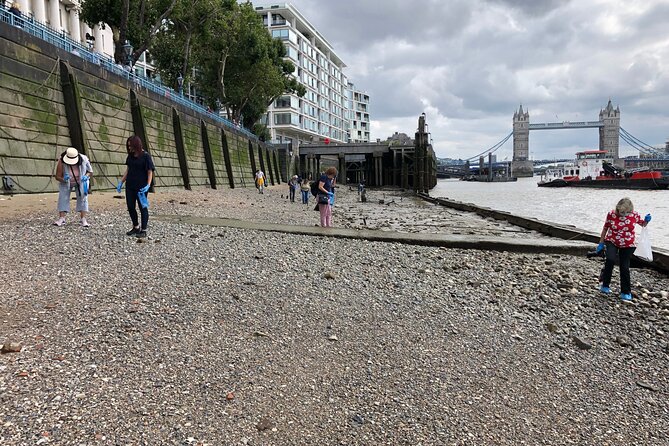
At $41.41 per person for about 2 hours, this sits in the sweet spot for people who want a hands-on experience without committing an entire day. There are no extra add-on fees listed, and you’re provided key tools (notably gloves and a plastic bag), so you aren’t paying extra for basic supplies.
The timing also matters. A short, focused session helps you stay engaged while you’re walking and scanning, and it reduces the stress of scheduling around low-tide timing. You’re not stuck for hours waiting in one place—you’re moving through a guided search window, then wrapping up with identification and context.
If you’re traveling with kids, older relatives, or anyone who tires out easily, the two-hour format is a major plus. Just remember: you still need to be ready to move along a stony, muddy riverbank.
Meeting up on the Thames: expect a changing spot and plan to adapt
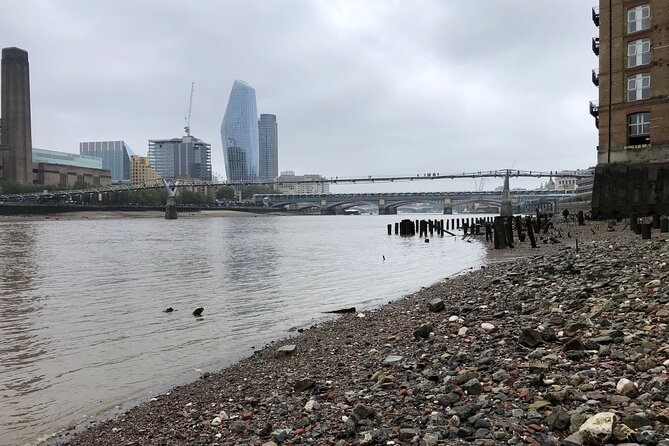
This isn’t a one-address tour where you show up, punch in, and start. Your guide will contact you with the location and time, and those details change depending on the season and the low-tide conditions. You’ll make your own way to the meeting point, and it’s described as being near public transportation.
In practical terms, that means you should keep your schedule flexible that morning or afternoon. Your day might need a little adjustment once your exact meeting location comes through. It’s also why mobile planning helps: you want to be reachable for the guide’s message.
The good news is that you’re not doing this alone. Once you’re at the foreshore, the guide manages the group and helps you know what to look for. That’s where the experience turns from random searching into something meaningful.
Dressing for the stony, muddy foreshore
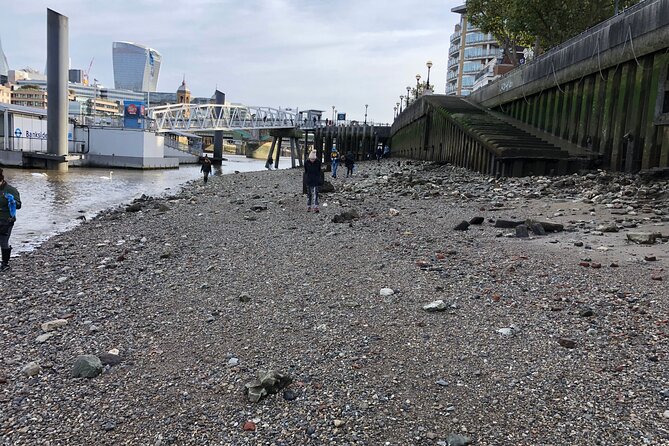
Wear boots. Seriously. The dress code calls for wellington boots or hiking boots because the foreshore can be stony and muddy.
Here’s why this matters: if your feet slip or your ankles get cold, your brain stops focusing on objects and starts focusing on comfort. Mudlarking is easier when you can move confidently and keep looking.
Gloves are supplied, and there’s also a plastic bag so you can carry your finds. If you’re coming with kids, one caution from past experiences is that glove fit can be annoying for smaller hands. For a child under 16, an adult must accompany them, so you’ll be the one managing their comfort and gear fit.
The two-hour Thames search: how the time usually works
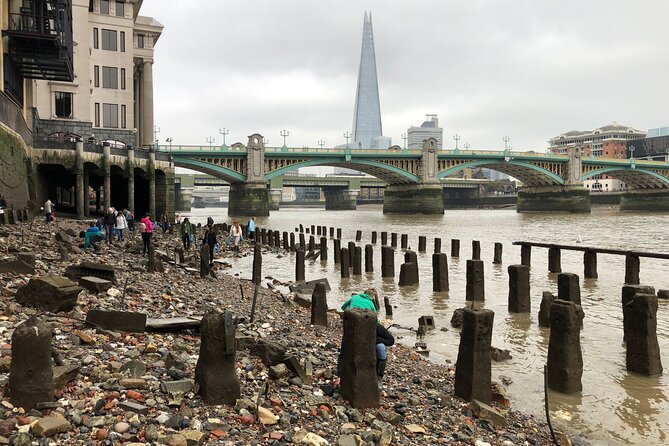
Your session runs for roughly 2 hours, with about 1.5 hours of active searching along the foreshore. The rest is setup and wrap-up with help identifying what you found.
Here’s what you can expect during the hunt:
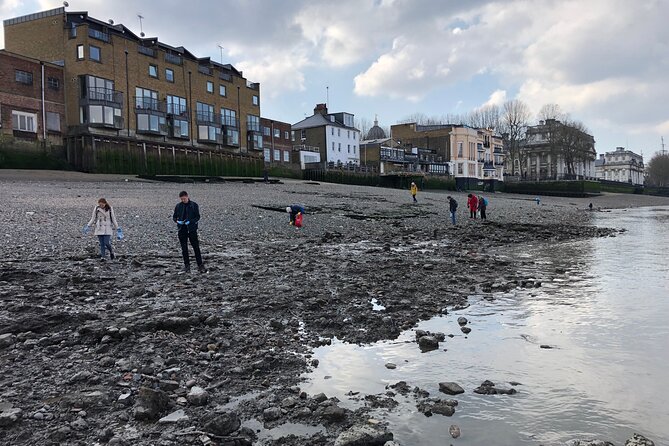
- You’ll walk the river foreshore at low tide and comb through washed-up material.
- You’ll search mostly by sight at first—spotting items that stand out against the mud and stones.
- Your guide is there to help you interpret what you’re seeing in real time, not just at the end.
- When time is up, you’ll gather your finds and go through identification and historical context.
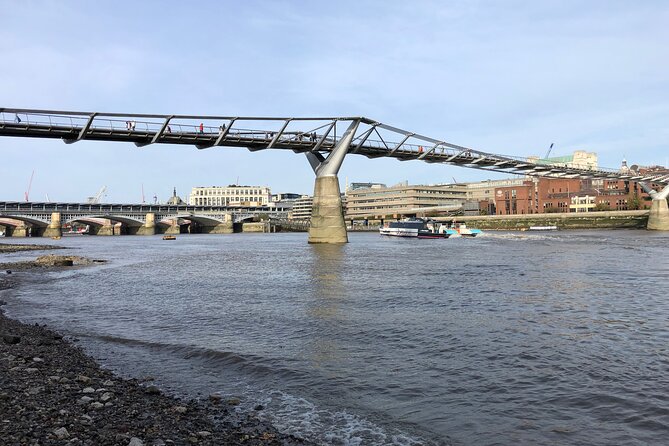
The guide contact and changing meeting location can make this feel slightly different each time the tour runs. Depending on the stretch of the Thames and the day’s conditions, you might be in areas that past experiences have described near places like below the Millennium Bridge, around Cannon Street, or by Putney Bridge. The key point for you: the activity is the same, but the specific shore section shifts.



What you might find: ceramics, clay pipes, roof tiles, and more
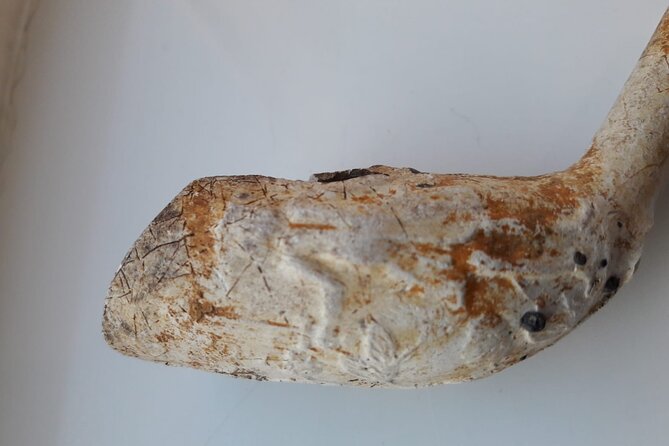
Mudlarking is often described as looking for treasure, but what makes it exciting is that the “treasures” tend to be small and specific. The types of objects you may spot include clay pipes, pottery fragments, tiles, and other washed-up items.
You’re hunting for clues. A tile edge can hint at a home décor style. A pottery shard can suggest a material and era. A clay pipe fragment can point toward older smoking-related everyday life. The Thames has a way of turning ordinary waste into historical evidence.
One especially memorable theme from past experiences: finding items that may connect to major events and timelines in London. For example, some participants described finding tiles that seemed to pre-date the Great Fire of London. You shouldn’t count on a specific dramatic find, but it gives you a sense of what’s possible when the timing and conditions line up.
Getting value from the guide: turning scraps into stories
The real payoff isn’t only finding objects. It’s understanding what they are.
Guides on this kind of tour help you identify finds and provide historical context at the end. In experiences featuring the host named Robert, the standout detail is how approachable the help feels while you’re searching and how useful it becomes when you’re sorting your finds later.
Think of it like this: if you pick up random bits, you’ll have items. If you pick up random bits with someone who can explain what you’ve picked up, you have a mini education in your pocket.
That’s also where the small-group structure helps. With fewer people, the guide can spend more time with each person’s questions—so you don’t just hear a general lecture and move on.
Who should book this Thames mudlarking tour (and who might pass)
This is a strong match if you like:
- Hands-on history and practical learning
- Discovery-style activities where you’re actively looking for objects
- A small-group walk with plenty of time to scan and ask questions
It’s also a good fit for people who enjoy slightly odd, deeply local experiences. The Thames foreshore isn’t a generic sightseeing stop; it’s a place where London’s everyday material life gets exposed and re-exposed.
You might want to think twice if you:
- Dislike muddy terrain or don’t have the right boots
- Need an experience with fixed, predictable timing and a set meeting address
- Prefer fully indoor activities (this is weather-dependent and run on real river conditions)
Children can enjoy it too. There’s an age rule: under 16 must be accompanied by an adult. One practical tip from real-world use is that glove fit for smaller kids may be an issue, so plan to help with gear adjustments.
Should you book Thames Beachcombing? My quick decision guide
Book it if you want a fun, practical activity that mixes movement, curiosity, and real-life London details. At $41.41 for about two hours, you’re paying for guided time on the foreshore plus the added value of identification and context, not just a walk.
Consider passing or booking on a day you’re truly ready for the conditions if:
- you’re sensitive to mud and stony ground
- you don’t like the idea of timing and meeting location changing with tide
- you’re expecting a guaranteed big discovery (it’s more about the hunt and learning)
If that sounds like your kind of travel day—go for it. This is the sort of experience that makes you look at a city differently on your way out.
FAQ
How long is the Thames mudlarking tour?
It’s listed as about 2 hours total, with around 1.5 hours spent searching along the foreshore at low tide.
What is included in the price?
The tour includes a local guide, gloves, and plastic bags for carrying items.
What should I wear?
Wear wellington boots or hiking boots. The foreshore can be stony and muddy, so regular shoes aren’t ideal.
Where do we meet for the tour?
There isn’t one fixed address. Your guide will contact you with the meeting location and time, and it changes throughout the year. You’ll make your own way to the meeting point.
How big is the group?
The description says the group is no more than 15 people, and the activity is listed with a maximum of 20 travelers. Either way, it stays small.
Can children join the tour?
Yes, but children under 16 must be accompanied by an adult.
How do you identify the finds?
During the session you look for items with your eyes, and at the end your guide helps identify what you found and provides historical context.
Is the tour canceled for bad weather?
The activity requires good weather. If it’s canceled due to poor weather, you’ll be offered a different date or a full refund.
What’s the cancellation refund rule?
Free cancellation is available. You can cancel up to 24 hours in advance for a full refund. If you cancel less than 24 hours before the start time, it won’t be refunded.