REVIEW · LONDON
The women of London
Book on Viator →Operated by Once Upon a Tour · Bookable on Viator
London’s streets tell a surprising story. This tour tracks women who helped shape modern Britain through real monuments, from the suffragettes to Agatha Christie, with a friendly small group and time for questions. I like the no-more-than-10 format because you actually get to talk, and I also love the chance to learn this through guide Carmen, who gets praised for knowing the suffragette story inside out. One thing to consider: it is a walking route with short photo-and-reading stops, and Buckingham Palace is outside/area viewing since an admission ticket is not included.
You’ll be moving through some of central London’s most famous squares while hearing focused facts and figures about women in the city’s history. The tour runs about 2 hours 30 minutes, uses a mobile ticket, and is offered in Spanish or French, which is a big plus if you want your history tour in your own language.
In This Review
- Quick reasons this women’s history tour gets such strong marks
- What You’re Really Buying on This Women of London Tour
- Price and What You Actually Get for $20.53
- Where It Starts, Where It Ends, and How the Timing Works
- Walking the Itinerary, Stop by Stop
- Stop 1: Buckingham Palace Area (Her Majesty the Queen)
- Stop 2: Crimean War Memorial and Florence Nightingale
- Stop 3: Parliament Square, Millicent Garrett Fawcett, and Black Friday
- Stop 4: Emmeline Pankhurst Memorial and the WSPU
- Stop 5: Women of World War II Memorial, Downing Street, and the Suffragettes
- Stop 6: Trafalgar Square and WWI-era votes for women
- Stop 7: Edith Cavell Memorial
- Stop 8: Agatha Christie Memorial
- Why the Small-Group Format Changes the Experience
- Language Options: Spanish or French Without the Usual Compromise
- Budget Tips: Entry Fees vs. Guide Value
- Who This Tour Best Fits
- Should You Book The Women of London Tour?
- FAQ
- Is this a small-group tour?
- What languages are available?
- How long is the tour?
- Where do I meet the guide?
- Where does the tour end?
- Is Buckingham Palace admission included?
- Are the other stops free to visit?
Quick reasons this women’s history tour gets such strong marks
- Small group of 10 or fewer keeps the pace calm and the Q&A useful
- Carmen’s standout suffragette storytelling is a recurring highlight in the reviews
- A clear route through iconic landmarks like Buckingham Palace and Parliament Square
- Most stops are free memorial sites, so your money goes to the guide, not entry fees
- Women across different eras show up throughout, from Florence Nightingale to Agatha Christie
What You’re Really Buying on This Women of London Tour
This isn’t a random “see the sights” walk. It’s a guided, women-focused history route through central London, designed to help you connect names you’ve heard with the exact places where those stories played out.
The value here is in the guidance. Even if you’re a confident independent walker, you’re often missing the through-line: how one movement affected the next, and how women’s public roles expanded over time. With a live guide, you get the context and the connections in plain language, plus time to ask your own questions.
The small group size matters more than people expect. When you’ve got no more than 10 people, the tour feels like a conversation with structure, not a lecture you have to shout over. It also makes it easier for the guide to adjust the pace when people want more detail.
You can also read our reviews of more tours and experiences in London.


Price and What You Actually Get for $20.53
At about $20.53 per person, you’re paying for a 2.5-hour guided route that covers multiple high-recognition London locations. Most of the stops are free memorials, so the tour’s cost stays focused on the guide experience rather than piling up ticket fees.
What is not included is important to note: the Buckingham Palace stop says admission ticket not included. That doesn’t mean you miss the story—it means you’re likely viewing from the outside area rather than entering.
If you’re budgeting for London, this kind of pricing can be a sweet spot: enough cost to hire a dedicated guide, low enough that you can still splurge later on something you really want.
Where It Starts, Where It Ends, and How the Timing Works
You start at the Constance Fund fountain of Diana, London SW1A 1RD. The tour begins at 2:00 pm and runs for around 2 hours 30 minutes. It ends at the Agatha Christie memorial on Cranbourn St, London WC2H 7AB.
It’s also set up to be practical for getting around. The meeting point is near public transportation, and the route moves through central, well-connected areas. The stop times are relatively short at each location, which keeps the pace moving and keeps the route from turning into a long sit-down lecture.
Walking the Itinerary, Stop by Stop
Stop 1: Buckingham Palace Area (Her Majesty the Queen)
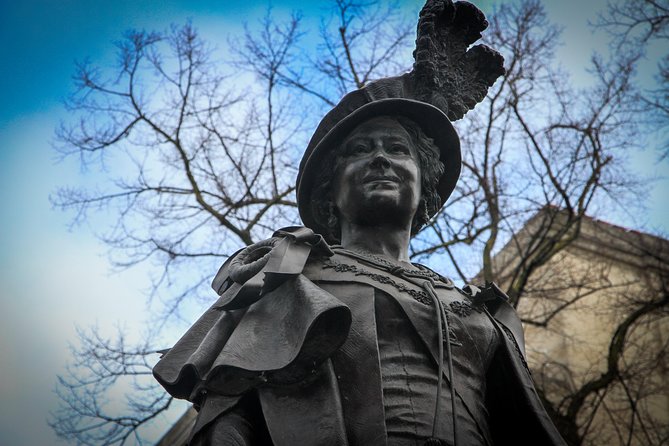
Your first stop is the Buckingham Palace area near The Mall, with a focus framed as Her Majesty the Queen. This is a strong opener because it anchors the rest of the tour in place you already recognize.
The practical side: you’re not buying an entry ticket for this stop. So think of it as a quick, guided “set the scene” moment—good for getting your bearings and then immediately shifting from royalty symbolism to the broader story of women’s influence.
Possible drawback: since it’s only about 15 minutes, you should treat this as an introduction rather than a deep, inside look.



Stop 2: Crimean War Memorial and Florence Nightingale
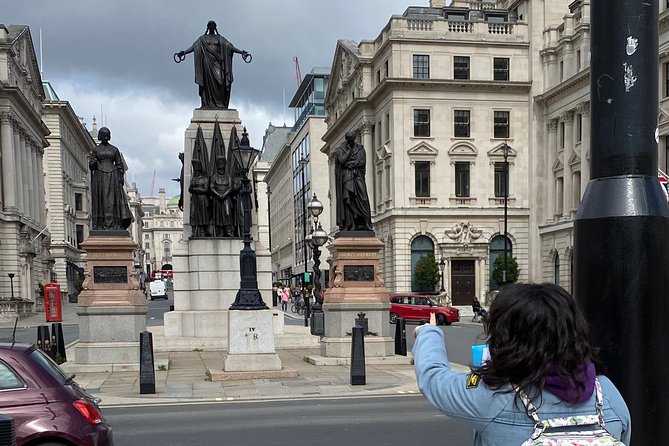
Next comes the Crimean War Memorial, with Florence Nightingale as the spotlight. Nightingale is one of those historical figures you know the name of, but a guide can help you connect why her role matters in a women’s history narrative—especially how public service and reputation became part of women’s authority.
This stop is about 10 minutes, and it’s set up as a free memorial location. The benefit of this pacing is that you get a focused story beat without losing momentum.
Stop 3: Parliament Square, Millicent Garrett Fawcett, and Black Friday
At Parliament Square, the tour centers on Millicent Garrett Fawcett and Black Friday. This is the kind of stop where the setting and the historical meaning work together. Parliament Square is one of those places where history feels loud, and a good guide helps you “read” the space instead of just looking at it.
This stop runs about 20 minutes, which is noticeably longer than a few of the other memorial stops. That extra time usually means there’s more explanation here—exactly what you want when learning about a specific event name like Black Friday.
Stop 4: Emmeline Pankhurst Memorial and the WSPU
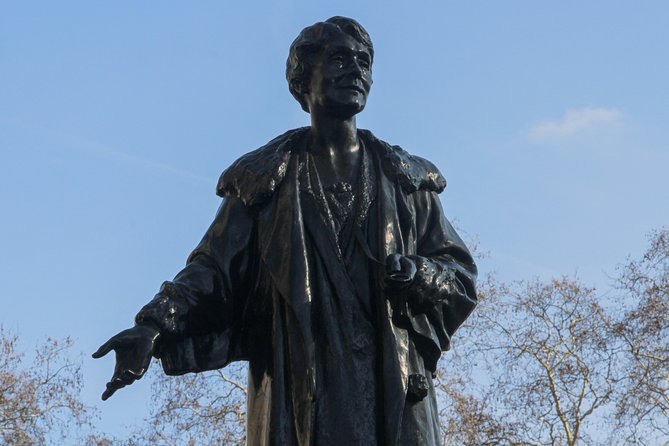
Then you head to the Emmeline Pankhurst Memorial, focused on Emmeline Pankhurst and the WSPU. If the tour has a beating heart, this is a likely contender. The suffragette movement is a major chapter in women’s rights history, and this stop gives you a defined place to hang the story.
This stop is about 15 minutes and is another free stop. The timing suggests a structured explanation: what the WSPU stood for, how Pankhurst shaped the campaign energy, and why this period changed public pressure.
This is also where the guide quality really shows. In the feedback, Carmen stands out specifically for how she teaches the suffragettes. If you care most about this era, you’ll probably love this part most.
Stop 5: Women of World War II Memorial, Downing Street, and the Suffragettes
You then move to the Women of World War II Memorial, with the story framed around Downing Street and the suffragettes. That pairing is clever. It helps connect the earlier push for votes and public recognition with the later reality of women’s roles in national life.
This stop is short—about 5 minutes—so you’ll want to keep your attention switched on. Short stops can still be satisfying if the guide delivers the key context quickly, and this is designed to do that.
Stop 6: Trafalgar Square and WWI-era votes for women
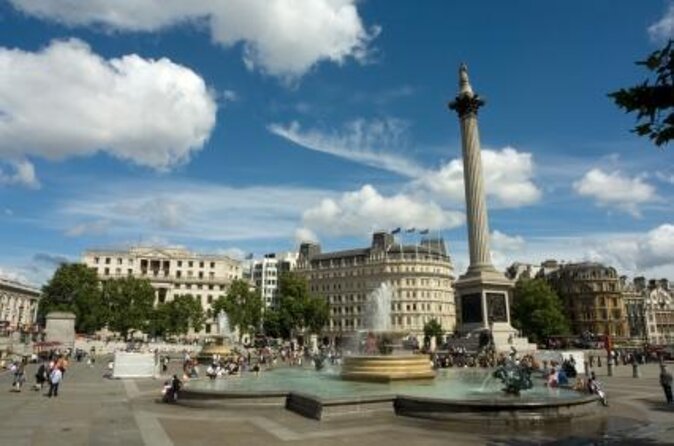
At Trafalgar Square, the tour focuses on WWI and votes for women. Trafalgar is a big stage, and the guide’s job is to make sure you don’t just see crowds and architecture—you see the political shift underneath.
This one lasts about 10 minutes and is another free stop. The value is in tying global conflict to national political change for women, not treating women’s rights history as a separate topic.
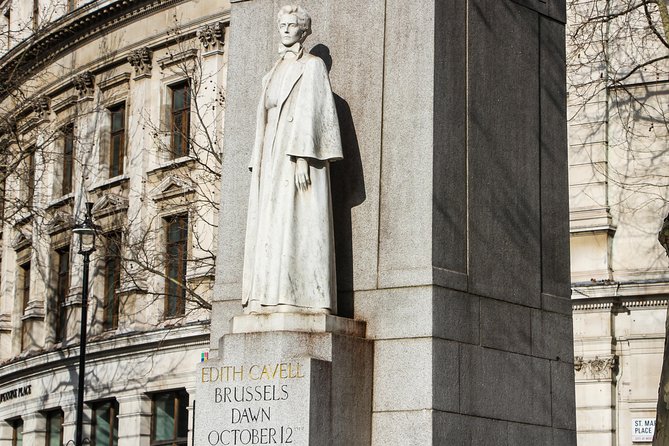
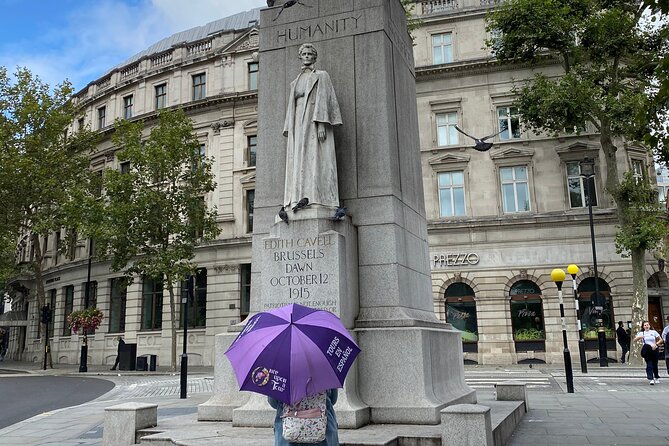
Stop 7: Edith Cavell Memorial
Next is the Edith Cavell Memorial. The framing here is the life of Edith Cavell. Cavell is often remembered for courage and humanitarian impact, and a guided stop can help you place her story in the broader sense of women’s visibility during wartime.
This stop is about 5 minutes, so again, it’s designed for quick, clear context.
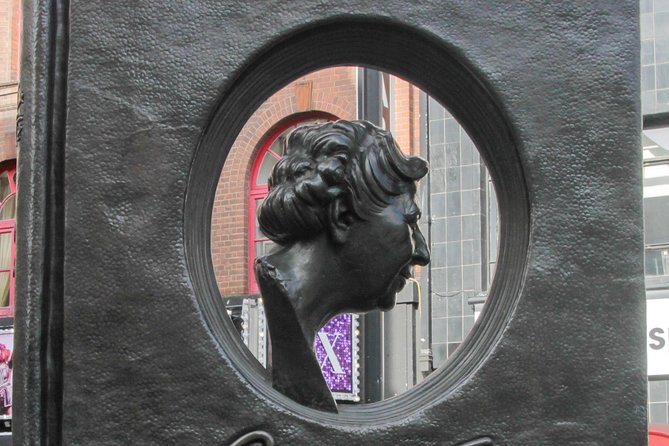
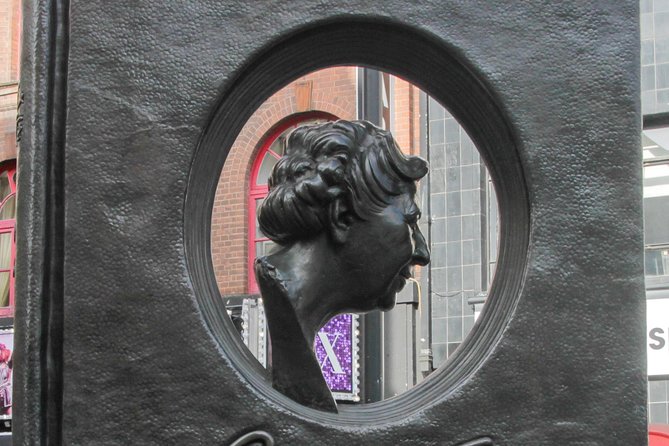
Stop 8: Agatha Christie Memorial
The tour ends at the Agatha Christie memorial, with a focus on her life. This ending is a smart choice because it shows another type of influence: not only activism and wartime roles, but also cultural impact and intellectual presence.
This stop takes about 10 minutes. It also gives you a satisfying “close the loop” effect: you’ve moved from political pressure and public service into popular authorship and enduring legacy.
Why the Small-Group Format Changes the Experience
A walking tour in a big crowd can feel like you’re chasing the guide. Here, with a maximum of 10 travelers, you get something better: you can ask questions when something clicks—or when it doesn’t.
That matters in women’s history tours because it’s easy to wonder about connections. For example, you might want to ask how the campaigning tactics related to later political outcomes, or how different eras treated women’s public roles. When the group is small, the guide can actually respond in a way that feels personal.
Also, shorter stops plus a small group tends to keep things lively. You’re not stuck waiting for everyone to catch up.
Language Options: Spanish or French Without the Usual Compromise
The tour is offered with a guide available in Spanish or French. If you’re traveling with limited English comfort, that’s a real quality-of-life feature. It also helps you stay engaged, since you’re not piecing together meaning while moving.
If you’re choosing between languages, pick the one you can follow smoothly. This type of tour includes specific names and event references, so clarity helps.
Budget Tips: Entry Fees vs. Guide Value
Here’s the practical way to think about this tour’s cost structure:
- Most memorial stops are free, so you’re mainly paying for guided storytelling.
- Buckingham Palace admission is not included, so treat that segment as viewing from the outside area.
- Tips are optional, not required.
So the “hidden” value is that your ticket price mostly covers the person doing the teaching. That’s where the reviews place the emphasis too—particularly on Carmen’s ability to make suffragettes and the women’s movement feel coherent.
Who This Tour Best Fits
This is especially a good match if you:
- want a women’s history London walk that stays focused rather than trying to cover everything
- like learning about specific people (Nightingale, Pankhurst, Garrett Fawcett, Cavell, Christie)
- enjoy a structured route through famous squares but still want conversation time
- prefer guided history in Spanish or French
It may be less ideal if you’re hoping for long museum-style time at one site, since many stops are short memorial moments.
Should You Book The Women of London Tour?
If you want a history walk that feels personal, not crowded, and you like your landmarks connected to real names and real political change, I think this is a strong choice. For the price, you get a guided, women-focused route that covers multiple eras and ends with a modern cultural figure (Agatha Christie), all in about 2 hours 30 minutes.
I’d only hesitate if you specifically need paid entry experiences (since Buckingham Palace admission isn’t included) or if you dislike walking between central London points for a route with many brief stops. Otherwise, this is the kind of tour that helps you see London as more than scenery.
FAQ
Is this a small-group tour?
Yes. The tour has a maximum of 10 travelers, which helps keep the experience focused and allows time for questions.
What languages are available?
The guide is available in Spanish or French.
How long is the tour?
It lasts about 2 hours 30 minutes (approx.).
Where do I meet the guide?
You meet at the Constance Fund fountain of Diana, London SW1A 1RD, UK.
Where does the tour end?
It ends at the Agatha Christie memorial, Cranbourn St, London WC2H 7AB, UK.
Is Buckingham Palace admission included?
No. The Buckingham Palace stop notes that an admission ticket is not included.
Are the other stops free to visit?
The other memorial stops listed are marked as admission ticket free (Crimean War Memorial, Parliament Square, Emmeline Pankhurst Memorial, Women of World War II Memorial, Trafalgar Square, Edith Cavell Memorial, and Agatha Christie Memorial).