REVIEW · LONDON
A Ball of Chalk – Guided Private East End Walk
Book on Viator →Operated by Urban Saunters · Bookable on Viator
London’s backstreets tell the real story. This private East End walk from Whitechapel to Shoreditch trades Westminster postcards for lived-in streets and big human history—immigration, work, faith, and street creativity—plus a guide who makes it all add up in real time (East End London).
I like two things a lot. First, the storytelling style: the guide (Frances is a name that comes up) links each stop to people’s lives, not just dates. Second, the mix of stops—from Brick Lane’s layers of culture to a proper pub visit at The Ten Bells and then through Spitalfields’ markets.
One thing to factor in: the experience needs good weather, and it’s a walk that still takes your feet seriously for about two hours, so wear grippy shoes and bring a light rain layer (weather matters).
In This Review
- Key highlights if you like your London personal
- East End London, not Westminster: what makes this walk worth 2 hours
- Price and what $137.07 buys in a private guided walk
- Where you start (Whitechapel Gallery) and how the route ends near Shoreditch
- Stop 1: Brick Lane Jamme Masjid and the story of shifting faith spaces
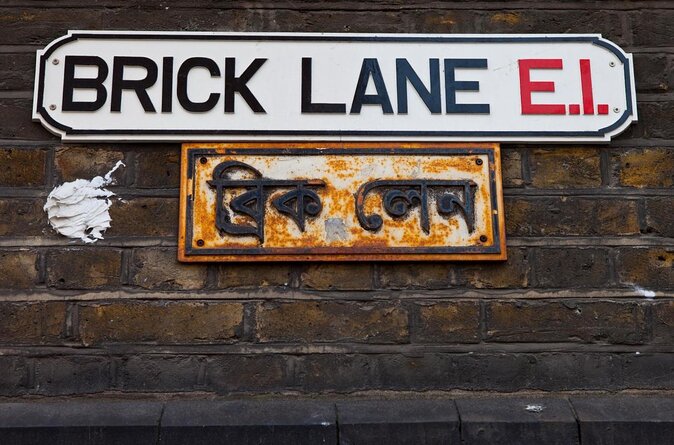
- Stop 2: Brick Lane itself—curry mile, record stores, and street art you can read
- Stop 3: Inside The Ten Bells—Jack the Ripper context in a real pub setting
- Stop 4: Spitalfields Market E1—the old worst street in London feeling
- Stop 5: Old Spitalfields Market—1638 roots, King Charles I, and street food smells
- Stop 6: Old Truman Brewery—beer heritage and an easy Shoreditch lead-in
- What kind of traveler (you) this suits best
- Should you book A Ball of Chalk’s East End private walk?
- FAQ
- How long is the guided East End walk?
- What time does the tour start?
- Where do I meet the guide?
- Where does the tour end?
- Is this tour private?
- What’s included in the price?
- What isn’t included?
- What happens if the weather is poor?
- Are service animals allowed?
Key highlights if you like your London personal
- Brick Lane Jamme Masjid shows how one building can serve shifting faith communities over centuries
- Street art on Brick Lane plus Beigel-shop energy gives you the real texture of the area
- The Ten Bells inside stop includes admission and a focused Jack the Ripper connection
- Spitalfields Market E1 and Old Spitalfields Market contrast old poverty narratives with today’s food stalls and crafts
- Old Truman Brewery adds an easy beer-and-brewery context for Shoreditch tastes
East End London, not Westminster: what makes this walk worth 2 hours
If you’ve seen enough Trafalgar Square photos, this is the kind of London that feels closer to everyday life. You’ll walk through Spitalfields and Brick Lane, but you’ll do it with the stories that explain why the streets look the way they do now—especially the mix of immigrants and communities that kept arriving, settling, and rebuilding.
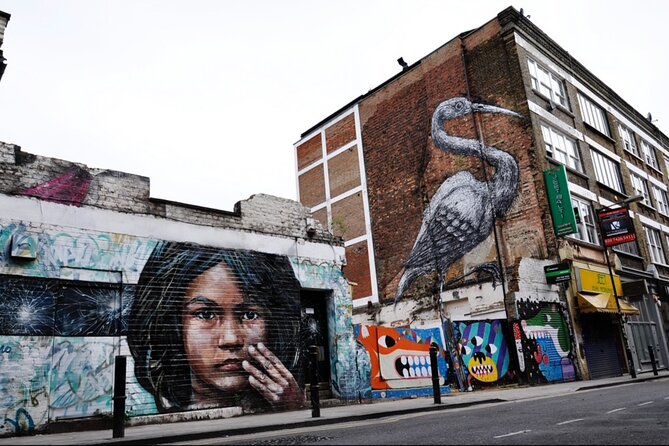
What I like about this format is how it stays human-sized. Instead of racing from landmark to landmark, you get a series of stops where a building, a street, or a pub becomes a clue. Along the way, you’ll also pass the visual stuff that makes this area famous: street art (from names like Banksy to Stik), older buildings, and the kind of signage and shopfronts that hint at decades of change.
There’s also a subtle payoff for curious food people. This walk calls out the area’s food culture—think curry-mile energy around Brick Lane, and street food you’ll smell near the market areas—without turning it into a food tour where you have to buy everything.
You can also read our reviews of more walking tours in London



Price and what $137.07 buys in a private guided walk

At $137.07 per person for about two hours, this isn’t a budget shuffle. You’re paying for a private guided walk with an English-speaking local expert, plus that one built-in paid stop (The Ten Bells). Everything else is listed as outside views or free-entry segments, so the cost is mostly about having someone connect the dots for you.
In plain terms: if you’re the type who likes meaning, context, and calm pacing, this can feel like good value. You’re not just moving through the East End—you’re getting a script for what you’re looking at, with extra color like how the area evolved from poverty to creative industry and modern markets.
If you’re coming with a small group, it’s worth checking the booking for any group discount option shown during purchase. A private walk can be more reasonable when the cost spreads out.
Where you start (Whitechapel Gallery) and how the route ends near Shoreditch
You start at Whitechapel Gallery, 77–82 Whitechapel High St, London E1 7QX, at 2:30 pm. The walk ends at Shoreditch Station, Bethnal Grn Rd, London E1 6LA, which is handy because it makes it easier to continue your day without needing a long return trip.
It’s also designed to be easy on navigation: you’ll be near public transportation, and you’ll move as a single group through streets and market areas. There’s no hotel pickup or drop-off listed, so you’ll want to plan your arrival to Whitechapel Gallery on your own.
Also note the practical style: you’re getting a guided walk, not a museum schedule. Expect time outdoors and in a couple of specific places, so your day plan should allow for a bit of standing, turning corners, and quick photo stops.
Stop 1: Brick Lane Jamme Masjid and the story of shifting faith spaces
This is a short stop—about five minutes and visiting outside—but it’s one of the most meaningful on the route. Brick Lane Jamme Masjid represents waves of immigrants settling in the area over hundreds of years, and the guide frames the building as part of a much bigger sequence: it has served as a Christian church, then a Jewish synagogue, and now a Mosque for the local Bengali community.
That kind of layered story changes how you see the street. Instead of treating the building as scenery, you start noticing what it signals about London: people come, communities organize, and places get reused as needs change. It’s a quiet start, but it sets the tone for the entire walk.
Potential consideration: because it’s outside, it’s weather-dependent like the rest of the experience. If it’s raining hard, you’ll still be out there, so bring something that makes standing under awnings comfortable.
Stop 2: Brick Lane itself—curry mile, record stores, and street art you can read
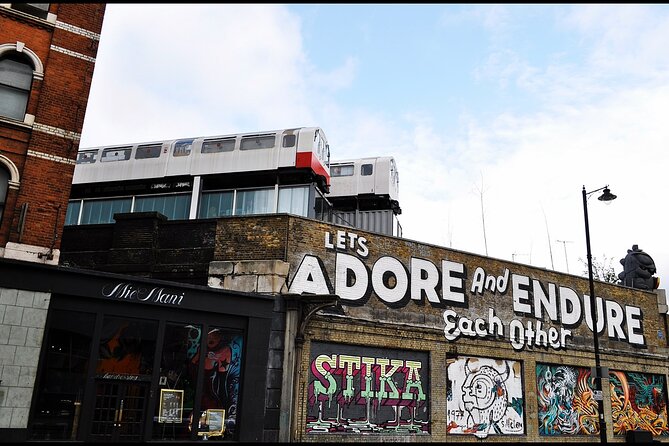
Next you’ll spend about 20 minutes on Brick Lane, again mostly outside. This stretch is where the area’s identity becomes obvious at street level. You’ll move past the curry-mile energy, and then toward shops that feel more like the modern East End: record stores, vintage stores, and all the little retail clues that point to a creative neighborhood.
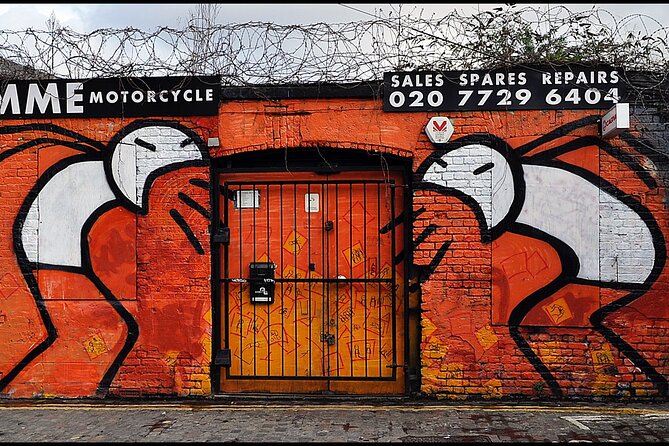
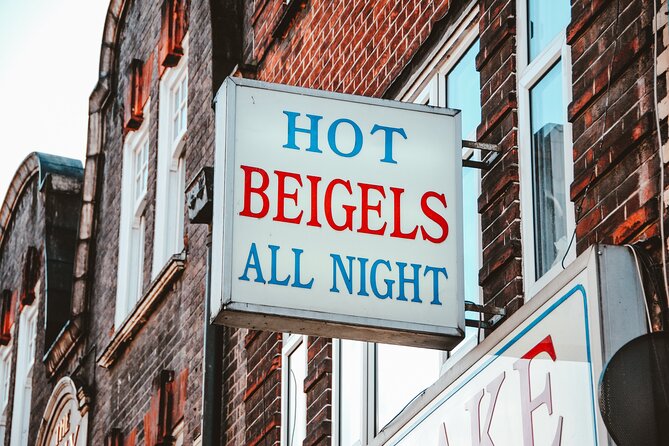
The real win here is the way the guide ties the street’s look to its human backstory. Brick Lane isn’t just a shopping street in this walk—it’s a living corridor where street art and everyday life share space. You’ll also hear about hipster markets and Beigel-shop culture as part of the broader neighborhood character.
Potential drawback: Brick Lane can be busy, so if you’re sensitive to crowds, keep your pace steady and let the group lead your timing. This stop works best if you’re okay with a lively street feel rather than quiet sightseeing.
You can also read our reviews of more guided tours in London






Stop 3: Inside The Ten Bells—Jack the Ripper context in a real pub setting
This is the one stop where you’ll go inside, for about 25 minutes, and admission is included. The Ten Bells is a classic British boozer, and the guide connects it to Jack the Ripper and crimes tied to the area.
What you get here is atmosphere plus focused storytelling. In a pub, people naturally slow down. That matters for the story, because it’s the kind of subject where you need a bit of time to understand how a place becomes associated with events.
If you’re not into true-crime, don’t panic. You’re not just hearing scandal for scandal’s sake. The guide uses the pub and its name to explain the area’s darker reputations alongside its everyday working history.
Potential consideration: because it’s an indoor stop in a pub, it’s not the time to expect a totally silent, museum-like experience. Plan for normal background noise and a more casual setting.
Stop 4: Spitalfields Market E1—the old worst street in London feeling

Then you step into Spitalfields Market E1 for a quick outside segment (around five minutes). The walk frames this area with an uncomfortable past: Spitalfields was once described as the worst street in London, tied to poverty and slum conditions.
This stop is short, but it does an important job. It helps you understand that the East End’s later creativity and redevelopment didn’t appear out of nowhere. You’re seeing the physical location, but the guide is helping you read the social reality beneath it.
Potential drawback: the emotional tone here is heavier. If you prefer only light and fun stops, you might want a quick mental reset before continuing to the market areas, where the mood shifts.
Stop 5: Old Spitalfields Market—1638 roots, King Charles I, and street food smells
Old Spitalfields Market is where the walk turns more sensory. You’ll spend about 10 minutes visiting inside, and admission is listed as free for this segment.
The market traces back to 1638, starting as a flesh, fowl, and roots market, and it was licensed by King Charles I. Today, it’s more likely you’ll see cool clothing and hand-painted crafts, and you’ll also catch the air scented with street food vendors trading right there in the market zone.
I like this stop because it balances past and present without trying to pretend everything stayed the same. The shape of the trade changed, but the idea of a public marketplace remained. For anyone who loves travel through food smells and shop textures, this is a good point to slow down and look around.
Potential consideration: market areas can be lively and crowded at certain times. Since your tour is around late afternoon, you may see a steady flow rather than a quiet gallery vibe, so it’s best to come ready to stand and browse in motion.
Stop 6: Old Truman Brewery—beer heritage and an easy Shoreditch lead-in
The final stop is the Old Truman Brewery for about 15 minutes, visiting outside. The guide gives you an iconic brewery history and a quick “taste of Shoreditch” so your evening ahead makes more sense.
Even if you don’t drink, the brewery context helps explain why Shoreditch looks the way it does today. Beer culture, industrial buildings, and repurposed spaces all connect in the East End, and the Truman name is part of that recognizable thread.
This ending also makes practical sense. You’re finishing near Shoreditch Station, and this stop helps you shift gears from guided narrative back into independent plans—whether that means finding food, a drink, or just walking the streets without feeling lost.
Potential drawback: because it’s outside and the stop is relatively short, you won’t get a full museum-style explanation here. It’s more of a good finishing note than a deep historical lecture.
What kind of traveler (you) this suits best
This private East End walk is ideal if you want London that feels like people actually lived in it. It’s especially good for you if:
- You like context—why a street, building, or pub carries certain stories
- You’re into neighborhoods with layers: immigration waves, changing faith spaces, and industry turning into creativity
- You enjoy street-level sights like markets, signage, street art, and food smells more than big indoor attractions
It can also work well for first-time East End visitors who feel overwhelmed by the sheer number of places in the area. The guided structure keeps you moving in the right order, from Whitechapel into Brick Lane and then onward to Spitalfields and Shoreditch.
If you want a fully food-centered outing, you might find the lack of food inclusions a bit limiting. Food and drink aren’t included, so you’ll be deciding on your own tastes at the market and around Brick Lane.
Should you book A Ball of Chalk’s East End private walk?
Yes, if you want a guided walk that explains the East End’s layers without turning it into a scripted lecture. The strongest reason to book is the storytelling quality, with Frances repeatedly called out for making the area feel personal and real through lived-in details and strong narrative flow.
Also, the stop selection is smart: a faith-history building, a famous street, a focused pub stop with Jack the Ripper context, then Spitalfields markets, then the Truman Brewery finish. It’s a tight route that covers major themes in about two hours.
If you hate walking in weather or you prefer only cheerful topics, then you may want to think twice—this experience needs decent conditions, and Spitalfields includes a heavier, poverty-focused moment.
FAQ
How long is the guided East End walk?
It’s listed at about 2 hours.
What time does the tour start?
The start time is 2:30 pm.
Where do I meet the guide?
You meet at Whitechapel Gallery, 77–82 Whitechapel High St, London E1 7QX.
Where does the tour end?
The walk ends at Shoreditch Station, Bethnal Grn Rd, London E1 6LA.
Is this tour private?
Yes. Only your group participates.
What’s included in the price?
A private guided walk of the East End including Brick Lane and Spitalfields, plus an English-speaking local expert guide. The Ten Bells stop also has admission included.
What isn’t included?
Food and drink, hotel pickup and drop-off, and entrance costs are listed as not included (aside from the admission included at The Ten Bells).
What happens if the weather is poor?
The experience requires good weather. If it’s canceled due to poor weather, you’ll be offered a different date or a full refund.
Are service animals allowed?
Yes, service animals are allowed.