One ride, and London starts making sense fast. This Waterloo-to-Tower bike tour strings together the big landmarks and the quieter streets between them, with local stories that connect the dots from Georgian housing to the docks. You’re also on a bike, so you cover ground without spending your whole day stuck in pedestrian bottlenecks.
I love two things here: the small-group feel (max 12 riders) and the way the guide keeps the route moving while still pointing out details you’d miss on your own. In the reviews, guides like Katie and Stewart come through as engaging and organized, with just enough personality to make the history stick.
One thing to consider: most stops are short photo-and-walk moments, not full museum visits. If you want to go inside places like the Tower of London or HMS Belfast, you’ll need to plan extra time tickets separately.
In This Review
- Key points before you pedal off
- Why this London bike format beats sprinting on foot
- Price and what you really get for $103.35
- Getting started at Waterloo: bikes, gear, and the pace
- Physical level: moderate, but not casual
- The ride from Roupell Street to Blackfriars: 1820s London with real street character
- Quick stop: The Cockpit
- St Paul’s, Bow bells, and the City’s medieval habits (fast, but sharp)
- Mansion House, Leadenhall Market, and the City’s architecture show
- East End stories at Cable Street and the docklands
- Tower Bridge and the Tower of London: iconic views, plus a reality check
- HMS Belfast, City Hall, and St Dunstan in the East: history that still feels physical
- The Monument to the Great Fire, Shakespeare’s Globe view, and Tate Modern
- Who should book this bike tour (and who might not)
- Should you book City & Secrets: Explore London’s Hidden Gems?
- FAQ
- What’s included in the tour price?
- Is admission included for places like the Tower of London or St Paul’s?
- How long is the tour, and when does it start?
- Where do we meet?
- What fitness level do I need?
- Can I get a refund if plans change?
Key points before you pedal off
- Hand-built British bicycle with optional helmet and even a tweed cap option for fun photos
- Route mixes classics (Tower Bridge, St Paul’s area) with the off-the-map East End docks
- Stops are time-friendly: lots of quick looks across major landmarks, plus lesser-known corners
- The guide’s stories cover both the “clean” London and the messy past, from smugglers to pirates
- Includes rain gear when needed, since this ride runs in all weather
- Maximum group size of 12 keeps the pace manageable and the navigation smoother
Why this London bike format beats sprinting on foot
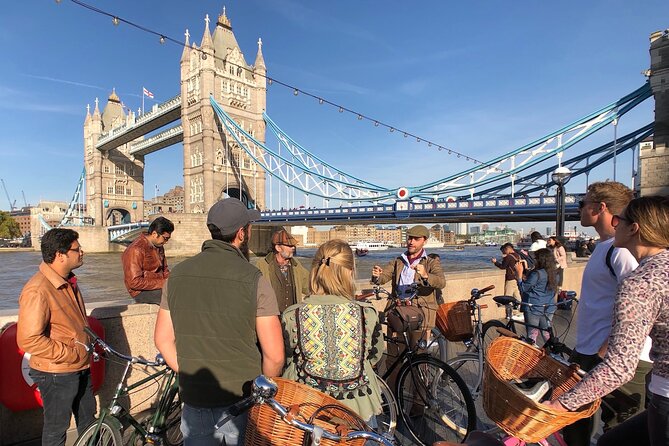
London can be a test of stamina. In a car you miss the details; on foot you get stuck waiting for others or swallowed by crowds. On a bike tour like this, you get the best tradeoff: fast movement between neighborhoods, with brief pauses where the history actually matters.
I also like the structure. The route works like a “greatest-hits tour” that still makes room for the sides streets, canals, and odd little landmarks that give London its texture. And because the group stays small, you’re not trying to herd 30 people through tight corners.
You can also read our reviews of more city tours in London

Price and what you really get for $103.35
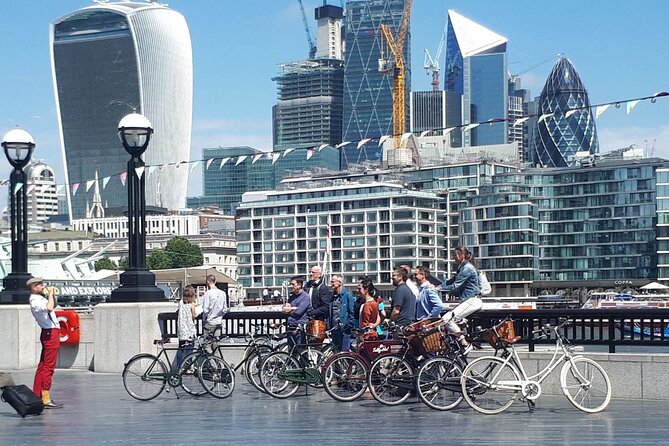
At $103.35 per person for about 4 hours, this is not a bargain-tour price. But it’s also not asking you to pay for full admissions you may not even want.
What you’re paying for is:
- a local guide who narrates the route as one story
- a hand-built bicycle (not a flimsy rental scooter situation)
- a system that covers a huge chunk of central London in a half-day window
- stops that lead you to later independent exploring
If your goal is to get oriented quickly—plus leave with a list of where to go next—this price can feel fair. If your goal is to linger inside major attractions for hours, you’ll probably feel like you paid more than you needed.
Getting started at Waterloo: bikes, gear, and the pace
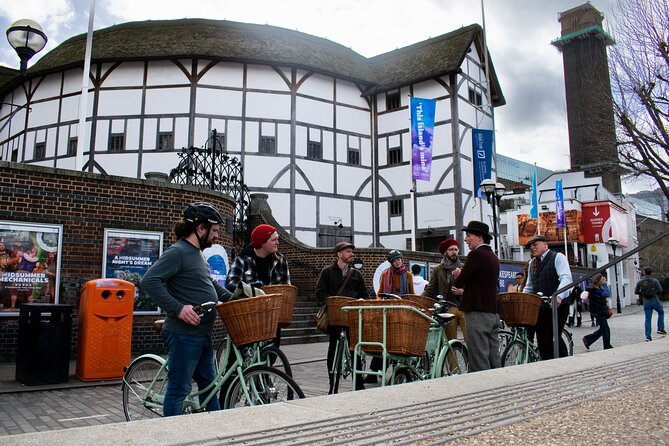
The tour starts at 189 Hercules Rd, London SE1 7LD, with the ride beginning at 2:00 pm and ending back at the meeting point. You’re out long enough to see a serious arc of London, but short enough that you’ll still have time for dinner and a second walk later.
You’ll be on a hand-built British bicycle, and the company provides a few extras to make the ride easier:
- helmet is optional
- a tweed cap is optional
- a rain poncho is provided if weather turns
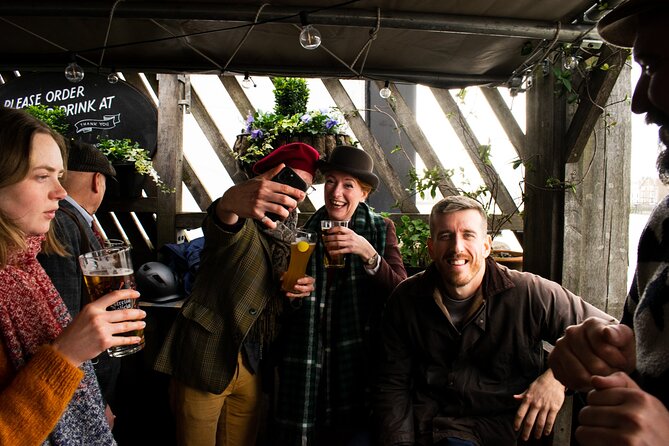
Also plan for basic comfort. Snacks and drinks aren’t included, so bring water and something small to tide you over. The route includes a pub stop and other photo stops, so if you skip breakfast or lunch, you may feel it.
Physical level: moderate, but not casual
The tour asks for moderate physical fitness and riders must be 13+. You’ll be cycling most of the time, not just rolling downhill for a few minutes. If you’re comfortable with a steady city ride (stops, turns, and traffic navigation), you should be fine.
The ride from Roupell Street to Blackfriars: 1820s London with real street character
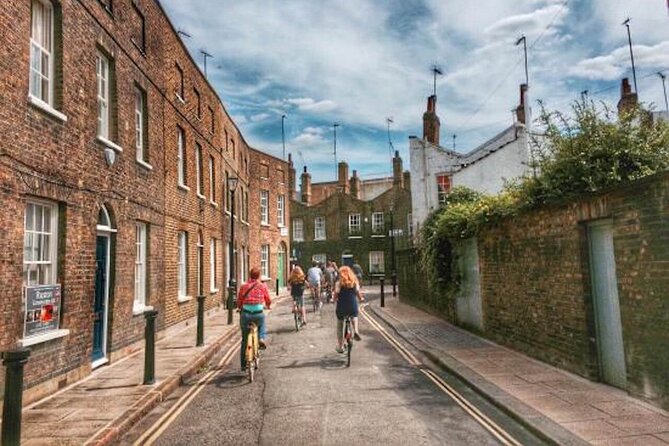
Your first stop is Roupell Street, a pocket of 1820s history with Georgian houses built for working-class life. It’s the kind of street you’d walk past quickly—unless someone points out why it looks the way it does. The stories here are fun and specific: John Roupel reclaimed marshy land and named the streets after his family, and even postmen’s confusion led to name changes.
This stop also has a practical London twist: fire risk and insurance. You’ll see reminders that private firefighting depended on whether your house had the right plaque. Then, nearly 100 years later, the area took WWII bombing hits but still holds onto its street form.
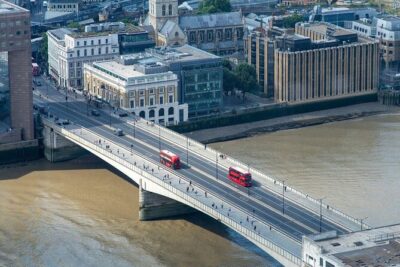
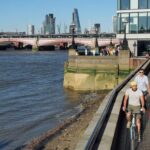
Next comes Blackfriars Bridge, opened in 1869 by Queen Victoria. It’s named after the Dominican Friars who had a monastery at the north end. Look up at the bridge’s support columns: the tops are shaped like pulpits—quiet details that make you feel like you’re reading London like a book instead of just watching it.


Quick stop: The Cockpit
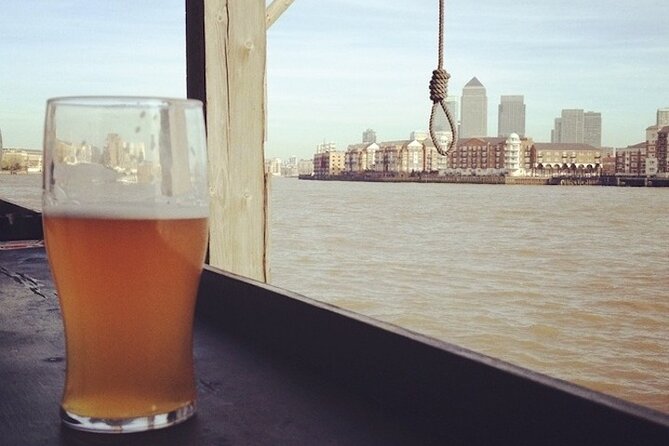
At The Cockpit pub area, you’re hearing the layered story again: this was tied to monastic houses and Dominican friars. The famous wrinkle is that Shakespeare bought the gatehouse and lived there. Even if you don’t stop inside, the point is clear—London’s famous names weren’t living in empty sets; they were part of an older city web.
St Paul’s, Bow bells, and the City’s medieval habits (fast, but sharp)
From there, you shift into the City of London zone, where the streets feel older and the buildings feel more official.
First up is St. Paul’s Cathedral. The tour frames it through major moments: the wedding of Prince Charles and Lady Diana, Winston Churchill’s funeral, and the resting places for Wellington and Nelson. You’ll also hear the timeline: St Paul’s dates back to 604 AD, but the old cathedral was destroyed in the Great Fire of London (1666) and rebuilt by Christopher Wren. WWII bombings are part of the story too, because the cathedral’s survival becomes the symbol of resilience.
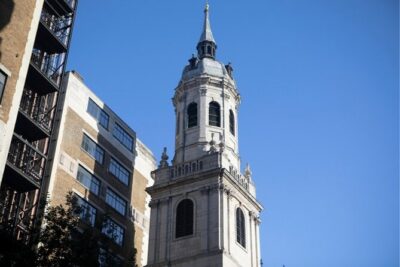
Then you get St. Mary Le Bow Church, famous for its bells. If you’re born within the sound of Bow bells, you’re considered a true Cockney. This is one of those London cultural facts that sounds like trivia—until you realize how identities get built in the public soundscape.
A few minutes later you’re at Guildhall, the City’s town hall. The focus here is on tradition: weird, archaic practices that have reportedly stayed in place since medieval times. It’s a quick stop, but it’s the kind that changes how you look at the City—less like a business district and more like a place with rules that survived centuries.
Mansion House, Leadenhall Market, and the City’s architecture show
At The Mansion House, you’re told about the area’s importance since Roman times, and you also connect it to the modern role of the Lord Mayor of London. The tour places this near the Bank of England as part of the bigger “London power system” picture—who runs things, and where.
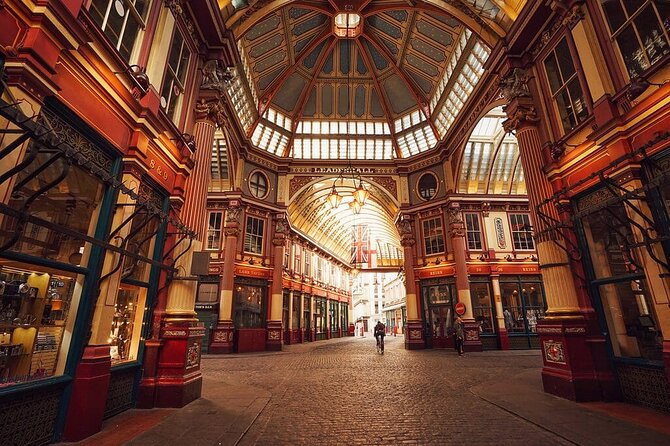
Next is Leadenhall Market, a Victorian market designed by Sir Horace Jones. The fun part is the layering: in Roman times, this location was the Forum and Basilica. You’ll also get the movie tie-ins—this area is tied to Diagon Alley and the Leaky Cauldron imagery from the Harry Potter films, which makes the architecture feel playful even if you’re not a fan.
Then you ride past Lloyds of London, a major architecture moment associated with Richard Rogers. You’ll see the contrast buildings around it: the Cheesegrater and the Gherkin, plus St Andrew Undershaft, a pre-1666 church built when Henry VIII was king.
A short hop brings you to London Wall, one of London’s oldest parts. You’re looking at Roman wall fabric, including a section thought to have been built around 200 AD. This is one of those “stand still and look closely” stops. In a city built over its past, seeing Roman material changes your mental map.
East End stories at Cable Street and the docklands
Now the tour shifts tone. The route starts talking about the rougher London—smugglers, pirates, and the messy human side of trade and survival.
You hit Cable Street Mural, completed in 1983. It depicts the 1936 clash between fascists and protesters, in a neighborhood that had been largely Jewish. It’s a fast stop, but the message is big: London’s history isn’t just kings and cathedrals; it’s street politics too.
Then it’s dockland time. Shadwell Basin is one of London’s original docks, regenerated since the 1980s. The narration ties it to a past when these docks were among the busiest in the world about a century ago. Even if you don’t know dock history, the geography helps you understand why ships mattered so much here.
After that you pass Tobacco Dock, with ornamental canal features and old tobacco warehouses redeveloped since the 1980s. If you’re the kind of person who likes “what used to be here” stories, this stop will click. It’s London’s industrial skeleton, dressed for modern use.
Then comes St Katharine Docks, built in 1825 and one of the last docks to close (in the 1960s). There’s also a medieval thread: the hospital St Katherine’s, founded in 1147 by Queen Matilda, ties the area back to an earlier era of care and power near the Tower.
Tower Bridge and the Tower of London: iconic views, plus a reality check
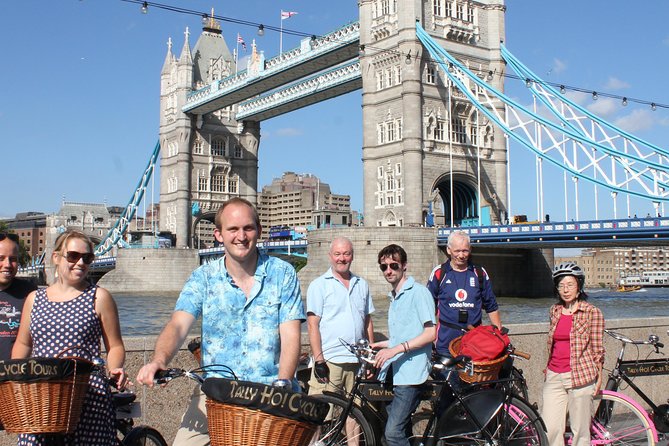
This section is why many people book. You cycle over Tower Bridge, completed in 1894, with design credited to Sir Horace Jones and engineering by Sir John Wolfe Barry. The tour explains what makes it special: it’s a combined bascule and suspension bridge, with two neo-Gothic towers and a central walkway.
You also get the bridge’s rhythm detail: the bascules raise around 800 times a year for tall ships. Even from outside, it gives you a sense that Tower Bridge isn’t only a monument—it still works.
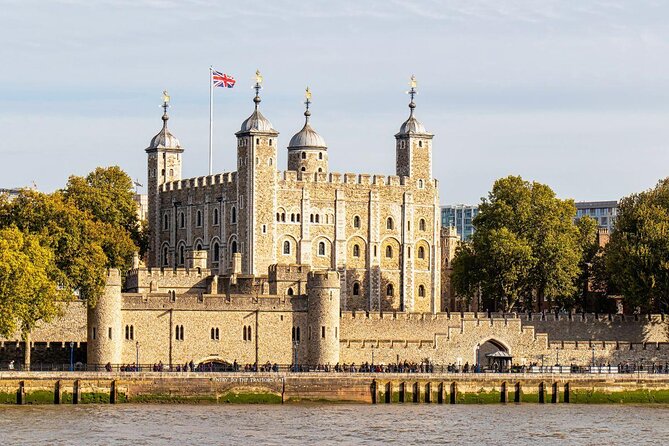
Tower Bridge is followed by the Tower of London. You’ll hear the core storyline: built by William the Conqueror shortly after the Norman Conquest of 1066, and later used as a royal palace and prison complex. It’s described as a place of executions and grim turns, including notable figures like William Wallace, Thomas More, Henry VI, Edward V, plus Henry VIII’s wives Anne Boleyn and Catherine Howard. The Crown Jewels are flagged as the must-see highlight inside.
Here’s the reality check: the stop is short, and admission isn’t included. So plan to take in the exterior and main impressions, then decide if you want a separate ticket for the full Crown Jewels experience.
HMS Belfast, City Hall, and St Dunstan in the East: history that still feels physical
Next is HMS Belfast, a WWII-era cruiser and floating museum. The tour frames it beyond just the ship name: it was built in the same shipyard as the Titanic in Belfast, and it protected convoys not only in WWII but also the Korean War. It’s also tied to D-Day (June 6, 1944), and today you can see interiors that doubled as Royal Yacht Britannia in The Crown.
Again, check expectations: admission isn’t included, so this is more of a look and photo moment than a full ship visit. Still, even seeing the scale from outside can give you perspective.
Then you view the former City Hall of London, designed by Norman Foster. It’s a quick look, but it helps you connect London’s political modernity to the same riverfront where the older empires did their business.
A quieter pause comes at St. Dunstan in the East, a calm space inside busy City streets. The church was destroyed in the Great Fire of London and later rebuilt by Wren. If you’re a sucker for “small room of peace inside a huge city,” this stop is for you.
The Monument to the Great Fire, Shakespeare’s Globe view, and Tate Modern
You end this central-history chain with the Monument to the Great Fire of London. It’s 202 feet high, and you’ll hear the neat geometry trick about the golden urn on top. The tour explains what happens if you lay the monument on its side: the urn would land near Thomas Farriner’s bakery shop on Pudding Lane, where the fire started on 2 September 1666.
Then you switch bridges for one last literary view: Southwark Bridge, where you can see Shakespeare’s Globe. The Globe is a 1997 reconstruction of the original 1599 venue. It’s also linked to the Lord Chamberlain’s Men, a company that saw debuts of many Shakespeare classics. From the bridge, it’s a helpful reminder that Shakespeare is tied to this exact shoreline.
Finally, you reach Tate Modern for a quick look at the powerhouse of modern art. The building opened in 2000 after converting a 1950s Bankside Power Station. You’ll be told about the twisted brick pyramid, a 2016 extension, and the 10th-floor viewing gallery. Even if you don’t go inside during the stop, the architecture and turbine hall design are part of why it’s famous, with mentions of artists such as Mondrian, Richter, Rothko, and Picasso.
Like the other major sites, admission isn’t included, so treat this as orientation and “check it out later” energy.
Who should book this bike tour (and who might not)
This tour is best for you if:
- you want a first-time London overview that still includes real neighborhoods
- you prefer cycling to constant walking
- you like stories that connect landmarks to trade, conflict, and daily life
- you want a guide to point out details so you can plan your next day more smartly
Skip it if:
- you want long museum-style visits inside top-ticket attractions
- you don’t feel comfortable riding in city traffic zones
- you’re hoping for lots of food stops, since snacks and drinks aren’t included
Should you book City & Secrets: Explore London’s Hidden Gems?
I’d book it if you’re short on time and you want London to feel coherent after four hours. The mix of Waterloo-side river history, City of London icons, and dockland grit gives you a rounded map, not just a list of famous buildings. With a max of 12 riders and optional gear for weather, it also feels like a well-run way to see more without burning your whole day.
If you’re the type who loves planning ahead, you can use the route to choose what to revisit on foot afterward—Tower of London, HMS Belfast, or Tate Modern depending on your interests.
FAQ
What’s included in the tour price?
You get a hand-built British bicycle and a local guide. The tour also provides an optional helmet, optional tweed cap, and a rain poncho if needed.
Is admission included for places like the Tower of London or St Paul’s?
No. Many major stops are not included for admission, including the Tower of London, St. Paul’s Cathedral, Tobacco Dock, Tower Bridge exhibition options, and HMS Belfast. Leadenhall Market and a couple of other stops are noted as free, but plan on outside viewing during most stops.
How long is the tour, and when does it start?
The ride runs about 4 hours and starts at 2:00 pm. It ends back at the meeting point.
Where do we meet?
The meeting point is 189 Hercules Rd, London SE1 7LD, UK.
What fitness level do I need?
The tour lists moderate physical fitness as the requirement. It also operates in all weather conditions, so dress appropriately for rain and cool temperatures.
Can I get a refund if plans change?
Yes. There’s free cancellation. You can cancel up to 24 hours before the experience start time for a full refund. If you cancel less than 24 hours before, the amount paid won’t be refunded.