REVIEW · LONDON
eSIM for UK (34 EU countries) | 3 to 30 days. Up to 40GB of data
Book on Viator →Operated by Xplori · Bookable on Viator
A QR code can save airport hassle. This UK eSIM from Xplori keeps you connected on the EE network, with quick email delivery for easy activation using a QR code. The big thing to think about is that it is data-only, and some areas of the UK may have weaker signal.
You also get a practical speed limit: you can use high-speed data up to your plan amount, then speed switches to 3G after the cap. For a lot of people, that trade-off makes sense because you are not paying airport prices and you are not hunting for stores mid-trip.
At an average rating of 4.1 out of 5, it’s a popular way to handle connectivity for trips spanning the UK and much of Europe, especially when you want it all set before you fly.
In This Review
- Key things to know before you buy
- What This UK eSIM Does (and Why It’s Worth Considering)
- Activating From Your Phone: QR Code, Mobile Ticket, and eSIM Check
- Network Coverage and Data Limits: EE in the UK, Then 3G After 40GB
- London Without the Offline Panic: Oxford Street as a Data-Test Day
- Notting Hill Days: Why Connectivity Helps More Than Photos
- Remote Customer Service: The Quiet Advantage
- Price and Value: Is $4.75 Actually Good for What You Get?
- The Most Common Friction Points (So You Can Plan Around Them)
- 1) Data-only means you need internet-based alternatives
- 2) Signal can vary within the UK
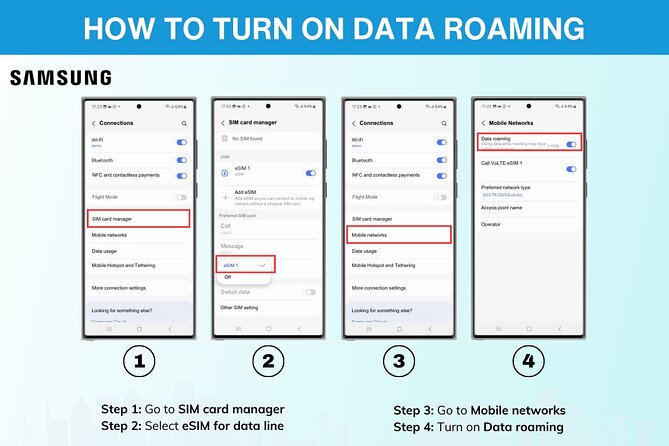
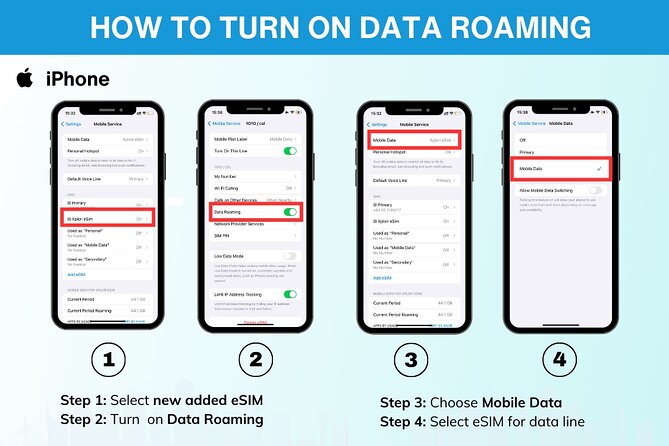
- 3) Activation and settings can make or break your first day
- 4) A plan can stop earlier than you expect in rare cases
- Who Should Book This eSIM Plan?
- Should You Book It? My Go/No-Go Advice
- FAQ
- Does this eSIM include voice calls or texting?
- Which network does it use in the UK?
- How much data do I get?
- What happens after I use up my data cap?
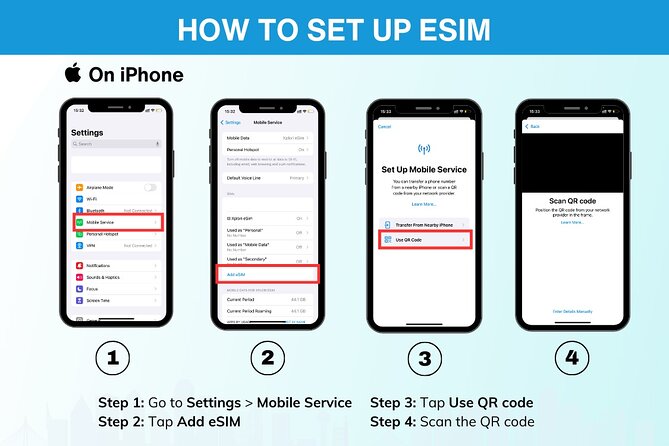
- How do I activate it?
- Do I need a pickup or meetup?
- Is it valid only in the UK?
- How long is the plan valid for?
- Is there customer support if something goes wrong?
- Can I cancel for a full refund?
Key things to know before you buy
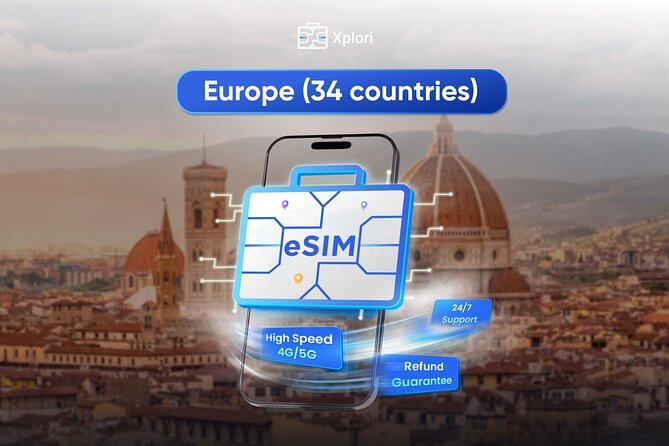
- QR-code setup from your email means you can get going fast once your phone is ready for eSIM
- EE network in the UK gives you strong local coverage in many areas
- Up to 40GB total data with a 3G fallback after the high-speed cap
- Works across the UK plus 34 EU countries, so you’re not buying a second plan mid-route
- Remote customer service adds peace of mind if settings get weird
- Data-only (no calls or texts) can be a deal-breaker for some travelers
What This UK eSIM Does (and Why It’s Worth Considering)
This is not a guided tour with a bus, tickets at the door, or someone waiting at a meeting point. It’s a digital connectivity plan. You get an eSIM data package, tied to the duration you select, and you activate it from your phone using a QR code you receive by email.
The real value here is the simplicity. Instead of buying a physical SIM at an airport and hoping it works in your exact neighborhood, you can get set up before you land and use mobile data for navigation, messaging apps, and social media.
You’re also looking at a plan that covers more than just the UK. The data plan is valid for the UK and much of Europe, including 34 EU countries. That matters if your itinerary hops beyond London, or if you’re doing a multi-country route where buying yet another SIM would be a hassle.
One important detail: it’s data-only. So if you rely on phone calls or SMS for day-to-day life, you’ll need an alternative plan (like using internet-based calling apps, as long as data is working).
You can also read our reviews of more tours and experiences in London.



Activating From Your Phone: QR Code, Mobile Ticket, and eSIM Check
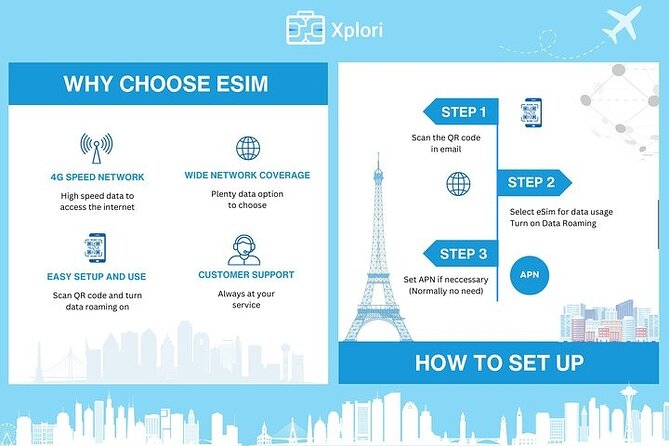
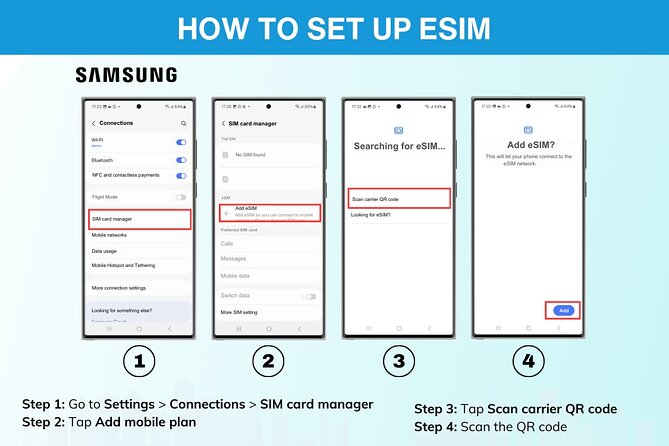
Activation is the big selling point. You receive a QR code by email, then you set up your eSIM on your phone. That’s the whole idea: fast setup, minimal friction, and no pickup or meetup needed.
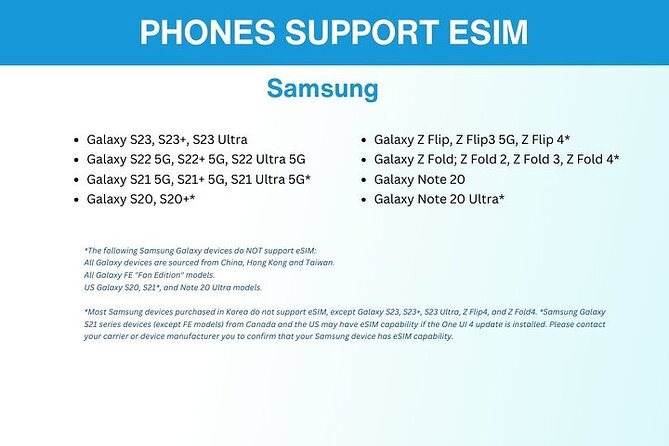
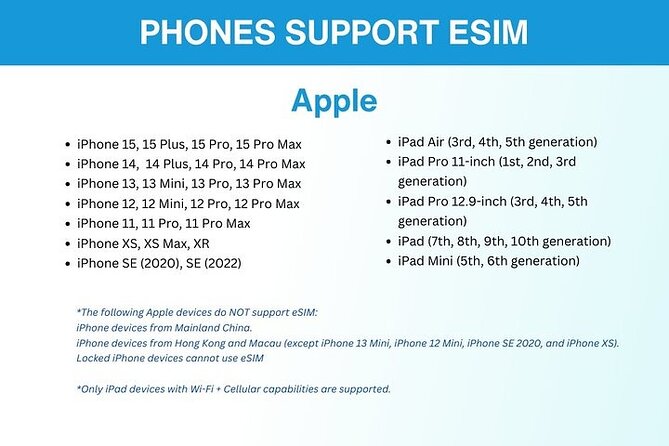
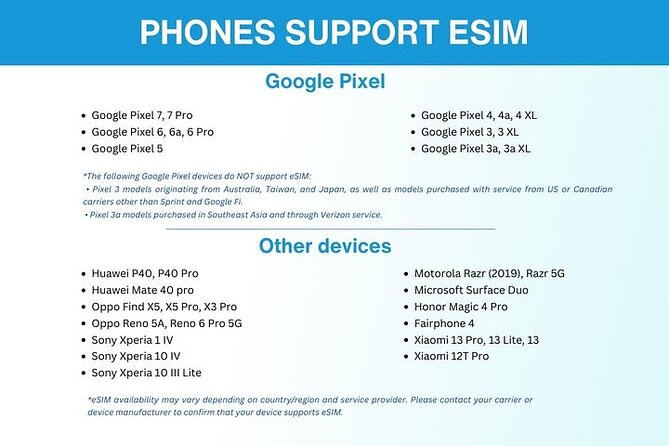
Before you get too excited, do one simple check: confirm your phone supports eSIM. The product info explicitly asks you to double check phone compatibility and reach out if you’re unsure. This one step can save you from that frustrating moment where you land and your phone can’t install the eSIM.
Also note the format: you’re dealing with a mobile ticket / digital product, not a paper voucher. That means your email access matters. If you arrive without access to that email account, you could delay your setup.
Timing is also easy. The listed start time is 12:00 am, which fits a digital product model. In practice, the key timing is when you activate, because that controls when your selected data period effectively begins for your trip planning.
Network Coverage and Data Limits: EE in the UK, Then 3G After 40GB
The plan runs on EE in the UK. EE is one of the big local networks, and that’s a strong baseline for London and other populated areas. For many travelers, the biggest win isn’t just having data, it’s having data that works reliably for maps, ride-hailing, and messaging.
Still, coverage can be uneven in any country, in any network, and in any city depending on your exact street or building. One practical takeaway from the feedback is that some areas can have poor or missing reception. So if you know you’ll spend time in places with tricky signal (deep indoor spaces, far corners, or areas with heavy construction), don’t assume you’ll get full bars everywhere.
Then there’s the speed structure. You get high-speed data up to the amount included in your plan (up to 40GB). After you hit that limit, the speed drops and switches to 3G. For quick tasks like messaging and basic web use, 3G can still be workable. If you plan to stream a lot of video or upload big files, you’ll feel the slowdown.
My advice: treat this like a budget-smart plan for connectivity rather than a unlimited streaming package. If your goal is staying in touch through WhatsApp and getting maps when you need them, the speed cap is usually an acceptable trade.
London Without the Offline Panic: Oxford Street as a Data-Test Day
The trip framework includes Oxford Street as a day to explore while staying connected. That’s a smart way to think about it, because Oxford Street is exactly where phone dependence spikes: directions, meeting points, ordering food, checking transport updates, and sharing photos.
Oxford Street also works well as a low-stress test of your setup. If your eSIM installs smoothly and your data runs as expected, you’ll see it early in the trip. If there are issues, catching them on day one is far better than discovering them after you’ve already moved neighborhoods.
The product notes the admission ticket as free for that stop. In plain terms, you’re not paying for an attraction here. You’re using data to make your wandering easier, which is the best match for a data-first product.
A small practical angle: busy shopping streets can mean a lot of phone usage at once. If you’re sensitive to speed, try to keep large downloads for quieter times and rely on messaging and web during peak crowd hours.
Notting Hill Days: Why Connectivity Helps More Than Photos
Notting Hill is the other named stop. Like Oxford Street, it’s a place where you’ll naturally want your phone available for directions, checking what’s open, and keeping contact organized.
There’s also a subtle benefit to having data while exploring neighborhoods: you can avoid spending time retracing steps. Instead of memorizing every route, you can use a map when you need it and stay flexible when you see something interesting nearby.
The plan again flags the stop as free for admission. That lines up with how people usually experience this part of London: lots of walking, browsing, and taking in the vibe rather than lining up for a single ticketed site.
One thing to keep in mind, based on real-world lessons: if your eSIM ever feels slower in a specific area, switch your focus to what matters most (messaging and essential navigation). Data that’s a bit slower can still be enough to keep you on track, even if it’s not perfect for streaming.



Remote Customer Service: The Quiet Advantage
A lot of travel products sell convenience. This one also includes remote customer service, which is quietly one of its strongest points.
Why it matters: with eSIMs, the friction is often not the data itself. It’s the setup steps, the phone settings, or the timing of activation. If you get stuck, having someone available remotely can prevent you from losing a day.
There’s also evidence that some early confusion can happen around settings. The good news is that the provider’s support approach includes working toward fair solutions if something goes wrong. That doesn’t erase the inconvenience, but it helps your odds of getting back on track quickly.
If you’re the type who hates troubleshooting on the road, I’d value this more than the headline data amount. For many travelers, support is the difference between a smooth trip and a stressful one.
Price and Value: Is $4.75 Actually Good for What You Get?
The price shown is $4.75 per person, with plans from 3 to 30 days and up to 40GB of data. Even without getting into comparisons by exact dollar amounts in every airport, the core value is clear: you’re paying for pre-arranged connectivity instead of last-minute purchases.
Where the math makes sense for many people:
- You’re not tied to airport hours or airport convenience markups
- You avoid physical SIM hunting when your phone is already ready for eSIM
- Your plan spans the UK plus many EU countries, which can reduce the need for a second purchase
But value has a catch. Since it’s data-only, it may not replace everything you need from a traditional SIM. If your trip requires calls and texts you can’t replace with apps, you might find the plan less worth it.
Also, the speed cap and 3G switch mean you should pick the plan length and data amount based on how you’ll use your phone. If your style is map checks, WhatsApp, and social scrolling, you’ll likely be fine. If your plan is constant high-bandwidth streaming and heavy uploads, you’ll likely hit the cap sooner than you expect.
The Most Common Friction Points (So You Can Plan Around Them)
Here are the issues that matter most for real life, based on the patterns in the product feedback and the product details.
1) Data-only means you need internet-based alternatives
No calls or texts are included. So you should plan to use WhatsApp for messaging and internet-based calling if needed. If you rely on carrier voice/SMS, this setup won’t fully replace your regular service.
2) Signal can vary within the UK
Even with EE, not every area will perform perfectly. If you’re visiting places with lots of indoor time or if your route includes areas with weaker reception, expect occasional dips.
3) Activation and settings can make or break your first day
Because this depends on phone support and eSIM settings, it’s worth doing the setup carefully when you’re calm, not when you’re rushing between stations.
4) A plan can stop earlier than you expect in rare cases
One traveler experience stood out for a timing issue, where service stopped about two days before the end of the booked data period. That’s not the most common outcome, but it’s a reminder: if you’re counting on connectivity to the very last day, consider doing your main tasks early in the trip.
If any of these friction points worry you, the remote customer service becomes extra important. I’d plan to contact them quickly if something doesn’t match what you booked.
Who Should Book This eSIM Plan?
This plan is best for travelers who want connectivity without the airport hassle and without dealing with physical SIM swaps.
You’ll likely fit well if you:
- Have an eSIM-compatible phone
- Want reliable data for messaging and mapping
- Plan to spend time in both the UK and multiple EU countries
- Prefer a simple setup via email QR code
- Like the idea of remote support rather than self-fixing everything
It’s less ideal if you:
- Need voice calls and SMS as a core requirement
- Rely on perfect coverage in every indoor location
- Download huge files and stream heavily for many hours a day
And if you’re a “show up and improvise” type, you’ll probably still be okay. But I’d keep one backup mindset: save offline maps and key info before you head out, just in case you hit a slow moment after the data cap.
Should You Book It? My Go/No-Go Advice
I’d book this eSIM if you want an easy, cost-friendly way to stay connected across London and much of Europe, especially with the EE network and the convenience of QR activation. The price point and the remote support make it feel practical, not like a risky gamble.
I’d hesitate if you truly need calls and texts, or if your itinerary includes signal-sensitive spots where you cannot lose data at all. In that case, you might be happier with a traditional SIM plan that supports more services, or with a plan that better matches your usage style.
My final rule: choose it when your phone is your main travel tool and your data needs are mostly messaging, navigation, and light browsing. If that’s your style, this is a smart, value-driven way to avoid the airport SIM scramble.
FAQ
Does this eSIM include voice calls or texting?
No. This plan is for mobile data only, with no calls or texting included.
Which network does it use in the UK?
The plan uses EE in the UK.
How much data do I get?
Plans include high-speed data up to the amount listed for your package, up to 40GB.
What happens after I use up my data cap?
After you reach your high-speed data amount, the speed switches to 3G.
How do I activate it?
You activate the eSIM using a QR code sent to you by email.
Do I need a pickup or meetup?
No. It’s a purely digital product, so there’s no pickup or meetup.
Is it valid only in the UK?
No. It’s described as working in the UK and 34 EU countries.
How long is the plan valid for?
You can choose a duration from 3 to 30 days.
Is there customer support if something goes wrong?
Yes. The plan includes remote customer service.
Can I cancel for a full refund?
Yes. You can cancel up to 24 hours in advance for a full refund. If you cancel less than 24 hours before the start time, it won’t be refunded.