REVIEW · LONDON
Interactive Treasure Hunt London – City of London/Southwark
Book on Viator →Operated by CityDays · Bookable on Viator
London rewards the curious.
This interactive treasure hunt turns Southwark and the City of London into a puzzle trail, so you get moving context instead of just staring at plaques. I like the game-style clues that make history feel like a plot, and I like how the route is flexible because you play at your pace.
You start at St Paul’s Cheapside and follow a riddled walk that’s meant to lead you through river views, quirky public art, and story characters like the unifier of England and Scotland. One watch-out: the hunt leans on your phone, so weak signal can make some locations harder to reach, and you should expect a fair amount of walking.
In This Review
- Key Highlights You’ll Notice Fast
- Why This Treasure Hunt Works in Southwark and the City
- Starting Point at St Paul’s Cheapside and How the Game Starts
- The App, Clue Formats, and Switching Difficulty Mid-Game
- Story Stops Through Medieval London’s Pleasure District
- Chewed-Up Bridge Art and Riverside Views You’ll Actually See
- The Historic Market and Pub Breaks That Keep You Moving
- Steampunk Fantasy, Sculptures, and How the Ending Lands
- Time, Walking Pace, and Phone Signal Reality Check
- Price and Value: What $24.07 Buys You
- Who This Is Best For (and Who Should Skip)
- Should You Book This Interactive Treasure Hunt?
- FAQ
- How long is the Interactive Treasure Hunt London?
- Where does the treasure hunt start and end?
- Do I need a mobile ticket and an app?
- Can I choose different difficulty levels or clue languages?
- Can I change clue sets while I’m playing?
- How many people can play together?
- Is this activity suitable for people who are moderately fit?
- Is it near public transportation?
- What happens if the weather is bad or I need to cancel?
Key Highlights You’ll Notice Fast
- App-based puzzle trail: you’re solving riddles as you walk, not reading a guide the whole time
- Multiple clue styles: Classic, Relaxed, and Spanish clue options let you tailor the difficulty
- Story-driven stops: figures from the theme (like a sinister Bishop) keep you engaged
- River views + art on the route: including chewed-up bridge artwork and big outdoor sculptures
- Real breaks built in: a rest stop in a market, plus pub time along the way
- Small-group feel without a group leader: private activity for your group, with room for up to five players
Why This Treasure Hunt Works in Southwark and the City

This is the kind of London experience that makes the city feel less like a checklist. Instead of trying to pre-plan everything, you walk a story route and answer clues that steer you to sights you might miss when you’re rushing.
The best part is how the format keeps you active. You’re not just looking; you’re figuring out where to go next, which turns streets and riverside corners into part of the game. And because you can change your clue set mid-game, it’s easier to keep momentum if you get stuck or want a different challenge level.
The setting also helps. Southwark and the City of London give you old-and-new contrasts in the same walk—medieval lanes in the story, big civic London energy, and river scenery that’s hard to beat. It’s a solid way to get under the skin of these areas without doing heavy research first.
You can also read our reviews of more city tours in London



Starting Point at St Paul’s Cheapside and How the Game Starts
You begin at St. Paul’s Cheapside (London EC2V 6AA) and the activity ends back there. That round-trip setup is nice because you’re not trying to figure out how to get home from a random finish point.
From the start, you’ll download the chosen app and use your mobile ticket to get going. The hunt is designed as a walking trail, so your first job is simply getting the app loaded and ready before you head out. If you’re traveling with friends, agree early on who’s managing the phone so nobody loses the thread.
Expect the story to kick in quickly. The early theme pulls you toward famous figures and “meet-up” moments tied to the unifier of England and Scotland and the inventor of dawn. Even if you know London history already, the game framing adds a light layer of suspense that makes you pay attention to details you’d normally walk past.
The App, Clue Formats, and Switching Difficulty Mid-Game
Clues come in Classic, Relaxed, and Spanish formats. That matters more than it sounds. If you’re with someone who likes tougher puzzles, you can pick a harder track; if you want smoother progress, Relaxed keeps things moving. Spanish is a helpful option if your group would rather read the clues in another language than constantly translate on the fly.
Another perk: you can change your set of clues at any time mid-game. So if you realize you picked the wrong level, you’re not stuck. You can also shift formats if one person is leading and finds the current style too slow.
Practical tip: bring a fully charged phone and consider an external battery. This is a self-guided experience, so the game depends on you being able to follow the app instructions without interruption. A weak connection can turn an easy puzzle into a frustrating scavenger hunt—especially when you’re trying to reach specific spots.
Story Stops Through Medieval London’s Pleasure District
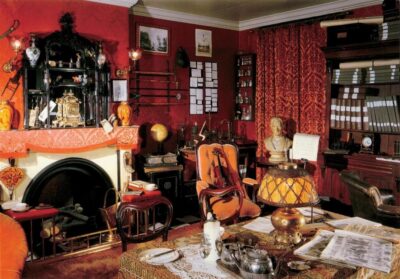
The trail is built like a guided story you play yourself. One segment has you moving into what the theme calls Medieval London’s pleasure district, with clues that push you toward “Frozen fairs,” a “sinister Bishop,” and scenes designed to feel like a series of chapters rather than a random walk.
This is where the experience can feel most fun. Characters and story labels give you a reason to pay attention to the area you’re in. Instead of asking, What is this building?, you’re asking, Why did the puzzle send me here? That shift is what makes the walk rewarding, even for people who are not big on museum days.
That said, the game requires you to keep going. If you prefer a slow sightseeing pace with lots of stopping and reading, you may find some clues take you away from where you expected. The good news is that because you’re in control of the pace, you can stop for photos and take breathers when you need them.
Chewed-Up Bridge Art and Riverside Views You’ll Actually See
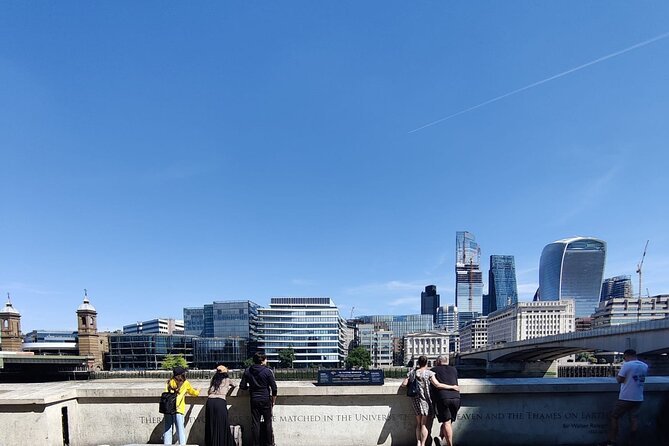
One of the standout elements is the river. The route includes stunning riverside views, and it also sends you across a bridge covered in chewed-up artworks. The “chewed-up” detail is clearly part of the theme, but the point for you is simple: you get outdoor art plus skyline and water views in the same section.
That combination is great for several reasons. First, it breaks up the walk so you’re not surrounded by street-only scenery. Second, it gives you a natural photo moment, which helps if your group enjoys visuals as much as puzzles. Third, the bridge crossing is a built-in pacing shift—use it to reset your brain before you hit the next set of clues.
If you’re sensitive to crowds, go earlier in the day when possible. The City and Southwark corridors can get busy, especially near major transport points and the most popular riverfront angles. You don’t control the outside world, but you can choose when you arrive.






The Historic Market and Pub Breaks That Keep You Moving
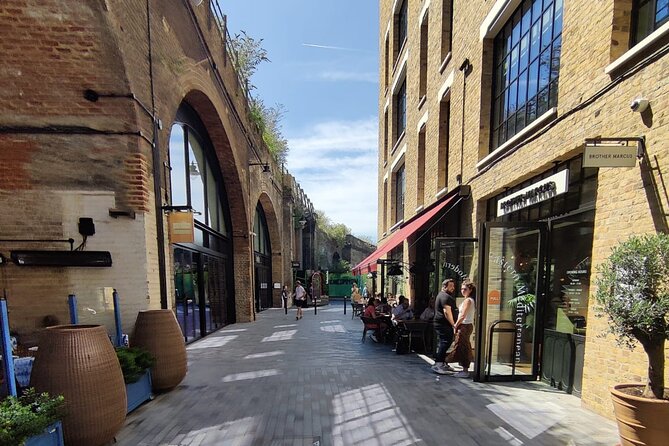
The hunt includes a rest stop in an historic market area, plus a pub stop as part of the planned “recharge” moments. This is smart. A self-guided puzzle walk can become tedious if you never get a chance to sit, snack, and reset. Here, the design nudges you to take breaks without killing the flow.
Markets in this part of London are also useful because they keep the experience feeling grounded. You’re not just doing a themed walk in a vacuum—you’re stepping into a real place where people shop and eat. Even if you don’t spend much, the vibe helps you feel like you’re moving through daily London rather than passing through only tourist points.
Practical note: plan small, easy purchases. You don’t want to take a long detour ordering a full meal if the game still has puzzles left. A quick drink or snack works best, then you’re back to the next clue with your energy intact.
Steampunk Fantasy, Sculptures, and How the Ending Lands

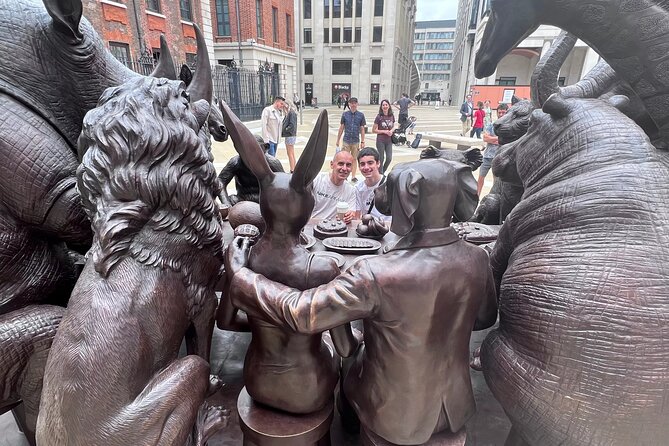
As you continue, the story builds into a steampunk fantasy feel, and the trail wraps up with several awe-inspiring sculptures along the way. That matters because it gives you an ending with a strong visual payoff. Puzzle trails can sometimes end with you simply walking back to the start; here, the design tries to land with impressions you’ll remember.
Sculptures are a good closing device because they’re easy to spot, and they create a natural “final photo” moment. They also make sense in a self-guided format: you can pause for a minute, solve the clue, then decide whether to take one more picture before you move on.
When you finish, you return to St Paul’s Cheapside. That is a comfort feature. You’re not left navigating an unfamiliar endpoint at the end of your three-hour effort.
Time, Walking Pace, and Phone Signal Reality Check
This experience runs about 3 hours. That’s a sweet spot: long enough for multiple themed chapters and real walking, short enough that you’re not stuck for half a day.
Your fitness needs are listed as moderate. In plain terms: you should be okay with steady walking. You might not need training, but you should expect pavement time and some legs-on-streets time—especially if you stop to solve clues carefully or if your group wants frequent photos.
One key consideration from real-world experience: if you get signal issues, it can become harder to reach the requested locations. London has pockets with spotty reception, so don’t assume your phone will always behave. If you hit a weak-signal moment, pause, wait a minute for the connection to improve, and don’t start wandering in every direction. Re-check what the app says and use nearby landmarks to orient yourself.
Price and Value: What $24.07 Buys You
At $24.07 per person for roughly three hours, you’re paying for an organized walking game that runs on your phone. The value isn’t in a lecturer or a sit-down guided segment; it’s in the structure: puzzle prompts, story framing, and a route that nudges you toward less obvious sights.
You also get control, which is part of the value. Difficulty levels are adjustable, clue formats include Classic/Relaxed/Spanish, and you can switch mid-game. If your group is mixed—some enjoy puzzles more than others—you can adapt without abandoning the experience.
It’s also good for families and friend groups where coordination is tricky. Because it’s private and designed for up to five people to play, you can keep it small and avoid the “everyone hears something different” problem that can happen on group tours. That said, you are responsible for following the game instructions, so bring patience if a clue takes a minute longer than expected.
Who This Is Best For (and Who Should Skip)
This hunt is best for you if you like active sightseeing. You’ll probably enjoy it if you want a London walk that feels like a quest, with built-in breaks and plenty of outdoor moments—river views, bridge art, and sculptures.
It’s also a good match for small groups that want flexibility. You can play Classic, Relaxed, or Spanish clues, and you can change your set mid-game. If you like the idea of mixing puzzles with real city wandering, this format fits.
You might want to skip or rethink if you dislike puzzle mechanics. If you prefer straightforward sightseeing with minimal phone use, this will feel like extra work. And if you know your phone struggles in crowded streets or you rely heavily on signal, go prepared with a charger and a backup plan for orientation.
Should You Book This Interactive Treasure Hunt?
Yes, with the right expectations. Book it if you want a fun, flexible way to explore Southwark and the City of London with puzzle momentum, plus built-in breaks at a market and pub. The “story chapters” approach—between bridge art, river views, medieval-themed scenes, and sculptures—keeps your walk from turning into a random stroll.
I’d also book it if you like control over pace and difficulty. The ability to switch clue sets mid-game is a practical feature that helps you avoid getting stuck in the wrong mode.
Skip it only if you know you’ll hate the phone-first format or you can’t handle the idea of searching for answers on foot. With moderate fitness and a phone that works, this is a smart-value London activity that feels like play instead of homework.
FAQ
How long is the Interactive Treasure Hunt London?
It takes about 3 hours.
Where does the treasure hunt start and end?
It starts at St. Paul’s Cheapside, London EC2V 6AA, UK, and ends back at the meeting point.
Do I need a mobile ticket and an app?
Yes. You’ll use a mobile ticket and download the chosen app to play the puzzle trail.
Can I choose different difficulty levels or clue languages?
Yes. Clues are available in Classic, Relaxed, and Spanish formats.
Can I change clue sets while I’m playing?
Yes. You can change your set of clues at any time mid-game.
How many people can play together?
Up to five people can play.
Is this activity suitable for people who are moderately fit?
Yes. The experience requires a moderate physical fitness level.
Is it near public transportation?
Yes. It’s near public transportation.
What happens if the weather is bad or I need to cancel?
The experience requires good weather. If it’s canceled due to poor weather, you’ll be offered a different date or a full refund. You can cancel for a full refund up to 24 hours in advance (based on local time).