REVIEW · LONDON
Medieval London Walking Tour Oxford PhD Historian Guide
Book on Viator →Operated by Historic Tours of England · Bookable on Viator
London’s medieval spine starts at St Paul’s. This walking route is led by Dr Geoff, an Oxford PhD historian, and it connects key places you’d otherwise pass with stories about London before and after the Great Fire of 1666. I really like the way the tour pairs buildings you can see with the political and religious events that shaped them.
My second favorite part is the stop-by-stop architecture focus. You get surviving medieval details at places like St Bartholomew the Great and Temple Church, plus context on Newgate’s role in justice in the Old Bailey era. One thing to consider: it’s a 2.5-hour walk and the tour requires good weather, so comfy shoes and a weather-ready layer matter.
In This Review
- Key highlights to know before you go
- St Paul’s Cathedral: Wren, 1666, and why your route starts here
- William Wallace Memorial: a quick detour with big identity politics
- St Bartholomew the Great: an early Norman church with a lot of life left in it
- Newgate Street: medieval walls, entry points, and the prison-to-court thread
- Temple Church: Knights Templar, a vaulted ceiling, and links to America’s founding
- Price and logistics: what $122.18 really covers
- Who this tour fits best (and who might want to think twice)
- A smart wrap-up: what you’ll carry home
- Should you book this Medieval London walking tour?
- FAQ
- Where do we meet, and where does the tour end?
- What time does the tour start, and how long is it?
- Is this tour private, and is it in English?
- Which stops include admission tickets?
- Is pickup available, and how do I find the guide?
- What happens if the weather is bad?
Key highlights to know before you go
- Oxford PhD-led storytelling: Dr Geoff blends history with what you’re standing in front of.
- St Paul’s framing: you start with Sir Christopher Wren and what changed after 1666.
- Buildings that survived major shocks: Great Fire, Reformation, Civil War, and even WW2 for certain stops.
- Newgate’s prison-and-court link: medieval entry point to Old Bailey criminal court.
- Temple Church and the Knights Templar: plus a famous vaulted ceiling that held up during bombing.
- Free stops that keep momentum: William Wallace Memorial and Newgate Street don’t eat into your ticket time.
St Paul’s Cathedral: Wren, 1666, and why your route starts here
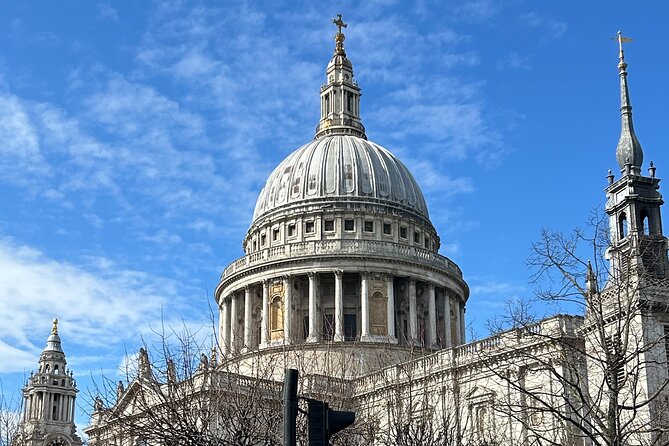
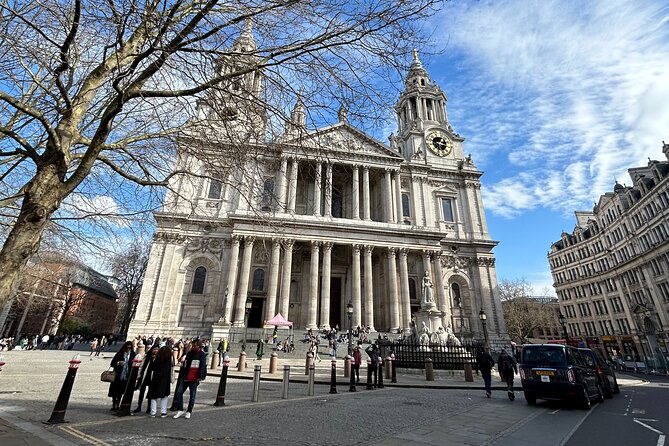
Your tour begins at St Paul’s Cathedral, by the grand stairs on the West end. Even if you’ve seen St Paul’s from the outside, this start gives you a “how we got here” frame for everything that comes next.
St Paul’s was built by Sir Christopher Wren after the Great Fire of 1666. That matters because the fire destroyed most of medieval London. So while you’re walking through streets and passing churches that still show earlier eras, Dr Geoff keeps bringing you back to the big question: what survived, what got rebuilt, and what got altered over time.
A small practical bonus: this start point is easy to find and it’s near public transport. If you like getting your bearings fast, you’ll appreciate that the tour doesn’t start with a maze.
You can also read our reviews of more walking tours in London



William Wallace Memorial: a quick detour with big identity politics
On the way toward St Bartholomew, you pause at the William Wallace Memorial. It’s a short stop (about 10 minutes) and admission is free, so it works well as a reset between heavier church stops.
The point here isn’t to turn the walk into a Scottish history lecture. It’s to show how medieval-era identity and resistance stories echo through later cultural memory. Wallace is presented as a Scot hero tied to Scottish independence—an angle that adds texture while you’re still anchored in London’s larger story.
If you’re the type who gets restless when a walk is only “look at a building,” this little stop helps break that rhythm.
St Bartholomew the Great: an early Norman church with a lot of life left in it
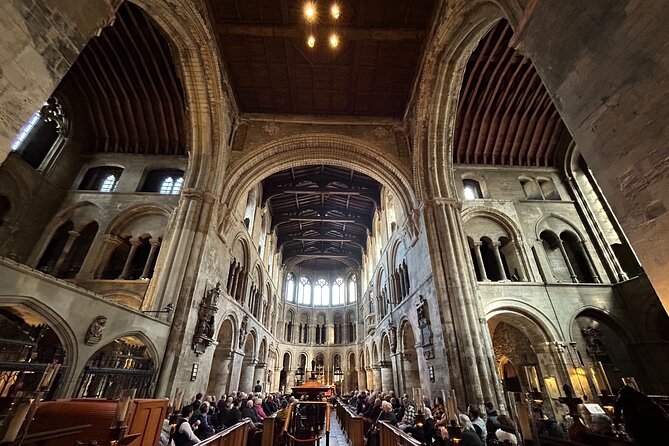
Next comes St Bartholomew the Great, and this is one of the best reasons to book a guide instead of just wandering in on your own. The church is 12th-century, and much of it survived not only the Great Fire of 1666, but also the Reformation, the Civil War, and the Blitz of WW2.
That’s a rare list of survival. You’re not just seeing an old church; you’re seeing a building that lived through major turns in British history.
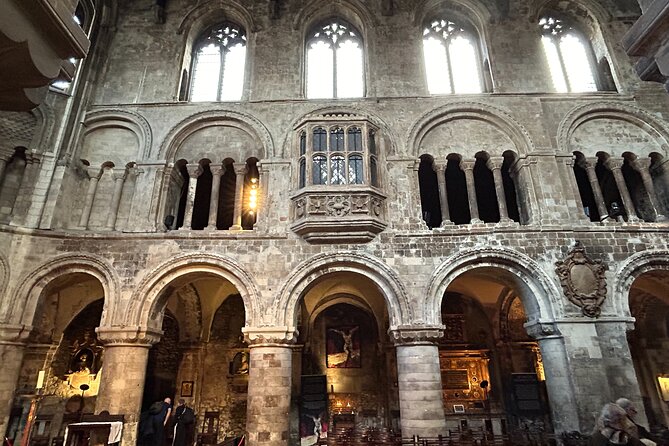
Plan for about 45 minutes here, and admission is included. The eastern side is the highlight area, with stunning arches, columns, and tombs. Dr Geoff also helps you compare what you’re seeing with later medieval church styles. That’s the kind of detail that’s hard to pick up if you’re visiting alone, because you don’t naturally know what to look for.
Possible drawback? Churches can involve a fair amount of standing and looking upward. If you don’t love that, pace yourself. Bring patience for a slower, more interpretive stop.
Newgate Street: medieval walls, entry points, and the prison-to-court thread
After that church focus, the tour shifts to the streets. You spend time discussing Medieval London’s walls, then you stop at Newgate, one of the city’s old entry points.
From there, the story pivots. Newgate later became famous as a prison site. Even more interesting: the Old Bailey (London’s criminal court) was built here, and it is still used today. So the connection goes from medieval boundary to later law-and-order machinery, all without needing a museum ticket.
This stop is about 10 minutes and free, so it’s not a time sink. But it packs in a lot of meaning, because it shows how London’s geography kept being repurposed.
If you’ve ever looked at a map and wondered why certain places have such long-running importance, this is the kind of explanation that clicks.
Temple Church: Knights Templar, a vaulted ceiling, and links to America’s founding
The final major stop is Temple Church, ending in the garden there. This is a 12th-century church with strong associations—especially if you’ve ever encountered Knights Templar stories in books or film.
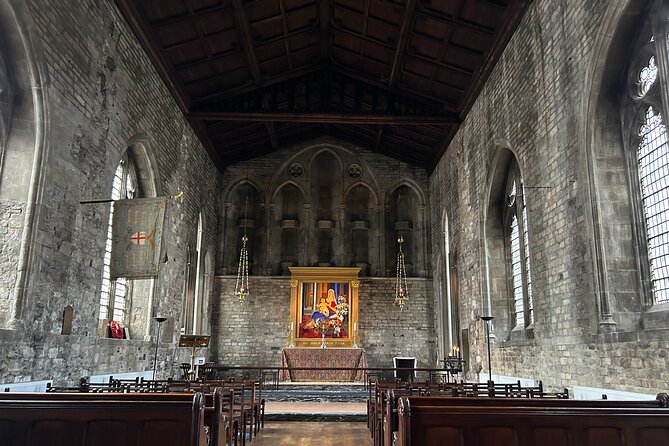
Temple Church is linked to the Knights Templar, the monk-knights of the Crusader era. They were wealthy, and they built this church in the 12th century. Dr Geoff also points out a key twist in the building’s survival story: it survived the Great Fire, but Victorian restorers did much of the damage. That doesn’t ruin the experience, but it changes how you should look at the stonework. Think of it as “medieval base, later layers.”
Then there’s the ceiling. The stone vaulted ceiling survived the Blitz when bombs rained down all around. It’s the kind of fact that makes you look differently, because you’re not just admiring a historic church—you’re seeing evidence of what held up under extreme events.
You’ll also hear a specific connection to the founding fathers of the United States. The tour frames this link as part of why Temple Church can feel surprisingly international, not just local.
You’ll spend about 45 minutes here, with admission included.
You can also read our reviews of more guided tours in London






Price and logistics: what $122.18 really covers
At $122.18 per person, this tour isn’t “budget London.” But it’s not priced like a museum trip either. What you’re paying for is a private guide experience with an Oxford PhD historian, plus the structure to visit multiple major sites in one run.
Two stops include admission (St Bartholomew the Great and Temple Church). The other core stops are free, including William Wallace Memorial and the Newgate Street/Newgate area pause. So the guide value is doing heavy lifting: you’re not just paying to get into buildings. You’re paying for context you’d struggle to assemble quickly by yourself.
It’s also private, meaning only your group participates. That matters because church and architecture explanations get better when you can ask questions without feeling rushed.
Pickup is offered, and Dr Geoff will have a blue lanyard showing Historic Tours of England. If you prefer an easy start, you’ll like knowing exactly what to look for.
One more practical note: the total duration includes the walk from St Paul’s to Temple Church, and the tour requires good weather. If London gives you rain, expect the route to be adjusted or the experience offered on a different date.
Who this tour fits best (and who might want to think twice)
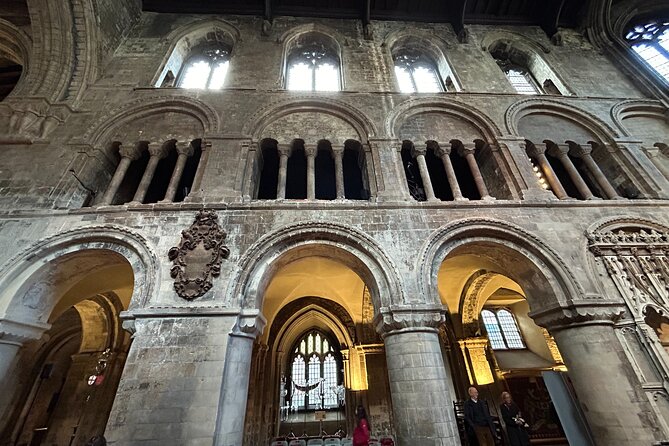
This is a great pick if you care about how London changed over time and you like your history grounded in specific places. It’s also ideal if you’re drawn to medieval architecture—especially Norman-era features—and you want someone to explain what you’re seeing before you move on.
You’ll also enjoy it if you want a more intimate feel. A private guide like Dr Geoff keeps the walk focused and conversation-friendly.
You might want to consider something else if you dislike longer church visits or if you’re traveling with limited walking tolerance. The tour is about 2 hours 30 minutes, and even with short stops, you’ll still be on your feet for a while. And yes, it depends on good weather.
A smart wrap-up: what you’ll carry home
By the time you reach Temple Church’s garden, you’ve traced a story line that runs from the post-1666 rebuilding mindset (Wren at St Paul’s) back into the medieval survivors still standing in London’s fabric.
You’ll have:
- A clearer sense of how catastrophic events changed the city’s physical shape.
- A street-level understanding of Newgate and why it mattered for criminal justice history.
- A better read on Temple Church and how later restoration history affects what you see.
And if you want to keep the day going, one review mentioned a pub lunch at the end that felt authentic and relaxed. If that option is available when you go, it’s a nice way to land after a few hours of walking and stone-staring.
Should you book this Medieval London walking tour?
Book it if you want medieval London that actually connects—not just a checklist of famous stops. Dr Geoff’s reputation for making the past feel human, and his specific attention to church architecture and survival through wars and fires, is the difference-maker.
Skip it (or swap plans) if you’re looking for a casual stroll with zero history, or if you’re not comfortable with about 2.5 hours of walking and weather dependence.
If you’re a history lover, especially one who likes churches, architecture, or the way legal and religious power used space, this tour is a strong value because it compresses a lot of meaning into one smooth route.
FAQ
Where do we meet, and where does the tour end?
You meet at St Paul’s Cathedral, St Paul’s Churchyard, London EC4M 8AD, near the grand stairs on the West end. You end at Temple Church, Temple, London EC4Y 7BB, in the garden.
What time does the tour start, and how long is it?
The start time is 10:00 am. The tour lasts about 2 hours 30 minutes, and that total includes the walking time from St Paul’s to the end point.
Is this tour private, and is it in English?
Yes. This is a private tour/activity, so only your group participates. It’s offered in English.
Which stops include admission tickets?
Admission is included for St Bartholomew the Great and Temple Church. The William Wallace Memorial and the Newgate Street/Newgate stop are listed as free.
Is pickup available, and how do I find the guide?
Pickup is offered. Your guide, Dr Geoff, will have a blue lanyard showing Historic Tours of England. If you’re meeting at St Paul’s, you’ll need to look for the lanyard at the cathedral’s grand stairs area.
What happens if the weather is bad?
This experience requires good weather. If it’s canceled due to poor weather, you’ll be offered a different date or a full refund.