REVIEW · LONDON
Jack the Ripper Tour in Spanish
Book on Viator →Operated by Once Upon a Tour · Bookable on Viator
Whitechapel looks different after dark. This Spanish-language Jack the Ripper walk strings together key murder-linked streets and stops like Miter Square and The Ten Bells, so you actually see what most people miss. I also love how the guide keeps the story moving with photos and street-level details, but the subject matter is unsettling and you should be ready for darker themes.
The 2-hour format is a smart use of time, and the group stays small (up to 25), which helps the guide keep everyone together on the night walk. It’s also hard to ignore the score: a 5/5 rating across 875 reviews, with lots of praise for the guide’s energy and how clearly the material lands in Spanish—especially when she brings the neighborhood to life.
In This Review
- Quick highlights
- Why this 6pm Whitechapel walk feels different
- Price and timing: good value for a short evening plan
- Meeting at Whitechapel Gallery, ending near Old Spitalfields Market
- Your route: from Gunthorpe Street to Whitechapel High Street
- Saint Botolph Without Aldgate: a quiet stop with big meaning
- Miter Square: where the story gets specific
- Goulston Street and Lilian Knowles House: lesser-known stops that add texture
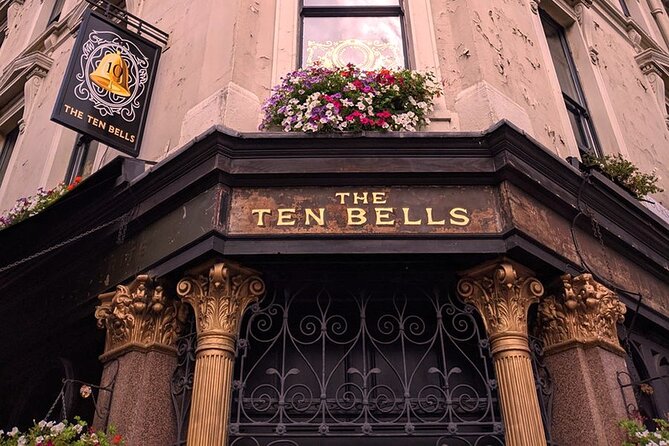
- The Ten Bells and Spitalfields Market: the finale with atmosphere
- What the guide does in Spanish (and why Carmen gets mentioned a lot)
- What to expect on the walk: pacing, photos, and after-dark reality
- Who should book this Jack the Ripper tour
- Should you book? My decision guide
- FAQ
- Is the Jack the Ripper Tour offered in Spanish?
- How long is the tour?
- What time does the tour start?
- Where do I meet the group?
- Where does the tour end?
- How much does it cost?
- Do I need to bring anything for tickets?
- Are tips included in the price?
- FAQ
- Is there a cancellation option?
- How big are the groups?
Quick highlights
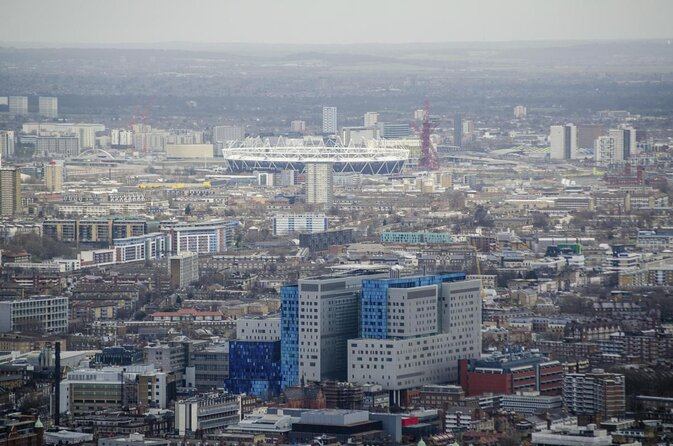
- Atmospheric after-dark Whitechapel route focused on locations tied to the case
- Spanish guided commentary that’s repeatedly praised for energy, clarity, and charisma
- Miter Square and The Ten Bells included, plus lesser-known stops along the way
- Small group size (max 25), better for questions and pacing
- Mobile ticket format so you can travel light
Why this 6pm Whitechapel walk feels different
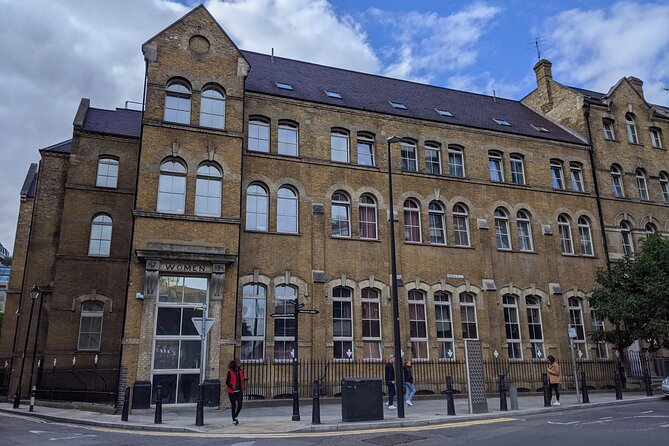
Whitechapel at night has a way of resetting your expectations. During the day, you tend to see streets and buildings. After sunset, the same streets feel like corridors—made for stories you weren’t expecting to find on a tourist map.
This tour leans into that after-dark effect, but it does it with a clear goal: you’re not just hearing the Jack the Ripper legend in the abstract. You’re moving through the neighborhoods tied to the murders and the daily life around them, which makes the whole case feel more grounded.
Also, it’s Spanish. That matters. If you’re comfortable with Spanish (or you’re studying), this is a chance to practice while the guide keeps you focused with photos, curiosities, and lively explanations.
One note: this is still Jack the Ripper. Even if the storytelling is careful, the topic is gruesome by nature. If you’re sensitive to violent crime stories, keep that in mind before you go.
You can also read our reviews of more tours and experiences in London.


Price and timing: good value for a short evening plan
At $17.16 per person for about 2 hours, this is priced like an efficient walking tour rather than a long sit-and-listen experience. And since admission is listed as free (meaning you’re not paying entry fees along the route), your money stays focused on the guide and the route.
The start time is 6:00 pm. That’s a sweet spot for London planning: you’re done with earlier sightseeing, and you can still grab dinner after. The schedule also helps you avoid the midday crowds that can dilute the “neighborhood feeling.”
And because the group caps at 25, you’re less likely to feel like you’re inside a moving crowd. You’re more likely to be part of a tighter group experience where the guide can manage the pacing.
If you want one practical rule: wear shoes you trust for uneven pavement. Evening walks around Whitechapel are still normal city sidewalks—your comfort will matter more than the lore.
Meeting at Whitechapel Gallery, ending near Old Spitalfields Market
The tour starts at Whitechapel Gallery, 77–82 Whitechapel High St (E1 7QX). You’ll also end at Old Spitalfields Market, 59 Brushfield St (E1 6AA). That end point is useful because it drops you near another active area—handy if you’re planning to keep exploring instead of heading straight back.
The meeting location is described as easy to find and near public transportation. In practice, that means less time hunting in the dark and more time listening to the guide.
You also get a mobile ticket, which is practical. No printing, no extra hassle—just have your phone ready when you arrive.
Your route: from Gunthorpe Street to Whitechapel High Street
The walk begins with Gunthorpe Street, then moves into Whitechapel High Street. Those first streets are important because they set the tone. You’re starting in the general Whitechapel area and then tightening the focus as the tour connects landmarks into a story.
Gunthorpe Street works like an orientation moment. You get a sense of how local streets stitch together—useful if you’ve never been here before. You’re not expected to know anything coming in, and that first stretch helps you get your bearings fast.
Then Whitechapel High Street gives you scale. It’s one of those roads where you can start comparing what you see now with what you’ve heard about the neighborhood’s Victorian-era life. Even if you’re skeptical of crime-tour myths, the street layout and the lived-in feel tend to make the guide’s explanation land better.
Expect the guide to talk about daily life for people in Whitechapel during the period—this isn’t just a list of locations. The tour frames the case as something that happened inside a real working neighborhood, not a detached “mystery story” sealed in a book.
Possible drawback here: if you’re expecting major, dramatic set-piece landmarks, early stops are more about street context than big photo backdrops. The payoff comes as you reach the famous names later.
Saint Botolph Without Aldgate: a quiet stop with big meaning
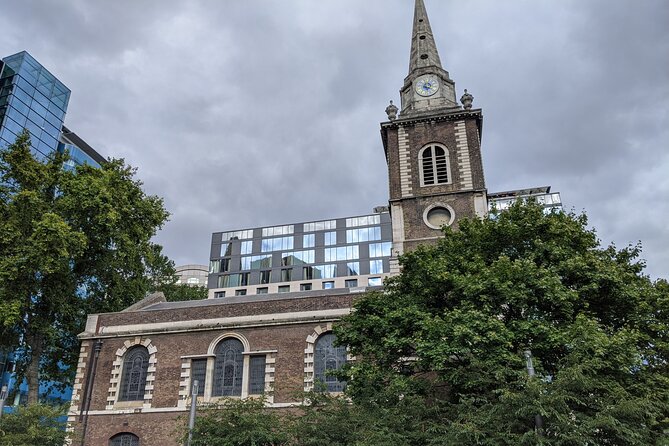
Next up is Saint Botolph Without Aldgate. Religious buildings in London often do two things at once: they offer a calm visual break, and they also make the past feel more “real” because they’re tied to long-term local presence.
On this tour, the stop helps the guide widen the lens beyond the case itself. You’re not only tracking incidents—you’re learning how the community around Whitechapel worked, lived, and moved through the day-to-day rhythm of the area.
Even if you don’t linger long, this kind of stop changes how you process the narrative. Instead of treating the case like a riddle with missing pieces, you’re seeing it as something that unfolded in a place where people still had routines—work, worship, errands, and neighborhood ties.
If you prefer heavy-action sightseeing, you might find this part slower. But if you like stories that connect crime with everyday life, this is the type of stop that improves the tour’s credibility.


Miter Square: where the story gets specific
Then you reach Miter Square. This is one of the tour’s anchor points because it’s tied to the way the investigation and the public fear took shape in real space.
Stops like this matter because they shift the experience from “general lore” to “named location.” When a guide points to a specific square or street corner, the story stops being just an image in your head. It becomes a route you can trace.
And Miter Square is also where the guide’s storytelling style becomes especially noticeable. The reviews highlight how the guide keeps people attentive and how she brings in photos and details that help you visualize what the area may have looked like at the time.
If you’re the type of traveler who likes to understand how rumors and fear spread, this stop is valuable. It’s not just about who did what. It’s about how the neighborhood experienced the case.
Goulston Street and Lilian Knowles House: lesser-known stops that add texture
After Miter Square, the tour continues to Goulston Street, then to Lilian Knowles House. These are the kinds of locations that often get missed by casual visitors, because they don’t always match the “most famous sight” format.
That’s exactly why they’re worth including. The case isn’t only made of big names. It’s made of lots of local geography—streets and buildings where events and daily movement overlapped.
Goulston Street helps you understand the neighborhood’s pattern of movement and how narrow corridors and street connections can shape what people notice. The guide’s focus on how victims lived and how the area worked gives these street names weight.
Then Lilian Knowles House adds a different texture. Even when you don’t know the name in advance, having a specific building tied into the narrative gives the guide an easy way to explain the human side—how people were part of a real community, not just figures in a sensational story.
One thing to consider: this part can feel more “interpretive” than visual. If you need dramatic architecture on every stop, you might not love every moment. But if you’re here for storytelling that connects details, these are the places that make the tour feel more complete.
The Ten Bells and Spitalfields Market: the finale with atmosphere
The last major themed stop is The Ten Bells / Spitalfields Market. This is where the tour leans into atmosphere. The name alone carries strong associations for anyone who’s heard Jack the Ripper stories, and the guide uses that familiarity to sharpen the narrative rather than just repeating headlines.
Spitalfields Market also helps the ending feel practical. You’re wrapping up in an area that’s not completely isolated, so you can keep your evening rolling—grab a bite, browse, or head back toward your next London stop.
If you’re taking photos, this is usually the section where it’s easiest to connect your pictures to what you learned. You’re ending with a place your brain already labels as significant, so the guide’s closing framing tends to stick.
The tour also carries forward the theme that the menace was never unmasked. The final feeling isn’t a solved mystery; it’s a lingering sense of unresolved fear and unanswered questions—exactly the emotional tone many people associate with the legend.
What the guide does in Spanish (and why Carmen gets mentioned a lot)
This tour is guided in Spanish, and the reviews make it clear that the guide is a major reason people love the experience. The name Carmen comes up repeatedly in the feedback, and the praise is consistent: professional delivery, strong energy, and a gift for keeping attention on the story without losing the thread.
The specific techniques people call out are practical. You get photos and additional interesting details that help you visualize the setting. You also get a clear storyline with stops that actually connect, instead of random name-dropping.
That matters for you because language tours can sometimes become a “listen and hope” situation. Here, the feedback suggests the guide’s pacing keeps you oriented, which is what you want when you’re learning while sightseeing.
If you speak Spanish at a comfortable level, you’ll get more out of the experience. If your Spanish is basic, you can still participate, but you’ll enjoy it most when the guide’s emphasis on photos and location names helps you follow along.
What to expect on the walk: pacing, photos, and after-dark reality
The tour runs about 2 hours, which is long enough to cover several named stops without dragging. The itinerary includes multiple street and landmark points, so expect walking and frequent stopping.
You’ll also want to be okay with a darker theme. Even when it’s delivered in a lively style, the material is about a violent case. The reviews don’t complain about shock value; they focus on clarity and engagement. Still, it’s smart to choose your comfort level in advance.
The tour is limited to 25 people max. That helps the guide manage the group, but you should still expect typical walking-tour behavior: keep up, stay together at stops, and don’t lag behind when the story is moving.
Weather matters in London. This is an evening activity, so bring a light layer and consider a compact umbrella if the forecast looks questionable.
Who should book this Jack the Ripper tour
I think this tour fits best if you:
- want a Spanish-language storytelling experience in Whitechapel
- like walking tours that connect named locations into a coherent narrative
- enjoy crime-history stories with human context, not just a “who and when” checklist
It might be less satisfying if you:
- hate spooky or violent topics, even as history
- need big-ticket attractions every stop (this is street-and-building focused)
- don’t speak Spanish well and want lots of translation support (the tour is guided in Spanish)
Should you book? My decision guide
If your priority is getting the Jack the Ripper story anchored in real Whitechapel streets—Miter Square, The Ten Bells, and the extra stops that many people skip—this tour is a strong value. The $17.16 price makes it easy to try without feeling like you need to commit to an all-evening excursion.
Add the consistent feedback about Carmen’s professionalism and energy, plus the fact it’s a short 2-hour plan that ends in a lively area, and you’ve got a tour that’s built for both learning and an enjoyable night out.
My honest “yes, book it” comes down to this: you’ll get more than a slogan. You’ll get a guided route through Whitechapel where the legend has physical places to stand on.
If that sounds like your kind of London evening, reserve a spot and plan your night around it.
FAQ
Is the Jack the Ripper Tour offered in Spanish?
Yes. The tour includes a guided tour in Spanish.
How long is the tour?
It runs for about 2 hours.
What time does the tour start?
The start time is 6:00 pm.
Where do I meet the group?
You meet at Whitechapel Gallery, 77–82 Whitechapel High St, London E1 7QX.
Where does the tour end?
The tour ends at Old Spitalfields Market, 59 Brushfield St, London E1 6AA.
How much does it cost?
The price is $17.16 per person.
Do I need to bring anything for tickets?
The tour uses a mobile ticket.
Are tips included in the price?
Tips are not included; they’re optional.
FAQ
Is there a cancellation option?
Yes, there is free cancellation. You can cancel up to 24 hours in advance for a full refund.
How big are the groups?
The tour has a maximum of 25 travelers.