REVIEW · LONDON
Jack the Ripper – What About the Women?
Book on Viator →Operated by Rebel Tours · Bookable on Viator
Jack the Ripper is everywhere in London. This tour tells the story from the women’s side. It’s built around real locations in Whitechapel and East London, tied to specific victims, and then widened into daily life for working-class Londoners. I love that it stays fact-based and respectful, without turning tragedy into spectacle.
You also get the bonus of an evening walk—so you’re seeing brick-and-stone London in the light people actually lived with. The route moves through places like Whitechapel Road, Brick Lane, Spitalfields Market, and St Botolph’s Aldgate, with short stops that help the story land. One possible drawback: if you want a murder-by-murder, graphic true-crime style, this is not that kind of tour.
In This Review
- Key Highlights You’ll Feel On This Walk
- A Women-First Jack the Ripper Walk Through East London at Dusk
- Evening Timing Matters: What a 6:30pm Start Does for the Story
- Whitechapel Road: Martha Tabram and Polly Nichols, Plus Workhouse Reality
- Brick Lane Mosque and the Polly Nichols Pub Connection: Addiction and Immigration
- Spitalfields Market and Truman Brewery: Annie Chapman, Ten Bells, and Renaming
- Old Spitalfields Market and Mary Jane Kelly’s Residence: The Contrasts That Hurt
- Petticoat Lane Market and St Botolph’s Aldgate: Textile Work and Elizabeth Stride
- Mitre Square Finish: Catherine Eddowes and How the Tour Lands
- Price and Value for a 2-Hour, Small-Group Walking Tour
- Practical Tips: Shoes, Pace, and Getting the Most From Night Streets
- Who This Tour Fits Best
- Should You Book This Tour?
- FAQ
- What’s the duration of the tour?
- Where does the tour start and end?
- What time does the tour begin?
- How much does it cost?
- Is the tour offered in English?
- Is the group size limited?
- Is admission included for the stops?
- Is the tour dependent on weather?
Key Highlights You’ll Feel On This Walk
- Women-first storytelling tied to named victims, not the killer myth
- Small group (up to 20) for questions and a calmer pace
- Evening East London at 6:30pm, with the route shaped for night-time atmosphere
- Actual sites in the story, from Truman Brewery-area streets to Ten Bells
- No sensational visuals, keeping the focus on context and daily life
- Culture and community stops, including Brick Lane Mosque and modern-day work in the area
A Women-First Jack the Ripper Walk Through East London at Dusk
If you think you know the Jack the Ripper story, this tour nudges you to rethink it. Instead of centering the legend, it centers the women and the world that pushed them toward vulnerability. The guide’s job is not just reciting dates. It’s explaining how Victorian East London functioned—housing, work, policing, charity, and stigma—so the names you hear stop being labels and start feeling human.
This is also one of the few versions of the tale that doesn’t trade in the grisliest angles. Based on the tour’s approach and how it’s described by past guests, you should expect a sensitive, historical, sociological focus. That makes it a good fit if you’re curious about the truth, but you don’t want the experience to feel like a shock show.
In practice, you’ll be walking a lot for about two hours. This isn’t a sit-in-and-watch film tour. Wear shoes you trust, and treat it like a paced city walk where the stops do the heavy lifting.
You can also read our reviews of more tours and experiences in London.



Evening Timing Matters: What a 6:30pm Start Does for the Story
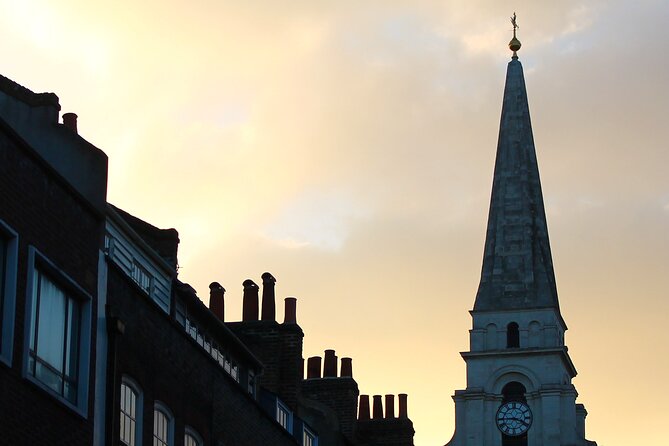
A 6:30pm start changes the whole mood. East London looks different at dusk. Streets feel less like a museum and more like a neighborhood. The tour leans into that by offering an evening walking experience that lets you notice the city’s layers: older brickwork, working businesses, and present-day community life in the same lines of sight.
This timing also helps the route make sense. You’re moving through key sites—Whitechapel Road, Brick Lane, Spitalfields Market, Petticoat Lane, and the Aldgate area—without the pressure of rushing across London in daylight. If you’re the type who likes to connect history to real streets, the evening pace is a strong match.
One practical thing: because it’s outdoors, the experience requires good weather. London drizzle can happen, so bring a light layer and plan for damp sidewalks.
Whitechapel Road: Martha Tabram and Polly Nichols, Plus Workhouse Reality
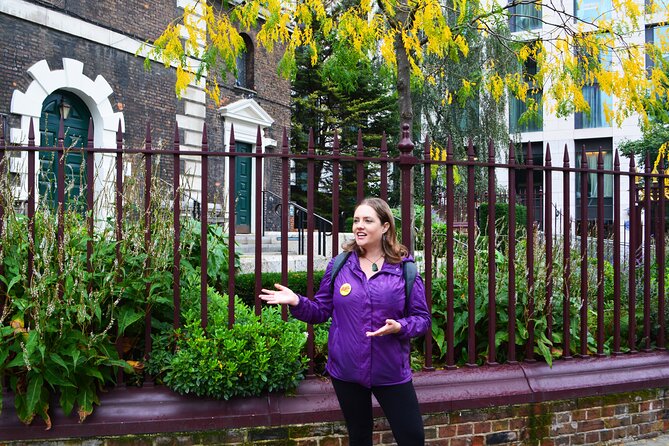
The tour begins on Whitechapel Road, where the story anchors in two named victims: Martha Tabram and Polly Nichols. This is where the tour gets its main power. The guide doesn’t jump straight to events. You start with how working-class residents lived—especially the women—inside harsh and crowded housing.
Expect discussion of the types of accommodation that shaped daily survival, including dosshouses, workhouses, spikes, and other lodging forms. Those words can sound unfamiliar until the guide connects them to what it meant to be poor in that area: limited options, hard conditions, and little margin for illness, unemployment, or addiction.
You’ll also hear about charities still carrying out work in the area today. That matters. It keeps the tour from feeling like a sealed-off past. You’re seeing how a neighborhood responds across time, not just how it suffered during a short scandal.
This stop is roughly 20 minutes, so you’ll want your mind switched on early. It sets the lens for everything that follows.
Brick Lane Mosque and the Polly Nichols Pub Connection: Addiction and Immigration
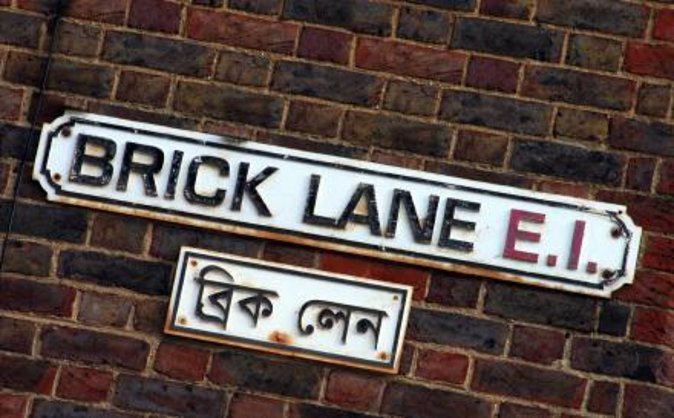
Next comes Brick Lane, where the tour connects to the site of the pub connected to Polly Nichols’s final night. The guide uses that point to talk about alcoholism and addiction in the Victorian era, framed in a way that explains the social environment rather than treating addiction like a moral punchline.
Then you’ll stop by Brick Lane Mosque. The purpose here is practical: it explains immigration into the East End and the area’s cultural diversity. This is an important contrast. Whitechapel is often remembered only for one grim chapter, but Brick Lane reminds you it’s also a living, changing community.
A short stop like this (around 15 minutes) works well because it broadens the story without slowing it down. You’re not just learning a grim timeline. You’re learning what kind of city corner this has been for generations.
Spitalfields Market and Truman Brewery: Annie Chapman, Ten Bells, and Renaming
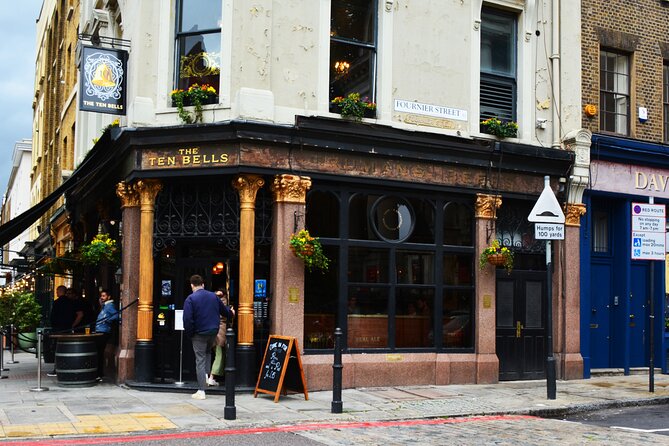
At Spitalfields Market, the tour shifts into a more urban, street-level geography. You’ll visit the site connected to the old Truman Brewery, once described as the largest in the world. Even if you don’t care about brewing trivia, it helps you picture why this part of London pulled in workers and built dense streets around industry.
The guide then brings in 29 Hanbury Street, where Annie Chapman was found on September 8. That kind of “here, on this street” detail makes the story feel grounded. It’s not just a tale floating in time.
From there, you’ll hear more at the Ten Bells Pub, including the heartbreak associated with Chapman’s life. And there’s also a modern angle that I really respect: the tour explains how the movement Reclaim the Night helped force the pub to change its name back to Ten Bells from the Jack the Ripper label.
That renaming story isn’t just trivia. It’s about respect for victims and for the neighborhood. It’s a reminder that history can be packaged badly—and then corrected by people who care.


Old Spitalfields Market and Mary Jane Kelly’s Residence: The Contrasts That Hurt
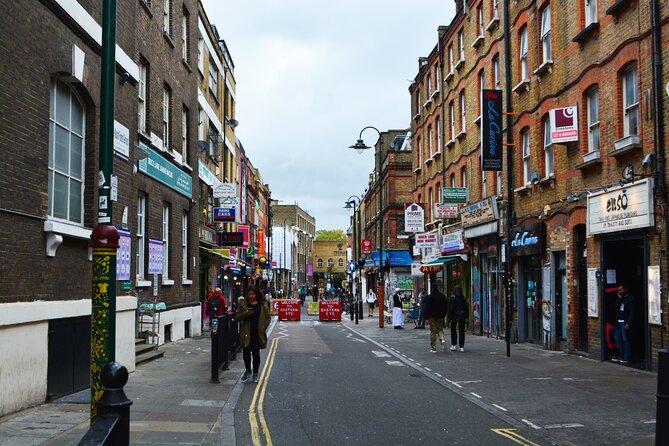
Then the tour moves to Old Spitalfields Market, opened in 1887. The guide uses the date to set up a stark contrast: this market era and the year before the Whitechapel murders began. It’s a useful technique because it stops the story from being a sudden “dark event” in an otherwise normal city. Instead, you get the sense of a society under pressure.
You’ll briefly dwell on the contrasts of the Victorian era, and then head toward Crispin Street, where there’s a site connected to a refuge for working-class people that actually worked. That phrase matters. It hints at the difference between charity that can help and charity that only gestures.
Across the street, the tour points to the former site of Mary Jane Kelly’s residence, described as the last victim and the most mysterious. Whether you’re familiar with Kelly’s story or not, the focus stays on what the setting meant for someone living there—rather than sensational guesses.
This segment is about 15 minutes, long enough to set the tone, short enough to keep the pacing steady.
Petticoat Lane Market and St Botolph’s Aldgate: Textile Work and Elizabeth Stride
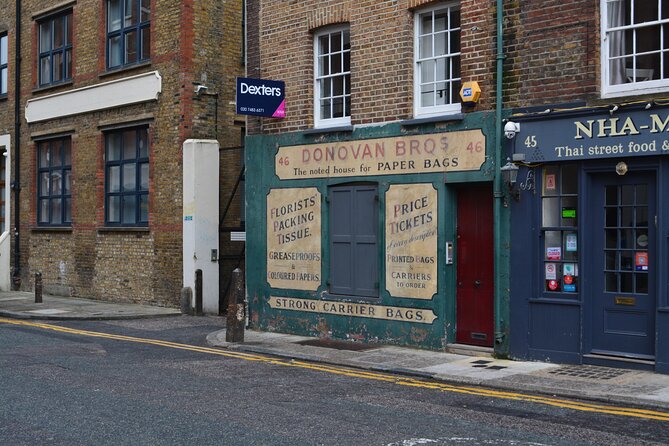
The tour continues to Petticoat Lane Market, described as the former heart of the textile industry in the East End. This stop helps you understand why so many people were drawn into the neighborhood’s labor system—and why vulnerability could spread when work dried up or risks piled on.
Then you reach St Botolph’s Aldgate, where the guide introduces Elizabeth Stride. You’ll hear that she was originally from Sweden, and the tour talks about her beginnings in Gothenburg and later life in London. This detail works for two reasons: it shows the international edges of Victorian London, and it quietly reinforces the theme that these weren’t faceless victims. They had backstories before East London’s final chapter.
The St Botolph’s stop is part of the final stretch, with the tour wrapping up near Mitre Square.
Mitre Square Finish: Catherine Eddowes and How the Tour Lands
The tour finishes close by in Mitre Square, where Catherine Eddowes’s body was discovered. The guide connects her story with her background—described as a feisty Wolverhampton lass—again emphasizing identity and circumstance over legend.
I like this ending because it doesn’t leave you hanging in grimness. By the time you reach Mitre Square, you’ve already been taught the wider story: the living conditions, the stigma, the social pressures, and the neighborhood’s role in shaping what was possible.
You get the satisfaction of a complete arc: from cramped daily life, to street-by-street locations, to the cultural mix of the East End, and finally back into a specific point on the map.
Price and Value for a 2-Hour, Small-Group Walking Tour
The price is $34.28 per person for about two hours. That’s not only reasonable for a guided walk in central London—it’s actually good value when you consider what you’re getting.
You’re paying for:
- A guide who connects named victims to named places
- Context on working-class life, housing types, and neighborhood charity
- An evening route that includes multiple key sites without you having to plan or navigate
- A small group size (up to 20), which helps the guide manage questions and pacing
Also, the itinerary includes stops where admission is noted as free, which keeps extra costs down. You’re not dealing with ticket surprises at each location.
If you already know you prefer history with context over sensational true crime, this price feels like a bargain. If you want graphic crime detail, you may feel you’re not getting what you expected.
Practical Tips: Shoes, Pace, and Getting the Most From Night Streets
This is an evening walking tour, so your comfort matters. Bring comfortable shoes, and expect uneven sidewalks. The pacing includes frequent stops and some brief time to look around, and there are places to sit if needed (the experience is described as accessible for people who want a bit of a break).
Language is English, and you’ll want to arrive a little early so you can get your bearings. The meeting point is easy to find: outside Aldgate station (start at Aldgate High St, London EC3N 1AH). The tour ends at Spitalfields Market, 65 Brushfield St, London E1 6AA.
And if you’re picky about content tone, read the vibe like this: it’s respectful, fact-based, and focused on the women’s lives and their circumstances—not on reenactment-style gore.
Who This Tour Fits Best
This is a strong match if you:
- Want a different angle on the Jack the Ripper story
- Prefer a history and social-conditions approach over the killer myth
- Like walking tours that tie stories to real street locations
- Care about how neighborhoods evolve and correct harmful narratives over time
It’s also a good choice for families with mature teens, since the tour approach avoids grisly picturing and doesn’t linger on graphic details. If your group wants the focus to stay on people, context, and consequence, you’ll likely feel comfortable.
If your group’s goal is purely true-crime entertainment, you might find the tone too restrained.
Should You Book This Tour?
Yes, if you want the Jack the Ripper era to feel human and grounded. I’d book it when you’re tired of the same old killer-centered version and want a route that connects victims’ names to the streets they lived (and suffered) through.
Skip it only if you specifically want a murder-moment retelling with graphic detail. This tour is built to keep the focus where it belongs: on the women, their lives, and the East End that shaped their choices.
If you like thoughtful tours—short stops, strong context, and a guide who keeps it factual—this one is a very easy yes.
FAQ
What’s the duration of the tour?
The tour lasts about 2 hours.
Where does the tour start and end?
It starts near Aldgate station at Aldgate High St, London EC3N 1AH, and ends at Spitalfields Market, 65 Brushfield St, London E1 6AA.
What time does the tour begin?
The start time is 6:30 pm.
How much does it cost?
It costs $34.28 per person.
Is the tour offered in English?
Yes, it’s offered in English.
Is the group size limited?
Yes. The maximum group size is 20 travelers.
Is admission included for the stops?
Admission is listed as free for the stops mentioned during the tour.
Is the tour dependent on weather?
Yes. It requires good weather, and if it’s canceled due to poor weather you’ll be offered a different date or a full refund.