REVIEW · LONDON
London: Natural History Museum Private Guided Tour
Book on GetYourGuide →Operated by Walkport Limited · Bookable on GetYourGuide
Dinosaurs and science in two hours.
This private Natural History Museum tour is built for people who want big, memorable sights plus the human stories behind the discoveries. You’ll move from prehistoric giants like T-Rex and Triceratops to the museum’s standout animal and Earth-science displays, guided by a real person who can connect the dots.
I like the way the tour balances wow-factor with meaning: you get both the animals you came for and the science behind how we know what we know. I also like the small-group feel, since it stays flexible enough to match curious questions and family pacing. One thing to think about: it involves walking and some stairs, so plan for that (lifts are available, but you should tell the guide if you’ll need them).
In This Review
- Key Things You’ll Appreciate From This Museum Tour
- Meet at the East Garden Entrance: Quick Start, Clear Orientation
- The Two-Hour Structure: Dinosaurs, Then the Bigger Natural World
- Dinosaurs: T-Rex, Triceratops, and the Story of Reign and Extinction
- The Human Side of Science: Men and Women Who Made History
- From Giraffes to Fast Fish: Seeing Diversity Without Feeling Lost
- Hope the Blue Whale: One of the Museum’s Most Memorable Moments
- Fossils, Minerals, and Artefacts: The Earth-Science Portion People Skip
- Price and Value: How $134 Works When You Group Up
- Who This Tour Fits Best (And Who Might Want Something Else)
- Getting Around Inside: Stairs, Lifts, and Making It Work Smoothly
- Language Support: English and French
- Should You Book This Natural History Museum Private Guided Tour?
- FAQ
- FAQ
- How long is the London Natural History Museum private guided tour?
- What is the meeting point for the tour?
- What happens if it’s raining?
- Is the tour private, and how many people can join?
- What’s included in the price?
- What’s not included?
- Is the tour wheelchair accessible?
- What languages are offered for the live guide?
Key Things You’ll Appreciate From This Museum Tour
- Private guide time so you’re not stuck reading labels while others drift ahead.
- Dinosaurs first, with the chance to stand close to headline fossils like T-Rex and Triceratops.
- People behind the science, not just facts—stories about the men and women who shaped what’s in the museum.
- Natural-world variety, from giraffes and ocean life to the famous Hope blue whale.
- Fossils, minerals, and precious gems, including that fun museum moment where gems are the feature, not a footnote.
Meet at the East Garden Entrance: Quick Start, Clear Orientation
This tour meets at the east side entrance to the museum’s garden, right at the crossing of Cromwell Road and Exhibition Road. You’ll look for the Excellent Walks of London sign. That matters because the Natural History Museum is busy, and having a precise meeting location helps you get your bearings fast.
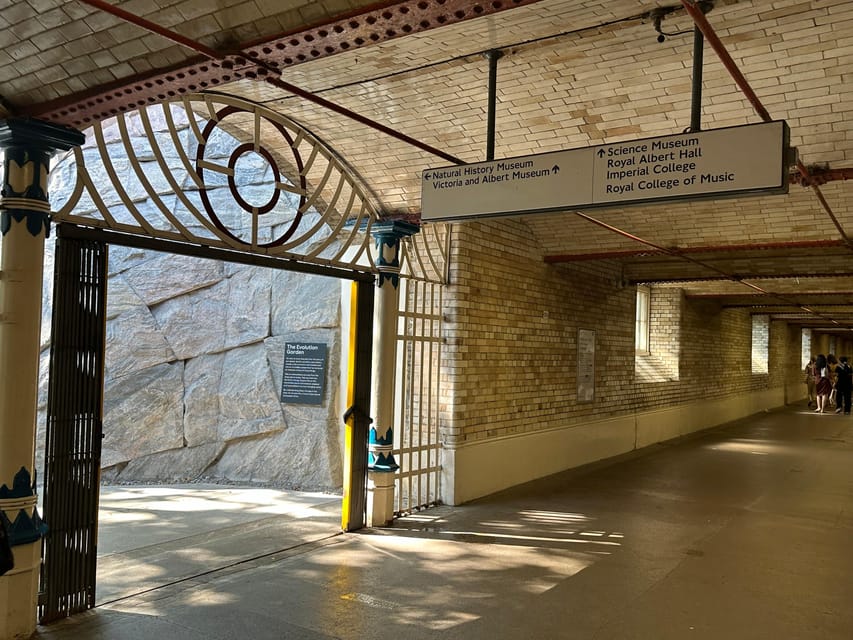
If rain hits, you’ve got a smart backup. There’s a tunnel route from South Kensington tube station that connects you underground to the museum area. The guide will wait at the Natural History Museum exit, which also functions as the East Entrance to the garden, underground (there’s a photo gallery mentioned for visual help).
Practical tip: wear shoes you can walk in comfortably. Even with a guided route, this is still a museum crawl with up-and-down movement during the tour.
You can also read our reviews of more guided tours in London



The Two-Hour Structure: Dinosaurs, Then the Bigger Natural World
At 2 hours, you’re not doing a full museum marathon. The tour is paced like a guided highlight reel with enough context to make it stick—especially if you’ve got kids, or if you only have a limited window in London.
The experience is organized around a few core ideas:
- Start with dinosaurs as the emotional hook (who doesn’t love terrible lizards?).
- Switch from spectacle to understanding: how science works and who made the discoveries.
- Expand outward to show the wide range of life on Earth, plus Earth materials like fossils and minerals.
- End with the museum’s “treasures” element—gems and precious stones—because yes, it’s as cool as it sounds.
That structure is the real value here. You don’t just see objects; you learn the reasons they matter.
Dinosaurs: T-Rex, Triceratops, and the Story of Reign and Extinction
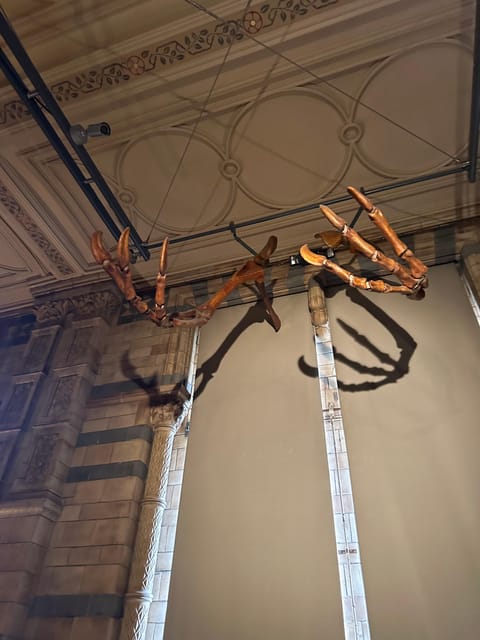
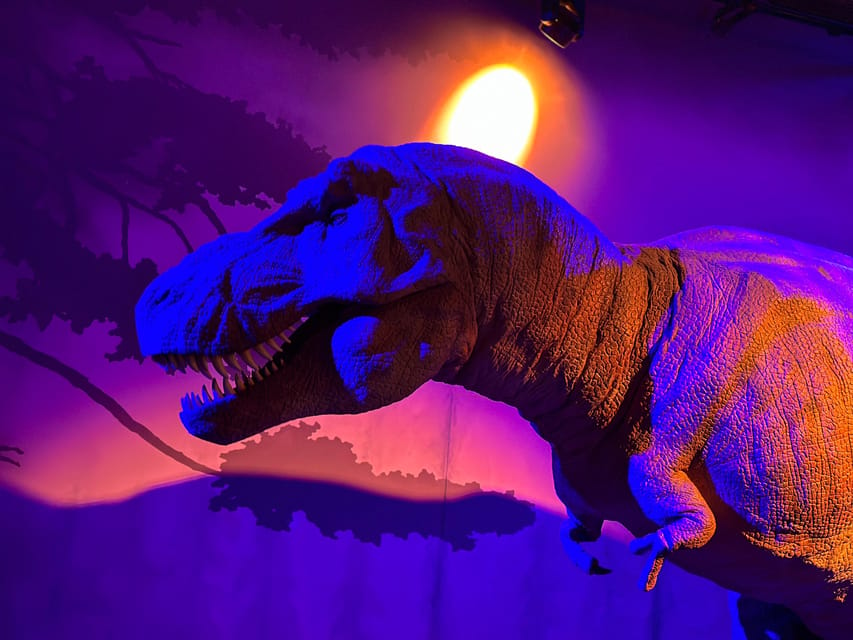
If you’re even slightly dinosaur-leaning, this is the section you’ll remember. The tour explicitly includes a chance to stand in awe of dinosaur giants like T-Rex and Triceratops, then learn about their reign and extinction.
What makes this more than a quick photo stop is the “science story” angle. A good private guide can take the label-style information and translate it into something you can picture: how paleontologists connect fossils to questions about life in the past, and what extinction means in the context of Earth’s changing environment.
Consider this if you’re with kids: dinosaurs are instantly engaging, so the guide can use that attention to explain how evidence leads to understanding. For adults, it’s also a relief—dinosaurs are fun, but the tour keeps you from getting stuck in the “cool fact” loop without context.
The Human Side of Science: Men and Women Who Made History
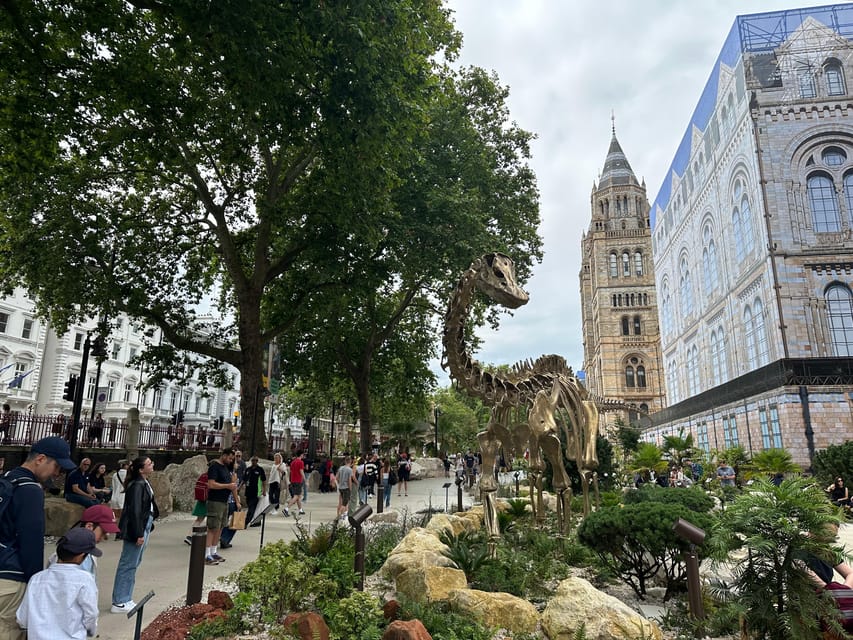
One of the listed highlights is uncovering the stories behind the science, including meeting the men and women who made history. That’s where a private guide can be especially useful.
In a self-guided visit, you can read plaques and move on. Here, you get an active thread that ties together ideas across exhibits—revolutionary concepts that changed how people understand the natural world. The payoff is that the museum feels less like a warehouse of specimens and more like a timeline of thinking.
For you, that likely means two things:
- You leave with a clearer mental model of how natural history knowledge gets built.
- You can ask questions without slowing everyone down, since the group stays private.
The fact that the tour is offered in English and French is also a plus. It’s not just “tour language,” it helps keep the explanation natural and easy to follow.
From Giraffes to Fast Fish: Seeing Diversity Without Feeling Lost
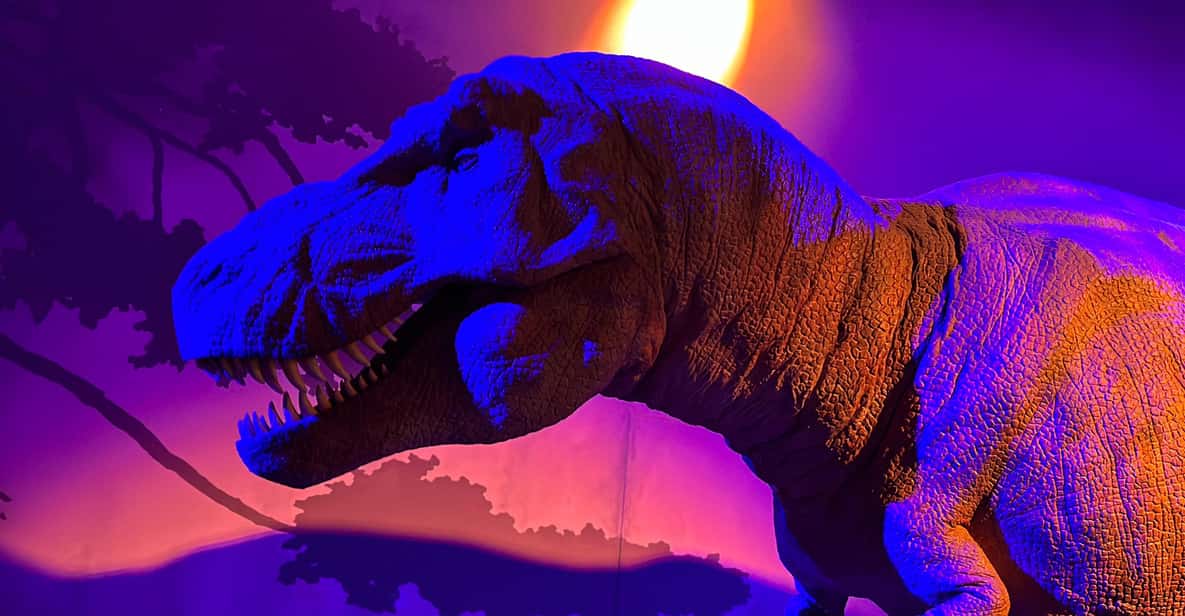
After the dinosaur wow, the tour shifts into broad natural-world diversity. The experience is described as covering everything from giraffes to the fastest fish of the oceans, plus other standout examples from the natural world.
This is a smart way to explore. The Natural History Museum can overwhelm you fast—there’s so much to see that you end up zigzagging and hoping you’ve covered the best parts. A guide gives you a curated pathway that highlights the range of life on Earth without turning your two hours into chaos.
Why this matters: when you’re shown animals across habitats and scales (land giants like giraffes to ocean speedsters), it becomes easier to understand adaptation as a theme. Even if you’re not a science person, you can appreciate why certain features help animals survive.
You can also read our reviews of more private tours in London




Hope the Blue Whale: One of the Museum’s Most Memorable Moments
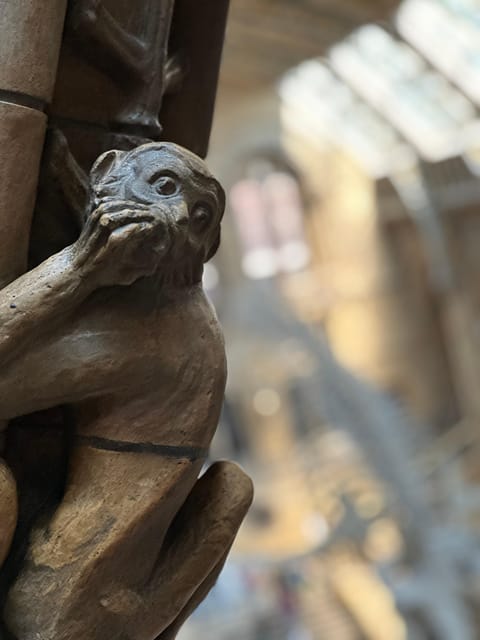
The tour includes Hope, the blue whale, which is one of those “you’ve heard of it” museum icons. Seeing a major whale display tends to hit different than reading about it—suddenly the ocean world feels real, and not just abstract.
This stop works well in the tour flow because it connects to the larger diversity theme. You’re not just collecting animals; you’re seeing the range of life and how the museum’s science storytelling expands beyond one category.
If you’re traveling with mixed interests—one person wants dinosaurs, another wants mammals, another wants Earth science—Hope is a great common ground.
Fossils, Minerals, and Artefacts: The Earth-Science Portion People Skip
Not everyone spends time on minerals and fossils unless they’re already hooked. This tour makes that part unavoidable—in a good way.
The experience specifically calls out:
- Fossils
- Minerals
- Artefacts
- And a focus on precious gems, literally
In just two hours, that’s a solid Earth-science sweep. And it’s also practical: if you’re planning to spend only a limited amount of time at the museum, you don’t want to miss the parts that make Natural History Museum special beyond animals.
If you like “how do they know?” science, this portion is where you get answers. Fossils and minerals are physical evidence, and a guide can help you connect what you’re seeing to the ideas behind it—how objects from deep time and deep Earth get studied and interpreted.
Price and Value: How $134 Works When You Group Up
The price is $134 per group (up to 6 people) for a 2-hour private guided tour.
Here’s the value math you’ll care about: if you’re splitting with a group, it can work out to roughly $22 per person at 6 people. Even at fewer people, you’re paying for a guided experience plus museum entrance, and the private format is what you’re really buying: a guide who adapts to your pace and interests.
What you get included:
- A private guide
- Entrance to the museum
What’s not included:
- Snacks, food, and drinks
- Transport
- Tickets for special exhibitions
So think of this as paying for high-impact time. If you’re the type of visitor who hates wandering without a plan, this private format is usually a good deal. If you love self-guided museums and you read every label, you might still enjoy it—but the value will depend on how much you want the guide’s explanations.
Who This Tour Fits Best (And Who Might Want Something Else)
This tour is built for:
- Families with kids who enjoy dinosaurs but also need help turning curiosity into understanding
- Curious adults who want more than a label-reading walk-through
- Small groups that want flexibility and real conversation
It’s especially strong if:
- You’re short on time and want the museum’s major themes covered
- You’d like your visit explained in English or French
- You want someone to point out the story connections across different exhibits (not just individual facts)
It may be less ideal if:
- You need a completely step-free route and you haven’t told the guide about lift needs ahead of time
- You want to linger for long periods in one area, since the tour is designed to cover multiple sections in 2 hours
Getting Around Inside: Stairs, Lifts, and Making It Work Smoothly
The tour involves walking up and down stairs during the visit. The good news is that lifts are available in the museum.
Here’s the key practical move: if you know you will need to use the lift, let the guide know so they can organize the itinerary accordingly. That small note can turn a potentially frustrating visit into a smooth one.
Wheelchair accessibility is included, and the private nature of the tour is what makes the lift planning practical—you’re not trying to force a rigid route on limited mobility.
Language Support: English and French
The tour guide speaks English and French. That matters because museum information lands better when it’s explained in a language you’re fully comfortable with—especially when the tour focuses on stories behind science, not just object descriptions.
If you’re booking for a mixed-language group, consider how everyone will engage. A private guide can help tailor the explanations, but the language you choose will still drive how fast you all connect to the material.
Should You Book This Natural History Museum Private Guided Tour?
Book it if you want a smart, time-efficient Natural History Museum visit with a guide who can connect the exhibits into a story. The combination of dinosaurs, the Hope blue whale, and the fossils/minerals/gems element gives you a full spectrum of what the museum is good at—without turning your day into a stressful “see everything” sprint.
I’d especially recommend it if:
- You’re traveling with kids or a group of mixed interests
- You want guided context about science ideas and the people behind them
- You’d rather pay for clarity than spend two hours guessing what’s worth your attention
Skip it in favor of self-guided time if:
- You’re comfortable navigating and prioritizing on your own
- You plan to focus deeply on one niche area for longer than two hours
- You prefer reading alone with no guided explanation
FAQ
FAQ
How long is the London Natural History Museum private guided tour?
The tour is 2 hours.
What is the meeting point for the tour?
Meet at the east side entrance to the museum’s garden, at the crossing of Cromwell Road and Exhibition Road, and look for the Excellent Walks of London sign.
What happens if it’s raining?
There’s an underground tunnel connection from South Kensington tube station. The guide waits at the Natural History Museum exit, which is also the East Entrance to the garden, underground.
Is the tour private, and how many people can join?
It’s a private group for up to 6 people.
What’s included in the price?
Included are the private guide and entrance to the museum.
What’s not included?
Not included are snacks, food, and drinks, transport, and tickets for special exhibitions.
Is the tour wheelchair accessible?
Yes, the experience is wheelchair accessible, and lifts are available in the museum. If you need a lift, tell the guide so they can plan the itinerary.
What languages are offered for the live guide?
The guide is available in English and French.