REVIEW · LONDON
Sherlock Holmes Old London – Very Small Group Walking Tour
Book on Viator →Operated by Richards Tours · Bookable on Viator
Sherlock London in one guided walk. I loved the way Richard’s Sherlock Holmes Museum experience turns landmarks into scenes from the stories, and I liked the small-group size that keeps the questions coming. The main drawback is simple: this is mostly walking, so comfy shoes matter, especially if you want to keep up with the pace.
You start at Embankment station and finish at 221B Baker Street, with the option to add museum time at the end. Along the way, you’ll cover famous names and also the kind of places most visitors miss unless someone points them out.
The tour runs about 3–4 hours, but if your group is very small the pace can feel quicker. Also, you’ll likely use the Underground for between stops, so bring an Oyster card or travel card so you can move without stress.
In This Review
- Key highlights you’ll notice right away
- Getting your bearings: Embankment start to Baker Street finish
- Northumberland Avenue: Holmes Pub stories and the Turkish bath contrast
- Scotland Yard at the Metropolitan Police: Lestrade, gas lamps, and a historic building
- Simpson’s in the Strand: a classic meal stop with author power
- Somerset House shortcuts: a Tudor-to-civic timeline and a film moment
- St Bartholomew’s Hospital: the first meeting that turns into a partnership
- The Langham connection: Wilde meets Doyle in 1889
- Queen Anne Street Practice: imagining Holmes as a neighbor
- Crosbie Care: Doyle’s medical practice and the writing between patients
- Baker Street statue and the Underground time travel effect
- The 221B Museum finale: decide how long to stay
- Price and value: what you’re really paying for
- Walking tips, time management, and what to bring
- Who this tour fits best (and who might not love it)
- Should you book Sherlock Holmes Old London?
- FAQ
- Where does the Sherlock Holmes Old London tour start and end?
- How long is the tour?
- Is the Sherlock Holmes Museum admission included?
- Do I need an Oyster card or travel card?
- How big is the group?
- Can I cancel and get a full refund?
Key highlights you’ll notice right away
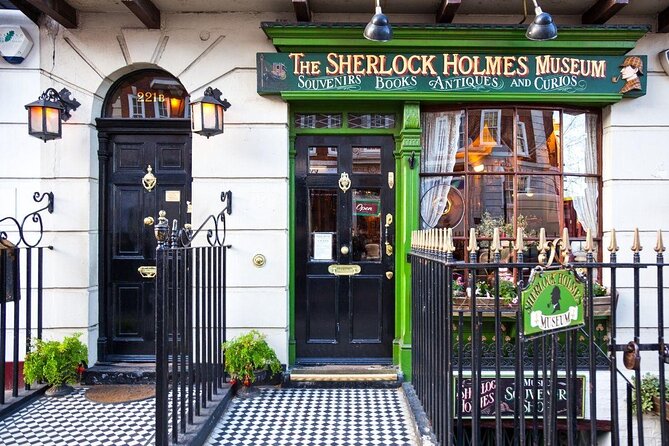
- Richard’s Sherlock connection: he worked at the Sherlock Holmes Museum in Baker Street
- Small group flow: maximum of 12 people, so you get real back-and-forth
- Real-case London stops: Scotland Yard, St Bartholomew’s Hospital, and key Baker Street landmarks
- Food-and-author sidetracks: Simpson’s in the Strand plus Conan Doyle’s wider London ties
- End at 221B: you can shop or go into the museum where Holmes and Watson live with Mrs Hudson
Getting your bearings: Embankment start to Baker Street finish
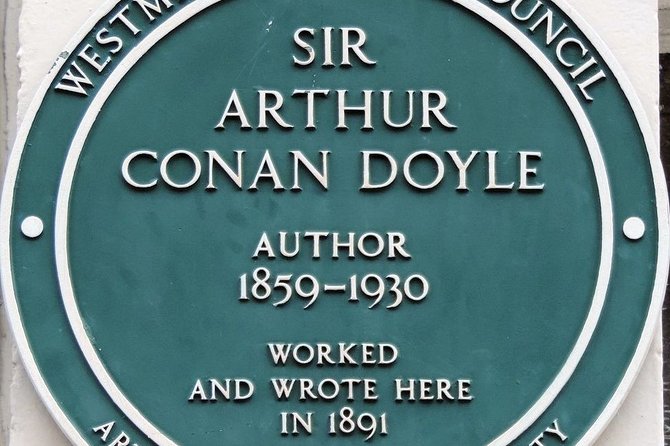
This is a classic old-London route designed for story fans who want more than photos. You meet at Embankment station (Embankment Pl), then you work your way across the city on foot, with short connections as needed. The ending is the payoff: you finish at the Sherlock Holmes Museum at 221B Baker Street, near Baker Street Underground Station.
A few practical things make this tour easier to enjoy. You get a mobile ticket, there’s service-animal access, and it’s set up for most travelers (with kids needing an adult). The walk is paced for small groups, so you’re not just following a line of strangers—you’re actually listening to a guide who can tailor where you spend time.
One more thing to plan for: the museum entry is not included. That means you should budget time at the end to decide if you want to go in. If you only care about the outdoor story sites, you can skip it—but if you’re a real Holmes person, you’ll probably want that final look inside.
You can also read our reviews of more walking tours in London



Northumberland Avenue: Holmes Pub stories and the Turkish bath contrast
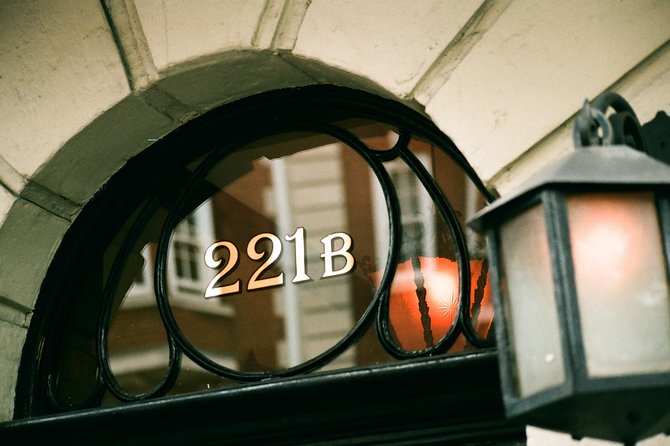
You begin where Sherlock fans like to start: Northumberland Avenue. The tour pauses outside the Sherlock Holmes Pub, and this is more than a photo stop. It’s the jumping-off point into Sir Arthur Conan Doyle’s London—how the character took shape and how the city around him fed the stories.
Right across the street, you’ll notice the Turkish bath area. The guide ties this setting to the moments when Holmes and Watson unwind between cases. It’s a fun contrast: a gritty detective trail, then this hint of the lounge life Holmes used when he wanted to be human for a moment.
This section also sets the tour’s style. You’re not just hearing about plots—you’re learning how locations connect to the author’s real surroundings and how people moved through the neighborhood. If you’re new to Holmes, this start helps you get oriented fast. If you’ve read everything, it still works because you see the city behind the fiction instead of just the fiction itself.
Practical note: this is “easy enough to stand and listen,” but it’s still London, so expect some street noise and traffic timing to matter.
Scotland Yard at the Metropolitan Police: Lestrade, gas lamps, and a historic building
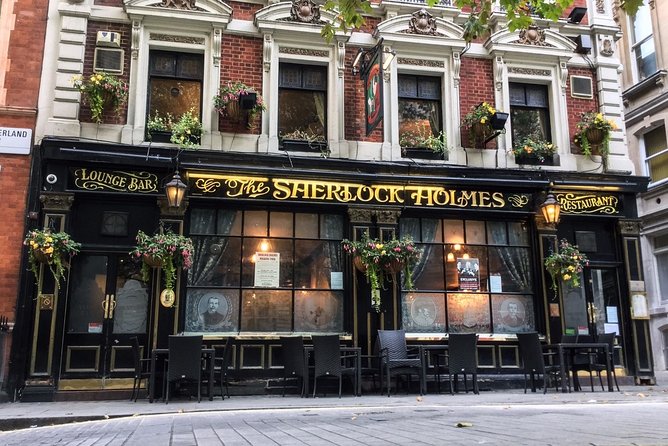
Next up is the Metropolitan Police area, tied to the world of Scotland Yard. The guide points out where Detectives Lestrade and Hopkins were based, and the tone gets appropriately detective-ish—because Sherlock doesn’t exactly admire them.
The building itself is part of the experience. It’s described as recently restored, with huge gas lamps that make the scene feel more period than modern. It’s one of those stops where you can almost picture a Hansom cab clattering by, even though today’s cars do their own version of chaos.
This is where the small-group format really helps. Instead of sprinting to the next address, you get time to look, listen, and ask questions that keep the story moving. If you love the friction between official police procedure and Sherlock’s methods, you’ll enjoy this segment a lot.
Downside to consider: you’ll pass some landmark-heavy areas, but you may not get a long sit-down at every stop. If you hate standing in wind for extended periods, plan accordingly.
Simpson’s in the Strand: a classic meal stop with author power
Then you get to the smell test—well, almost. The tour heads to Simpson’s in the Strand, where the guide connects the setting to Sherlock’s favorite line for nourishment: Come Watson, let’s take nourishment at Simpson’s in the Strand. Even if you don’t quote every scene from memory, the stop lands because it’s such a specific slice of London culture.
Simpson’s is also tied to major names beyond Holmes. The guide notes it was once a chess club and coffee house, and it later became a favorite place for Charles Dickens, Arthur Conan Doyle, and Winston Churchill. If you like the idea that big writers lived in the same city as their stories, this stop delivers.
There’s a practical tip here if you’re timing your day well: if you arrive before lunch service, you may get a peek inside, including meat carving trolleys said to have been in use since 1840. You’re not guaranteed a long look, but the guide’s aim is to help you see the place as a working old establishment, not just an address.
The main consideration is food vs. walking time. This is a “look and listen” stop rather than a full meal break. If you need a seated lunch, you’ll likely have to plan that on your own after the tour ends.
Somerset House shortcuts: a Tudor-to-civic timeline and a film moment
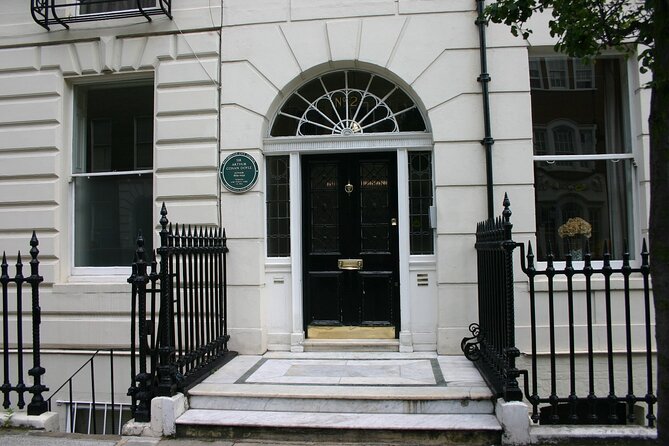
Not every stop is a Holmes scene, and that’s okay—because the tour uses detours to make the city make more sense. Somerset House is presented as a walk-through route and a fascinating context stop: a Tudor palace site later rebuilt into a major civic building in the late 1700s.
The guide also points out a recognizable pop-culture link: Somerset House has been used as a filming location for Love Actually. That matters because it helps you understand how London’s older architecture keeps getting reused by modern storytelling. Holmes may be the theme, but the city is the real star.
You’ll also go through a 300-year-old staircase, then make your way toward Temple station. For many visitors, that’s a hidden kind of win: you get the Holmes trail plus a tactile London moment where you feel the building age under your feet.
If you’re sensitive to stairs, this segment is worth noting. The staircase is part of the experience, but it’s not a flat stroll.





St Bartholomew’s Hospital: the first meeting that turns into a partnership
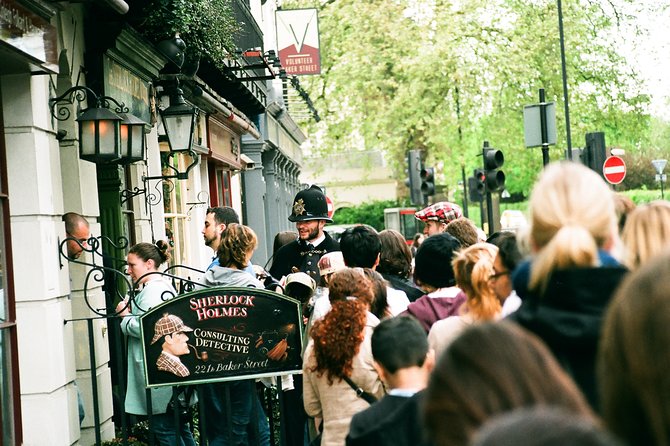
This is one of the most story-charged stops on the route. The guide takes you to St Bartholomew’s Hospital—London’s oldest hospital—and ties it directly to the first time Holmes and Watson connect after being introduced.
Here’s why this stop works so well: it’s not just a “this happened here” moment. The guide walks you through how Watson is drawn into the orbit of an eccentric doctor figure, then how Holmes uses analysis and deduction after a lab visit. That leads to the partnership that readers love: Holmes and Watson at 221B.
The surrounding area also gets treated as part of the plot. The tour includes details about the local links, including the Criterion Bar area mentioned in the meeting storyline, and why the neighborhood made sense as a place where introductions could happen.
If you’re the kind of person who likes Holmes for the science and the method—not just for the theatrics—this is the stop to lean into. You’ll end up thinking differently about forensic observation after you see the hospital setting.
Practical consideration: this is a longer stop than some of the street-corner moments. It’s still not a museum, so you’re listening while walking the area.
The Langham connection: Wilde meets Doyle in 1889
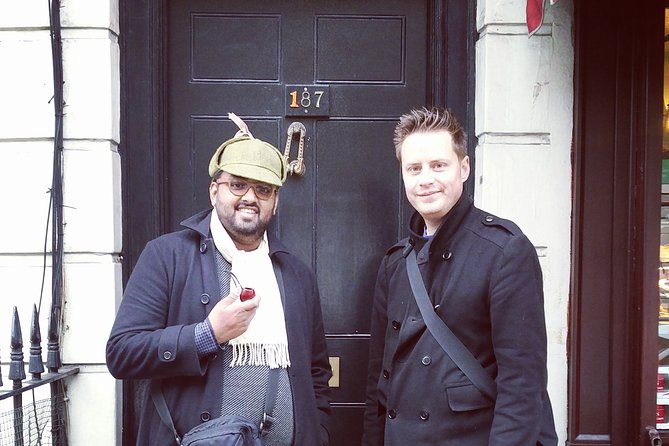
Next is a quick, high-impact stop at The Langham, London. The guide notes the hotel had recently opened, and in August 1889 two authors were invited to dine with an American publisher on a talent scouting mission.
Those two authors: Oscar Wilde and Arthur Conan Doyle. The guide frames the meeting as a career launch point for both, which gives you a bigger lens for what’s going on around Holmes.
Why I like this kind of stop: it reminds you that Holmes wasn’t created in a vacuum. When you connect the author to other writers and publishing ambitions, the whole Sherlock world feels less like a closed universe and more like a living London of ambition, magazines, and reputations.
This stop is brief, so don’t expect a long architecture tour. But it’s a great way to break up the heavier investigative stops with something lighter and more author-centered.
Queen Anne Street Practice: imagining Holmes as a neighbor
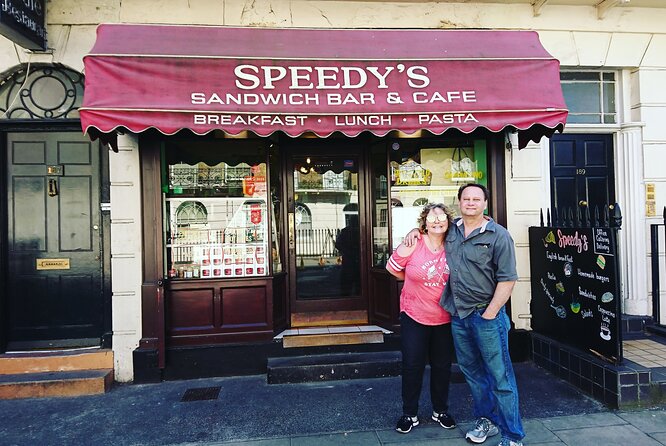
Now you shift from major institutions to the street-level reality of living and practicing. The guide points out Queen Anne Street Practice at 8 Queen Anne Street, tied to Watson’s move from Baker Street into a married life setup.
The tour plays with the visual imagination here. You can picture Holmes on the doorstep with his cane, while Mrs. Watson’s expression (and patience) is the kind of reality-check you can almost hear.
This stop is short, but it’s useful because it shifts focus from Holmes as a lone detective to Holmes as a constant presence in Watson’s world. If you’re used to thinking of Baker Street as a stage set, these address-specific moments help it feel like an actual neighborhood life.
Practical note: you’ll be looking at an exterior location. If you’re hoping for interiors, save that for museum time.
Crosbie Care: Doyle’s medical practice and the writing between patients
Crosbie Care is a must-do stop for true Sherlockians on this walk. The guide describes it as a place where Arthur Conan Doyle had his medical practice, and he’d reportedly walk there each morning from his home, a route of about 20 minutes.
Then comes the author joke that turns practical life into story fuel: the guide mentions Doyle saying that not a single patient darkened his door. Whether you take that literally or as good humor, it’s a great reminder that writing could sit right next to real work.
The exterior is described as unchanged since 1891, and the guide ties it to the writing process—between patients, Doyle wrote the series that became The Adventures of Sherlock Holmes.
This is one of those stops where the value is in the details. You’re not just learning a name—you’re imagining how a working doctor’s daily route could become the backbone of fictional settings and character habits.
Downside: it can feel like a “pause and picture” moment. If you prefer hands-on museum-style content, you may want to make sure you add the museum entry at the end.
Baker Street statue and the Underground time travel effect
As you near the finish, you’ll stop at the Sherlock Holmes statue just outside Baker Street Station. Baker Street Underground is noted as one of the oldest stations in the system, and the guide connects it to the way Holmes and Watson use the Underground in the stories.
The statue itself gets some backstory: it was commissioned by the Abbey National Building Society, which had occupied 221 Baker Street for a number of years. It’s a clever detail because it shows how real institutions can end up linked to fictional ones over time.
This is also the moment where you’re likely to want photos. The statue area is busy, but the guide helps you choose angles and timing so you can get your shots without blocking traffic or taking ten minutes per photo.
Then you head to the museum finish point, where the walk becomes a visit.
The 221B Museum finale: decide how long to stay
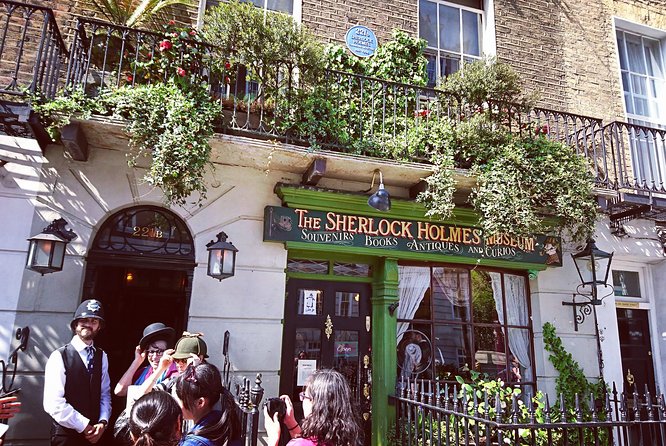
The tour ends at the Sherlock Holmes Museum at 221B Baker Street. The museum is described as set up as Sherlock and Watson’s home, shared with Mrs Hudson. If you’re a fan of the stories, this is where the “walk through London” turns into “step inside the world.”
Because museum admission is not included, you can decide on the spot if it’s worth the extra time. If you’ve got energy, go in. If your feet are already begging for mercy, you can still do the basics—shop for souvenirs and use the area around Baker Street for your final photos.
Either way, the guide finishes near Baker Street Underground Station, so it’s easy to continue your day without a long commute.
Price and value: what you’re really paying for
At $108.32 per person for about 3–4 hours, the question isn’t just whether the price is fair—it’s what you get that you can’t recreate on your own.
Here’s the value angle that matters most for this kind of tour:
- You’re paying for a guide who has hands-on ties to the museum and can connect real London details to the Holmes world.
- The route includes many important street-level locations that are free to view from the outside, so your money goes into storytelling and context rather than admissions.
- The format is small-group, so you don’t feel like a number.
The only cost you might add on top is museum admission at the end. Since the museum is optional, you’re not forced into extra spending—but Holmes fans usually end up wanting it.
If you’re the type who likes reading plaques and then leaving, you might prefer a self-guided walk. But if you want someone to connect the dots between author life, publication culture, and the actual buildings you pass, this is priced like a guided “story experience,” not a lecture.
Walking tips, time management, and what to bring
This tour is built around walking, plus the occasional Underground connection. So:
- Wear comfortable shoes. London sidewalks add up fast.
- Keep an eye on the tour pace. With small groups, the schedule can feel quicker than the stated duration.
- Bring your Oyster card or travel card so you’re ready if the route uses the Underground between stops.
- If you care about photos, plan to shoot during stop pauses, not while you’re moving.
Weather matters too. Even though many stops are short, you’ll still be outside a lot. Pack a light layer and expect you’ll feel every bit of wind off the Thames area.
One practical note from the tour style: some stops are set up for close listening, not long hangs around cafes. If you want a sit-down break, you might need to build that into the rest of your day rather than expecting it within the route.
Who this tour fits best (and who might not love it)
This walk is a strong match if:
- You’re a Sherlock Holmes fan who wants real London locations linked to the stories.
- You like learning about Sir Arthur Conan Doyle through place, not just facts.
- You want a guide who can connect Holmes sites with broader London culture.
It may be less ideal if:
- You hate walking for hours or can’t handle a brisk pace.
- You want museum time to be included by default. The museum is optional at the end.
- You prefer purely historical tours with no literary storytelling angle.
If you’re traveling with kids, the tour does note that children must be accompanied by an adult. It can work well for older kids who enjoy stories, but expect it to be more “walk and listen” than “activity-based.”
Should you book Sherlock Holmes Old London?
If you’re coming to London mainly for Holmes, I’d book this. The best part isn’t any one address—it’s how the guide turns a chain of locations into a guided story you can follow from Northumberland Avenue all the way to 221B.
The small-group format makes the tour feel personal, not rushed, and the fact that Richard has museum experience means you’re getting more than sightseeing. Just go in knowing it’s a walk-first experience, and plan for Underground readiness plus possible extra time (and cost) if you add the museum.
FAQ
Where does the Sherlock Holmes Old London tour start and end?
It starts at Embankment station (Embankment Pl, London WC2N 6NS) and ends at the Sherlock Holmes Museum, 221B Baker St (London NW1 6XE).
How long is the tour?
The tour runs for about 3 to 4 hours.
Is the Sherlock Holmes Museum admission included?
No. The tour ends at the museum, but museum admission is not included.
Do I need an Oyster card or travel card?
Yes. The tour notes that an Oyster card or travel card is required for the London Underground to move between locations.
How big is the group?
The experience has a maximum of 12 travelers.
Can I cancel and get a full refund?
Yes. You can cancel for a full refund if you cancel at least 24 hours in advance of the experience start time.