REVIEW · LONDON
London: British Museum with Expert Guide.
Book on GetYourGuide →Operated by Strabo · Bookable on GetYourGuide
One museum, five stories, one focused tour. This British Museum highlights experience is built to help you see the big-name objects—Rosetta Stone, Elgin Marbles, Assyrian reliefs, and the Lewis Chessmen—without getting lost in the scale of London’s collections. You’ll also get the kind of explanation that turns isolated artifacts into connected chapters, from ancient Egypt’s beliefs to Greek myth in stone.
What I like most is how the tour concentrates on key pieces while still making room for questions, and the way guides (including Strabo) keep the pace lively with clear, easy-to-follow storytelling. One possible drawback: with just 80 minutes, you’ll leave knowing the highlights well, but you won’t have time to roam every gallery on your own.
In This Review
- Key highlights you’ll actually feel during the tour
- Finding the meeting point at the British Museum (and keeping the plan simple)
- Rosetta Stone and ancient Egypt: why this start works so well
- Elgin Marbles and the Parthenon sculptures: Greek myth with context
- Assyrian lion hunt reliefs: power you can read at a glance
- Lewis Chessmen: from Scottish discovery to Viking culture
- What you can do after the guide: gift shop and free time
- Price and value: is $20.20 worth it for 80 minutes?
- Who this tour is best for (and who may want something else)
- FAQ
- How long is the British Museum with Expert Guide tour?
- Where do I meet the guide?
- Is the tour in English?
- Is the tour wheelchair accessible?
- Can I take photos inside the museum?
- Are food and drinks allowed during the tour?
- What famous objects does the tour cover?
- Is free cancellation available?
- Can I reserve now and pay later?
- Should you book this British Museum with Expert Guide tour?
Key highlights you’ll actually feel during the tour
- Certified English guide who keeps the flow manageable in a huge museum
- Rosetta Stone as the starting point for how hieroglyphs were understood
- Mummies and coffins explained through Egypt’s ideas about the afterlife and mummification
- Elgin Marbles (Parthenon sculptures) tied to Greek myth and 5th-century BCE artistry
- Assyrian lion hunt reliefs showing royal power through carved action
- Lewis Chessmen linked to medieval discovery on the Isle of Lewis and Viking culture
Finding the meeting point at the British Museum (and keeping the plan simple)
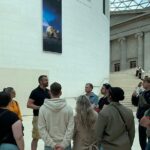
This tour is straightforward: you meet at the British Museum and the guided portion runs for 80 minutes, then you end back at the same meeting spot. There are two entrances, and you’ll meet outside the Montague Place entrance by the two stone lions. That matters, because the British Museum can feel like a maze when you’re rushing.
The experience is led in English by a live guide, and it’s designed for real viewing time rather than a long lecture while you stand around. If you’re bringing someone who gets bored in “museum lecture” mode, the format tends to work well because the guide focuses on the objects you came to see.
Accessibility is good on paper: the tour is wheelchair accessible, but the information also flags that some areas may be challenging to navigate. So if mobility is a concern, I’d plan on moving at a careful pace and being ready for uneven navigation inside the building.
You can also read our reviews of more guided tours in London



Rosetta Stone and ancient Egypt: why this start works so well
The tour typically begins with one of the most recognizable objects in the museum: the Rosetta Stone. It’s not just a famous artifact stop; it’s used as a way to explain why ancient Egyptian writing became readable and how that changed what we can understand about Egypt. The best part of starting here is that it gives you a “why it matters” foundation before the tour moves into heavier content.
From there, you spend time on Egypt’s beliefs about what happens after death. You’ll look at the museum’s mummies and coffins and hear how the rituals and techniques of mummification connect to the idea of life after death. Even if you’ve only encountered Egyptian history as a set of movie-style images, this part helps you translate the symbols into something more human and specific—what people believed, what they prepared for, and how the process worked.
Photography is allowed, but flash is prohibited, so keep that in mind if you’re trying to capture details in any dimmer display cases. Also note that food and drinks aren’t allowed inside the exhibition rooms, which keeps the environment focused on viewing the artifacts rather than snacking.
Elgin Marbles and the Parthenon sculptures: Greek myth with context
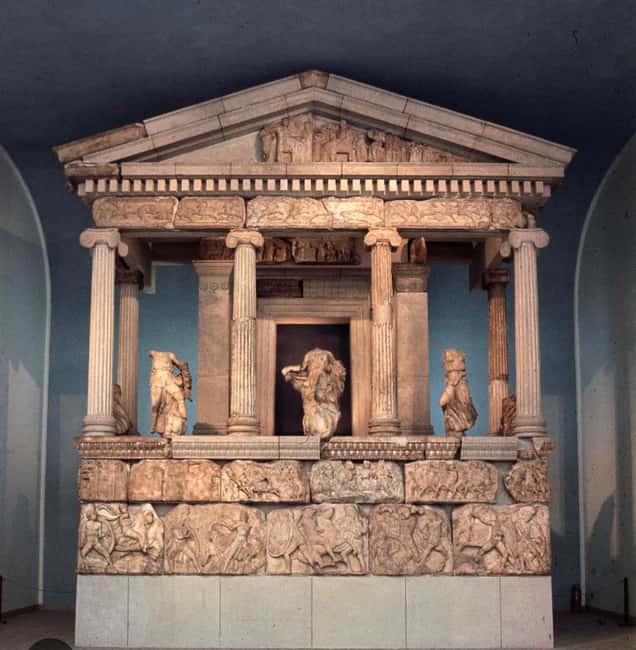
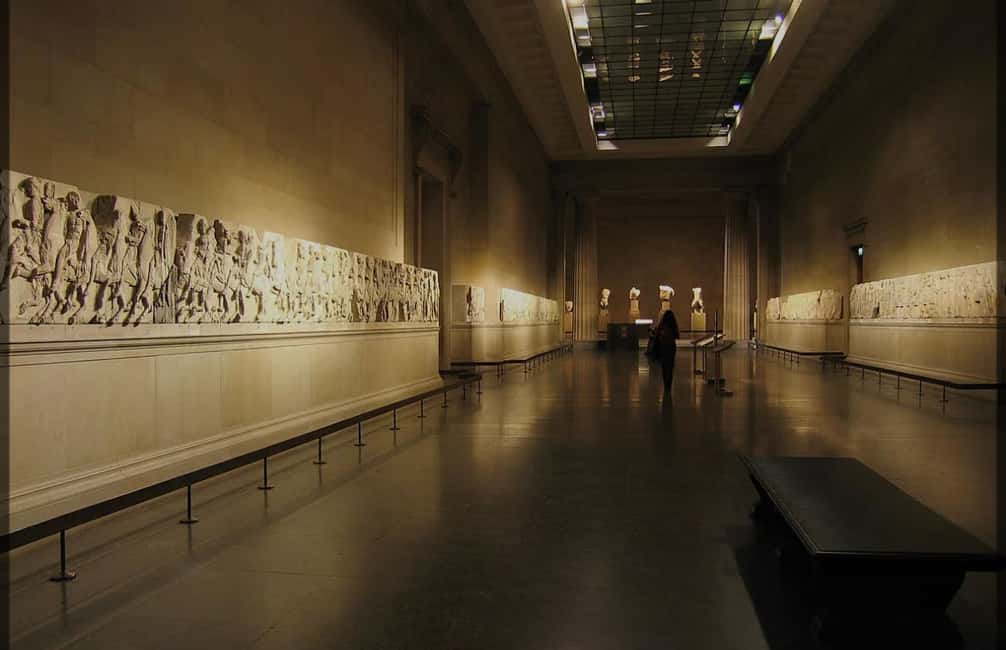
Next up, the tour turns to Greece with the Parthenon sculptures, often known as the Elgin Marbles. You’ll see why these works still make people stop in their tracks: the sculptures date to the 5th century BCE and they depict scenes tied to Greek mythology.
The value here is that you’re not just hearing “these are from Athens.” You get help connecting the imagery to the larger idea of how the ancient Greeks presented myth and meaning through art. That’s especially useful if you don’t have much background—your eyes can recognize figures and scenes, but a guide helps you read what’s going on.
One practical upside: the tour keeps you moving between major sections without forcing you to do your own planning inside the museum. If you’ve ever walked into a large museum and spent the first hour trying to decide where to start, this structure saves time and mental energy.
Assyrian lion hunt reliefs: power you can read at a glance
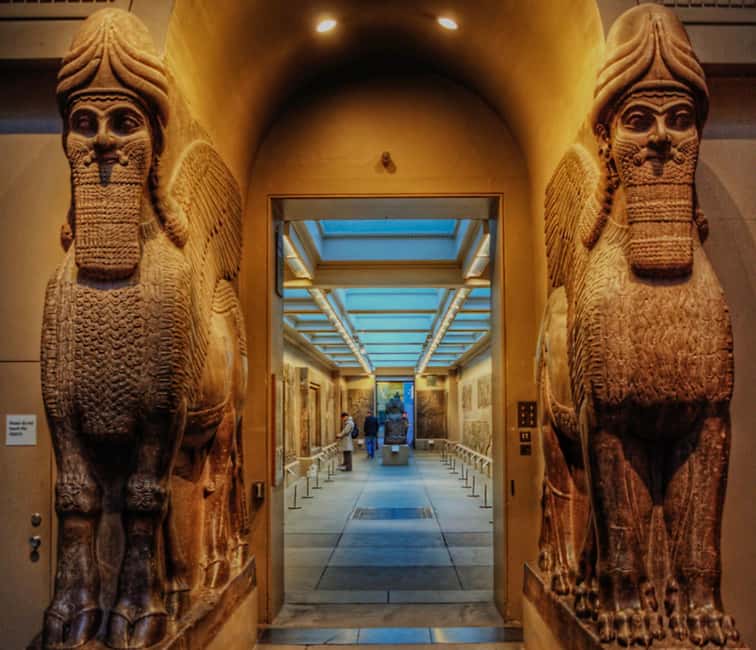
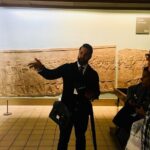
Then you get a big visual shift with Assyria and the lion hunt reliefs. These intricate carvings are known for showing action—royal confidence and controlled violence—without relying on text the way modern storytelling often does.
In a guided format, the lion hunt scenes work especially well because a good guide can point out what to look for: the sense of movement, the way the figures are arranged, and how the composition signals authority. Even if you’re not a “relief sculpture person,” you’ll likely find this segment memorable because it’s so direct and dramatic.
This is also a good example of why a guide helps in the British Museum. Left to your own devices, it’s easy to see a panel as decoration. With interpretation, the same panel becomes evidence of how rulers wanted to be seen—power, discipline, and dominance.
Lewis Chessmen: from Scottish discovery to Viking culture
The tour includes a stop for the Lewis Chessmen, a set of intricately carved chess pieces discovered on the Isle of Lewis in Scotland. This is one of those objects that’s famous, but not always well understood. You’ll hear their story in a way that connects the pieces to Viking culture and the broader medieval world they came from.
What I appreciate about this inclusion is the balance. After major ancient civilizations like Egypt and Greece—and the political intensity of Assyria—the chessmen offer something a bit more relatable: games, craft, and daily life tied to a culture that could also build art with serious skill.
If you’re traveling with kids or teens, this section can work as a “wait, chess came from this?” moment. That kind of connection helps people stay engaged through a museum that spans centuries.
You can also read our reviews of more museum experiences in London




What you can do after the guide: gift shop and free time
After the 80-minute guided portion, you’re free to explore the rest of the museum at your own pace. That matters because one of the best ways to enjoy the British Museum is to choose what you want to see deeper once you’ve seen the best-known anchors.
There’s also a gift shop where you can browse books, souvenirs, and replicas. It’s a practical way to bring a piece of what you learned home, especially if you want something you can keep using later—like a reference book tied to the civilizations you just met.
Quick note on museum rules that affect your planning: flash photography is prohibited, and food and drinks aren’t allowed inside exhibition rooms. If you’re hoping to snack through the tour, you’ll need to plan that outside the exhibition areas.
Price and value: is $20.20 worth it for 80 minutes?
At $20.20 per person for an 80-minute guided highlights tour, the value depends on what you need from your museum visit. If you like structure—seeing the best-known artifacts in a logical order, with explanations that connect them—this price can feel very fair. You’re paying for time saved and context added, especially in a museum where it’s easy to wander without a plan.
If, on the other hand, you prefer to spend hours moving gallery to gallery on your own, you may feel the tour is too short to justify paying extra. The good news is that the tour is designed to leave you enough flexibility afterward: you get the curated highlights first, then you can choose what to continue with.
In other words, this isn’t a “see everything” option. It’s a “see the important things in a smart order” option, led by a live guide in English.
Who this tour is best for (and who may want something else)
This experience is a strong match for first-timers who want the British Museum’s headline objects—especially if your main goal is to understand what you’re looking at. The structure is also family-friendly in practice, since guides can pace the tour in a way that works for younger visitors too.
It also fits travelers who don’t want to spend their precious London time figuring out where to start. With a focused itinerary built around major civilizations—ancient Egypt, Greece, Assyria, and the Viking-era chessmen—you get a readable sweep rather than a random set of stops.
If you’re someone who loves slow wandering, or you already know exactly which galleries you want, you might prefer self-guided time. But if you’d rather let a guide do the prioritizing, this tour is designed to make your visit feel efficient without turning it into a rushed checklist.
FAQ
How long is the British Museum with Expert Guide tour?
It runs for 80 minutes. Starting times vary, so you’ll want to check availability for the schedule that fits your day.
Where do I meet the guide?
You’ll meet outside the Montague Place entrance by the two stone lions. The tour starts and ends back at the same meeting point.
Is the tour in English?
Yes. The live tour guide provides the tour in English.
Is the tour wheelchair accessible?
The tour is wheelchair accessible, but some areas may be challenging to navigate. If accessibility is important for you, it’s worth keeping that in mind.
Can I take photos inside the museum?
Photography is allowed, but flash photography is prohibited.
Are food and drinks allowed during the tour?
Food and drinks are not allowed inside the exhibition rooms.
What famous objects does the tour cover?
You’ll focus on highlights including the Rosetta Stone, the Elgin Marbles (Parthenon sculptures), Egyptian mummies and coffins, Assyrian lion hunt reliefs, and the Lewis Chessmen.
Is free cancellation available?
Yes. You can cancel up to 24 hours in advance for a full refund.
Can I reserve now and pay later?
Yes. The option is reserve now & pay later, so you can book your spot without paying immediately.
Should you book this British Museum with Expert Guide tour?
I’d book it if you want a clear, high-impact first visit: Rosetta Stone to Egypt, Greek myth through the Parthenon sculptures, Assyria via the lion hunt reliefs, and the Lewis Chessmen as a bridge to Viking culture. The guide-led structure is the point, and the 80 minutes is a practical way to get the meaning behind the museum’s most famous objects.
I’d skip it if you’re mainly hoping to spend the day wandering freely and you already know the galleries you want to hit. For most people, though, this is a strong way to turn a massive museum into a focused, satisfying experience with real context.