London changes fast when you walk it. This small-group route links the big-picture sights of Westminster to the Thames and then onward to the historic London Bridge area, all in a tight window. You’ll come away with an easy sense of how the city sits along the river—useful on day two, and day three.
Two things I really like about this experience are the maximum 12-person group size and the way the guide stitches landmarks into stories instead of just pointing. With a guide like Chris—warm, funny, and ready for questions—you get history that feels like a conversation, even when you’re jet lagged and running on fumes.
One thing to consider: it’s still a walking tour. If your feet get sore easily, plan for that, because you’re moving between multiple stops over about 1 to 2 hours.
In This Review
- Key things to know before you go
- Starting at the Golden Carousel and getting your bearings fast
- London Eye to Westminster: Big Ben and Parliament without the chaos
- The oldest monument stop: why one short stop can teach you a lot
- Westminster on one side, the City on the other: learning the river map
- St Paul’s, Millennium Bridge, and the Thames views you’ll remember
- Shakespeare’s Globe Theatre: more than a quick photo stop
- The Golden Hind, Winchester Palace, and the Borough Market area finish
- Price and value: what $94.65 gets you for 1 to 2 hours
- Who should book this walking tour (and who might want a different style)
- Should you book the London Eye to London Bridge river walk?
- FAQ
- How long is the London Eye to London Bridge (River Walk) tour?
- What is the group size for this tour?
- What language is the tour offered in?
- Where does the tour start?
- Where does the tour end?
- Do I get a mobile ticket?
- What’s included in the price?
- Is tipping included?
- Are any admissions required during the tour?
- Is there a cancellation option if my plans change?
Key things to know before you go
- Small-group pace (max 12 people) means more Q&A and less time standing around
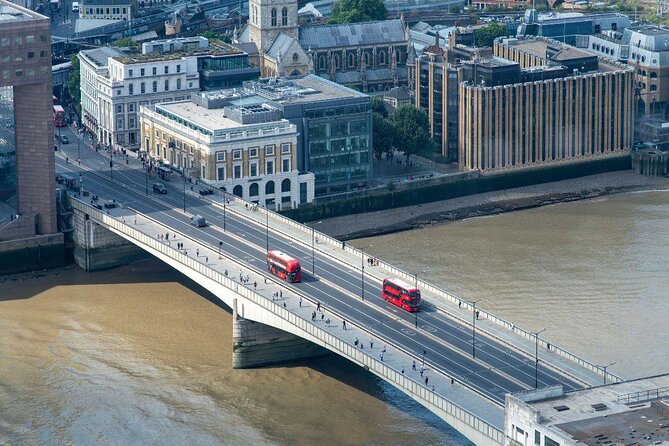
- Big sight coverage in a short time: London Eye, Big Ben, Parliament, St Paul’s, Globe Theatre, Millennium Bridge, London Bridge
- Thames orientation: you’re guided to see how Westminster and the City relate across the river
- Shakespeare’s Globe stop with the original Globe connection: you spend time on what burned down and what you can still spot today
- Borough Market area finish: the route passes the ancient market area, plus the Golden Hind and Winchester Palace
- Mobile ticket + English: simple to use, and service animals are allowed
Starting at the Golden Carousel and getting your bearings fast
The tour begins at The Golden Carousel by The Queen’s Walk (SE1 7PB). That matters more than it sounds. This is one of the easiest places to start your “Thames understanding,” because you’re already on the south bank, looking toward the cluster of Westminster landmarks that many first-timers only see from postcards.
From the start, the pace is built for orientation. You’re not just collecting names. You’re learning how the river acts like a spine for the city. That’s why this works so well if you’re arriving with only one afternoon and you want to feel oriented before you start wandering on your own.
Also, the tour is set up as a moderate physical fitness walking experience. You’re not doing an all-day hike, but you should expect to stay on your feet and keep moving. In practical terms: wear comfortable shoes you can walk in for a bit, and skip the “new shoes” experiment.
You can also read our reviews of more walking tours in London



London Eye to Westminster: Big Ben and Parliament without the chaos
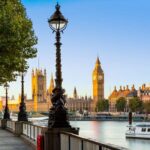
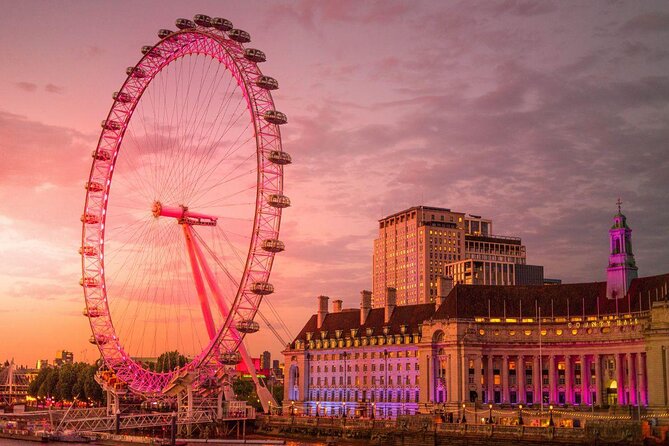
Early on, you’ll see the London Eye, then move into the Westminster view zone that includes Big Ben and the Houses of Parliament. These are the sights that most people think they know already—until you understand what you’re looking at from street level.
What makes this section worthwhile is the storytelling angle. Instead of a generic “this is old,” you get a cultural read on the place, with guide explanations designed to help you connect the buildings to how London functions.
One small practical plus: the group size stays small, so you’re less likely to get swallowed by crowds. You can actually focus on the details the guide calls out—angles, viewpoints, and what landmark sits where across the river. That helps you later when you’re back on your own trying to figure out what’s closest to what.
The oldest monument stop: why one short stop can teach you a lot
At one point, the route includes a stop for what’s described as the oldest monument in London. You don’t get long to linger, but that’s the point of a short, well-planned walking tour: it gives you a quick hit of context.
This kind of stop is valuable because it changes how you read everything else. When you touch the “earliest” layer of a place like London, later landmarks stop feeling like isolated icons and start feeling like parts of a timeline. Even if you’re not a museum person, a guided moment like this can make the city snap into focus.
There’s also a geography lesson here. From the area where the tour connects to views of Westminster and the City of London, you get a clearer mental map of how the city is divided by function as much as by politics and riverfront.
Westminster on one side, the City on the other: learning the river map
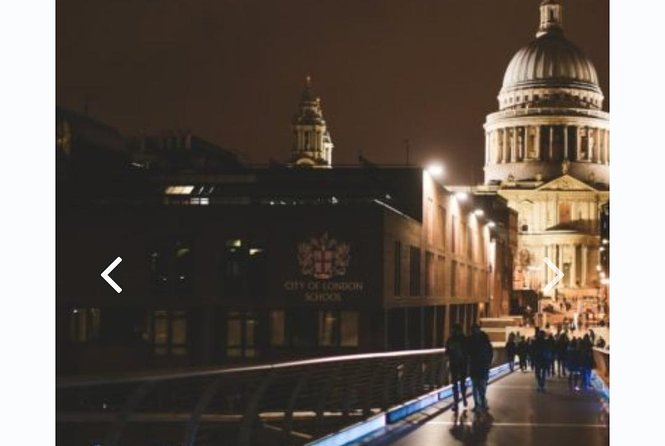
After the oldest-monument moment, the walk shifts into a “now you understand London” phase. The route takes in views of both Westminster and the City of London—the two big names that first-time visitors often treat like separate tourist zones.
But London doesn’t work that way. It works as a set of neighborhoods threaded together by the river and transit corridors. When you’re shown both sides in sequence, you start recognizing patterns: where the skyline changes, how the streets angle, and why certain routes feel easier than others.
This part also sets you up for future exploring. Once you understand where Westminster ends visually and where the City begins, it’s easier to plan day trips, choose which bridges to cross, and decide what to see next without feeling like you’re retracing steps blindly.
And then the tour gets you moving again along the river, so the orientation isn’t just visual—it’s physical, which sticks better.
St Paul’s, Millennium Bridge, and the Thames views you’ll remember
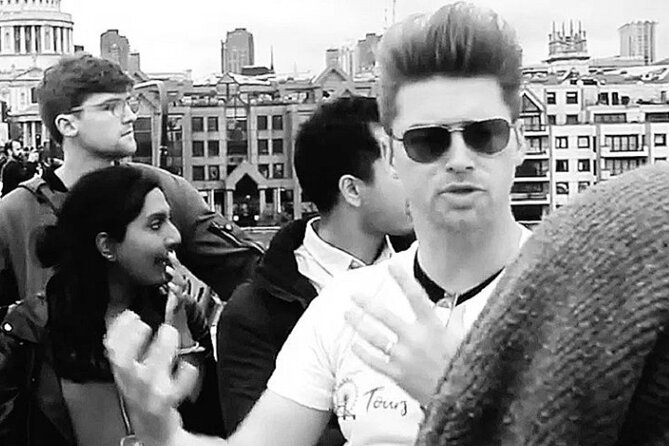
One of the most satisfying parts of the route is the segment where you get views of St Paul’s Cathedral, along with Shakespeare’s Globe Theatre and Millennium Bridge. These are the sights that suddenly make you feel the scale of the city.
St Paul’s is often seen in photos, but seeing it as part of a wider riverfront view gives you a different sense of size and placement. You’re not only looking at a landmark—you’re seeing how it anchors the skyline across waterways.
Millennium Bridge, too, is a great orientation tool. The bridge is visually distinctive, but it also helps you understand walking paths between south and north bank areas. When a tour includes that kind of “useful landmark,” you get more than photos. You get a route you can reuse later.
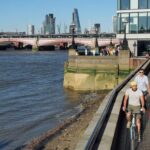
This is also where the river-walk aspect really pays off. Walking past Thames icons, instead of just viewing them from a single spot, helps you see movement, perspective changes, and where the best angles actually sit.



Shakespeare’s Globe Theatre: more than a quick photo stop
The tour includes a stop for Shakespeare’s Globe Theatre. You get a short window—about 10 minutes—with free admission ticket noted for that stop. It’s not a long museum-style visit, so treat it as a focused look: enough time to orient yourself, take photos, and absorb what the guide points out.
Here’s the special part: you’re also told about a little-known place connected to the original Globe Theatre that burned down. That’s the kind of detail that turns a familiar name into something you can actually picture with your own eyes, rather than just accept as trivia.
If you want to make the most of this section, come with one question in mind: what aspect of the Globe connection matters most to you—architecture, performance history, or the idea of what’s still visible today? A good guide will help you connect the dots quickly, and the small group format makes it easier to ask.
Even if you’re not a theater superfan, this is a strong stop because it adds a human layer to the city. London becomes less about stone and more about stories people told there.
The Golden Hind, Winchester Palace, and the Borough Market area finish
As you head toward the end, you pass an ancient market area and additional landmarks named on the route: the Golden Hind and Winchester Palace. This is where the walk feels more like wandering with a purpose.
Borough Market (the “ancient market” area in this kind of route) is a classic end-of-tour zone because it’s food-friendly and easy to extend into your own plans. And the other two stops—Golden Hind and Winchester Palace—add a sense of place beyond the riverfront.
The walk then finishes at London Bridge, with the endpoint set at 1 Tooley St (SE1 2PF) and the tour finishing next to London Bridge station. Practically, it’s a smart landing spot. You’re near major transit, and you can easily continue your day in either direction without hunting for transportation.
This ending also helps you shake off jet lag in a gentle way. One of the best reasons to do an outdoor walking tour early in a trip is that it turns “stuck indoors” energy into movement and daylight, without draining you like an all-day itinerary can.
Price and value: what $94.65 gets you for 1 to 2 hours
At $94.65 per person for about 1 to 2 hours, this isn’t a bargain-basement price. But it does line up with what you’re paying for: a guided route with stories and history, a small-group cap of 12, and coverage of a lot of major landmarks in a compact time window.
To judge value, I’d look at three things:
1) Coverage density: London Eye, Big Ben, Parliament, St Paul’s, Globe Theatre, Millennium Bridge, London Bridge, plus named stops around the market area. If you tried to do this alone without a plan, you’d spend time figuring out what’s close to what.
2) Guide quality and responsiveness: guides named like Chris are praised for keeping attention even when people are tired and for answering lots of questions. That matters because it’s what turns a list of sights into learning.
3) Orientation payoff: this route is designed to get you oriented around the Thames. That kind of “mental map” value often lasts far longer than the tour itself.
One more practical note: the tour is often booked about 65 days in advance on average. If your dates are fixed, you’ll feel better booking sooner rather than later, especially because small-group tours can sell out.
Who should book this walking tour (and who might want a different style)
This tour is a great fit if you:
- want a first-afternoon orientation to central London’s riverfront
- like history told through walking instead of sitting in one place
- prefer small groups where your questions don’t get swallowed
- want a short, structured plan that still leaves you time afterward
It may not be the best fit if you:
- have limited stamina or a tight schedule where even 1–2 hours of steady walking feels too much
- dislike tours with multiple quick stops (this is not a slow, lingering pace)
- want heavy museum time, because most stops are short viewpoint or guided segments
And language is listed as English, so if you need another language, you’d want to confirm options directly with the provider.
Should you book the London Eye to London Bridge river walk?
Yes—if you want a smart way to see a lot without feeling rushed through a confusing maze of streets. The biggest wins are the small group size, the guide-led stories and history, and the way the route forces you to understand London’s geography along the Thames.
Book it when you:
- have limited time and want a confident first look at central sights
- want a route that helps you explore later with less guesswork
- can handle some walking and want your feet to do part of the learning
Skip it if your ideal day is slow, seated, and museum-heavy. But if you want fresh air, a clear city map in your head, and landmark photos you can place accurately—that’s exactly what this route is built to deliver.
FAQ
How long is the London Eye to London Bridge (River Walk) tour?
It runs for about 1 to 2 hours.
What is the group size for this tour?
The tour has a maximum of 12 travelers.
What language is the tour offered in?
The tour is offered in English.
Where does the tour start?
It starts at The Golden Carousel, The Queen’s Walk, London SE1 7PB, UK.
Where does the tour end?
It ends at 1 Tooley St, London SE1 2PF, UK, finishing at London Bridge next to London Bridge station.
Do I get a mobile ticket?
Yes, the tour includes a mobile ticket.
What’s included in the price?
Stories and history are included.
Is tipping included?
Gratuity is not included.
Are any admissions required during the tour?
At least one stop notes free admission (Shakespeare’s Globe Theatre). London Bridge also notes admission as free for the stop time.
Is there a cancellation option if my plans change?
Yes. You can cancel for a full refund up to 24 hours in advance of the experience start time, and cancellation is free.