REVIEW · LONDON
London: Natural History Museum Guided Tour
Book on GetYourGuide →Operated by The Great Weekender · Bookable on GetYourGuide
A museum full of fossils can turn into a blur fast. This guided tour keeps you pointed at the main highlights and turns big exhibits into clear, human-scale stories. I like that you get a tight hit of evolutionary science and deep time without having to plan every turn yourself.
Two things I really appreciate: seeing Sophie the Stegosaurus up close and standing in front of the Giant Sequoia cross-section that’s already 1300 years old at the time it was felled. The downside is simple: this is a highlight-focused tour, so if you already know the science well, you may want more depth than you’ll get in 2.5 hours.
In This Review
- Key points worth your time
- A science sprint through London’s Natural History Museum
- Meeting outside the red telephone box (and why that helps)
- Sophie the Stegosaurus and the dodo: instant wow with context
- Archaeopteryx and Darwin’s Origin of Species: evolution you can see
- Giant Sequoia cross-section: the scale trick works
- Earth vault moments: gemstones plus Moon and Mars rock
- Pompeii plaster casts: disaster history that hits
- How the 2.5 hours usually feels in real time
- Guide quality can make or break the experience
- Price and value: $93 for a focused route, not a museum marathon
- Who this Natural History Museum tour suits best
- Should you book it?
- FAQ
- How long is the Natural History Museum guided tour?
- Where do we meet for the tour?
- Is the tour only in English?
- What’s included in the price?
- Are flash photos allowed inside the museum?
- Is this tour suitable for wheelchair users?
Key points worth your time
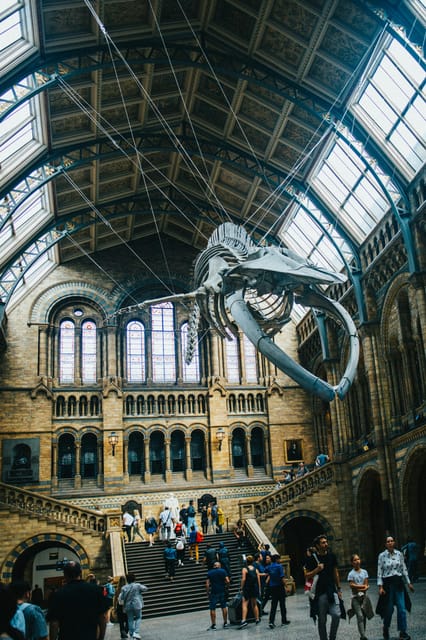
- Sophie the Stegosaurus: one of the museum’s biggest “stop-you-in-your-tracks” moments, with guided context
- Archaeopteryx + Darwin: evolution explained through classic science and a fossil often called the missing link
- Giant Sequoia cross-section: a 1300-year-old slice of the past, shown with scale you can feel
- Pompeii plaster casts: a sobering break from dinosaurs, tied to Mount Vesuvius
- Earth materials + space rocks: gemstones plus rock from the Moon and Mars in the same tour path
A science sprint through London’s Natural History Museum
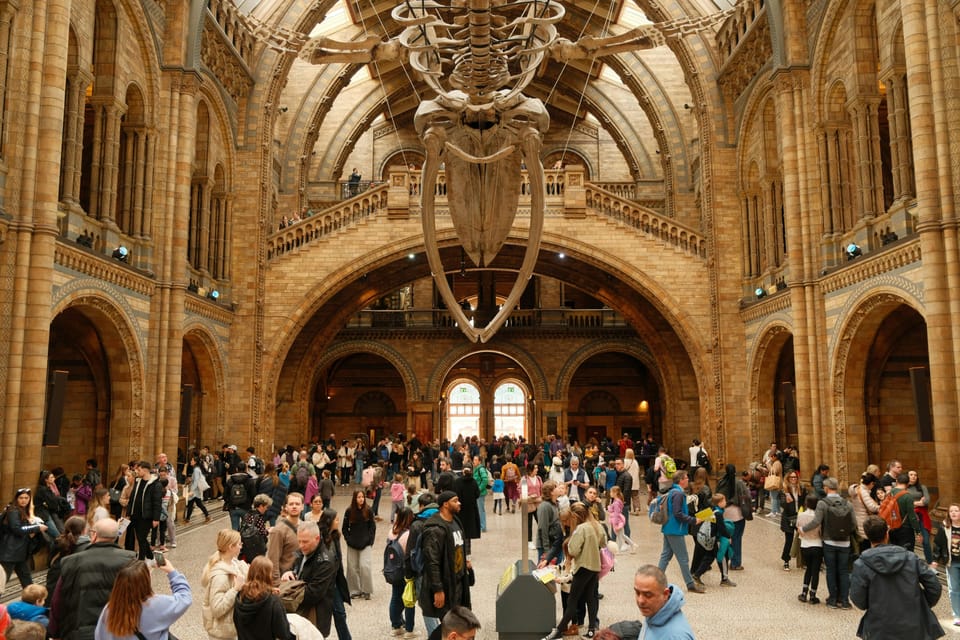
If you only have a couple hours in London, this tour is built for exactly that. The Natural History Museum is huge, so wandering on your own can turn into running past the best stuff. With a guide, you get a route that actually works.
You’ll spend about 2.5 hours in the museum, with a 2-hour guided tour through the main highlights. That structure matters. It means you can see the big-ticket items (Sophie, Darwin, Archeopteryx) and still have enough time to take in the details that make them real.
Also, you’re not starting from scratch. You get help getting your bearings, with a live English guide and express security so you lose less time to lines.
You can also read our reviews of more guided tours in London



Meeting outside the red telephone box (and why that helps)
You meet outside the red telephone box opposite the Exhibition Road entrance to the Natural History Museum. That sounds small, but it’s genuinely useful. The museum has multiple entrances, and when you’re cutting it close, clarity beats guessing.
The tour includes express security, which is one of the smartest parts of the whole setup. Security lines inside London can be slow, and this helps you start the museum experience sooner instead of burning time before you even reach the galleries.
Practical tip: wear shoes you can stand in. Even though the tour is “just” 2.5 hours, the best exhibits pull you into close looking. And the museum is the kind of place where you’ll naturally slow down when you spot something familiar or dramatic.
Sophie the Stegosaurus and the dodo: instant wow with context
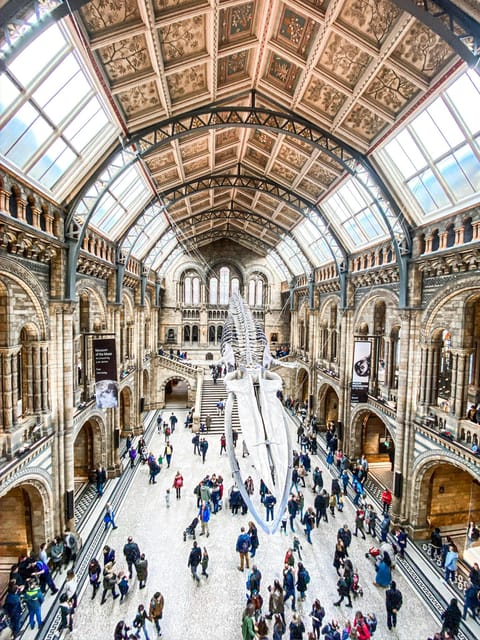
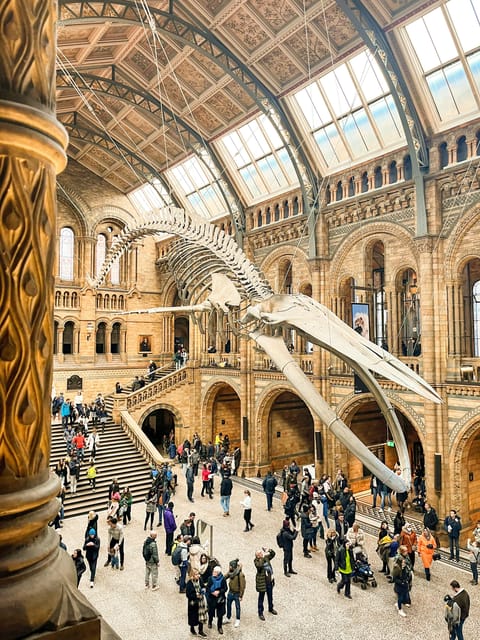
The first headline stop is Sophie the Stegosaurus. This is the kind of display that makes you forget to look at your phone. The skeleton is complete enough to feel like a living animal, not a science poster.
What’s valuable about a guided visit here is the framing. Instead of just admiring bones, you’ll learn how paleontologists interpret fossils—why particular features matter and what they can and can’t prove. That’s the difference between seeing a dinosaur and understanding a dinosaur.
You’ll also encounter the long-extinct Dodo. It’s a good pairing with the dinosaurs because it shifts the story from deep time to extinction closer to human history. That contrast tends to stick. You leave remembering that the museum isn’t only about “cool old creatures”—it’s also about what disappears.
One small rule to keep in mind: flash photography isn’t allowed. It’s worth remembering so you don’t lose your chance at the moment you’re ready to photograph.
Archaeopteryx and Darwin’s Origin of Species: evolution you can see
Next comes one of the most compelling “aha” combinations: Archaeopteryx and Darwin’s On the Origin of Species (first edition).
Archaeopteryx is often discussed as a bridge between dinosaurs and birds—commonly called the missing link. That label gets repeated online, but seeing the fossil display in person helps it make more sense. You start noticing why the details matter: small traits can mean big evolutionary clues.
Then you pair that with Darwin’s book—the first edition. Seeing a scientific classic in a museum setting changes the vibe. It’s not just a theory you’ve heard about; it’s an object tied to the moment evolution became an evidence-driven argument. For many people, that’s when the topic feels real.
If you’re coming as a family, this is usually the sweet spot. If you’re coming as an adult with some science background, you’ll still likely enjoy it, but you may want your guide to explain the “why” behind the traits rather than the basics.
Giant Sequoia cross-section: the scale trick works
Then you’ll stand in front of a cross-section of a Giant Sequoia that’s 1300 years old when it was felled in the 19th century. A living tree takes forever to understand with your eyes. A cross-section makes it immediate.
This stop has two strengths:
- It turns time into something physical. You’re not just imagining “a thousand years.”
- It breaks up the fossil-heavy flow with a tree that feels almost alien in how old it is.
If you like when a museum stops being abstract, this is where it happens. Even if you don’t study botany, you’ll walk away thinking differently about forests and longevity.
You can also read our reviews of more historical tours in London





Earth vault moments: gemstones plus Moon and Mars rock
The tour doesn’t only stick to biology. You also get to see fine gemstones and rock samples from the Moon and Mars.
Why does that matter? Because it widens the museum’s message. Dinosaurs and evolution are dramatic, but Earth science and planetary materials answer a different question: how the world is made. When you see them side by side in the museum’s main highlights, it helps the whole place feel like one connected story.
This is also one of the reasons the guided route can be better than a self-guided sprint. Without a guide, you might skip over the “earthy” sections because you’re laser-focused on the dinosaurs. Here, you get a balanced mix automatically.
Pompeii plaster casts: disaster history that hits
After the big wow exhibits, you’ll visit plaster casts of the victims of the eruption of Mount Vesuvius in Pompeii. It’s powerful and heavy. This stop is not light entertainment.
The value of having a guide here is pacing and context. You’ll get help understanding what you’re looking at—why the casts exist and what they represent—without turning the experience into something numb or rushed. If you’re sensitive to tragedy, plan for a slower moment here. Look, then step back.
I also think this stop improves the overall tour experience. Dinosaurs can be awe-inspiring, but disaster history adds emotional stakes and makes the museum feel connected to human reality.
How the 2.5 hours usually feels in real time
The structure is simple: 2 hours of tour plus time to get through museum spaces and see the key exhibits. A tour like this works best when you’re open to moving steadily.
Here’s the practical reality: if you spend too long trying to read every label, the highlight tour won’t feel long enough. If you’re the type who wants the “main points fast,” you’ll probably love it.
The express security helps, but inside the museum you’ll still do plenty of standing and walking. Bring water if you normally like it, and accept that you’ll likely only get the most important parts of the museum rather than an everything-for-everyone day.
Guide quality can make or break the experience
The biggest variable is the guide. You’ll see that reflected in the range of ratings.
Some guides are clearly excellent at keeping people engaged. One guide named Sasha is described as engaging everyone in a family group, and another named Wesley is praised as highly knowledgeable with the time flying by without boredom. That’s exactly what you want from a 2.5-hour museum tour: guidance that changes the way you look.
There’s also a reality check. One booking reported the guide wasn’t present, and another described the tour as basic and info-oriented with not enough interesting detail for the price, especially if you already know the topic.
So here’s my advice to you: treat this as a guided highlights tour, not a full course. If you want more storytelling or deeper science, your best move is to go in ready to ask questions early. A good guide can often adjust how much depth they share once they know what your group cares about.
Price and value: $93 for a focused route, not a museum marathon
At $93 per person for about 2.5 hours, you’re paying for three things:
- A guided route through the museum’s main highlights
- Access to those highlights during your visit
- Express security and a guide who keeps the pacing efficient
If you compare that to a self-guided visit, the value isn’t the entry price by itself. The value is time saved and the sense that the museum is curated for you in a short window.
If you’re a first-timer, or you only have half a day in London, it’s a strong deal. If you’re already a science nerd with a list of facts and specimens you want to hunt down, you may find the tour feels too short or too basic for the cost.
For families, this kind of structured “big hits” approach usually feels worth it because it prevents the day from collapsing into aimless walking.
Who this Natural History Museum tour suits best
This tour is a great match if:
- you want Sophie the Stegosaurus, Darwin, Archaeopteryx, and Pompeii casts without planning each turn
- you like an organized overview with a live guide in English
- you’re visiting with kids or a mixed group and want something that stays engaging
It’s not a good match if:
- you use a wheelchair, since it’s listed as not suitable for wheelchair users
- you want a deep, lecture-style exploration of every topic in the museum—this is a highlight run
- you dislike “main exhibits only” formats
Should you book it?
I’d book this if you want an efficient, high-impact museum experience where you’re shown the core exhibits and given enough context to make them meaningful. The combination of Sophie, Archaeopteryx, Darwin, the Giant Sequoia cross-section, and the Pompeii casts hits a rare balance: biology, evolution, Earth science, and human history in one route.
I’d think twice if you’re an expert or you hate tours that focus on highlights rather than deep study. Also, because guide quality can vary, go into it ready to engage and ask questions—your experience can improve quickly when you do.
FAQ
How long is the Natural History Museum guided tour?
The tour is 2.5 hours total, with a 2-hour guided portion through the museum’s main highlights.
Where do we meet for the tour?
Meet outside the red telephone box opposite the Exhibition Road entrance to the Natural History Museum.
Is the tour only in English?
Yes, the live tour guide is English.
What’s included in the price?
You get a 2-hour tour of the Natural History Museum, access to the museum’s main highlights, and access to the museum accompanied by a tour guide.
Are flash photos allowed inside the museum?
Flash photography isn’t allowed.
Is this tour suitable for wheelchair users?
No, it’s listed as not suitable for wheelchair users.