REVIEW · LONDON
London: Natural History Museum Guided Tour
Book on GetYourGuide →Operated by Babylon Tours London · Bookable on GetYourGuide
Dinosaurs plus Darwin in one museum run. That’s the smart idea behind this 2.5-hour London Natural History Museum tour, where a guide helps you pick the best stops from a collection that runs on the scale of 80 million specimens. I love how the tour steers you to marquee moments like Iguanodon teeth fossils, the Dodo skeleton, and the first edition of On the Origin of Species without turning it into a random museum stroll.
The second thing I like is the way the guide keeps the story moving. Whether you get a guide like Ivo or Guy V. (I’ve seen names like Matilda, Laurence, and Sacha pop up too), the focus stays on clarity, pacing, and getting you oriented fast—so kids and adults stay interested. One drawback to plan for: you can’t bring luggage or large bags, so you’ll want to pack light and expect security checks to take a few minutes.
In This Review
- Key Highlights You’ll Actually Remember
- Why This Natural History Museum Tour Fits London Time
- Walking the Museum Like a Pro: 80 Million Specimens, One Route
- Fossils First: Iguanodon Teeth and the Dodo That Grabs You
- Pompeii Casts and the Dark Side of Curiosity
- Darwin’s First Edition and the Archaeopteryx Bridge
- The Cursed Amethyst and the Giant Sequoia Slice
- Price and Value: Is $112 Worth It?
- Group Size, Pacing, and Who This Tour Suits
- What to Bring and What to Avoid at Security
- Should You Book This Natural History Museum Guided Tour?
- FAQ
- How long is the Natural History Museum guided tour?
- Where does the tour meet?
- Does the tour include a ticket line skip?
- What’s included in the price?
- What are the top highlights on the tour?
- Is this tour private or group-based?
- Will the group tour run with any number of people?
- What should I bring?
- What items aren’t allowed in the museum?
- Is it wheelchair accessible?
Key Highlights You’ll Actually Remember
- Iguanodon teeth fossils that make deep time feel real, not abstract
- Pompeii plaster casts that turn a historic catastrophe into a close-up human story
- Dodo skeleton time that’s quick to spot and impossible to forget
- Archaeopteryx shown as the alleged dinosaur-bird bridge you’ve heard about
- Cursed Amethyst and the strange power of a museum label with a myth attached
- A giant sequoia slice that gives you size-compare thinking in seconds
Why This Natural History Museum Tour Fits London Time
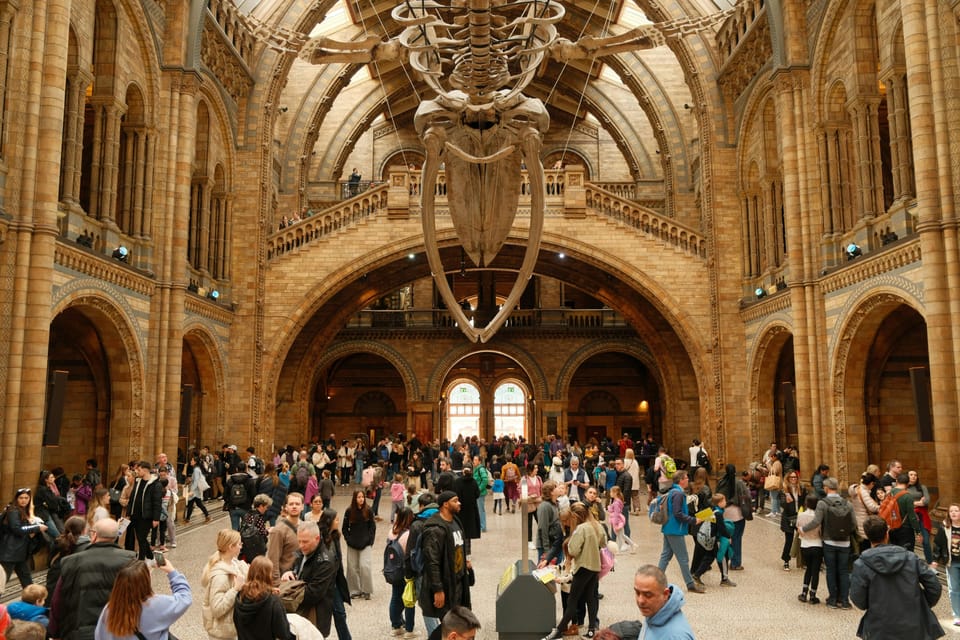
London has a way of stealing your day with lines, detours, and “we’ll figure it out in the next gallery.” This tour fights back. In just 2.5 hours, you’re guided to a tight set of high-impact exhibits, so you don’t lose half your visit trying to decide what’s worth seeing in one of the world’s biggest museums.
The Natural History Museum can feel like a maze—beautiful, but easy to wander off course. A live guide changes the experience because they connect the dots: how fossils explain evolution, how displays reveal past life, and how even oddball curiosities (yes, including the Cursed Amethyst) fit into the bigger science picture.
Also, the tour includes a professional art historian guide. That matters. You don’t just get dates and names; you get help seeing how the museum presents objects—why a label’s phrasing, a cast’s texture, or a specimen’s placement affects what you notice first.
You can also read our reviews of more guided tours in London



Walking the Museum Like a Pro: 80 Million Specimens, One Route
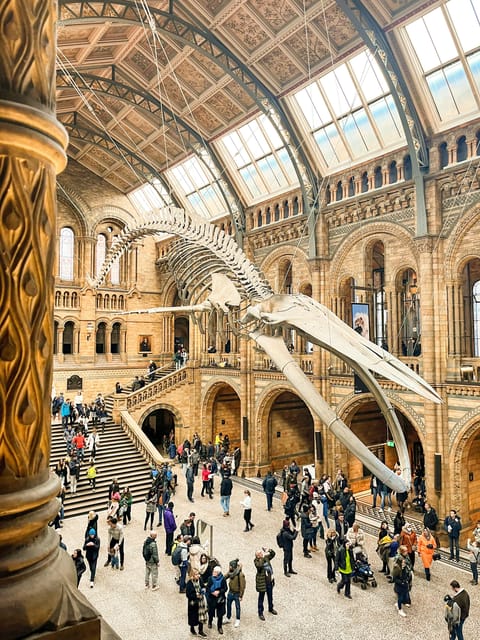
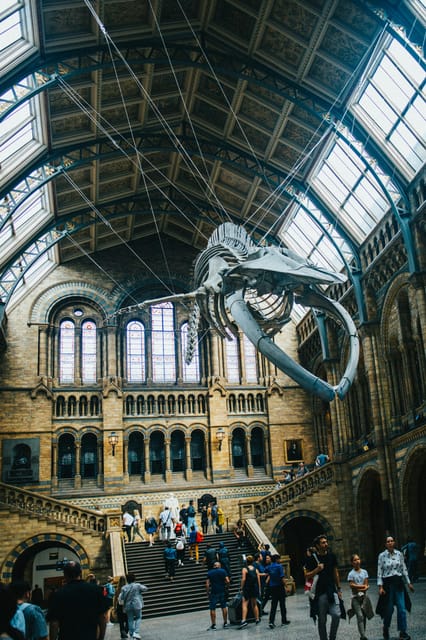
You’re stepping into an institution that lives on scale. The tour frames it as a labyrinth of galleries holding an estimated 80 million specimens. That’s a lot of stuff. Without a plan, you’ll end up seeing whatever is closest to you—and missing what you came for.
With a guide, you move with purpose. The tour is built to hit major specimens and famous displays early enough that you’re not exhausted before the good parts. And because the tour is only 2.5 hours, it keeps the pace realistic. You get time to look, then time to understand what you’re looking at—without spending the whole visit reading your way through the entire museum.
If you’re visiting with kids, this structure is especially useful. The tour is described as working well for families, with guides who actively involve children and answer questions in a way that keeps momentum.
Practical reality check: this is still a museum visit, so expect a small amount of walking and time moving between rooms. Comfortable shoes matter more than you think.
Fossils First: Iguanodon Teeth and the Dodo That Grabs You
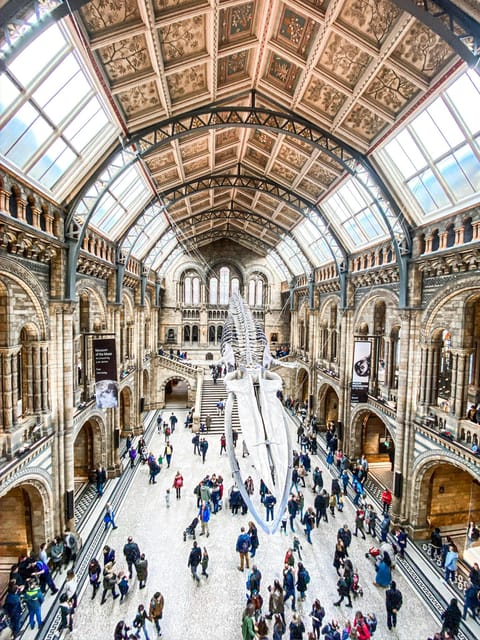
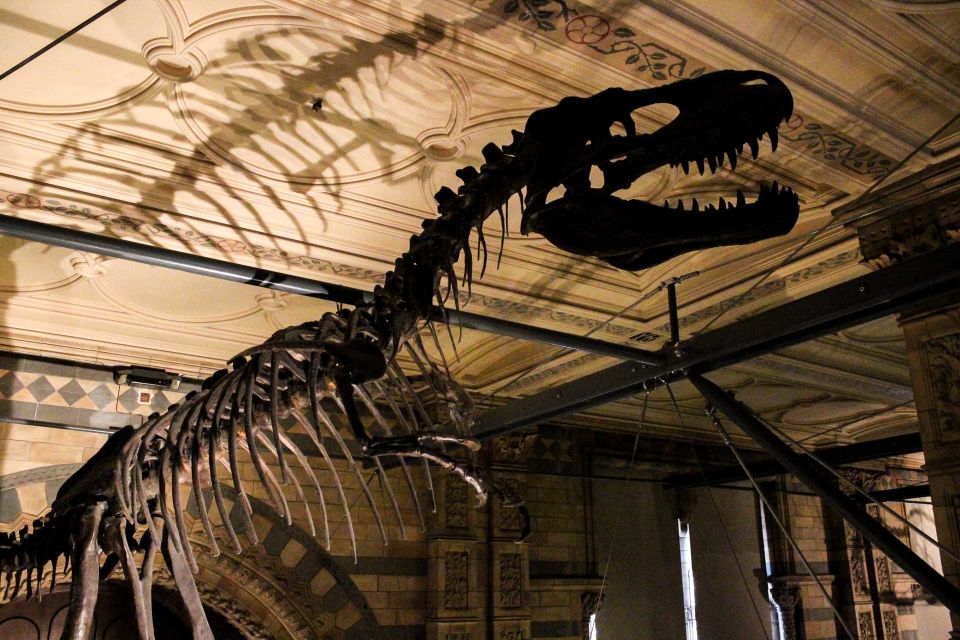
Let’s start with the fossils, because the Natural History Museum does dinosaurs better than almost anywhere in London. The tour spotlights Iguanodon teeth fossils, which are the kind of detail people often skip when they’re hunting for big skeletons. But that’s exactly why this stop works. Teeth are evidence. They’re proof of diet and habits, not just decoration.
Then comes a moment that tends to pull everyone in: getting close to a Dodo skeleton. It’s one of those exhibits where your brain immediately switches from wow-to-sad, because extinction becomes real when you’re standing near the preserved remains. With a guide, you’re not just seeing a bird—you’re seeing how museums communicate loss, survival, and scientific discovery.
What’s valuable here is the guided framing. A fossil display can turn into a checklist if you go alone. On this tour, you’ll understand why certain specimens are emphasized and how they connect to evolution and classification.
Pompeii Casts and the Dark Side of Curiosity
The tour includes casts of victims from the volcanic disaster at Pompeii. These displays aren’t gentle. They’re also unforgettable, which is why they belong on a “top highlights” route.
A guided visit helps you look the right way. Casts make sense when you understand what you’re seeing—how impressions translate into the bodies that once existed. Instead of just staring, you’ll learn to interpret the form and recognize the story the museum is trying to tell.
And the tour doesn’t stop at ancient Rome. You’ll also learn about civilizations that used human skulls as drinking glasses. That’s the kind of fact that can feel shocking out of context. With a guide’s explanation, it becomes a doorway into how humans in different times understood the body, symbolism, and status—still ethically complicated, but more understandable than a random trivia bite.
This section is a strong reason to book a guide at all. Left alone, you can find yourself either skipping quickly (because it’s intense) or reading so much you miss the thread. The tour keeps you moving while still giving you meaning.
Darwin’s First Edition and the Archaeopteryx Bridge
If you want evolution in one glance-and-explain package, this tour makes it easy. You’ll see a first edition of On the Origin of Species, the kind of artifact that feels like it belongs in a library… until you realize it’s museum gold. When you’re staring at a real first edition, you get a sense of the moment science shifted from theory to argument—something built, debated, and published.
From there, you jump into the dinosaur-to-bird question with a rare Archaeopteryx display. The tour frames Archaeopteryx as the alleged missing link between dinosaurs and birds. Even if you’ve heard the debate before, seeing the specimen and getting guided explanation helps you understand why people keep circling back to it.
This pairing—Darwin plus Archaeopteryx—is a smart use of 2.5 hours. It gives you two angles on evolution: one through a landmark text, the other through anatomy and fossils. You leave with a clearer mental map instead of a pile of interesting objects.
You can also read our reviews of more historical tours in London


The Cursed Amethyst and the Giant Sequoia Slice
Not every stop has to be “important” in the boring sense. Two highlights in this tour are museum-famous for feeling strange in the best way.
You’ll be drawn to the Cursed Amethyst. That’s a name built for stories. But it’s also a chance to talk about how people attach meaning to objects. With a guide, you can enjoy the mythy label without losing sight of what the object actually is and why it got attention in the first place.
Then you’ll see an enormous slice of a Giant Sequoia tree. This is your time-scale reality check. Fossils can make deep time feel abstract; a giant tree slice turns that scale into something you can stand next to. You start thinking in measurements you can feel—how long growth takes, how much life stretches across centuries, and how much history can sit quietly behind a glass barrier.
These two stops give the tour variety. They break up the fossil-heavy intensity with objects that let your imagination run, while still keeping you grounded in museum interpretation.
Price and Value: Is $112 Worth It?
At $112 per person, the question isn’t whether the Natural History Museum is worth visiting. It clearly is. The real question is whether a guided format earns its keep.
Here’s how this one makes sense on value:
- You’re paying for a professional guide who helps you find and understand the best exhibits without wasting time.
- You get a curated route through top targets: fossils, Darwin, Pompeii casts, Dodo, Archaeopteryx, and standout oddities like the Cursed Amethyst.
- The duration (2.5 hours) is short enough that you’re not stuck dragging yourself around all day—especially if this is your “one big museum plan” while in London.
If you’re the type who likes museum “self-guided wandering,” you might feel you can do it cheaper with an audio guide. But if you want your visit to feel like a story—with clear links between what you see—then the cost feels fair.
Group Size, Pacing, and Who This Tour Suits
This tour runs either as a private option or a group tour with a maximum of 8 guests. For group tours, there’s a minimum of 2 guests; if it doesn’t run, you’re offered an alternative date or a full refund.
That small group size helps a lot. It’s big enough for energy, but small enough for the guide to steer attention and answer questions without losing the room.
This is also a strong family option. Guides here are described as paying special attention to children, and the tour duration works for kids who want action but still benefit from explanations. Adults who enjoy science trivia also do well—especially if you like connections between artifacts and the bigger ideas they represent.
One more note: wheelchair tours are available only upon request and only as a private tour. The tour is not listed as suitable for wheelchair users in general, so plan around that if accessibility matters.
What to Bring and What to Avoid at Security
London museum security can be picky, and this tour follows the museum rules. Bring a passport or ID card. Don’t plan on carrying luggage—no large bags or suitcases are allowed inside, only handbags or small thin bag packs through security.
Because security checks can create lines (even with skip the ticket line access), build in patience. Skip-the-line helps at the ticket point, but you still have to clear the museum’s own systems.
For your comfort: wear shoes you can walk in for a couple hours of gallery hopping. You’ll do a small amount of walking, and the pace stays active.
Finally, food isn’t included. If you need energy, grab something before you start, then plan for a café stop after.
Should You Book This Natural History Museum Guided Tour?
I’d book it if you want a fast, focused London museum win. This tour is built for people who don’t want to spend their trip guessing which exhibits matter most. You’ll get a guided route to the kind of objects that make the Natural History Museum famous, including Darwin’s first edition, a close Dodo moment, and the unforgettable Pompeii casts.
Skip it if you’re a slow, deep-reader type who wants to roam every wing at your own pace, or if you can’t travel light and hate the security hassle. This one works best when you’re ready to move through galleries with a plan.
If you’re deciding between going alone and booking a guide, ask yourself this: do you want facts, or do you want the facts stitched into a route you’ll remember? This tour is designed for the second option.
FAQ
How long is the Natural History Museum guided tour?
It runs for 2.5 hours.
Where does the tour meet?
The meeting point may vary depending on the option booked.
Does the tour include a ticket line skip?
Yes. The tour includes skip the ticket line access, though you might still encounter some security or access lines due to increased security.
What’s included in the price?
The tour includes a live English guide and a professional art historian guide. Private and semi-private options are available.
What are the top highlights on the tour?
Key highlights include Iguanodon teeth fossils, Pompeii casts, a Dodo skeleton, a first edition of On the Origin of Species, and a rare Archaeopteryx display, plus stops featuring the Cursed Amethyst and a Giant Sequoia slice.
Is this tour private or group-based?
It’s offered as either a private tour or a small group tour with 8 guests maximum.
Will the group tour run with any number of people?
Group tours have a minimum of 2 guests. If the minimum isn’t met, you’ll be offered an alternative date or a full refund.
What should I bring?
Bring a passport or ID card.
What items aren’t allowed in the museum?
You can’t bring luggage or large bags. Only items like handbags or small thin bag packs are allowed through security.
Is it wheelchair accessible?
The tour is not listed as suitable for wheelchair users, but wheelchair tours are available upon request only and only as a private tour.