REVIEW · LONDON
London: Uber Boat – Single Journey River Thames Cruise
Book on Viator →Operated by Uber Boat by Thames Clippers · Bookable on Viator
The Thames turns sightseeing into quick transport. This one-way Uber Boat ride lets you glide past London’s icons while also functioning like practical transit, with an easy mobile ticket and flexible pier stops. You’ll see sights like the London Eye and Tower Bridge in one smooth, hour-ish trip.
I love the mix of indoor comfort (with air-conditioning) plus covered outdoor viewing, so you’re not stuck in the weather. I also like the value: you’re paying for a scenic ride with real transportation benefits, not a pricey standalone “cruise.” One thing to consider is that it can feel busy and fast at busy departures, so if you hate crowds or need lots of outdoor space, plan smart.
In This Review
- Key things to know before you go
- Price and the value of a one-way Thames ride
- Boarding tips: zones, piers, and mobile ticket reality
- What you’ll see: the Thames highlights from Battersea to the east
- Battersea Power Station to Lambeth Palace: where the ride feels iconic
- Westminster, the London Eye, and Southbank’s most famous walls
- Millennium Bridge to St. Paul’s: the skyline swing you came for
- The Shard to HMS Belfast: modern height and wartime scale
- Tower of London to Tower Bridge: royal drama and the lift-bridge story
- Canary Wharf to the finish near The O2 area
- Onboard comfort, covered viewing, and the soundscape
- How this compares to a classic river cruise
- Who this is best for (and who should plan differently)
- Should you book Uber Boat on the Thames Clippers?
- FAQ
- How long is the Uber Boat single journey on the Thames?
- How much does it cost?
- What’s included in the ticket?
- Can I board and get off at different piers?
- Do I need entrance tickets for attractions along the way?
- Is food or drinks included onboard?
- Is the ticket valid for The O2 express services?
- What if I cancel close to the ride date?
Key things to know before you go
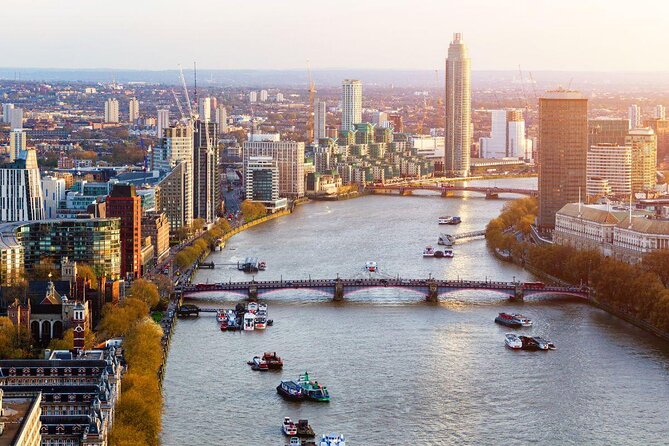
- One-way Thames transit with flexible piers between Battersea Power Station and Barking Riverside
- Air-conditioned indoor seating plus covered outdoor areas for different comfort levels
- Icon spotting on the move, including the London Eye, St. Paul’s dome, and the Tower Bridge lift
- Free digital River Guide from Thames Clippers to help you identify what you’re seeing
- First come, first served boarding, so early arrival helps
- Good value for the route, especially compared with classic tourist river cruises
Price and the value of a one-way Thames ride
For about $13.44 per person, this is one of the more budget-friendly ways to cover a lot of London riverside sights in a short time. The key value isn’t just the scenery. It’s that you’re paying for transport along the Thames corridor—so you’re not spending the whole day “on a boat” while the rest of your itinerary waits.
Think of it like this: a traditional river cruise often costs more and keeps you locked into one route and one experience. Here, you can start and end at different piers (within the valid zones), which makes it easier to build around your day—museums, viewpoints, theatre tickets, or simply time in the parks and promenades.
One practical downside of the value: you’re not buying a long, guided sightseeing experience with guaranteed extended stops. It’s designed for efficient river travel, so you’ll get the best results by deciding in advance which landmarks you want to linger near.
You can also read our reviews of more boat tours in London



Boarding tips: zones, piers, and mobile ticket reality
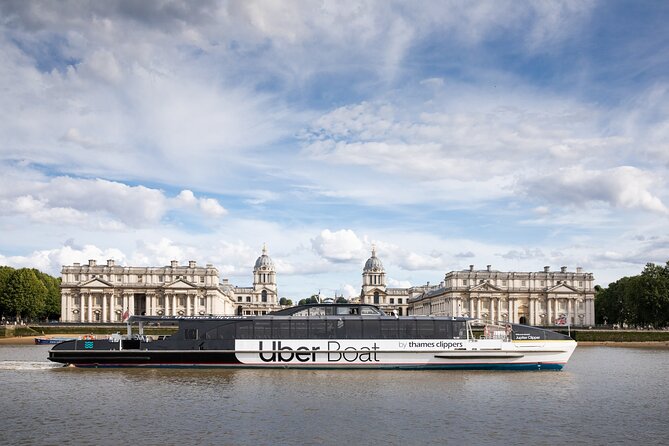
This is a mobile-ticket experience. You’ll want your e-ticket ready to show at the piers (printed or on your phone works). Tickets are valid for the day selected and for travel within Central and East zones, between the Battersea Power Station side and the Barking Riverside side.
A few rules that matter in real life:
- You can board and disembark at any pier that falls within that valid stretch.
- Boarding is first come, first served, so the easiest rides go to the people who arrive calmly before the boat fills.
- It’s not meant to cover The O2 express services, so if your plan is specifically the O2 area, keep your routing in mind.
Also: this is a pier-to-pier service. The pickup isn’t included—so you’ll be walking to the dock yourself. Luckily, many of these piers are near public transit, which helps if you’re mixing the Thames boat with the Tube or buses.
If you’re travelling with kids, note that children under 10 must be with an adult.
What you’ll see: the Thames highlights from Battersea to the east
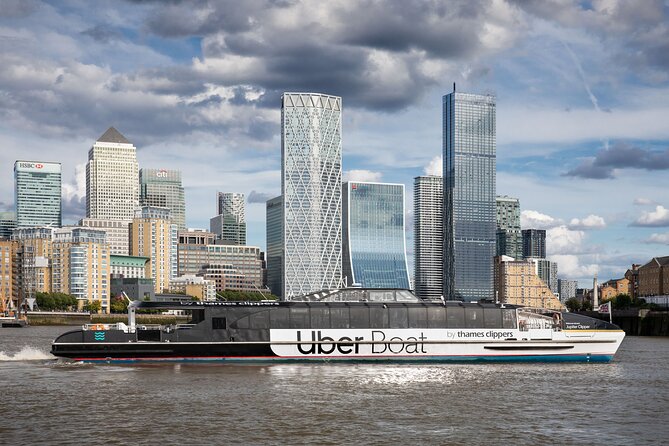
This route is basically a greatest-hits run down the river—made better because you’re moving through the city, not parked in one view. Even when you only catch a quick look at a landmark, the Thames angle gives everything a new shape: different bridges, different skylines, and a changing perspective as the boat slides along.
Here’s how the landmarks tend to land for you on the water, from west to east.
Battersea Power Station to Lambeth Palace: where the ride feels iconic
You’ll start with Battersea Power Station, the big Art Deco landmark that has been reborn as a riverside hub. From the boat, it reads instantly as a symbol of London’s “old industrial meets new life” story.
Next up is a section with bridge-and-sculpture detail and then Lambeth Palace, the London residence of the Archbishop of Canterbury. If you’re into architecture and institutions, this stretch is a good reminder that the Thames isn’t just a postcard line—it’s a political and religious backbone too.
Why it’s worth it: this early part gives you the feeling of “London is waking up around the river,” and it’s a strong start for first-timers.
What to watch for: early on, you might want to be near a window or covered viewing area quickly, since seating and sightlines can tighten as the boat fills.
Westminster, the London Eye, and Southbank’s most famous walls
As the boat reaches Houses of Parliament and the Big Ben area, the view gets dramatic fast. You get that classic angle without crowds you’d expect on land right in front of the buildings.
Soon after, you pass the London Eye—the observation wheel that’s basically a second skyline feature. The movement of the boat makes it feel less like a single photo spot and more like part of the river panorama.
Then you roll into the Southbank corridor:
- Southbank Centre for that arts-meets-river vibe
- Shakespeare’s Globe Theatre for the history-meets-performance feeling
Why it’s worth it: if your day includes theatre, galleries, or a walk along the Southbank, this is the easiest way to link those stops together without spending extra time in traffic.
Possible drawback: the ride is efficient, so don’t expect every landmark to come with a long, lingering window moment. If you want deeper time at the Globe or the Southbank, treat it as a “spot and plan” section.





Millennium Bridge to St. Paul’s: the skyline swing you came for
This is where the Thames view gets cinematic. You’ll pass:
- Millennium Bridge, a sleek footbridge that points your gaze toward St. Paul’s dome
- Tate Modern, housed in a former power station
- St. Paul’s Cathedral, with that unmistakable dome
For many people, this is the moment that makes the whole ride feel worth it. The river space creates breathing room around the buildings, and St. Paul’s looks almost architectural in motion—changing how “giant” it feels depending on the boat’s angle.
Why it’s worth it: even if you’re not doing museum time, this stretch helps you understand how London’s major landmarks line up.
What to watch for: engine noise can make spoken audio less clear in places, so if you care about descriptions, rely more on the River Guide than on what you catch through the speakers.
The Shard to HMS Belfast: modern height and wartime scale
After St. Paul’s, you’ll see The Shard, slicing upward with a futuristic silhouette that looks sharper from the river than from street-level. It’s one of those landmarks that becomes more “real” when it’s framed by the Thames.
Then you move toward HMS Belfast, a WWII warship turned floating museum. The shift here is important. You’re not only seeing London’s power and beauty—you’re also seeing its military history tied to the river’s role in trade and defense.
Why it’s worth it: it adds variety. The skyline thrills, then you get a more grounded, historical stop in view.
Possible drawback: if you’re expecting a full museum visit as part of the boat, this won’t replace that. It’s best as a visibility moment so you can decide whether to hop off later.
Tower of London to Tower Bridge: royal drama and the lift-bridge story
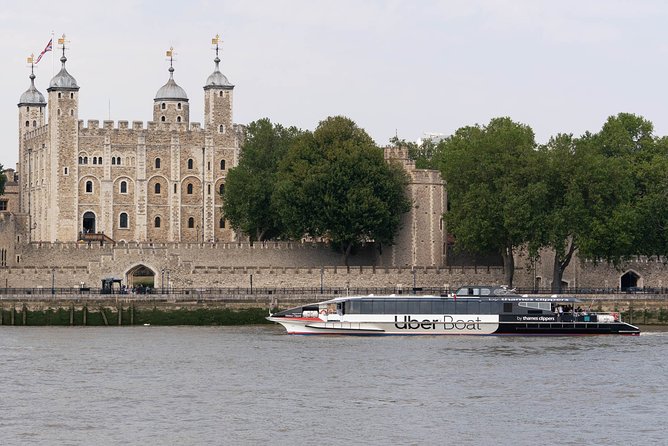
You’ll reach Tower of London, a fortress that’s synonymous with royal intrigue and iconic guards. Then comes Tower Bridge, the Victorian masterpiece that can lift to let ships pass.
From the water, Tower Bridge looks taller and more detailed. It also gives you a better sense of why the bridge is such a central river fixture: it has to fit a major shipping route and still look monumental.
Why it’s worth it: you’ll likely recognize these spots instantly, and the river angle makes that recognition feel fresh.
What to watch for: if you want photos, plan for the fact that the boat moves fast through the most photogenic zones. Have your phone ready before you arrive at the busiest visual moments.
Canary Wharf to the finish near The O2 area
As you head farther east, you’ll pass Canary Wharf, London’s modern financial powerhouse with plenty of glass and vertical lines.
Finally, you reach the Up at The O2 area. The good news: access to the general area is described as free, but if you want the climb, that requires purchasing tickets.
Why it’s worth it: ending toward the newer London skyline can feel like a clean “full circle” after the older landmarks.
Important consideration: your ticket is tied to the valid zones and is not for the O2 express services, so make sure your plan matches how the boats run in practice.
Onboard comfort, covered viewing, and the soundscape
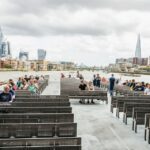
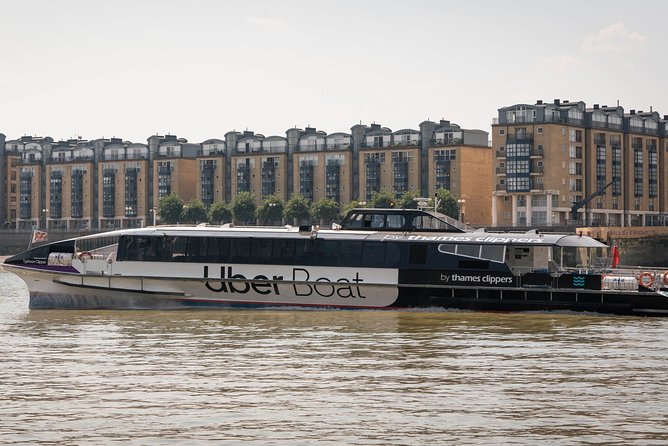
This boat layout is built for comfort. You get comfortable indoor seating, air-conditioning, and access to covered outdoor areas. That combination matters in London, where weather can change quickly and unpredictably.
In terms of how it feels during the trip:
- If the day is sunny, you’ll want a spot near windows or in the covered outdoor space for the best photos.
- If it’s cold or rainy, indoor seating keeps the experience pleasant without sacrificing too much visibility.
One thing to keep expectations realistic: the experience is designed to keep the ride flowing. Boarding and disembarking can feel quick, so don’t plan to linger in the aisles or around the doors. If you’re trying to coordinate everyone for a photo, do it before the boat reaches the busiest piers.
Also, consider using the free River Guide to get descriptions that you might miss if the spoken audio is hard to hear. The link is: https://www.thamesclippers.com/explore-london/river-guide
How this compares to a classic river cruise
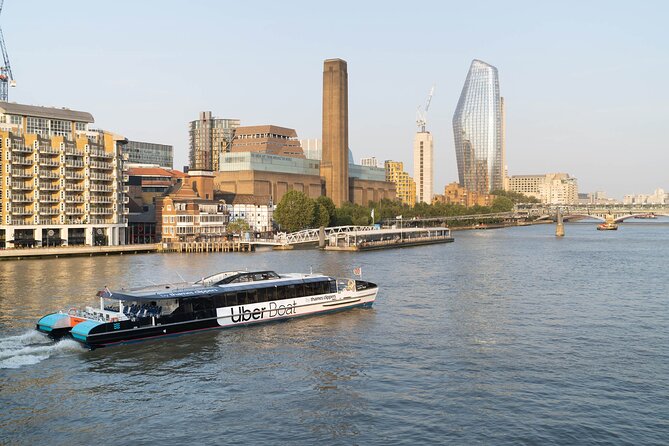
You’ll notice the difference the moment you compare intent. This ride is more transport with sightseeing value than a long, commentary-heavy cruise.
That means:
- You’ll see many major landmarks in a relatively short ride.
- You’ll have flexibility to choose start and end piers within the valid zones.
- You can pair it with walking routes or nearby transit connections more easily.
If you’re looking for a relaxed, seated-with-guidance tour where someone talks nonstop, you might find the pacing a bit more practical and less narrated. But if your goal is simply to get great Thames views without overspending, it’s a very strong match.
Who this is best for (and who should plan differently)
This is ideal when you:
- Want a budget-friendly Thames experience that covers major landmarks fast
- Prefer flexibility over a rigid route
- Like the idea of combining the river ride with walking, museums, or neighbourhood exploring
- Travel with family and want an easy, predictable way to move while still enjoying views
It may be less ideal if you:
- Need lots of open-air space at all times
- Strongly prefer a slow, sit-and-listen guided cruise format
- Are sensitive to crowding during peak times, since the service is efficient and can feel busy at stops
Should you book Uber Boat on the Thames Clippers?
Yes, you should book if you want a smart value way to enjoy London’s river and you’re okay treating it like transit with sightseeing perks. At around $13.44, the price-to-view ratio is hard to beat—especially for landmarks like St. Paul’s dome, the Tower Bridge area, and the classic Westminster corridor.
Before you commit, decide where you want the day to end. Because it’s a single one-way experience across valid zones, your best results come from choosing a start pier that matches your morning plans and an end pier that matches the rest of your day.
FAQ
How long is the Uber Boat single journey on the Thames?
It’s listed as about 1 hour.
How much does it cost?
The price is $13.44 per person.
What’s included in the ticket?
You get a one-way journey on Uber Boat by Thames Clippers, plus a free digital River Guide.
Can I board and get off at different piers?
Yes. You can board and disembark at any pier between Battersea Power Station and Barking Riverside.
Do I need entrance tickets for attractions along the way?
No entrance tickets are included. You’d need separate tickets for paid attractions.
Is food or drinks included onboard?
No. Food and beverages are available for purchase onboard.
Is the ticket valid for The O2 express services?
No. Tickets are not valid on The O2 express services.
What if I cancel close to the ride date?
You can cancel for a full refund up to 24 hours in advance. If you cancel less than 24 hours before the start time, you don’t get a refund.