REVIEW · LONDON
Run the Thames Bridges
Book on Viator →Operated by Secret London Runs · Bookable on Viator
GPS-guided runs across London beat staring at a map. This one follows the Thames like a moving history lesson, using GPS-triggered audio so you can go at your pace while you pass the big sights. You start near the Tower of London area and finish in Putney, with famous bridges and riverside landmarks along the way.
Two things I really like: first, the audio gives you both route guidance and factual prompts, so you rarely feel lost. Second, if you wander off-route, the GPS is designed to bring you back onto the correct track. One thing to consider: this is a moderate-fitness run, and it’s non-refundable, so pick your day carefully.
In This Review
- Key highlights that make this bridges run worth it
- GPS-triggered prompts: what it’s like to run and listen at the same time
- Tower Hill to Putney: start and finish that make the route feel complete
- London Bridge stop: a smooth warm-up over the Thames
- Tower Bridge start: the big landmark moment with Tower of London views
- Shakespeare’s Globe to Big Ben: London’s central river drama
- Westminster to Waterloo Bridge: the South Bank stretch and a changing vibe
- Battersea Power Station: from classic London to modern redevelopment
- Battersea Park to the Tates: river views plus serious art stops on the route
- Duration and scheduling: fitting a 2–3 hour river run into real life
- Price and value: $23.31 for guided routing, not museum entry
- Practical tips so the audio tour stays effortless
- Should you book Run the Thames Bridges?
- FAQ
- FAQ
- What is the duration of Run the Thames Bridges?
- How much does it cost?
- Where do I start and where do I end?
- Is this tour self-guided or guided by a person?
- What languages is the tour offered in?
- What happens if I go off the route?
- Can I do it across multiple days?
- What should my fitness level be?
- Are service animals allowed?
- Is it refundable if I cancel?
Key highlights that make this bridges run worth it
- GPS-triggered audio that paces itself with you, not the other way around
- Clear stop-by-stop landmark sequence from London Bridge to Putney
- Off-route recovery: the GPS guides you back if you miss the path
- You can split the run across several days, staying in charge of your schedule
- Big landmarks plus great river views, including Tower Bridge and Westminster
- Designed for a private group so it’s just your people on the route
GPS-triggered prompts: what it’s like to run and listen at the same time
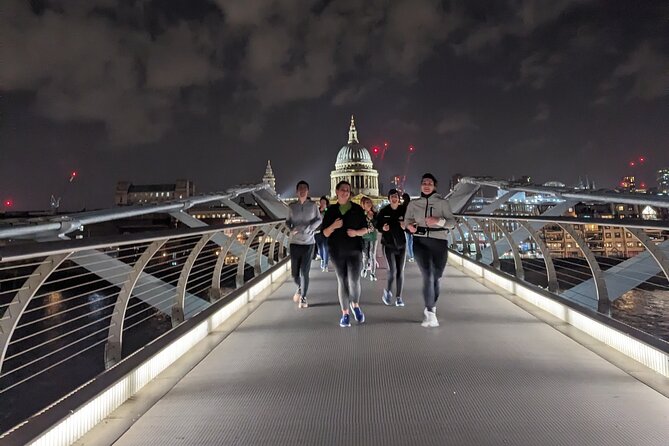
This run is self-guided, but it doesn’t feel like you’re left alone with a phone and hope. The audio is GPS-triggered, so the next cue shows up as you get near each landmark. You can keep moving without constantly checking the screen, which matters when your legs are doing the heavy lifting.
One reviewer loved the format: the narration includes a route voice and a separate factual voice, which helps your brain stay oriented. Another praised that GPS timing is very clear, with prompts that arrive when you actually need them. That combination is exactly what you want on a long river route where it’s easy to accidentally choose the wrong side.
If you’re the type who likes a steady pace, the “at your pace” design is a real win. If you want to pause for photos or just catch your breath, you can. Just remember you’re leaning on your phone for the prompts, so keep headphones ready and don’t run on a dead battery.
You can also read our reviews of more tours and experiences in London.


Tower Hill to Putney: start and finish that make the route feel complete
The meeting point is the Sundial at Tower Hill (Tower Hill, London EC3N 2LY). Your tour ends immediately outside Putney Station on Putney High Street (London SW15 1RT). That start-to-finish setup is part of why this works: you’re not backtracking the same streets over and over.
The route runs during posted opening hours: 5:00 AM to 10:00 PM, Monday through Sunday, across the listed date range. That gives you flexibility if you’re trying to avoid the busiest parts of town or you’re planning a morning run. Either way, the Thames gives you constant visual cues, so even a first-time runner can get their bearings fast.
Also note the practical detail that travel time is added to the total duration. In plain terms: plan for more than just “how long your legs run,” and give yourself some buffer for getting through crowds and crossing bridges safely.
London Bridge stop: a smooth warm-up over the Thames
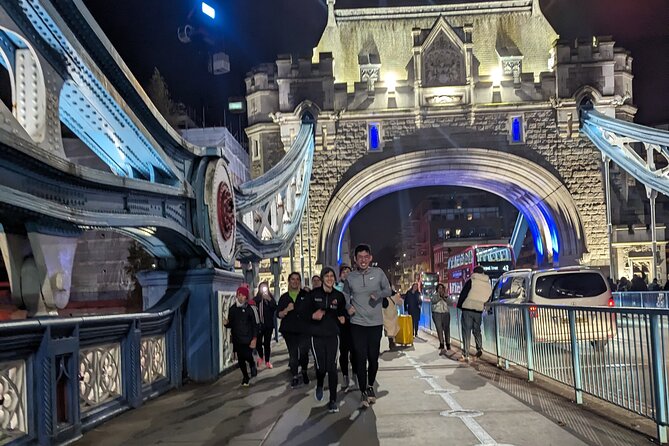
You begin at the London Bridge area as the first major stop. The idea here is to get you rolling right away with the river and its immediate surroundings. The time at this stage is about 30 minutes, and admission is listed as free.
London Bridge is more than a postcard bridge. It’s a gateway into how the Thames shapes London, because you can look across and see how the river splits neighborhoods, viewpoints, and walkable paths. Running here early also helps you settle into the rhythm of the audio prompts before the route gets more “iconic sight” heavy.
If you’re nervous about following GPS on foot, this first bridge is a friendly place to test the process. Once you trust the timing and realize you don’t need to keep stopping to confirm your turn, the rest of the run gets easier.
Tower Bridge start: the big landmark moment with Tower of London views
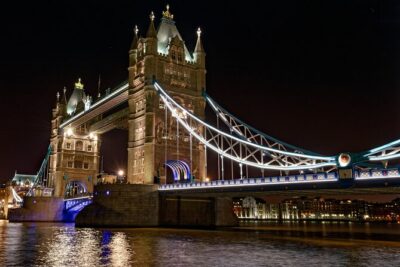
The run begins at Tower Bridge, and this is where you’ll see the famous bridge along with the Tower of London area. The time listed for this stop is about 20 minutes, with free admission.
Tower Bridge is a practical landmark because it’s visually unmistakable even if you’re tired. It also gives you a clean “anchor” for the route—once you’ve handled that first major crossover, the rest of the Thames corridor makes more sense.
This section is a good reminder of why a guided route beats wandering. On the river, it’s easy to overshoot or end up on the wrong side when paths change from one stretch to the next. The GPS design here is meant to prevent that stress, and it’s a big part of the appeal.
Shakespeare’s Globe to Big Ben: London’s central river drama
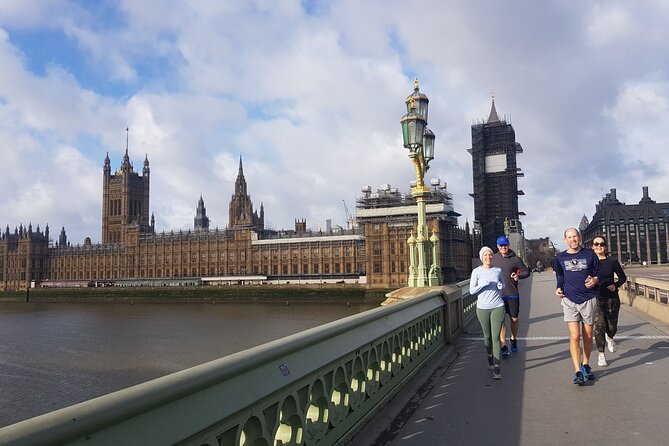
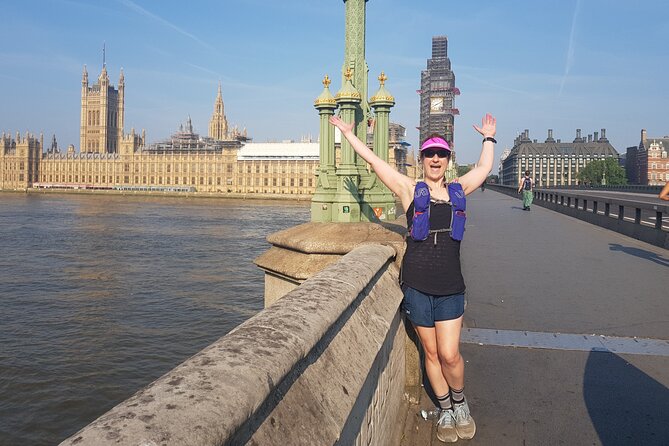
As you move along, you pass Shakespeare’s Globe theatre, then cross the area around Westminster Bridge. Big Ben is referenced as visible as you cross, and you also get clear sightlines toward the Houses of Parliament from the South Bank side.
These stretches are timed as travel/run segments, not long dwell times. You’ll be looking at landmark views while the narration keeps you on track rather than telling you to stop for long museum-style visits.
Here’s what makes this part valuable: you get a “from-the-road” perspective. From the Thames, these icons relate to each other in a way they don’t when you’re standing in one spot. The route pushes you forward while still letting you register the scale of the city.
If you’re tempted to stop constantly for pictures, that’s your call—but keep your pace in mind. The course flows from one viewpoint to the next, and the audio cues are spaced so you don’t want to skip ahead too far.



Westminster to Waterloo Bridge: the South Bank stretch and a changing vibe
Next up is Waterloo Bridge, where you run over the bridge and continue through nearby Southbank areas. This stop is listed at about 30 minutes, with free admission.
South Bank is one of those places where there’s always something going on, and that can be fun if you’re in a people-watching mood. It also means your run can feel different in feel from quieter river stretches—more movement, more crossings, more reasons to slow down for a moment.
The strength of a route like this is that you’re not guessing. You’re following a plan that links landmark views with the physical act of moving across London. If you’ve done other self-guided bridge routes before and felt like you sometimes ended up on the wrong side, this route guide is built to prevent that kind of wandering.
Battersea Power Station: from classic London to modern redevelopment
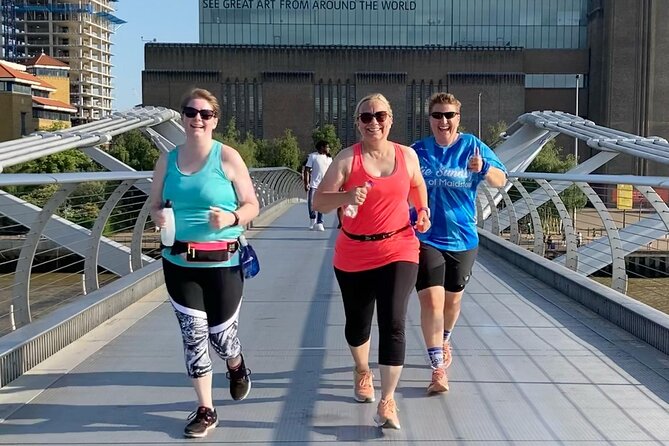
After Waterloo Bridge, the route moves toward Battersea Power Station, with about 20 minutes assigned to this segment. Admission is listed as free.
Battersea Power Station changes the emotional tone of the walk. Instead of only “old London” visuals, you get a redevelopment story visible along the river. It’s a reminder that the Thames isn’t just a historical stage—it’s also a working part of how the city keeps growing.
This stop also works well as a mental checkpoint. If you’ve been focused on landmarks so far, now you’re switching to a different kind of city reading, one where architecture and new riverfront use are part of the narrative.
Battersea Park to the Tates: river views plus serious art stops on the route
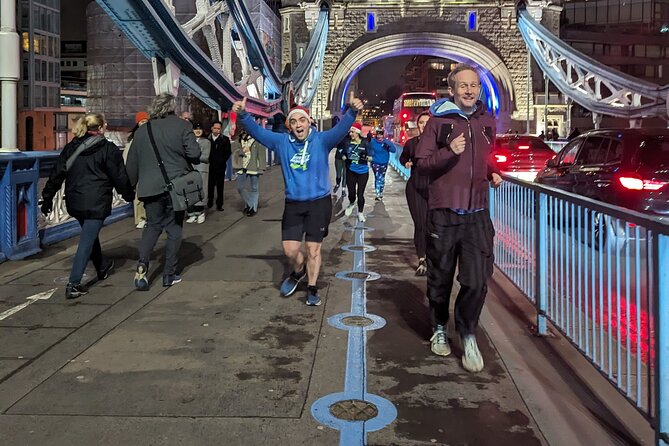
You’ll continue to Battersea Park, with the park visible across the Thames as you run along the North Bank. That segment is listed at about 20 minutes, with free admission.
Then the route passes Tate Modern and Tate Britain. Each is listed as about 5 minutes of travel time on the route. You’re not being scheduled like a museum day. Instead, these art spaces become part of the running skyline.
This is a smart way to handle London culture if you’re not trying to turn your run into a full afternoon of ticketed attractions. You get the sight and location cues right from the river, and if you feel like visiting later, you’ll already know where you are.
If you do plan to stop for a closer look, just do it with intention. The route is timed, so a long pause can knock your rhythm off. Short stops for photos work well; long ones may make you feel like you’re late to your own tour.
Duration and scheduling: fitting a 2–3 hour river run into real life
The total duration is listed as 2 to 3 hours (approx.), and travel time is added. That’s a helpful range because river runs can slow down with bridge crossings and crowd flow.
A feature I appreciate: you can break up the run across several days if you need. That matters if you’re sightseeing hard the rest of the day and you don’t want one ambitious session to ruin your schedule.
There’s also a “private tour” note, meaning only your group participates. In practice, that’s great if you’re running with friends or doing something like a fundraiser and you don’t want to share the timing with strangers.
Price and value: $23.31 for guided routing, not museum entry
At $23.31 per person, you’re paying for the guided experience—the GPS-triggered audio tour and the route logic. Most of the named highlights are shown with free admission, so you’re not paying to get into every landmark just to understand them.
That’s a strong value model if your goal is connection and context, not checkboxes. This tour doesn’t replace a museum visit. It gives you a running framework for seeing where everything sits, how bridges connect neighborhoods, and why each stretch of river matters.
If you already enjoy running and you like learning in motion, this is a good fit. If you want a sit-down guided commentary with a person talking face-to-face, you might prefer a traditional walking guide. Here, the “guide” is your phone and GPS.
Practical tips so the audio tour stays effortless
A few things help this type of run go smoothly:
- Wear comfortable headphones that stay put while you move. If your audio cuts out, you’ll feel it right away.
- Give yourself time for bridge crossings and take safer gaps when traffic or crowds build up.
- Start with a simple plan for pacing: treat the first bridge as settling-in time rather than a sprint.
- Be ready to adapt if you stop for photos. The GPS guidance is meant to keep you on track, but long detours can shift your timing.
One review mentioned they didn’t expect the run to be as engaging without other entertainment, and the audio helped with that concern. In other words: don’t ignore the tour’s narration. It’s doing real work to keep you oriented and informed.
Should you book Run the Thames Bridges?
Book it if you want a London “greatest hits” route that still feels like a workout. The GPS-triggered audio setup is ideal when you like structure but hate the stress of navigation, and the ability to split over multiple days is a practical advantage.
Skip it if you’re looking for a relaxed, stroll-only experience with lots of long stops. This run is designed for people with moderate physical fitness, and the route moves at a runner’s pace with shorter view windows at each landmark.
If your goal is to see Tower Bridge, Westminster, Waterloo, Battersea Power Station, and the river art spaces in one connected line—without constantly rerouting yourself—this is a smart way to do it.
FAQ
FAQ
What is the duration of Run the Thames Bridges?
The tour takes about 2 to 3 hours (approx.), and travel time is added to the total duration.
How much does it cost?
It costs $23.31 per person.
Where do I start and where do I end?
You start at the Sundial at Tower Hill (Tower Hill, London EC3N 2LY). You end immediately outside Putney Station on Putney High Street (London SW15 1RT).
Is this tour self-guided or guided by a person?
It’s a private GPS-triggered audio tour, where audio prompts follow you at your pace.
What languages is the tour offered in?
The tour is offered in English.
What happens if I go off the route?
If you go off-route, your GPS will guide you back.
Can I do it across multiple days?
Yes. The run can be broken up across several days if you need.
What should my fitness level be?
You should have moderate physical fitness.
Are service animals allowed?
Yes, service animals are allowed.
Is it refundable if I cancel?
No. The experience is non-refundable and cannot be changed for any reason.