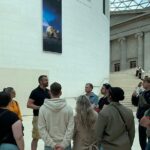
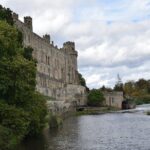
WWII in London is everywhere, if you know where to look. This semi-private Churchill tour strings together landmark after landmark with a guide who helps the story click, then gives you real time inside the Churchill War Rooms.
What I like most is the small group size (up to 8) and how the walking route makes it easy to pause for photos without feeling rushed. I also like that your War Rooms visit is built in as real time (about 1.5 hours) with an audio guide rather than a quick look. One drawback to plan around: there are no comfort breaks or bottled water on the tour, so you’ll want to take care of that before you start.
In This Review
- Key points before you go
- The Westminster loop that makes Churchill feel real
- Battle of Britain Monument and Big Ben: where the Blitz story begins
- Churchill War Rooms: 1.5 hours in the WWII command center
- Parliament Square and Whitehall: statues, memorials, and the war in the streets
- Cenotaph and Houses of Parliament: remembrance on one side, rebuilding on the other
- Horse Guards Parade and Westminster Abbey: cavalry life and Nazi-era attacks
- How the guide shapes the tour (and why you’ll notice the small group)
- Price and time: what $115.16 buys you in real terms
- What to know before you go: comfort, weather, and your schedule
- Should you book this Churchill and War Rooms tour?
- FAQ
- How long is the tour, and how much time do I spend at the Churchill War Rooms?
- What is the maximum group size?
- Is admission to the Churchill War Rooms included?
- Will the guide go inside the Churchill War Rooms with me?
- Are bottled water or comfort breaks provided?
- Where do I meet, and where does the tour end?
Key points before you go
- Small group pace (max 8) keeps questions from getting lost in the crowd
- Churchill War Rooms ticket included plus an audio guide for your 1.5-hour visit
- Walking route through Westminster means more photo stops and less waiting around
- Perfect concentration of WW2 sites from the Blitz to Parliament to Westminster Abbey
- Morning or afternoon departures let you fit it around your other London plans
The Westminster loop that makes Churchill feel real
This is a focused WWII route through the political heart of London. You start at a famous WWII-related monument area, then work your way along Whitehall and Westminster with short stops that keep the story moving.
You’re not just looking at buildings. You’re getting the context that makes them more than postcards. And because it’s a walking tour, you’re usually close enough to read details, frame photos well, and regroup quickly when the guide shares a key point.
You can also read our reviews of more private tours in London


Battle of Britain Monument and Big Ben: where the Blitz story begins
You begin at the Battle of Britain Monument in Whitehall. Even though the stop is short, it sets the tone: you hear how Royal Air Force skill and courage helped the UK push back against Nazi air attacks. It’s a smart start because it reminds you that WWII in London wasn’t only about politics and speeches. It was also about survival and skill.
Next you hit Big Ben, with a focus on what the landmark went through during the Blitz. The stop is also brief, which is exactly why a good guide matters here. You don’t just see a famous clock tower—you understand why it became part of London’s wartime story.
Practical note: both stops are short, so wear shoes that work well for quick stands and photo angles. This is more “walk-and-witness” than “sit-and-stare.”
Churchill War Rooms: 1.5 hours in the WWII command center
The centerpiece is your Churchill War Rooms visit, with admission included. You get about 1.5 hours inside, and the museum is described as a preserved time capsule from the 1940s. That matters because you’re not trying to imagine what it looked like. You’re walking through an environment built to keep the wartime feel intact.
Your guide won’t join you inside. Instead, you’ll use the provided audio guide while you explore. For me, that’s a good setup. A museum visit can get crowded and distracting if everyone is trying to listen to the same person at the same time. Here, you get guided setup outside the museum route, then more breathing space once you’re inside.
When you plan your day, give yourself room mentally for this part. The War Rooms are the kind of place where you’ll want to slow down for a few rooms or exhibits, even if you keep moving overall.
Parliament Square and Whitehall: statues, memorials, and the war in the streets
After the War Rooms, the route keeps pulling you toward the symbols of power and remembrance.
At Parliament Square, you stand near the Churchill statue and hear the meaning behind it. This is one of those stops that can be surprisingly emotional if you let it land. WWII-era leadership isn’t only shown in museums. It’s marked right out in the open where daily life still happens.
Then comes Whitehall, where the tone shifts from wartime command to wartime loss and national attention. You spend more time here—about 20 minutes—focused on memorials tied to war. This is where you start seeing how WWII is woven into London’s government district, not pushed off into a separate history area.
Cenotaph and Houses of Parliament: remembrance on one side, rebuilding on the other
At the Cenotaph, you pause to pay respects at the memorial for soldiers who fought and died in war. It’s short—around 10 minutes—but the moment is usually what you take with you after the tour. Even if you’re not the sentimental type, this stop tends to make the rest of the story feel less abstract.
Then you move to the Houses of Parliament area. Here, you get the thread that Churchill helped with rebuilding the destroyed House of Commons building. That’s the kind of detail that’s easy to miss if you’re just sightseeing. It turns a major landmark into a wartime narrative: damage, response, and reconstruction.





Horse Guards Parade and Westminster Abbey: cavalry life and Nazi-era attacks
You’ll also see Horse Guards Parade at Whitehall, where the story ties back to Churchill’s life in the cavalry. That may sound like a detour from WWII, but it actually helps you understand him as more than just the WWII headline. It’s a reminder that his story had earlier chapters that fed into his later leadership style and public image.
Finally, you reach Westminster Abbey. The stop is about 10 minutes, focused on the Abbey’s grandeur and how it was attacked during the Nazi period. In a single walk-through, you go from living political spaces to a coronation church that survived—and was targeted—during the war. That contrast is powerful.
How the guide shapes the tour (and why you’ll notice the small group)
A big part of value here is that the experience is built for a group of up to 8 people. In a larger group, you get pulled along and you lose nuance. In a smaller one, you’re more likely to hear side points and ask quick follow-ups.
The guide energy is a recurring theme in how this tour is talked about, with specific names coming up like Alex, Judd, Rosie, Marnie, and Amber. What you can reasonably expect from that kind of track record is storytelling that connects the plaques and monuments to the real wartime picture—plus practical tips for getting the most from the War Rooms.
If you’re a history buff, this matters. If you’re not, it still helps, because you’ll understand what you’re looking at while you walk.
Price and time: what $115.16 buys you in real terms
At $115.16 per person for roughly 3 hours, the price makes sense when you break it down. Your Churchill War Rooms admission is included, and the War Rooms portion is a full 1.5 hours. That’s not just a quick entry stop; it’s enough time to actually see and process what matters.
You also get the structure of a guided walking route through Westminster, which normally takes a lot more effort to recreate on your own. If you like to explore at your own pace, you might be tempted to DIY this with a map. But the time you save, plus the way the story is threaded from site to site, is usually what makes it feel worth it.
The booking lead time averages around 46 days, which suggests the popular slots can go quickly. If your dates are firm, it’s worth reserving earlier so you can choose the morning or afternoon departure.
What to know before you go: comfort, weather, and your schedule
This tour runs on good weather. If conditions are poor, you’ll be offered a different date or a full refund, so plan for an alternate option if your trip window is tight.
Comfort planning is the bigger thing. There are no bottled water and no comfort breaks built into the tour. That doesn’t mean you can’t take care of yourself en route, but it does mean you should think ahead. Use the restroom before you start, and bring what you need for the walk from stop to stop.
You’ll also want to be ready for a lot of short standing moments. Several stops are around 10 minutes, so pack light and keep your focus on good shoes and quick photo-friendly positioning.
Good news for logistics: the start point is near public transportation, and there’s a mobile ticket. The tour also allows service animals, and it’s described as doable for most travelers.
Should you book this Churchill and War Rooms tour?
If you’re interested in WWII London and you want a route that connects the dots, I’d say yes. This is a strong choice when you want more than museum time—when you want the Westminster streets, memorials, and political landmarks to feel like part of the same story.
It’s especially good if you like a semi-private group and you want a guide who can keep the pacing human. The War Rooms are the anchor, but the walk through Parliament Square, Whitehall, and the Cenotaph helps you understand why the War Rooms mattered in the first place.
If you hate walking, need lots of planned breaks, or rely on a comfort-and-snack rhythm during tours, you may find the lack of bottled water and built-in breaks limiting. For everyone else, it’s a practical way to see the Churchill story in London at a level most self-guided days don’t reach.
FAQ
How long is the tour, and how much time do I spend at the Churchill War Rooms?
The tour is about 3 hours. You’ll spend about 1.5 hours at the Churchill War Rooms.
What is the maximum group size?
The maximum group size is 8 travelers.
Is admission to the Churchill War Rooms included?
Yes. Entrance tickets to the Churchill War Rooms are included in the tour price.
Will the guide go inside the Churchill War Rooms with me?
No. Your guide will not join you inside the museum, but you will receive an audio guide.
Are bottled water or comfort breaks provided?
Bottled water is not included, and there are no comfort breaks or refreshments listed as part of the tour.
Where do I meet, and where does the tour end?
You start at the Battle of Britain Monument, 79 Whitehall, London SW1A 2NS. The tour ends at Churchill War Rooms, King Charles St, London SW1A 2AQ.