REVIEW · LONDON
SHERLOCKTRAIL: A Sherlock Holmes Mystery (Self-Guided Walk)
Book on Viator →Operated by SideWalks · Bookable on Viator
A murder mystery with a walking plan. That’s the fun hook of this Sherlock Holmes self-guided route in London—part sightsee, part deduction, all at your pace. I like that it keeps you moving through Marylebone and Regent’s Park without forcing you into the usual tourist loop.
Two things I especially enjoy: you get a built-in clue hunt tied to the story (not just random trivia), and you can stop anytime for a break or a snack because it is not a race. One watch-out: you’ll be reading a lot on your phone, and the experience depends on Telegram working smoothly and the right language being available.
In This Review
- Quick take: what you’ll love (and what to plan for)
- Key highlights to know before you start
- Sherlock on Baker Street: how the self-guided mystery actually plays
- Price and value: $13.64 for a whole London-style evening
- Getting started at Baker Street Underground: your code, your phone, your pace
- The walk through Marylebone: clues, side streets, and detective brain
- Regent’s Park pacing: breaks you can really take
- Using /HINT, /ROUTE, and /SKIP when London gets confusing
- Ending near 221B: submitting your theory to Holmes
- Accessibility and physical effort: what moderate fitness means here
- Who this Sherlock Trail suits best (and who might not love it)
- The language reality check: 11 options, but expect to test
- Should you book Sherlock Trail: my recommendation
Quick take: what you’ll love (and what to plan for)
5km, self-paced, no time slots means you can fit it into your day. The walk is designed for adults or teens who like stories, crime fiction, and walking, and it runs fully wheelchair and buggy accessible—plus service animals are allowed.
Here’s the one drawback to factor in: while the game lists many languages, if your preferred language option isn’t available when you play, the puzzle-solving will feel tougher.
Key highlights to know before you start
- Telegram-based gameplay: you use a smartphone and commands like /ROUTE, /HINT, /SKIP.
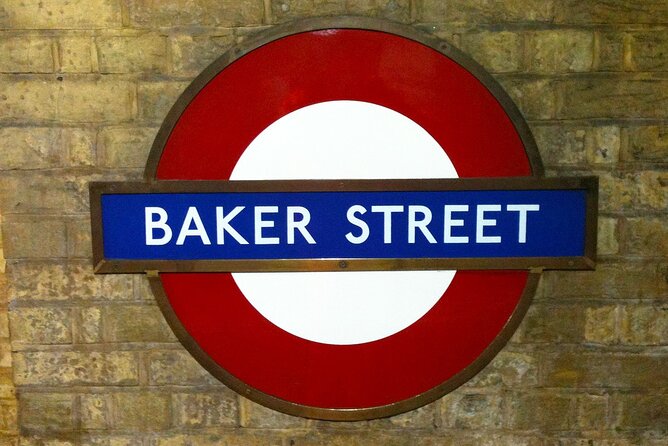
- 5km Sherlock Holmes loop: starts at Baker Street Underground and ends near 221B, looping through Marylebone and Regent’s Park.
- Self-paced, not competitive: pause, wander side streets (within reason), and keep your own reasoning thread.
- Story-first clue locations: you gather clues to answer victim, cause of death, motive, and opportunity.
- Multilingual design: the game supports 11 languages, including English, French, German, Italian, Spanish, Portuguese, Russian, Japanese, Chinese, Korean, and Arabic.
- Good for mixed travel styles: great for locals and visitors who want London at street level.
You can also read our reviews of more walking tours in London



Sherlock on Baker Street: how the self-guided mystery actually plays
This is a self-guided walking mystery built around Sherlock Holmes-style deduction. You start with a story premise, then the route drops you at clue points where you observe what’s around you and connect it back to the case. You’re not just walking for views—you’re walking to make decisions.
The game asks you to build a theory by answering questions like: who the victim was, what the cause of death might have been, and who met whom—plus motive and opportunity. That structure is why it feels fun for adults and teens: you can think like a detective, but still enjoy the city as your “case board.”
A key mindset shift: this is not a digital scavenger hunt where you just collect items. It’s a walk where clues push you toward a conclusion, and you have the option to ask Holmes or submit your theory when you think you’re ready.
Price and value: $13.64 for a whole London-style evening
At $13.64 per person for a roughly 2-hour experience, the value is mostly about what you get for the cost: a planned walking route, story-based clues, and interactive help—without paying for a guide or entry tickets.
What you’re really buying is time plus structure. London can be overwhelming, and guided tours can feel rigid. This format gives you a framework to explore Baker Street, Marylebone, and Regent’s Park while staying flexible enough to pause when you want.
Just don’t assume the 2 hours will always feel like 2 hours. If you enjoy reading and you’re the kind of person who double-checks details, you might take longer. That can be a good thing—this game rewards attention—but it’s worth setting expectations.
Getting started at Baker Street Underground: your code, your phone, your pace
Your starting point is Baker Street Underground Station (Marylebone Rd), London NW1 5LJ. The whole thing is designed around you showing up with a smartphone and running the game through Telegram Messenger.
There is one detail you should know ahead of time: you cannot access your game code through the Tripadvisor ticket link. Instead, your unique gamecode is manually generated and sent to you by message after booking. If you’re the type who hates last-minute surprises, make sure you book with enough lead time to get that code before you walk.
You also don’t need a time slot. You can play any day, any time during daylight hours, and the listed hours run 8:00 AM to 5:00 PM. Practically, that means morning and afternoon are your best bet for daylight walking and easier sightseeing photos.
The walk through Marylebone: clues, side streets, and detective brain
The route loops through Marylebone and includes clue moments spread along the way. This is where the experience starts to feel like real urban puzzle-solving: you’re in lived-in neighborhoods and you’re encouraged to pay attention to what you see, not just where you’re going.
Why this section works: Marylebone offers a calmer, more residential atmosphere than the busiest central tourist corridors. That kind of environment makes it easier to slow down and read clue text without constantly fighting foot-traffic.
In practice, Marylebone is also where you’ll likely do your main “thinking work.” If you like piecing evidence together, you’ll enjoy the way the game nudges you to build logic step by step—victim, cause, motive, opportunity. If you prefer quick-and-light travel, you might find this part takes concentration because you’ll be balancing walking with ongoing story reading.
One thing to plan for is language dependency. The game is designed for 11 languages, but if the language switching doesn’t work for you on your session, the clue text becomes your bottleneck. If English isn’t your strong suit, consider checking that the language option is actually working in Telegram before you commit your best brainpower to the case.
You can also read our reviews of more guided tours in London






Regent’s Park pacing: breaks you can really take
The route also goes through Regent’s Park, which is a nice change of scenery within the same mystery walk. Parks naturally shift the rhythm of a walking game: the air feels different, paths tend to be more forgiving for getting your bearings, and it’s easier to pause without feeling like you’ve stopped in the middle of a crowd.
This part is especially good for the “not a race” style of play. The instructions explicitly encourage taking breaks, exploring side streets, and following your own line of enquiry. So if you need a breather, this is the section where it tends to feel most natural.
The park loop also makes the route feel complete as an afternoon activity. You’re not only darting from point to point; you’re experiencing London as a mix of neighborhood streets and open space, while still solving the same case from start to finish.
Using /HINT, /ROUTE, and /SKIP when London gets confusing

London navigation and mystery navigation can collide. That’s why the game includes optional help tools. You can use /ROUTE to move faster, /HINT if you get stuck, and /SKIP if you need to jump ahead.
Here’s how I recommend using that system to keep the fun: if you’re only slightly lost, use /ROUTE to get your bearings quickly. If you feel stuck on a clue meaning rather than your direction, use /HINT and keep your own reasoning process going after. If you’re running out of patience or daylight, /SKIP can keep the walk enjoyable instead of frustrating.
Because you’re self-guided, these commands are your equivalent of a human guide. They don’t replace the detective work—but they prevent you from wasting your whole trip fighting the phone.
Ending near 221B: submitting your theory to Holmes

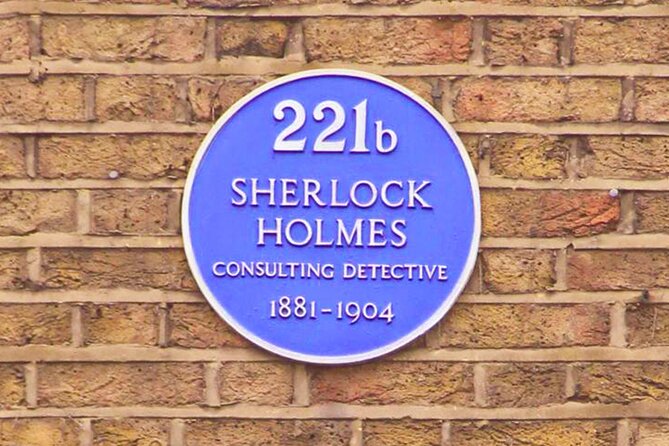
You end near 221B, finishing the main story arc of the case. This is where your earlier clue notes finally pay off. The game is built to get you from question to conclusion: who the victim is, why it happened, and who could have done what, when.
Once you form your conclusion, you can submit your theory—or ask Holmes for his. That last option is a fun closer because it lets you compare your logic to the story’s final framing without forcing you into a “got it or failed it” moment.
There’s also a practical wrap-up consideration. The activity is listed as ending back at the meeting point, even though the route ends near 221B. In other words, plan for the last stretch to bring you back to where you started, so your day doesn’t end in a transit puzzle.
Accessibility and physical effort: what moderate fitness means here
The route is listed as fully wheelchair and buggy accessible. That’s a big deal for families and for anyone who wants an outdoor experience without constant stairs or bottlenecks.
The only physical note is that it’s intended for people with moderate physical fitness. Since it’s a 5km walk, that’s mostly about being comfortable walking that distance at a relaxed pace while you occasionally stop to read, look around, and type commands into Telegram.
If you’re with kids or using a stroller, the self-paced setup helps. You can pause whenever you want and avoid the pressure of keeping up with a group.
Who this Sherlock Trail suits best (and who might not love it)
This experience shines if you:
- want a budget-friendly way to see parts of London beyond the main bus routes
- like mystery and crime fiction and enjoy solving logic puzzles on the go
- prefer exploring at your own speed, with the option to stop for drinks or snacks
- travel with teens or enjoy story-based activities without needing a live guide
It might feel less ideal if you want:
- a classic sightseeing tour with minimal reading
- something that behaves like a pure treasure hunt focused on objects in the street
- a fully hands-off experience, since the game runs on Telegram and depends on your phone
If you’re someone who gets impatient with text-heavy tasks, you’ll want to mentally prepare for reading. The game is story-first, and the clues are part of that storytelling.
The language reality check: 11 options, but expect to test
The game is designed for 11 languages, including major European languages and East Asian and Arabic options. That’s a strong inclusion for international travelers.
Still, one caution is worth respecting: a previous session had trouble switching language for a non-English-speaking family, which made the hunt harder. So if language is crucial to your enjoyment, do a quick check before you start. Make sure your preferred language is actually active in your Telegram session, not just listed.
Should you book Sherlock Trail: my recommendation
Book it if you want an affordable, story-driven walking adventure that turns London streets into evidence. The combination of a clear route (Baker Street to near 221B), interactive help commands, and a self-paced format makes it a smart pick for couples, solo travelers, and families who can handle a bit of reading.
Skip it if you’re chasing minimal-effort sightseeing or if you strongly depend on language switching working perfectly. In that case, you might end up spending more time troubleshooting your phone than enjoying the case.
If you like solving puzzles while you walk, this is one of those London experiences that feels more personal than a checklist tour. You don’t just see places—you build a theory about what you found, then close the case when you finish the route.