REVIEW · LONDON
Turmoil, Templars & Oliver Twist London’s Squalor and Splendour
Book on Viator →Operated by Historic London Tours · Bookable on Viator
A London route that mixes courtrooms and literature? In Holborn, you walk through places tied to Oliver Twist and medieval power, then get the why behind it all. I especially love how the tour turns storybook London into real street corners, and how a small-group format gives you time for questions and follow-ups. One catch: it is a walking tour, and it is not for you if you can’t manage about two miles at a steady pace.
You’ll spend roughly five minutes at each key site, so nothing drags. That short-stop pace also means you can hop on and off in your head: crime and justice, freemasons and institutions, then Templar legend, and finally the everyday oddballs like retail silver. The main consideration is that you’ll be mostly outside and moving, so wear comfy shoes and keep your pace realistic.
If you want London history that feels like it’s living in the pavement, this walk is a good fit. I also like that the guide is clearly a pro at explaining connections without making it stiff—people mention a guide named Tom for being clear, engaging, and happy to answer questions.
In This Review
- Key things to know before you go
- Holborn’s law-and-literature walk: why this route works
- Price and what you really get for $27.42
- Meet-up, walking pace, and what to bring
- Stop by stop: Bow Street to the Old Bailey
- Stop 1: Bow Street Museum of Crime and Justice
- Stop 2: Freemasons’ Hall
- Stop 3: Royal Courts of Justice
- Stop 4: Temple Church
- Stop 5: The London Silver Vaults
- Stop 6: Staple Inn
- Stop 7: Old Bailey
- Oliver Twist and the way stories map onto streets
- Temple Church and the Templars: medieval power you can spot
- Small-group Q&A with Tom: how the guide style boosts value
- Quick itinerary reality check: what 5 minutes per stop feels like
- Who should book this Holborn walking tour
- Should you book? My honest call
- FAQ
- FAQ
- How long is the tour?
- What is the price per person?
- Is the tour offered in English?
- How big is the group?
- Where does the tour start and end?
- Are admissions included for the stops?
- Do I need to be able to walk a certain distance?
- Will I receive a ticket on my phone?
- Is free cancellation available?
Key things to know before you go
- Oliver Twist locations in Holborn: see the real places behind Dickens’ grim characters.
- Small group size (max 15): more back-and-forth with Tom-style Q&A.
- Law courts and crime landmarks: Bow Street, the Royal Courts of Justice, and the Old Bailey.
- Temple Church and the Knights Templar: medieval angles you can still feel in the streets.
- Seven quick stops, about 2 hours: tight route, lots packed in without marathon walking.
- Free admissions at each stop: each site listed is ticket-free for the visit portion.
Holborn’s law-and-literature walk: why this route works
Holborn is one of those London areas that often gets skipped because it’s not as instantly postcard-ready as the West End or Westminster. That’s exactly why this tour works. You get London’s justice system geography in one sweep, and you connect it to the stories people actually remember—especially Oliver Twist.
This is not a slow museum day where you stare at plaques for hours. It’s a street-level walk where each stop is short, focused, and meant to build a bigger picture. When you’re done, you can look at buildings you’d otherwise pass and understand the roles they played—courts, prisons, legal institutions, and the medieval groups that shaped the city’s power web.
The other smart design choice is the mix of “big institution” sites and smaller, more surprising ones. You’ll hit places tied to formal law and trials, then swing to Temple Church, and later check out the London Silver Vaults for something completely different—because London history includes commerce, not just punishment.
You can also read our reviews of more tours and experiences in London.



Price and what you really get for $27.42
At about $27.42 per person for roughly two hours, you’re paying for three things: a guided storyline, tight routing, and free entry to the stop locations listed.
Is it cheap? Not exactly. But value in London is rarely about cost alone. Here, the math is that you get a structured walk with a small group, plus a guide who can field questions. That matters because London’s legal and medieval history can feel confusing if you’re reading alone. A guide turns scattered facts into a sequence you can hold onto.
Also, the stops are short—about five minutes each—so you’re not paying for long stretches of “stand still and listen.” You should expect motion, short explanations, and quick context. If that style suits you, the price feels fair. If you prefer long, linger-and-stare visits, you might want a different kind of tour that slows down.
Meet-up, walking pace, and what to bring
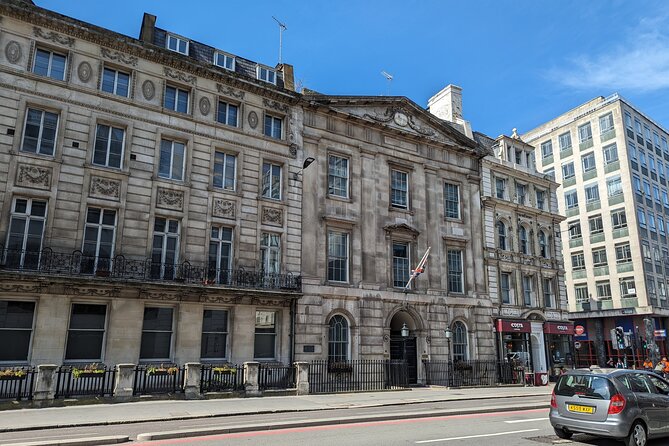
The walk starts at Covent Garden Underground Ltd, Long Acre, London WC2E 9JT. It ends near Blackfriars Station on the north bank of the Thames, at Superdrug Health Clinic, 36–37 New Bridge St, London EC4V 6BJ.
That matters because you’re not doubling back. It’s a one-way route that naturally ends you closer to the river and rail connections. If you’re planning the rest of your day, think of it as a bridge between central London sightseeing and a later walk or meal near Blackfriars.
The tour runs about two hours and has a max group size of 15. It’s offered in English with a mobile ticket, and you get confirmation at booking. Most people can participate, but it is not recommended if you can’t walk around two miles at a reasonable pace.
What to bring:
- Comfortable shoes (you’ll be on your feet for most of the time)
- A light layer (London weather loves plot twists)
- A question or two you’re curious about—this tour is built for that pace
Stop by stop: Bow Street to the Old Bailey
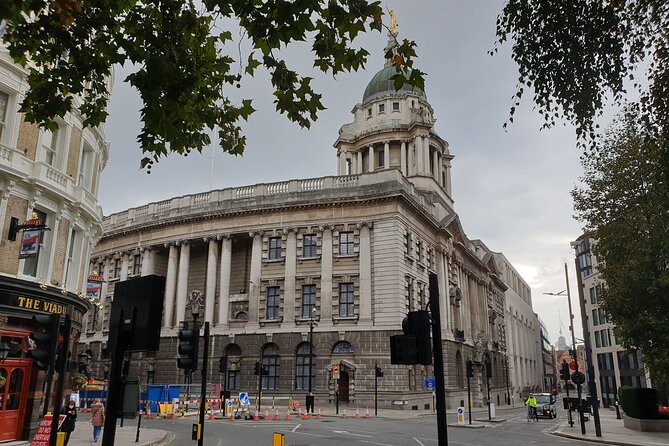
This is the spine of the itinerary, and it’s where the tour earns its name. You start in the legal-crime orbit and gradually zoom out to show how different layers of justice shaped the city.
Stop 1: Bow Street Museum of Crime and Justice
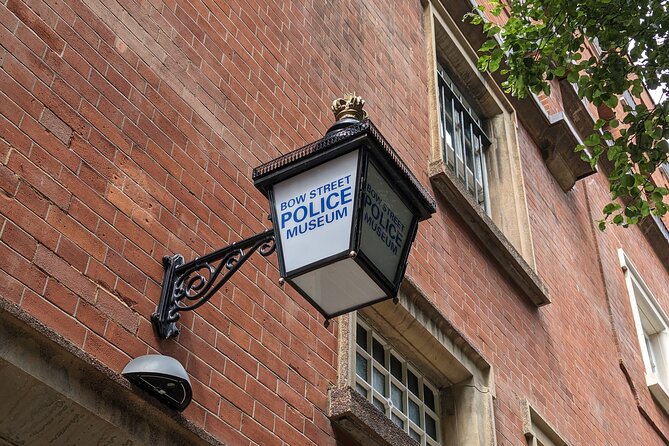
You’ll hear about the Bow Street Runners, a history tied to early policing and the development of crime-fighting in London. Even though your time at the stop is brief, this opening sets the theme: London’s justice system didn’t appear fully formed. It evolved through people, procedures, and places.
What to watch for: when the guide connects this to later court sites. Bow Street is like the preface to the Old Bailey story.
Possible drawback: because the stop is only about five minutes, you’ll get direction and context more than a full museum experience. If you want deep galleries, pair this with a separate visit later.



Stop 2: Freemasons’ Hall
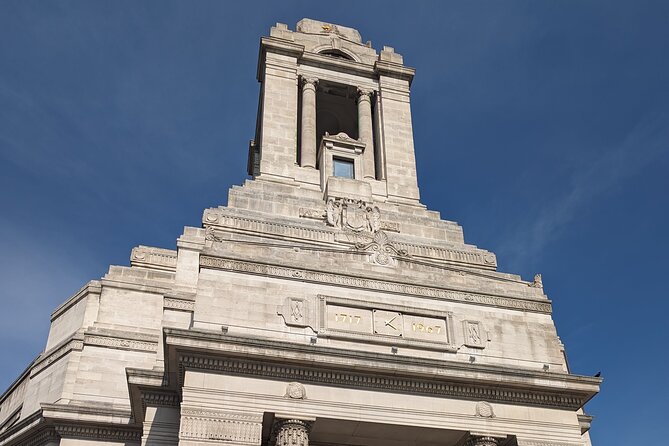
Then you pivot from crime and policing to an institution with a different kind of influence: Freemasons’ Hall and what it represents historically. This is one of those London moments where the history isn’t about one building; it’s about networks.
Why it’s valuable: it helps you see how social power and official power overlap. When you later stand in court-linked surroundings, you’ll start noticing how “who knows who” mattered.
Stop 3: Royal Courts of Justice
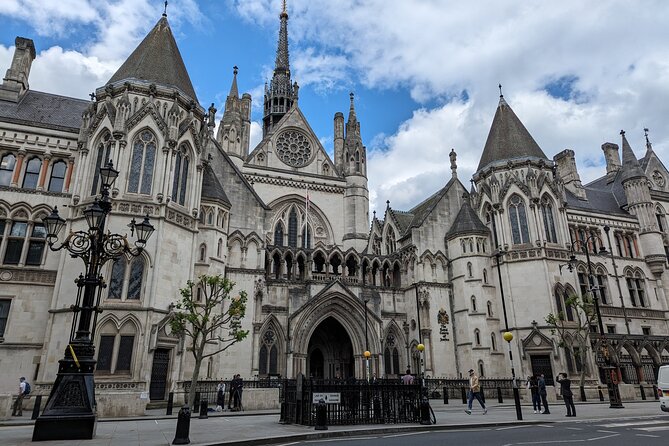
Next comes the Royal Courts of Justice, a place that screams law even if you’re not a legal-history nerd. Your guide explains the site’s background so it doesn’t feel like just an impressive façade.
How to get more out of this: listen for the guide’s points on how legal institutions changed the city’s rhythm—who had access, how disputes moved, and why buildings like this became magnets.
Stop 4: Temple Church
Temple Church is a key stop, and it’s also where the tone can shift from legal modernity to medieval legend. You’ll hear about the Knights Templar and the church itself, with a focus on how the Templars’ presence shaped the area.
If you like medieval stories: this is one of the most compelling stretches.
If you’re not into legend: stay anyway. The medieval angle explains why the streets around here feel layered, not flat.
Stop 5: The London Silver Vaults
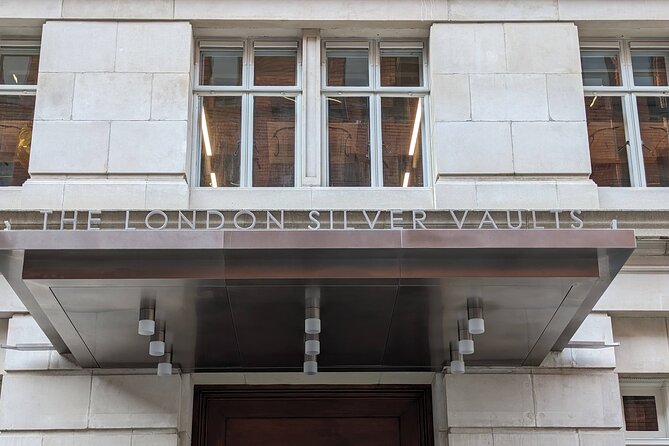
This is the curveball stop: The London Silver Vaults, described as the world’s largest collection of retail silver. In a tour about justice and medieval institutions, it can feel out of place—until you realize London’s story always includes business.
Why it works: it’s a breather that still keeps you in the same neighborhood and time period theme. It shows how commerce grew in the shadow of big institutions.
Small practical note: it’s still a short visit, so go for the context and atmosphere, not a long browsing session.
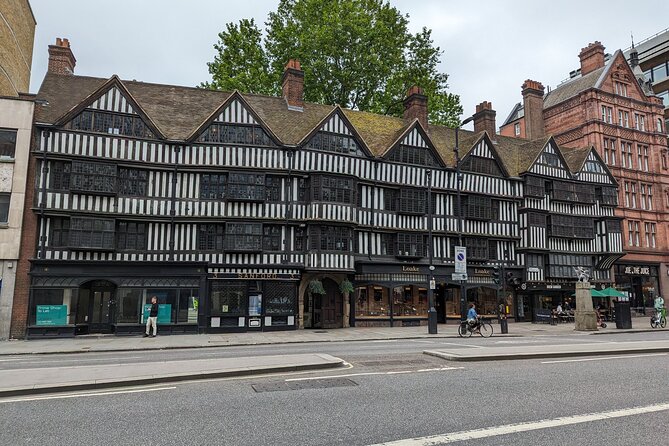
Stop 6: Staple Inn
Then you hit Staple Inn, described as the last remaining of the Inns of Chancery buildings. Inns of Chancery are part of the legal ecosystem, and Staple Inn is a tangible reminder that law was once strongly tied to specific buildings and communities.
This stop is a favorite for people who love London details: it’s historic without feeling like a theme park.
Stop 7: Old Bailey
Finally, you end at the Old Bailey area, where the Central Criminal Court sat, and where Newgate Prison once stood. This is the stop that clicks the whole crime-and-justice sequence into place.
What you’ll get: a clearer sense of how the criminal justice process shaped public space and daily life.
Why the ending works: your last minutes leave you with a mental map. You’ll remember the route because you saw the “before, during, after” logic across the legal sites.
Oliver Twist and the way stories map onto streets
A big reason this walk appeals to fiction lovers is that it links Dickens’ Oliver Twist to the reality of Holborn. You don’t just hear that characters existed; you see how the city’s layout and institutions could inspire the settings.
This matters because London in fiction often feels too theatrical to be believable. When you stand in the real neighborhood and hear how streets, institutions, and buildings were positioned, the story lands differently. It stops being a book fantasy and becomes a social portrait of the era.
If you’re someone who likes to read a chapter and then go see the actual “stage,” this tour gives you that momentum fast. The stops are short, but the connections are clear enough that you’ll want to revisit the area on your own after.
Temple Church and the Templars: medieval power you can spot
Temple Church isn’t just a landmark on a map—it’s a medieval anchor. Your guide explains the Knights Templar connection, and the effect is practical: suddenly, the area feels less like random architecture and more like a corridor of influence.
The Templar story can be easy to treat like abstract legend. The value here is that you’re shown why it mattered to the physical neighborhood. When medieval groups left their marks, they did it through land, institutions, and the way power got organized.
Even if you only care about one thing—crime, courts, or Dickens—Temple Church brings the timeline into sharper focus. It turns the walk into more than one period of London; it becomes a layered timeline.
Small-group Q&A with Tom: how the guide style boosts value
One of the most consistent strengths here is the guide’s ability to answer questions without rushing. The name Tom comes up again and again, with people highlighting how clear and engaging he is.
That isn’t just a nice-to-have. In London, the real fun is in the connections: Why did this institution go here? How did these legal buildings relate to each other? What did people actually do in these spaces day to day?
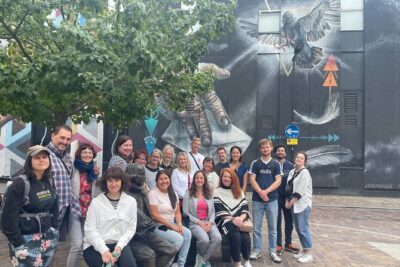
Because the group is capped at 15, you’re not just listening to a monologue. You should expect space for back-and-forth. If you’re the type who pauses a guide mid-sentence with questions, this tour’s format is designed for that.
Quick itinerary reality check: what 5 minutes per stop feels like
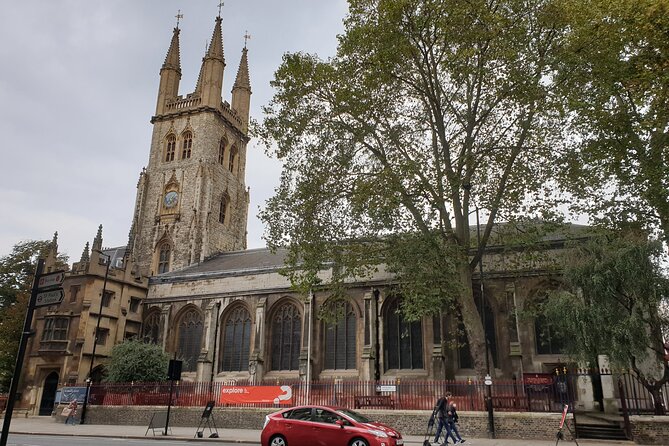
Each of the listed locations is about five minutes. That sounds short because it is short, and you should plan around that.
Think of it like this:
- You’ll get a guided snapshot at each stop.
- You’ll walk away with a mental note of what to read up on or revisit later.
- If you want long, detailed site access, this tour is the start, not the finish.
This short-stop approach also helps you manage attention. London can wear you out fast, and two hours of structured motion tends to feel easier than a half-day of independent wandering.
Who should book this Holborn walking tour
This tour is ideal if you want:
- Oliver Twist London in a real-neighborhood format
- A legal-and-medieval storyline in one loop
- A guide who makes time for questions
- A route that finishes near Blackfriars, so you can keep sightseeing afterward
You might skip it if:
- Walking about two miles is a problem for you
- You hate outdoor walks and want mostly indoor time
- You prefer deep museum-level visits at each stop
It also suits solo travelers and pairs well. The small group helps you feel included, not swallowed by a crowd.
Should you book? My honest call
I’d book it if you like your London history with a plot: crime leads to courts, courts link to institutions, and medieval chapters explain why the city grew the way it did. The value isn’t just the free admissions at each stop—it’s the guidance that helps you connect the dots quickly.
If you’re on a tight schedule and want one smart morning or afternoon that makes Holborn click, this is a strong pick. On the other hand, if you want lots of quiet time inside buildings, or you can’t handle steady walking, you’ll feel the tour’s speed.
FAQ
FAQ
How long is the tour?
It lasts about 2 hours (approx.).
What is the price per person?
The price is $27.42 per person.
Is the tour offered in English?
Yes, it is offered in English.
How big is the group?
The tour has a maximum of 15 people.
Where does the tour start and end?
It starts at Covent Garden Underground Ltd, Long Acre, London WC2E 9JT and ends near Blackfriars Station at Superdrug Health Clinic, 36–37 New Bridge St, London EC4V 6BJ.
Are admissions included for the stops?
The listed stops show admission ticket free, and the experience includes a guided walking tour.
Do I need to be able to walk a certain distance?
It is not recommended if you’re unable to walk about two miles at a reasonable pace.
Will I receive a ticket on my phone?
Yes, it includes a mobile ticket.
Is free cancellation available?
Yes. You can cancel for a full refund up to 24 hours in advance of the experience’s start time.