REVIEW · LONDON
Shoreditch Street Art and Graffiti Tour (Private Group Booking)
Book on Viator →Operated by London With A Local · Bookable on Viator
Street art here tells London’s recent story. On this private Shoreditch tour, you’ll walk through street art and graffiti that reflects everything from fashion-floor commerce to street-level protest. It’s a focused two hours that makes the area feel explainable fast, even if London is new to you.
I especially like how it pairs famous spots with the kind of context you usually miss when you just wander. You’ll also get a guide who encourages questions, not a lecture you have to sit through.
One thing to consider: the tour is short, so if you want maximum time in shops or to slow-walk every wall, you’ll likely want extra self-exploration on your own after you finish.
In This Review
- Key points to know before you go
- Shoreditch street art: what you’re really learning on the walk
- Starting at Shoreditch High Street: getting oriented without wasting time
- Brick Lane: the famous street that still earns its hype
- Spitalfields Market: where street art meets real shopping energy
- From hipster to protest: how the neighborhood changes show up on walls
- King John Court: the largest mural in London, up close
- Why the private format (up to 15) makes this worth doing
- Price and value: when $347.23 actually works out
- Practical tips for the walk (so you enjoy it more)
- Who this tour fits best
- Should you book this Shoreditch Street Art and Graffiti Tour?
- FAQ
- FAQ
- Where does the Shoreditch street art tour start and end?
- How long is the tour?
- Is this a private tour?
- How many people are in a group?
- What language is the tour offered in?
- What does the tour cost?
- Is a mobile ticket provided?
- What’s the cancellation policy?
- Is public transportation nearby?
- Is the tour wheelchair-friendly or accessible?
Key points to know before you go
- Private group up to 15: your guide can slow down for questions and curiosity.
- Brick Lane first: start in the area’s best-known street and then build outward.
- Spitalfields Market stop: street art meets daily street life, food, and shopping culture.
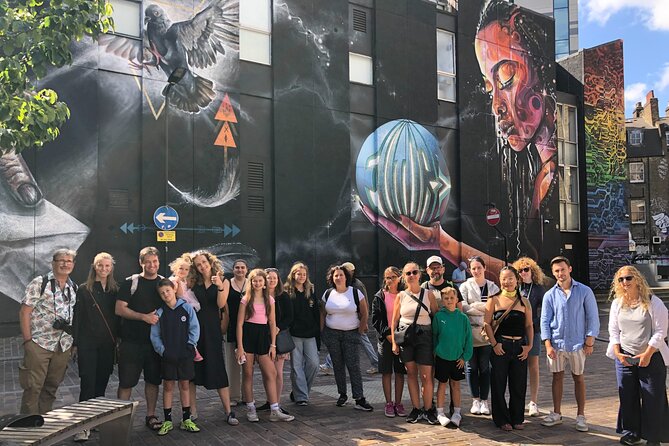
- King John Court mural: you’ll see the site described as the largest mural in London.
- Commercial art plus protest pieces: you’ll learn how styles and messages differ.
- Mobile ticket: easier on the day, less fuss at check-in.
Shoreditch street art: what you’re really learning on the walk
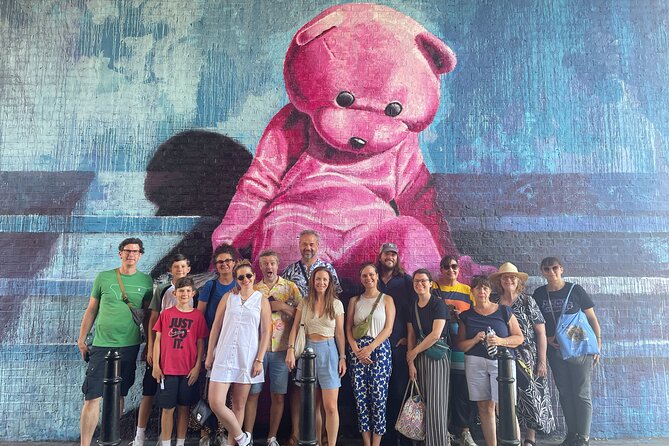
Shoreditch street art is not just colorful wall decoration. It’s a map of change—where money shows up, where new subcultures form, and where people push back when something feels wrong.
That matters because street art can be read on two levels. On the surface, it’s skill, color, and style. Underneath, it’s timing. The walls often record what the neighborhood thought about itself in that moment—hipsters, markets, community tensions, and the constant push-pull between art and commerce.
On this tour, I like that the guide keeps the stories grounded. You’ll look at commercial work and then contrast it with protest pieces. That shift helps you see why some art stays playful while other art takes a clear stance.
You’ll also hear how Shoreditch moved from one kind of reputation to another. The point isn’t to turn it into a myth. It’s to help you recognize how the area’s identity got rewritten—and how street art was part of the toolset.
You can also read our reviews of more private tours in London



Starting at Shoreditch High Street: getting oriented without wasting time
The tour starts near Shoreditch High Street on Braithwaite St (London E1 6GJ). That’s a smart launch point. You’re already in the thick of it, close to where East London’s street culture blends into the everyday city.
The structure is simple: you meet, you get your bearings, and then you’re off. With a 2-hour pace, you’re not stuck in “okay, maybe we’ll get to the good part soon” mode.
This start location also gives you flexibility. Even after the tour ends, you’re in an area where you can keep going in multiple directions—toward Spitalfields or back toward Brick Lane.
Brick Lane: the famous street that still earns its hype
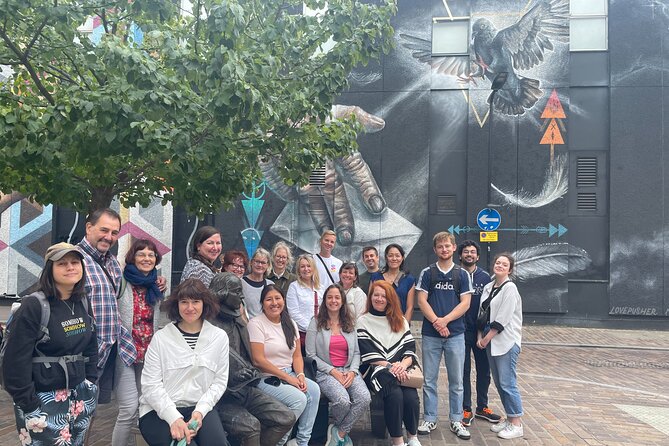
Brick Lane is the first stop, and it’s famous for a reason. You’ll see a mix of vintage shopping, markets, bars, and curry houses—so street art doesn’t feel like a museum thing. It feels like it’s living right next to daily life.
A good guide here does two things. First, they point out what you’re seeing: different styles, different purposes, different levels of “this was made to be seen.” Second, they explain why this street works as a starting point for Shoreditch culture.
You’ll spend about 10 minutes at the Brick Lane stop. That’s not long, but it’s enough to do something important: get your eyes trained. By the time you move on, you’ll be able to tell whether you’re looking at something made for visibility, something commissioned, or something that reads like a message.
If you’re the kind of person who takes photos constantly, bring that habit—but also listen for the meaning behind what you’re photographing. The best moments are when the art clicks with the neighborhood context.
Spitalfields Market: where street art meets real shopping energy
The next highlight focuses on East London’s most famous market area: Spitalfields Market. This is a useful stop because markets are where cultures collide on practical terms—food, clothing, passing conversations, and changing trends.
Street art around market zones often has a different feel than the art in tucked-away courtyards. You get more layers of “audience.” People pass through for errands and hangs, not just to look. That changes what art becomes: sometimes it’s commentary, sometimes it’s branding, and sometimes it’s there for sheer visual impact.
You’ll get time to see how the neighborhood’s identity is communicated in more than one language—signage, storefronts, murals, and the visual rhythm of people moving through.
A quick note: this part of London can involve crowds depending on the day and time. Since this tour is about street art and not a full market tour, your guide will keep you moving so you don’t get trapped in decision-making at every stall.
From hipster to protest: how the neighborhood changes show up on walls
One of the tour’s core promises is learning how Shoreditch was transformed by the hipster movement—and, importantly, how the story is bigger than one stereotype.
In practice, that means you’ll compare different kinds of works. You’ll see art that leans commercial and art that reads like protest. The difference helps you understand two big ideas:
1) Street art can behave like marketing.
2) Street art can behave like speech.
When you’re walking, it’s easier to notice the cues. Some pieces look designed for cameras. Some look like they’re responding to a specific issue or frustration. Some sit in places that make you slow down; others are placed so you can’t ignore them as you pass.
That’s where a private guide adds real value. You can ask questions as you go and get clarity on what you’re seeing, instead of guessing. In one set of feedback tied to the tour, Hannah is specifically praised for knowing the area and helping people find incredible lesser-seen culture along the way. If you get a guide with that kind of local feel, the tour becomes a much better use of your time.
You can also read our reviews of more tours and experiences in London





King John Court: the largest mural in London, up close
The tour’s second anchor is King John Court, with the stop described as home to the largest mural in London. You’ll spend around 10 minutes here, which is short—but murals hit hard when you get the right viewing distance and angle, and a guide can help you understand what to notice.
For mural sites like this, I think the value is in learning how to read a large work. When something is huge, it’s easy to treat it like one single image. But the best murals often include layered details—figures, style shifts, and message elements that change depending on where you stand.
You’ll likely leave with a photo you like, but also with a “why it looks like this” feeling. That’s the difference between seeing art and understanding it.
And because this is the last major stop, it works well as a landing point. When the tour ends, you’re still in a neighborhood where street art and street life keep overlapping, so your momentum doesn’t disappear.
Why the private format (up to 15) makes this worth doing
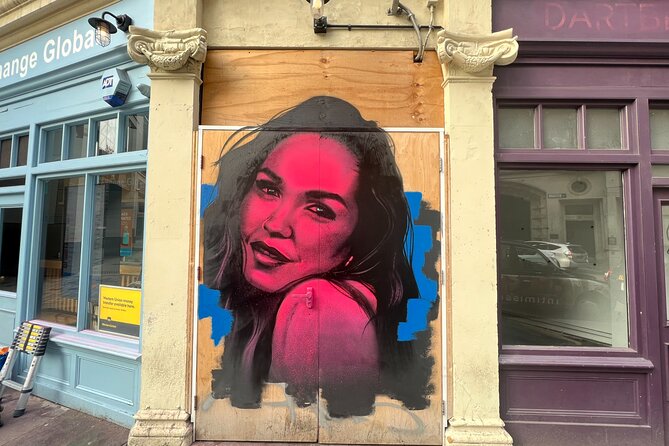
This is a private group tour, so only your group participates. With up to 15 people, it’s big enough for families and friend groups, but small enough that your guide can keep control of the pace and answer questions without turning it into a herding exercise.
That’s a key advantage in a niche like street art. If you’re curious—about techniques, tags, themes, or what’s legit versus what’s just decorative—you’ll get more out of the tour.
Also, the guide’s tone matters. The tour is designed to feel like you can ask anything. That reduces the mental load for you. Instead of doing homework at home, you get practical explanations while you’re surrounded by the evidence.
One more detail I appreciate: the mobile ticket. On busy London days, anything that reduces friction is a win.
Price and value: when $347.23 actually works out
The price is $347.23 per group for up to 15 people, and the tour runs about 2 hours. If your group fills closer to the maximum, it can work out to roughly $23 per person at full capacity.
That matters because street art tours can be expensive when you’re booking solo or as a tiny group. Here, the per-person value depends heavily on your group size. If you’ve got a mix of adults and teens who are into streetwear, street art, and fashion-adjacent culture, you’ll often feel the cost makes sense because everyone gets something out of the walk—not just one person.
On average, this type of booking is made about 27 days in advance, which is a good clue to plan ahead. Not because you’ll never find space, but because popular time slots in London tend to move faster than you’d expect.
Practical tips for the walk (so you enjoy it more)
This tour is short, and that’s good. But you should still plan like it’s a real walk, not a “stand around and look” situation.
Here’s what helps:
- Wear shoes you can stand in for the full 2 hours.
- Bring your camera, but keep an ear open for the meaning behind what you see.
- If you’re traveling with teens or people who want fashion or streetwear connections, ask your guide to point out how the neighborhood’s identity shows up in the art.
Also, the tour is in English, and it uses a mobile ticket, so make sure your phone battery is decent.
The meeting points are specifically located near public transit, so you won’t need private transport to make this work. That lowers the “hidden costs” of planning.
Who this tour fits best
This is a strong match if you:
- want a break from the typical London checklist,
- like street-level culture and want context fast,
- enjoy art that includes both visual style and social messages,
- have a group (family, friends, or a small school group) and want a private guide rather than a large public group.
It also works well if your group includes people with mixed interests. Markets, street fashion vibes, and protest art each attract different types of curiosity, and the tour touches on multiple angles without turning into a scavenger hunt.
If your group expects a slow museum-style deep dive into one artwork, the timing may feel tight. But if you want a guided course through the neighborhood’s street art logic, this format is built for you.
Should you book this Shoreditch Street Art and Graffiti Tour?
I’d book it if you want a guided way to understand Shoreditch’s street art without spending your whole day figuring out what you’re looking at. The private group format, the focus on different art purposes (commercial and protest), and the inclusion of major visual stops like Brick Lane and King John Court make it feel efficient.
It’s also a smart choice if your group includes younger visitors or people into streetwear culture. In feedback associated with the tour, the guide name Hannah is praised for local knowledge and steering people toward unexpected cultural details. That kind of guidance is exactly what makes street art walks more than sightseeing.
You might skip or adjust expectations if you want long time in markets or you prefer slow wandering with no structure. The tour is built for movement and context within about two hours, so plan a little extra time afterward if you want to linger.
FAQ
FAQ
Where does the Shoreditch street art tour start and end?
It starts at Shoreditch High Street, Braithwaite St, London E1 6GJ, UK. It ends near Tibet Kitchen London, 7 Dray Walk, London E1 6QR, UK.
How long is the tour?
The duration is about 2 hours.
Is this a private tour?
Yes. It’s a private tour/activity, and only your group participates.
How many people are in a group?
The booking is for up to 15 people per group.
What language is the tour offered in?
The tour is offered in English.
What does the tour cost?
It costs $347.23 per group.
Is a mobile ticket provided?
Yes. The tour includes a mobile ticket.
What’s the cancellation policy?
Free cancellation is available. You can cancel up to 24 hours in advance for a full refund, based on the experience’s local time.
Is public transportation nearby?
Yes. The meeting area is near public transportation.
Is the tour wheelchair-friendly or accessible?
The information provided says most travelers can participate, but no specific accessibility details are listed here. If you have specific accessibility needs, it’s best to check with the provider before booking.