REVIEW · LONDON
Woolf & Dickens: London Literary Tour & Writing Workshop
Book on GetYourGuide →Operated by JPierson · Bookable on GetYourGuide
Virginia Woolf meets practice writing in London. This 90-minute literary tour and writing workshop turns famous authors into on-the-street prompts, so you’re not just seeing locations, you’re putting words to them. It’s built to work for first-timers and experienced writers alike.
Two things I really like: the hands-on writing exercises (mindful, creative, and structured) and the fact that the guide Joseph Joseph is not running a lecture. He uses short readings and thoughtful questions to help you make the prompt your own, whether you write every day or rarely write at all.
One thing to consider: you’ll get the most out of it if you come prepared to actually write. Bring a pen, water, and take the prompt seriously for a short burst, because the workshop is only 1.5 hours.
In This Review
- Key things that make this tour work
- A 90-minute London writing workshop that actually gets you writing
- Meeting at Waterloo Bridge and setting your “Woolf lens”
- Somerset House mindful writing: pay attention, then shape it
- Aldwych time and St Mary Le Strand: T.S. Eliot’s way of thinking
- Ekphrasis inside St Mary Le Strand: turn the interior into prose
- Gladstone, Dickens, Samuel Johnson: truth and politics through perspective
- Doctor Johnson’s house: dictionary reading and identity through language
- Price and value: what $101 buys you in London
- What to bring (and what will make you happier)
- Who this tour fits best
- Should you book Woolf & Dickens: London Literary Tour & Writing Workshop?
- FAQ
- Where does the tour start?
- How long is the experience?
- Do I need to buy entry tickets?
- What language is the tour delivered in?
- Is the tour wheelchair accessible?
- Is the group private?
- What should I bring?
- Can I get a refund if plans change?
- Can I reserve without paying right away?
Key things that make this tour work
- Writing prompts with structure, not vague inspiration
- Woolf’s view from Waterloo Bridge used as a real starting point
- A mindful exercise at Somerset House that slows your attention
- T.S. Eliot’s ideas about time tied to what you see near Aldwych
- Ekphrasis at St Mary Le Strand, turning a grand interior into prose
- Doctor Johnson’s dictionary and a facts-based exercise that links language and identity
A 90-minute London writing workshop that actually gets you writing
This isn’t a long, wandering literary walk. The timing is tight on purpose: you get enough movement to feel you’re in the city, and enough focus to finish a few writing exercises without rushing the words themselves. At about 1.5 hours, it’s also a smart add-on if you’re already juggling museum time and dinner plans.
The big value is the format. The tour uses London locations connected to major writers, then it hands you a prompt and asks you to respond. That turns literary sites into living material instead of photo backdrops. You get readings from authors like Woolf, Eliot, Dickens, and Johnson, but the main job is your response: short writing, observation, and revision of your first instincts.
You’ll be in a private group, so the vibe tends to be more personal. If you’ve ever felt intimidated by writing workshops, this one aims for kindness and inclusivity, with exercises designed to suit your level.
You can also read our reviews of more tours and experiences in London



Meeting at Waterloo Bridge and setting your “Woolf lens”
You meet at the north end of Waterloo Bridge, where there’s a slope on the right that goes behind Somerset House. It’s a good starting spot because you can look outward immediately, not spend ten minutes finding the “right” pose for a photo.
From there, the Woolf connection kicks in fast. The exercise draws on Virginia Woolf’s wistful way of holding past and present in the same sentence, using the view from Waterloo Bridge as the emotional engine. You’re guided to notice details, then convert those impressions into writing.
What I like about this start: it doesn’t ask you to sound like Woolf. It asks you to practice Woolf’s technique—blending time, memory, and perception—using your own words. That makes the whole tour feel less like imitation and more like learning a tool.
Practical note: the group is outdoors at the beginning, so wear layers. Even in pleasant weather, riverside air can change quickly.
Somerset House mindful writing: pay attention, then shape it
At Somerset House, you practice a mindful writing experiment. Think of it as attention training with a pen. You’re not just describing the place; you’re learning how to slow down enough that your writing has texture.
Somerset House is a strong choice for this kind of exercise because it’s the sort of location that rewards observation: the building cues history, while the surroundings keep it grounded in the present. The prompt nudges you to write what you actually perceive, not what you assume you’re supposed to see.
This is where the tour earns its “workshop” title. The guide keeps the process gentle but purposeful: you’ll have a task, you’ll have time to try, and you’ll leave with something you wrote (even if you only take one paragraph seriously).
If you’re a beginner, mindful writing helps because it removes the pressure of being “clever.” If you’re more advanced, it helps because it interrupts routine writing habits and resets your attention.
Aldwych time and St Mary Le Strand: T.S. Eliot’s way of thinking
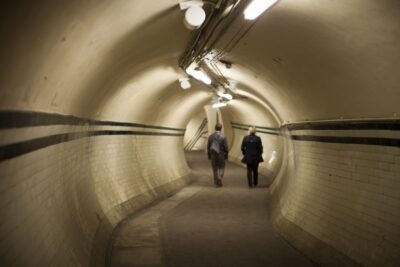
The tour weaves T.S. Eliot into the experience through the idea of time and history. You’ll connect this to a timeline on the walls at Aldwych, then carry it into the stop at St Mary Le Strand.
Here’s the useful bit: the guide helps you treat time as something you can write about in a practical way. Not time as a theme only, but time as structure—how events line up, how memory returns, and how history leaves echoes in the present.
Then you step into St Mary Le Strand, a church that the workshop uses as a writing prompt rather than a sightseeing checkpoint. You respond to Eliot’s study of time while also seeing how the physical space influences your writing choices: pace, imagery, even tone.
One consideration: churches can be quiet spaces, and your writing will likely be “in the moment” rather than big dramatic performance. If that kind of quiet focus fits you, you’ll love this part. If you dislike stillness, you may need to consciously translate the prompt into movement through your words, not through volume.
Ekphrasis inside St Mary Le Strand: turn the interior into prose
At St Mary Le Strand, the workshop specifically practices ekphrasis—writing inspired by a work of visual art, in this case the church’s grand interior. You’re not asked to summarize what you see like a tour guide. You’re asked to produce a written experience that the reader can feel.
Ekphrasis is one of those tools that can improve your writing fast, because it demands specificity. Even if your paragraph is short, you have to choose: what detail matters, what it suggests, and how your words recreate the effect of being inside.
What I like here is that ekphrasis trains you to write beyond “pretty.” A grand interior can easily turn into generic admiration. The prompt pushes you to notice contrasts—light and shadow, scale, form, mood—then convert that into language with attitude and control.
You’ll leave this stop with writing practice that you can use later on your own trips. Next time you enter a cathedral, you’ll know how to write from it without forcing yourself into historic roleplay.






Gladstone, Dickens, Samuel Johnson: truth and politics through perspective
After the church stop, the tour pivots toward politics and truth, using authors as lenses for how meaning changes depending on where you stand.
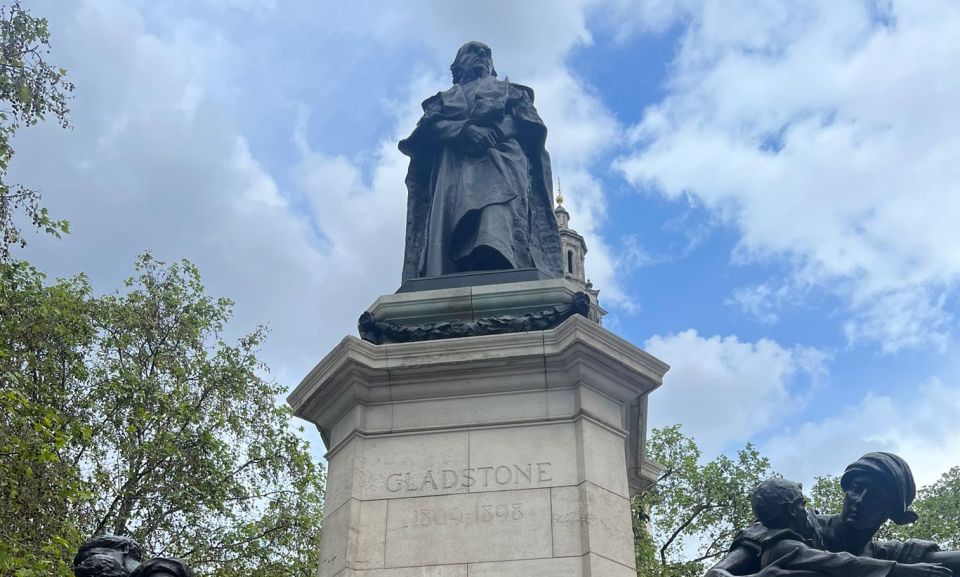
You’ll encounter a statue of Gladstone, and the prompt is about how politics, truth, and history shift with perspective. This is a smart idea for a writing workshop because it gives you an argument to test on the page. You’re not just collecting impressions; you’re turning them into a point of view.
From there, Dickens and Samuel Johnson become prompts for reflecting on truth and politics. Dickens is naturally linked to social observation, and Johnson is linked to language and moral clarity. The tour uses them not as a trivia test, but as writing permission: you can explore big ideas without needing to be an academic.
One of the practical exercises here is writing a list of facts, then blending personal history with the environment you’re in. That might sound basic, but it’s actually powerful. Facts are supposed to be neutral, yet your selection of facts reveals your values. Your memory and associations leak into the writing whether you plan them to or not.
If you’ve ever struggled to start an essay, this part gives you a structure. It’s easier to write “facts” first, then let meaning arrive while you revise.
Doctor Johnson’s house: dictionary reading and identity through language
The final major stop is Doctor Johnson’s house, where you read from his dictionary. This is more than a cute literary nod. The workshop uses Johnson’s approach to language structures—religion, politics, art, and language—to get you thinking about how those systems shape who we become.
You’re guided to connect language and identity. If you pay attention, you’ll notice how Johnson’s dictionary spirit supports the exercise: words aren’t just decoration. They organize thought.
This is a great place to end because it ties the entire tour together. Earlier stops trained your attention (Woolf, mindfulness), then trained your technique (ekphrasis, time), then tested your viewpoint (facts, politics, truth), and now it gives you a language tool: diction and definition as a way to clarify your own thinking.
Even in a short workshop, the Johnson ending can change how you write after the tour. You’ll likely catch yourself choosing words more carefully as you revise.
Price and value: what $101 buys you in London
At $101 per person for a 1.5-hour private workshop, the value isn’t only the scenery. You’re paying for a specialized guide: an award-winning novelist with a PhD in Creative Writing who delivers readings and writing exercises, then helps you respond to them.
This matters because a “literary walk” is often just narration. Here, the workshop element is the product. You’ll get:
- Guided tour + writing workshop (no entry tickets needed)
- An interactive format that fits beginners through more experienced writers
- A guide who structures prompts and asks good questions, creating a safe and welcoming learning atmosphere
Could you build a DIY version of this? Sure. You can find Woolf images, Eliot references, Dickens links, and Johnson dictionary facts online. But DIY won’t give you the exercise format, the accountability of a timed workshop, or the gentle coaching through prompts.
What to bring (and what will make you happier)
Plan to bring:
- A pen
- Water
- Internet access
- A notebook helps, and an umbrella is smart just in case
The internet piece is important because the workshop includes a digital component. It’s not listed as optional in the practical info, so bring your phone or any device you’re comfortable using for quick access.
Also: wear shoes you can stand in for the full 90 minutes. This is light walking between stops, but the experience is still built around being present and writing at each location.
Who this tour fits best
This suits you if you want literature to do something useful. If you like writing prompts, you enjoy structured creativity, or you want a fun way to learn how writers build atmosphere, this will click.
It also works well for visitors who don’t consider themselves writers. The exercises are designed so you don’t need to sound “literary.” You need to notice, then translate your noticing into your own language.
It might feel less perfect if you only want passive sightseeing or you hate writing in public. This tour is kind and inclusive, but it is still a writing workshop. Your pen is part of the deal.
Should you book Woolf & Dickens: London Literary Tour & Writing Workshop?
If you want a London experience that’s more than photos, I’d say book it. The best part is the pairing of specific places with specific writing prompts. Waterloo Bridge sets up Woolf’s past/present tension. Somerset House gives you a mindful reset. Aldwych and St Mary Le Strand bring time and ekphrasis into play. Gladstone, Dickens, and Johnson move you into politics, truth, and language as identity.
You’ll get a short, satisfying workshop that leaves you with new writing practice you can reuse on other trips. For me, that’s the real value.
If you’re the kind of person who enjoys a guided nudge—then writes a few lines anyway—this is a strong choice.
FAQ
Where does the tour start?
The meeting point is at the north end of Waterloo Bridge. There’s a slope on the right that goes behind Somerset House.
How long is the experience?
It lasts 1.5 hours.
Do I need to buy entry tickets?
No entry tickets are needed; the guided tour and writing workshop are included.
What language is the tour delivered in?
The tour guide leads in English.
Is the tour wheelchair accessible?
Yes, it’s wheelchair accessible.
Is the group private?
Yes, it’s a private group.
What should I bring?
Bring a pen, water, and internet access. A notebook and an umbrella are also recommended just in case.
Can I get a refund if plans change?
You can cancel up to 24 hours in advance for a full refund.
Can I reserve without paying right away?
Yes, you can reserve now and pay later.