REVIEW · LONDON
British Museum Private Tour: Ancient Daemons and Timeless Beauty
Book on Viator →Operated by MyLondonGuide · Bookable on Viator
Small group, big time travel. This private British Museum experience is interesting because you’re not just staring at objects; you get a story-led walk through ancient civilizations and famous galleries, guided in clear English. I love how the tour centers on memorable anchor pieces like the Rosetta Stone and the Parthenon Marbles, and I also like the museum-taming convenience of fast-track entry for a place that can feel endless. The main drawback to consider is simple: in 2 to 3 hours, you have to choose a “best-of” route, so you may not see everything you’d want on your own.
You start at Montague Place and finish back near where you began, and the whole thing is designed for a small private group (the setup is described for up to 6 guests, and the pricing is per group up to 8). If you like your museum visits with a theme—daemons, gods, power, and beauty—this style makes the collection easier to remember. One more practical note: admission is included, but snacks and drinks are not, so plan for a quick stop elsewhere if you’ll be there near midday.
In This Review
- Key highlights to know before you go
- How this private, story-led British Museum tour helps you see more
- Meeting point and fast-track entry at Montague Place
- What you’ll see in 2–3 hours: key galleries and the links between them
- Rosetta Stone: the fast lesson in forgotten writing
- Parthenon Marbles: glory, politics, and the politics of looking
- Egyptian mummies: the dance of life and death
- Sutton Hoo: the last voyage of an Anglo-Saxon warrior
- Lewis chessmen: strategy and wit in miniature form
- Shiva Nataraja: cosmic creation and destruction
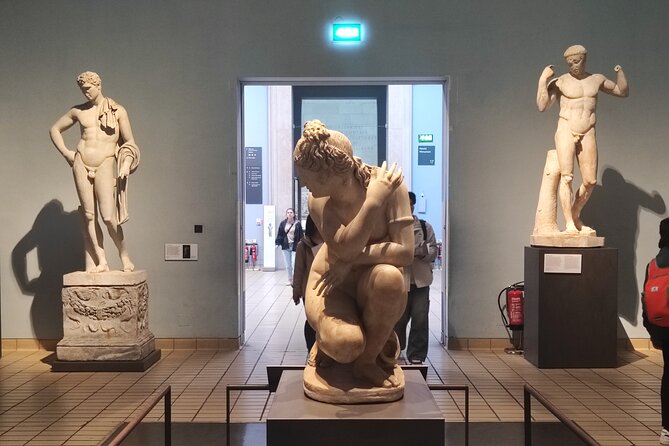
- Ancient sculptures: evolution of beauty standards
- Plus: you’ll see more than these headline stops
- Guide style: how Richard and Yulia made it personal
- Cost, group size, and what you really get for the money
- Practical tips so you don’t waste time inside
- Who this tour suits best (and who might prefer something else)
- Should you book this British Museum private tour?
- FAQ
- FAQ
- How long is the British Museum private tour?
- What’s included in the price?
- Is the tour private?
- Where do we meet?
- Do we get a mobile ticket?
- What language is the tour offered in?
- What is the cancellation policy?
Key highlights to know before you go
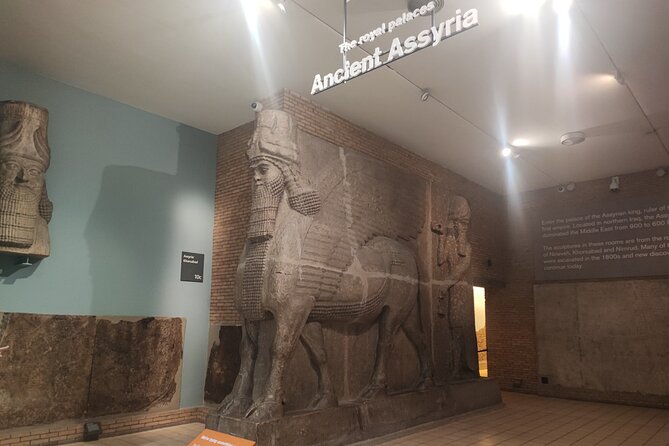
- A theme you can follow: Ancient daemons, empire, death, and beauty are linked by story, not by random wandering.
- Fast-track entry: helps you beat the slow-moving bits at a high-traffic museum entrance.
- Big-name objects in a smart order: from Rosetta Stone to Parthenon Marbles to Egyptian mummies to Sutton Hoo.
- A small-group pace: private tour format means you can ask questions without shouting over crowds.
- Guides who adjust: Richard was praised for tailoring the route, and Yulia was praised for building the tour around what the group cared about.
- Ticket is effectively handled: admission is covered, so you’re paying for the guiding and time, not just entry.
How this private, story-led British Museum tour helps you see more
The British Museum can be a fantastic problem. You walk in and instantly think: where do I even start? This tour solves that by giving you a route that feels like a guided conversation—one object leading to the next, with explanations that connect the art, the culture, and the why.
What I like most is that it’s not only about “famous” objects. The theme pulls together different civilizations and ideas—writing, war, myth, ritual, and human standards of beauty. You get help making sense of why an item matters, not just what it looks like behind glass. That matters more than you’d think, because many of these works can feel oddly distant until someone puts them into context.
The private format also changes the rhythm. When you’re in a small group, the guide can slow down where your interests land and move on when your attention is ready to shift. That flexibility is exactly why some families and groups come away feeling like they got their money’s worth, not a generic lecture.
You can also read our reviews of more private tours in London



Meeting point and fast-track entry at Montague Place
The tour starts at Montague Place, Montague Pl, London. That’s convenient because you’re not guessing which entrance will work best or how to navigate the area before you even begin. The experience ends back at the meeting point too, which keeps the whole outing from turning into a “thanks, good luck” walk across London.
You also get fast track entry included. In practice, that means less time stuck at the start gate and more time walking the galleries with your guide. On a busy museum day, that difference can feel huge.
One more detail that helps: you receive a confirmation at booking and this uses a mobile ticket, which cuts down on friction. You’re not hunting for paper or lining up for extra steps before you begin. For a place this large, any saved minutes reduce stress.
What you’ll see in 2–3 hours: key galleries and the links between them
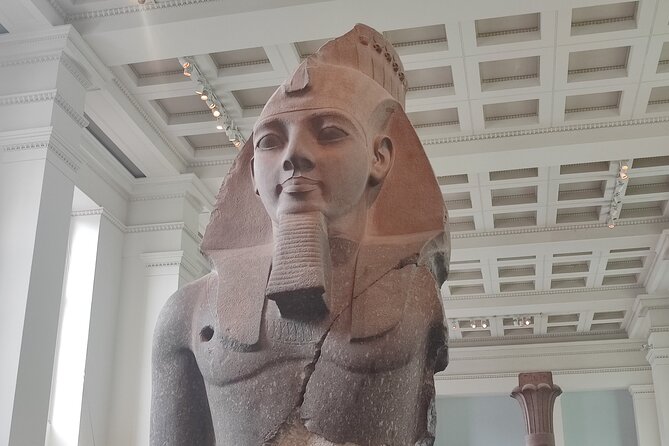
This is a British Museum tour focused on a curated route. You’ll spend about 2 hours with the guide, and the total experience is described as about 2 to 3 hours depending on the flow. There’s just one main stop: the British Museum itself, but the route includes a chain of iconic objects and themes.
Before you even start the gallery storytelling, there’s the building wow-factor. You step into the museum’s light-and-glass canopy designed by Norman Foster. It’s the kind of architecture that makes you pause, because it signals you’re inside something special, not just a box full of stuff.
Then the tour shifts into the “Ancient Daemons and Timeless Beauty” vibe—ideas about power, the afterlife, strategy, cosmic creation, and how people defined beauty. Here’s how the visit typically plays out.
Rosetta Stone: the fast lesson in forgotten writing
You’ll stop for the Rosetta Stone, and the point of that moment is more than “here’s a famous rock.” The tour frames it as the key to forgotten languages, and it helps you understand why translation unlocks whole worlds. Even if you’re not a language person, the story makes the impact feel immediate: knowledge didn’t disappear—it was just waiting for the right bridge.
If you’ve ever looked at inscriptions in museums and thought, I wish I knew what this said, this stop scratches that itch. It also sets the tour up well, because writing is a theme of memory—what people carved, recorded, and left behind.
Possible drawback: this stop can feel more like an intellectual launchpad than a slow visual moment. If you’re hoping for long, quiet time in front of every artifact, you’ll want to keep expectations realistic for a 2-hour guided route.
Parthenon Marbles: glory, politics, and the politics of looking
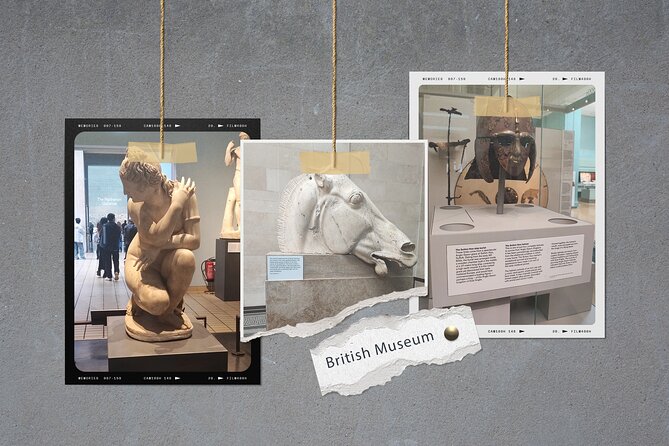
Next come the Parthenon Marbles. The tour connects them to the glory of past empires while you’re actually standing in front of them. That combination is smart because it prevents a common museum mismatch: you might admire the sculpted forms but miss how culture and power get wrapped together.
I like that the tour’s wording pushes you to consider how beauty can be a statement. Art can broadcast control, values, and identity. Even when you’re just seeing fragments, you get a sense of what was being claimed.
You can also read our reviews of more museum experiences in London




Egyptian mummies: the dance of life and death
Then you shift to Egypt, where the atmosphere changes. You’ll encounter the mummies and the tour frames the experience as contemplating the dance of life and death, with the mummies resting in silence.
This is one of those stops where a guide does real work. Without guidance, you might look at cases and feel unsure where to focus. With a story-led approach, you start seeing how ritual, belief, and body preservation connect to how civilizations thought about continuity.
Practical consideration: Egyptian gallery areas can be dim and busy. If you’re traveling with kids, this is a good moment for questions, because the guide can match the explanation to your group’s comfort level and attention span.
Sutton Hoo: the last voyage of an Anglo-Saxon warrior
The tour also highlights Sutton Hoo and the mystery of the last voyage of an Anglo-Saxon warrior. This is a striking shift from grand empires and monumental stone. It’s closer to human scale—more “what kind of person were they, and what did they value?” than “what does this empire say about the world?”
What makes this stop valuable is how it turns archaeology into lived storytelling. You’re not just viewing objects; you’re thinking about journeys—metaphorically and literally—and about what people wanted to carry into what came next.
Lewis chessmen: strategy and wit in miniature form
If you’ve ever played chess and thought, this game is older than modern life, you’ll love the stop on the Lewis chessmen. The tour frames them through strategy and wit, which is a great lens because it makes the objects feel playful instead of remote.
Even if you don’t know the history of chess pieces in detail, the guided connection helps you see why small objects can carry big cultural meaning. Games are social tech. They travel. They teach. They reflect values.
Shiva Nataraja: cosmic creation and destruction
The route continues to Shiva Nataraja, described as the cosmic dance of creation and destruction. This is another “story matters” stop. A guide helps you see the symbolism instead of treating the sculpture as only decorative or only religious.
If your brain likes patterns, this stop is a payoff moment. You’ve traveled from writing to power to death rituals, and suddenly you’re standing in front of a visual philosophy about cycles—how life transforms, ends, and begins again.
Ancient sculptures: evolution of beauty standards
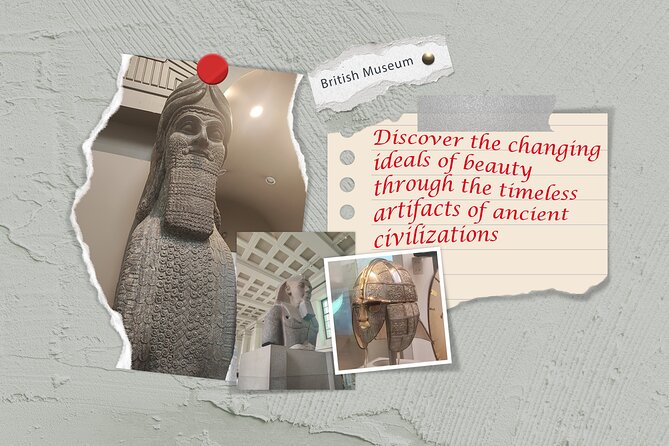
Finally, the tour points you toward ancient sculptures and the evolution of beauty standards. That’s a smart closing theme because it brings the tour back to something you can feel across time: humans do not all define beauty the same way, and yet people have always tried.
A good guide makes this more than a comparison game. You start noticing that style is tied to beliefs—what a culture thinks matters, what it wants to emphasize, and what it believes a human body should communicate.
Plus: you’ll see more than these headline stops
The route includes additional highlights beyond these named anchors. The point is that the theme keeps you from getting lost in the museum’s sheer size. You don’t need to hunt for connections yourself; the guide does the linking work.
Guide style: how Richard and Yulia made it personal
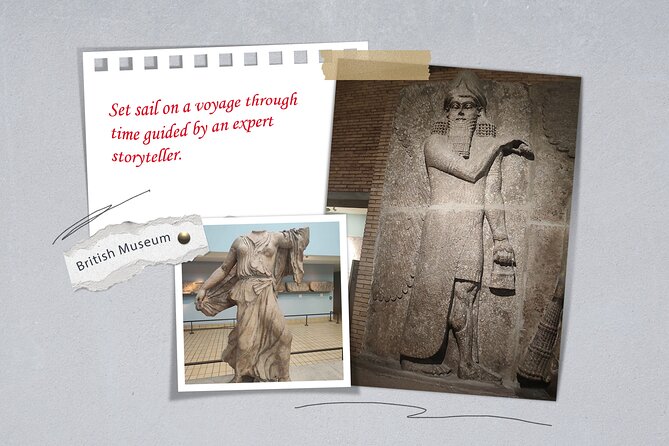
This tour lives or dies on the guide. And here, you have a big advantage: art specialist storytellers who explain history in a way that doesn’t drown you in dates.
Two names come up again and again: Richard and Yulia (also spelled Yulywa or Yuliya in some accounts). Richard is noted for flexibility—tailoring the experience to the areas of greatest interest, and even extending the tour by an extra half hour without charging more. That tells you the tour isn’t rigid. If your group clicks with a topic, you’re not stuck sprinting through a checklist.
Yulia is described as exceptionally knowledgeable and able to tailor the tour to what the group cared about. One account also highlights her kindness and accommodation when someone was late, and that detail matters because museum tours are easy to throw off. When a guide stays calm and keeps you moving, the whole visit feels smooth.
The practical takeaway for you: if your group has a clear interest—my kids love mummies, or we’re art people, or we want the big political empires—you’ll get more out of the experience by saying it early. A flexible guide can build the route around you, and a theme tour is most fun when it reflects your questions.
Cost, group size, and what you really get for the money
The price is listed as $203.65 per group, for a group size up to 8. Another part of the description says the private tour is for groups up to 6 guests. Either way, the big picture is that you’re buying a guided session, not paying per person to rent a headset.
Value is where it gets interesting. You also get admission ticket free, plus fast track entry. That means your payment is mainly funding the guide’s time and your reduced friction getting inside and moving between galleries.
To sense the per-person cost, here’s a simple way to think about it:
- If you’re a small group of 6, it’s roughly $34 per person.
- If you’re closer to 8, it’s roughly $25 per person.
Those are rough math numbers, but they help you compare against what a self-guided visit costs in time and stress. A museum visit is usually easy to overspend energy on confusion. This tour spends money on direction instead.
Practical tips so you don’t waste time inside
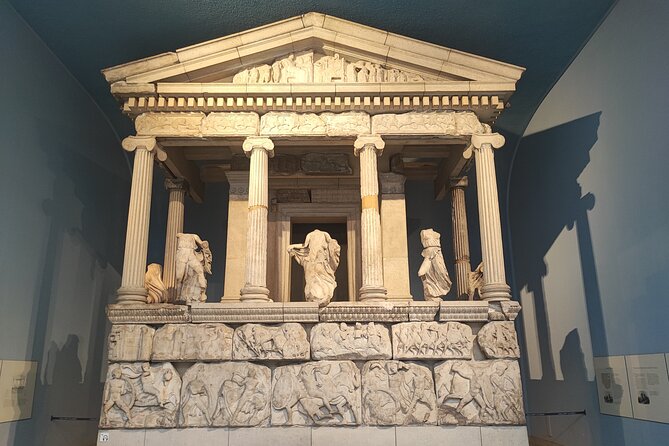
Here’s how to get the most out of a 2 to 3 hour guided museum experience.
First, come with one or two must-sees in mind. The tour already includes headline objects, but your group’s choices determine the pacing. If you want more time on Egyptian mummies, don’t wait until you’re already halfway through the route.
Second, wear shoes that work for standing. The British Museum is large and you’ll be walking between galleries. The tour ends where it starts, so you’re not “commuting” the rest of the day; you’re spending energy in the building, and you’ll feel it.
Third, plan around the snack gap. Snacks, food, and drinks are not included, so if you’ll be there around lunchtime, keep some time buffer for water and a quick bite nearby.
Finally, ask questions early. One of the best parts of a private theme tour is that you can steer the explanation toward your curiosity. If you want the guide to explain what to look for in faces, symbols, or scenes, bring that up before you’re standing in a crowd of your own group trying to figure it out silently.
Who this tour suits best (and who might prefer something else)
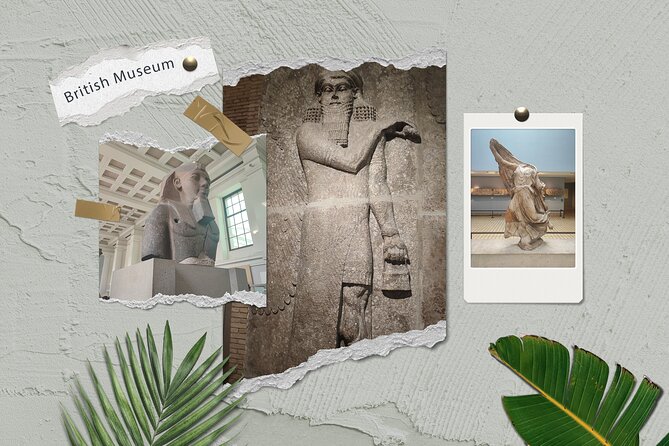
This is a great fit if:
- You want a guided, themed route at the British Museum instead of trying to plan your own path.
- Your group includes kids or mixed ages and you want explanations that keep attention.
- You’d rather ask questions than scan labels for two hours.
- You like ancient art but don’t want to get lost in it.
It may not be the best fit if:
- You want to roam completely freely with no structure at all.
- Your group has one narrow obsession and would rather spend the full day there at your own pace.
- You prefer long stays at a few objects with zero movement.
For most people, the sweet spot is first-time British Museum visits and people who feel overwhelmed by museum scale. A private guide turns scale into a manageable route.
Should you book this British Museum private tour?
If you like the idea of connecting big-name objects with clear stories about power, faith, strategy, and beauty, I think booking makes sense. The mix of fast-track entry, a small private group, and a theme that ties together writing, empires, death rites, and myth is exactly what turns a famous museum into a memorable visit.
Book it when you want guidance more than browsing. Skip it when you already know exactly which galleries you want to hit and you prefer to move at your own speed without help.
FAQ
FAQ
How long is the British Museum private tour?
The tour runs for about 2 hours with guiding, with the experience described as approximately 2 to 3 hours total.
What’s included in the price?
The tour includes a guided museum tour, fast track entry to the British Museum, and a ticket approach described as admission ticket free. Snacks, food, and drinks are not included.
Is the tour private?
Yes. It is a private tour/activity, and only your group participates.
Where do we meet?
The meeting point is Montague Place (Montague Pl, London, UK).
Do we get a mobile ticket?
Yes. A mobile ticket is included as part of the experience.
What language is the tour offered in?
The tour is offered in English.
What is the cancellation policy?
Free cancellation is available. You can cancel up to 24 hours in advance for a full refund, with the cutoff based on local time. If you cancel less than 24 hours before the start time, the amount paid is not refunded.