REVIEW · LONDON
Churchill’s Wartime London Walking Tour
Book on GetYourGuide →Operated by Evan Evans Tours · Bookable on GetYourGuide
Westminster has a WWII pulse. This Churchill’s Wartime London walking tour traces how Winston Churchill operated during World War II and how his relationship with Franklin D. Roosevelt shaped the mood in London. You’ll move past the big name sites like Big Ben, Parliament Square, and Downing Street, then add a layer most visitors miss: damage from the Blitz.
I especially like how the tour uses the street itself as a timeline—speeches, wartime decisions at the House of Commons, and visible remnants of what war did to real buildings. With a personal audio headset and an expert guide (including John Steel, known for sharp, memorable trivia), you can keep up without straining to hear in the middle of Westminster chaos. The main drawback is simple: it’s a steady walking route and not suitable for reduced mobility, so wear shoes you trust.
In This Review
- Key highlights you’ll actually care about
- Meeting at Victoria Embankment: starting where Westminster feels real
- Big Ben to Parliament Square: landmarks plus wartime meaning
- 10 Downing Street and the House of Commons area: where speeches meet power
- Photo stop at Churchill’s statue: make it quick, make it useful
- Seeing Blitz damage and the ruined church remains: history you can spot with your own eyes
- Whitehall statues and war memorials: Allied leaders and public grief in one corridor
- Finishing at Churchill War Rooms: what you’ll get on the walk, and what you’ll add later
- Price and walking pace: is $40 good value?
- Should you book Churchill’s Wartime London Walking Tour?
- FAQ
- Where is the meeting point?
- How long is the Churchill’s Wartime London Walking Tour?
- What’s included in the price?
- Is admission to the Churchill War Rooms included?
- What should I bring?
- Is the tour suitable for guests with reduced mobility?
- What’s the cancellation policy?
Key highlights you’ll actually care about
- Westminster in one loop: Big Ben, Parliament Square, and the 10 Downing Street area in a tight route.
- Audio headsets for clarity: You hear the guide’s live commentary even at busy curbside stops.
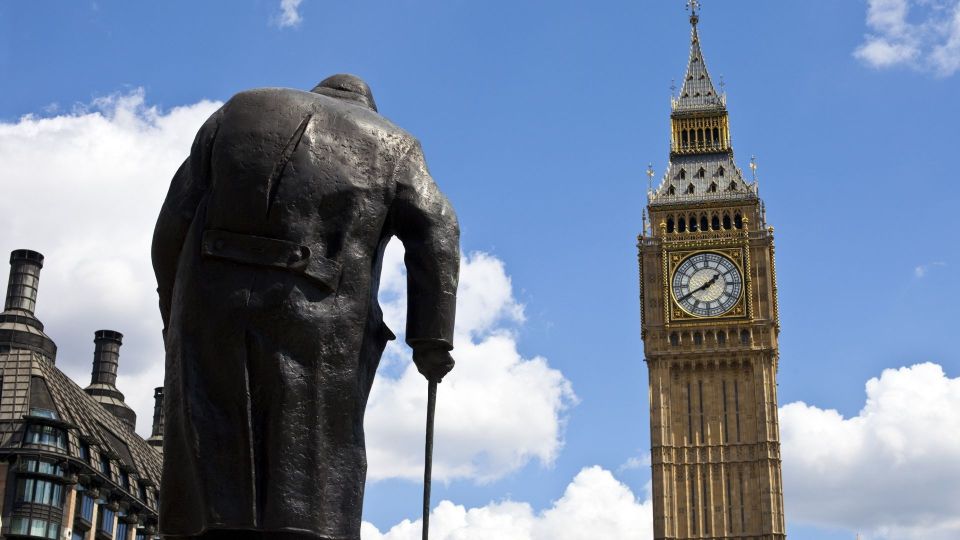
- Churchill photo moments: A dedicated stop at the statue of Winston Churchill for quick, satisfying pictures.
- Blitz damage you can see: Visible bomb damage and the remains of a church destroyed during the Blitz.
- Allied leaders in Whitehall: Statues tied to Churchill, Eisenhower, Franklin D. Roosevelt, and Sir Arthur Harris.
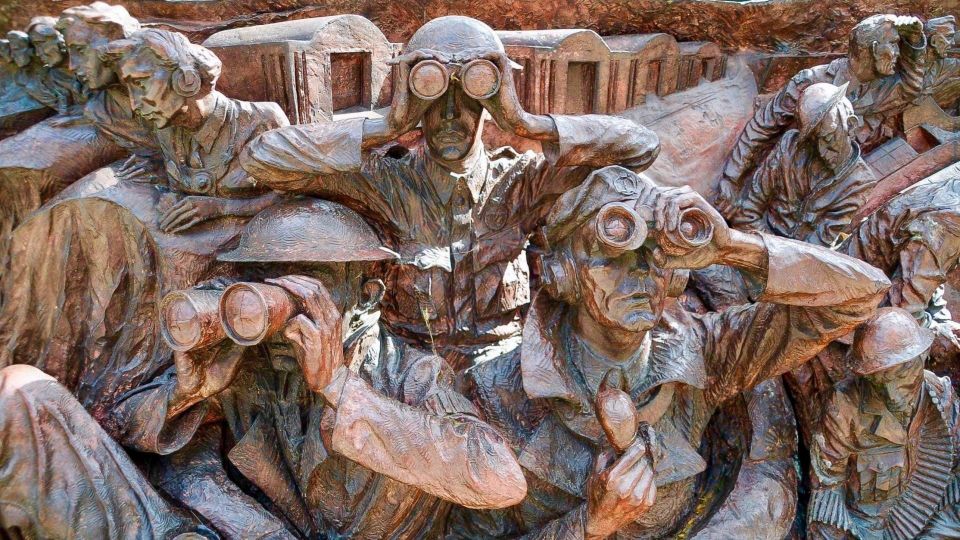
- War memorial stops: Battle of Britain reminders, Women of WWII recognition, and the Cenotaph.
Meeting at Victoria Embankment: starting where Westminster feels real
Most history walks start at a museum door. This one starts outside, by the Boadicea and Her Daughters statue on Victoria Embankment. That’s a good move. It helps you get your bearings fast, before you’re swept into the Westminster bottleneck.
You meet near the tube at Westminster (Exit 2). If you arrive a few minutes early, you’ll have time to locate the guide and get your headset sorted. Then you’re off on a route that stays focused on key WWII-era geography: government power, public squares, and Whitehall corridors.
One practical tip: because this is centered on Westminster’s main streets, you’ll want your walking shoes on from the start, not “later, once the route gets interesting.”
You can also read our reviews of more walking tours in London



Big Ben to Parliament Square: landmarks plus wartime meaning
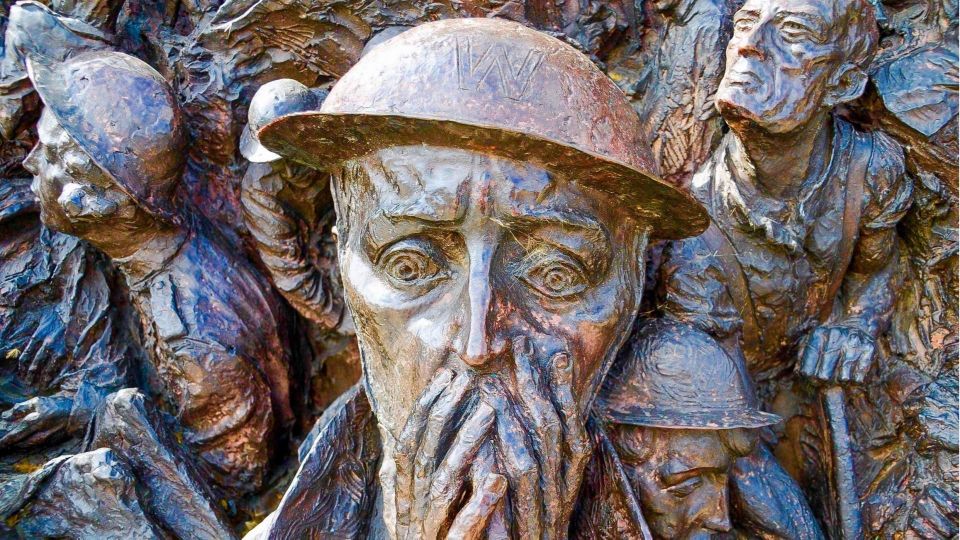
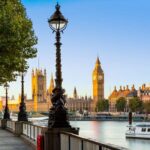
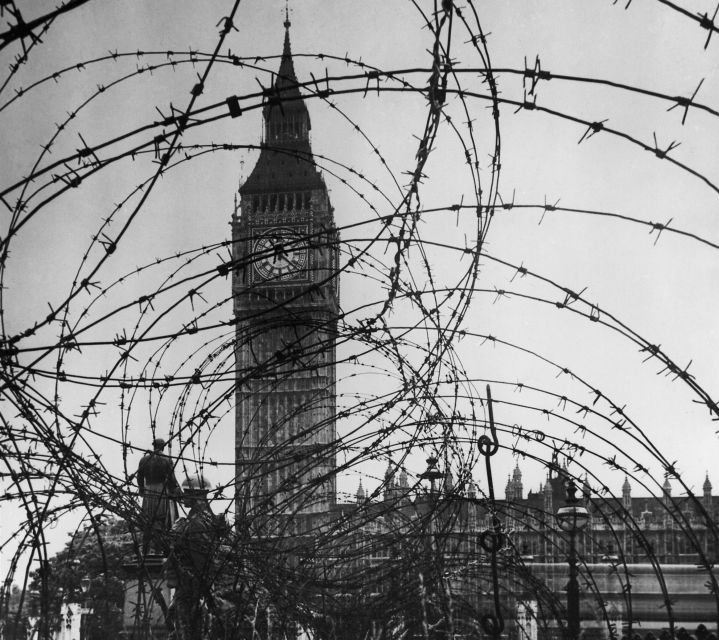
The tour’s early stretch is basically a guided “now you’re in it” orientation to Westminster. You’ll see Big Ben and the Houses of Parliament area as you work your way along the core government district. These spots are famous, sure. But what makes this tour feel different is the way the guide anchors wartime decisions to what you’re looking at right now.
When you reach Parliament Square, you’re in a place that naturally feels like where headlines were born. It’s open enough to stop and orient, but surrounded by buildings that carry real institutional weight. Expect commentary that ties Churchill’s wartime role to the political process you’re standing beside—especially around Parliament and the House of Commons.
This part also sets you up for the next stops. By the time you’re approaching the Downing Street area, you’ll already understand the “who decides what” layout of the district.
10 Downing Street and the House of Commons area: where speeches meet power
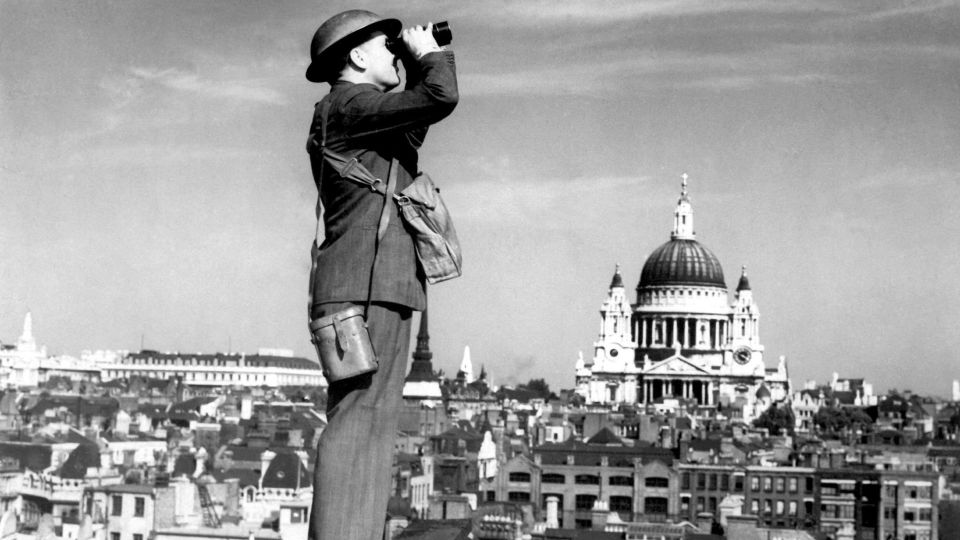
The walk brings you past 10 Downing Street, and that’s your “this is where the government spoke from” moment. Downing Street is photographed endlessly, but on this tour it’s treated like a working address tied to wartime pressure.
From there, you’ll connect the dots between Churchill’s speeches, wartime choices, and the ongoing political machinery at the House of Commons. You’re not just hearing dates. You’re hearing why certain wartime decisions mattered, and how those decisions played out in public life as well as behind closed doors.
You also get the specific thread of Churchill’s bond with US President Franklin D. Roosevelt. That matters because WWII wasn’t only a battle of armies—it was a battle of cooperation and public messaging across the Atlantic. You’ll feel that international angle most clearly as the route shifts from Westminster’s British government core into Whitehall’s monument-heavy streets.
Photo stop at Churchill’s statue: make it quick, make it useful
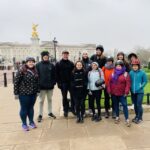
You’ll get a photo opportunity at the statue of Sir Winston Churchill. This is one of those small tour elements that pays off later. In a city full of grand buildings, it’s easy to forget which angle gave you the “Churchill” reference. This stop gives you that clean visual anchor.
If you’re traveling as a pair or small group, coordinate your photo plan before you stop. Once you’re in position, take two quick shots: one wide shot that includes the statue and street context, and one closer portrait-style shot. That way, you’ll have something for both “I was there” and “I remember what I learned” photos.
Keep your camera ready but not reckless. Westminster crowds move fast, and the tour pace is designed around getting to the next point while the light and attention hold.
Seeing Blitz damage and the ruined church remains: history you can spot with your own eyes
Here’s the moment that changes the tour from a “cool walk” into something you’ll remember. You’ll witness visible signs of bomb damage from the war and visit the remains of a church destroyed during the Blitz, left as a testament to the devastation.
This is powerful because it’s not abstract. You’re seeing evidence that the war struck real neighborhoods and real institutions, not just military sites far away. The guide’s job here is to explain what you’re looking at and why it was preserved in some form rather than erased completely.
Two reasons this stop is valuable for you:
- It adds weight to everything else on the walk. When you later hear about wartime leadership, the physical proof makes it feel less theoretical.
- It gives you a different kind of London memory. Many tours keep everything inside the polished “tourist London” layer. This one forces you into the scarred version.
Dress for outdoor stops, and bring an umbrella even if the forecast looks polite. The route is outside by design.



Whitehall statues and war memorials: Allied leaders and public grief in one corridor
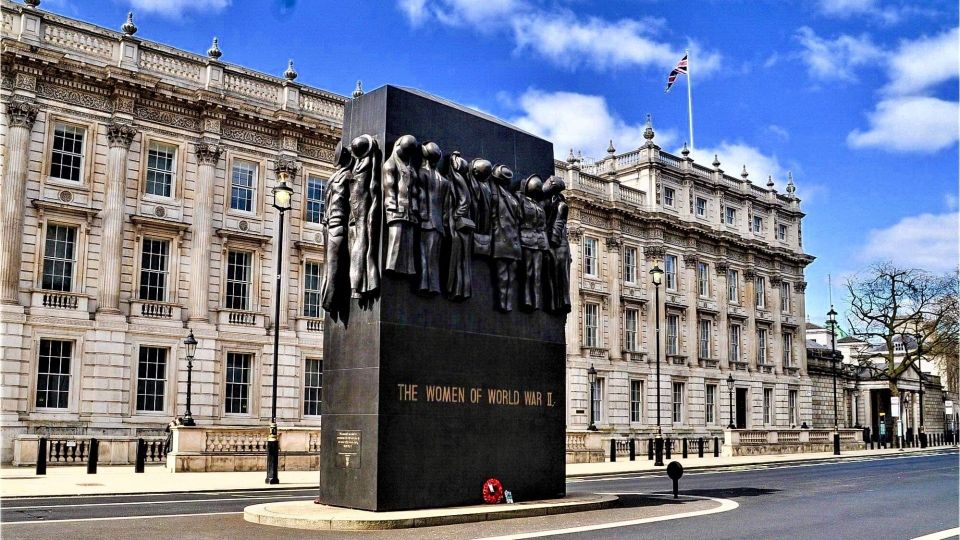
The tour shifts into Whitehall, where the streets are lined with monuments and statues tied to WWII and Allied leadership. You’ll see statues dedicated to major Allied figures, including Churchill, Eisenhower, Franklin D. Roosevelt, and Sir Arthur Harris. Those names aren’t random. They represent different sides of the WWII story—strategy, operations, leadership, and the machinery behind the scenes.
This stretch also includes several monuments associated with the wartime experience:
- Memorials related to the Battle of Britain
- Recognition of Women of WWII
- The Cenotaph, Britain’s national war memorial
The best part is how these stops help you understand WWII as a whole society event. You’re not only learning about command decisions. You’re seeing how Britain chose to publicly remember air defense, civilians’ roles, and national mourning in stone.
If you’ve only learned WWII through books, you’ll find this portion turns the pages into geography. You can stand where the symbols live and connect the narrative to the streets.
Finishing at Churchill War Rooms: what you’ll get on the walk, and what you’ll add later
The tour ends at the Churchill War Rooms. That’s a smart ending point because it’s the obvious next step for anyone who wants to go from “what happened” to “how it was run day to day.”
But admission to the Churchill War Rooms isn’t included in the tour. Translation: you’re finishing at the door, not spending your whole time inside. That’s a good value approach if you want flexibility. You can decide on the spot whether you want the full interior experience based on your energy and time.
Also, because you’re finishing after the walk, you’ll likely have a clearer mental map of what you just learned. The War Rooms then feels less like a separate attraction and more like a continuation.
Price and walking pace: is $40 good value?
At $40 per person for about 80 minutes on the route, this tour is priced like a focused, guided city experience—not a long day tour. You’re paying for three things that matter:
- A professional guide who connects the landmarks to WWII context
- Personal audio headsets to keep the commentary clear
- A concentrated set of Westminster locations, including the more unusual elements like visible Blitz damage and the ruined church remains
Value-wise, it works best if you like walking tours that teach. If you’re hoping for a mostly scenic stroll with light facts, you may feel the time is more “active” than you expected.
It is also worth noting that the timing description can feel a touch like it’s split between planning expectations and real street walking. You should plan for a steady pace—this is not built for anyone who needs minimal walking.
Who should book?
- You want WWII context without sitting in a classroom
- You’re excited by big political landmarks but also by less-photogenic wartime scars
- You enjoy a guide who makes details memorable (John Steel is a great example from what I’ve heard)
Who might skip?
- You don’t handle steady walking well
- You prefer museum-style pacing over outdoor stops and moving between viewpoints
Should you book Churchill’s Wartime London Walking Tour?
Yes, if your ideal London day includes sharp guide commentary, Westminster’s core WWII sites, and at least one stop that feels emotionally real (the Blitz damage and ruined church remains). The fact that you end at Churchill War Rooms adds an easy next step if you want to go further.
If you’re short on mobility, or you hate the idea of walking nonstop through a busy central district, then choose a different format. This one is built for motion, and it rewards you when you’re ready for it.
If you do book, do two things right away: pack comfortable shoes and bring an umbrella. Then show up a little early, get the headset working, and let the guide do what they’re best at—turn Westminster streets into a WWII story you can follow beat by beat.
FAQ
Where is the meeting point?
Meet the guide by the Boadicea and Her Daughters statue on Victoria Embankment, London SW1A 2JH. The nearest tube station is Westminster (Exit 2).
How long is the Churchill’s Wartime London Walking Tour?
The tour runs about 80 minutes, and it’s described as a longer walking route (around 90 minutes).
What’s included in the price?
You get a walking tour of Westminster, a professional guide, and personal audio headset so you can hear the guide’s live commentary.
Is admission to the Churchill War Rooms included?
No. The tour ends at the Churchill War Rooms, but entry tickets are not included.
What should I bring?
Bring comfortable shoes and an umbrella.
Is the tour suitable for guests with reduced mobility?
No. It’s not suitable for guests with reduced mobility due to the walking route.
What’s the cancellation policy?
You can cancel up to 24 hours in advance for a full refund.