REVIEW · LONDON
Ghosts of Greenwich: London’s Haunted Walking Tour
Book on Viator →Operated by Where Now Tours · Bookable on Viator
One short walk at night can change how you see Greenwich. This Ghosts of Greenwich tour mixes maritime landmarks, WWII shadows, and famous paranormal lore into a tight, easy-to-follow route. Guides like Jamie and Ryan keep the stories flowing with clear English and a real interest in the history behind the spooky bits.
What I like most is the small group size (max 15), which makes it feel personal instead of rushed. I also appreciate that it stays manageable for most people—level ground, short stops, and a finish that works well even if you have kids or you want an early night. One thing to consider: each location is brief, so if you want long views or time inside major sights, you’ll need to plan extra time for that.
In This Review
- Key takeaways before you go
- Why Greenwich at night feels different
- Starting at Cutty Sark: the ship that lends its name to the spooky
- Greenwich Foot Tunnel and WWII shadows under the Thames
- Bellot Memorial: lost ships, missing people, and the weight of 229
- Thames Path and the angel story when things go badly
- Trafalgar Tavern: 1837, famous authors, and a ghost with music
- Crowleys Wharf: pirates, revenge, and the Millennium Dome builders
- Star of Greenwich and the Ghost Club connection
- Old Royal Naval College and the Queen’s House ghost
- King William Walk: a procession, then an investigation
- St Alfege Church: Vikings, torture stories, and a warning from beyond
- Price and logistics: is $18.74 a good deal?
- Who this tour suits best
- What to bring for a smoother night
- Should you book Ghosts of Greenwich?
- FAQ
- How long is the Ghosts of Greenwich walking tour?
- Where does the tour start and end?
- What time does the tour begin?
- How large is the group?
- Is the tour in English?
- Is free cancellation available?
Key takeaways before you go
- Max 15 people keeps the vibe intimate and easy to ask questions in the dark.
- Two hours means you’ll see a lot without losing the night to transit and tangents.
- WWII to Victorian to modern-day Greenwich stories are stitched together in one walk.
- Cutty Sark to St Alfege Church gives you a clean route with an easy landing spot.
- Guides use a projector, so the story isn’t only told by voice.
- Family-friendly timing: many families finish around 9pm.
Why Greenwich at night feels different
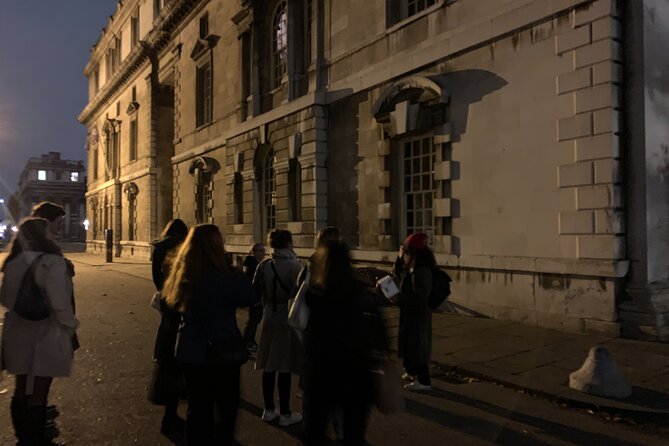
Greenwich day or night is already special because it’s compact, historic, and tied to the river. But at 7:30pm, the mood shifts fast. The Thames area changes from sightseeing to atmosphere, and the tour leans into that with stories that feel made for the evening.
You’ll start near Cutty Sark Gardens and work your way through spots that connect ships, tunnels, and local legends. The pace is intentionally brisk: short story stops, then a walk to the next location. That works for me because you get momentum, not the tired feeling of dragging through a long “mystery walk” with no structure.
Also, the guide style matters here. In the best moments, you can hear the history underneath the ghost story—why a name was chosen, what happened to people, and how rumors spread through a place. If you’re the type who likes facts with your fear (or jokes with your ghost), you’ll likely enjoy this format.
You can also read our reviews of more walking tours in London



Starting at Cutty Sark: the ship that lends its name to the spooky
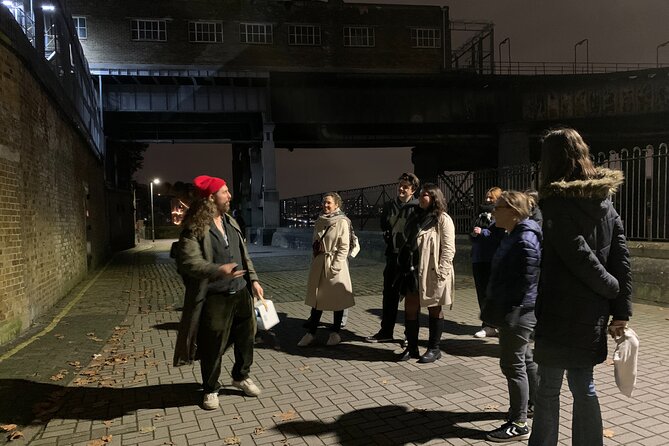
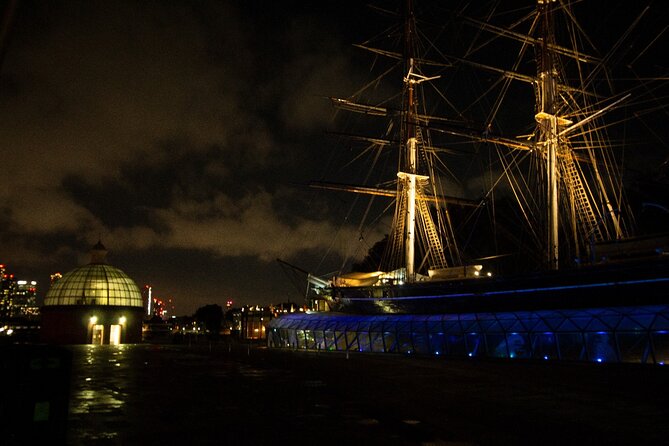
You kick things off at Cutty Sark, the famous merchant vessel form that sits as a landmark for Greenwich’s ship world. The story begins with why the ship’s name has ghostly origins and how its first voyage set the tone for its later fame.
This stop works well because it anchors you. Before you hit darker spaces like tunnels and churchyards, you get an immediate sense of Greenwich’s maritime identity. You’re not just collecting spooky stops—you’re getting the local logic behind them.
A small drawback: the stop is short, about 10 minutes, so it’s not the place for long photos or reading every plaque. If you want the best picture of Cutty Sark, plan to do that either before the tour starts (if you’re early) or after your walk finishes.
Greenwich Foot Tunnel and WWII shadows under the Thames
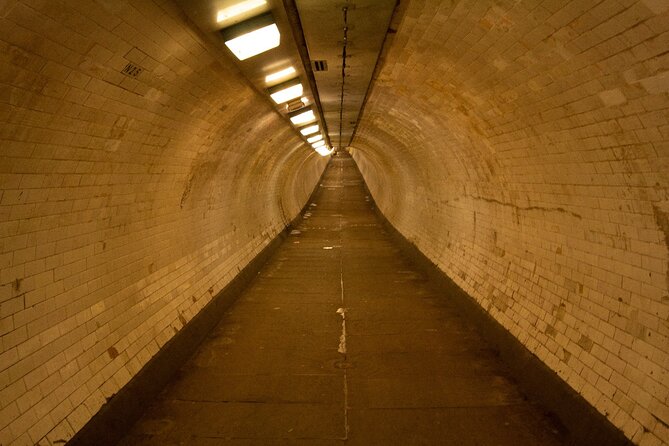
Then the tour turns to the Greenwich Foot Tunnel, one of those London places that already feels cinematic. Here, the story shifts hard into World War II, including harrowing elements and the hauntings said to follow.
The tunnel location is key to why this works. Even if you don’t think about ghosts much, a long passage under the river changes your senses—sound bounces, light fades, and time feels slower. The guide’s job is to keep the story grounded in what makes it frightening, not just loud for effect.
One practical note: tunnels can feel colder and damp. Wear layers you’d be comfortable in for a short stretch, especially if you’re running late or the weather turns. This is also a stop where you might want to keep your phone use minimal, since you’ll want your attention on the guide’s direction and pacing.
Bellot Memorial: lost ships, missing people, and the weight of 229
Next comes the Bellot Memorial, where the tone becomes more tragic than spooky. You’ll hear about two British ships that disappeared and the chilling tale tied to the idea that 229 lost souls were aboard.
This stop is valuable because it shows how ghost stories often start: people disappear, records are uncertain, and the gaps invite imagination. The guide connects the memorial to the emotional reality of missing sailors, so the story lands as something more than spooky theater.
The downside is also clear: this isn’t a lighthearted “boo” moment. If you’re touring with very young kids or you know your group gets uncomfortable with serious tragedy, you may want to prepare them that the mood darkens here.
Thames Path and the angel story when things go badly
After Bellot, the walk tracks by the Thames Path, where the story takes a turn toward hope. You’ll hear about an angel who arrives in times of great turmoil—one of those legends that feels built for survival stories and hard winters.
I like this contrast because it prevents the tour from becoming one long grim mood. It also gives you a sense of how Greenwich legends can be both scary and strangely comforting. The river is the common thread, but the message flips from loss to rescue.
A small consideration: the time at each stop is brief, around 10 minutes, so you’ll want to listen closely rather than multitask. If you’re the type who likes to stand and read every sign, know you won’t get that here.




Trafalgar Tavern: 1837, famous authors, and a ghost with music
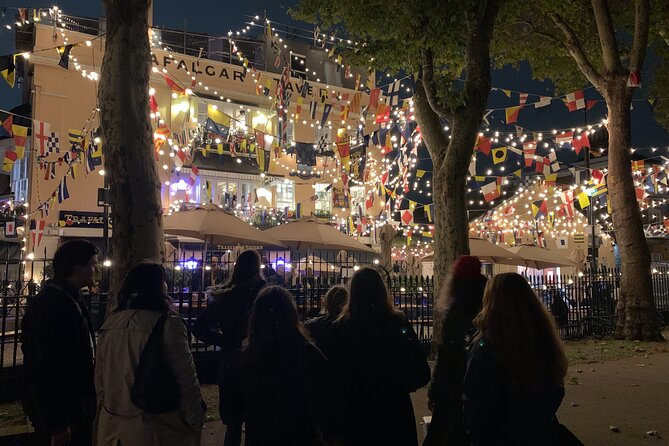
The tour stops at the Trafalgar Tavern, built in 1837, and linked to esteemed patrons like Benjamin Disraeli and Charles Dickens. On top of that, you’ll hear about a ghostly pianist and the after-hours ambience the story claims to bring.
This is one of the most fun stops because it mixes literary London with a spooky angle. It’s also the kind of legend that makes sense in a pub setting: people gather, stories travel, and music becomes part of the folklore. Even if you’re skeptical, the way the guide frames it can make it feel like you’re walking through a stage set from another era.
One drawback: you’re outside, so if it’s windy or rainy, you’ll feel it. Bring a jacket you actually like wearing in cold damp conditions.
Crowleys Wharf: pirates, revenge, and the Millennium Dome builders

At Crowleys Wharf, the tour goes pirate mode, then shifts into more modern haunted territory. You’ll hear about British pirates and the bloody revenge the crown took upon them. Then the story moves forward to the builders of the Millennium dome and a haunting experience tied to their work.
This stop is a nice reminder that Greenwich isn’t only “old.” It’s also a place where later projects spark their own legends. The guide’s job here is tricky: you want the ghosts, but you also want the timeline to make sense.
The main consideration is attention span. Because the story covers different eras, you’ll get the most out of this stop if you stay present and don’t drift into phone-scrolling between locations.
Star of Greenwich and the Ghost Club connection
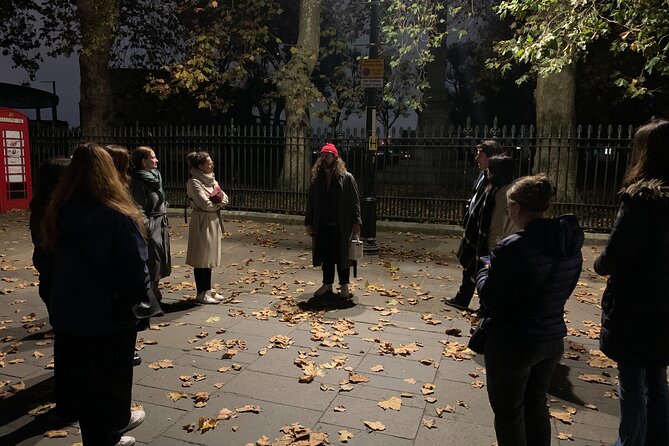
Next you’ll reach Star of Greenwich, where the story links to something oddly specific: the Ghost Club, started in 1862. The guide explains that it included members such as Charles Dickens, Arthur Conan Doyle, Siegfried Sassoon, and even a sometime member, Harry Houdini.
This is where the tour earns its credibility for me. The ghost stories aren’t just random spooky claims—they connect to people who were publicly interested in the unexplained. It helps explain why Greenwich became a place where paranormal talk didn’t just stay in gossip circles.
Because this stop is still short (around 10 minutes), I suggest you lean into the names. If a single name hits your curiosity—say, Dickens or Houdini—jot it down in your phone for later reading. The tour gives you the springboard, even if it doesn’t have time to turn into a full lecture.
Old Royal Naval College and the Queen’s House ghost
Then you move toward the Old Royal Naval College, where the stories focus on hauntings around the grounds. The highlight here is a famous incident connected to the Queen’s House ghost.
This area matters because it’s iconic. You’re not just walking past a building; you’re walking through a setting that already feels like a memory from another century. The guide weaves in the idea that certain places develop reputations for paranormal activity, partly because of what people have said happened there over time.
A practical note: this stop includes a bit more time (about 15 minutes) than the earlier ones. That extra time usually means the guide is spending more care on the setup and payoff. If you’re prone to getting impatient on tours, this is a good moment to settle in—this is often where the story clicks most for the group.
King William Walk: a procession, then an investigation
At King William Walk, the tour tells a story of a ghostly procession of women and the investigation that followed. It’s the kind of tale that feels halfway between folklore and early “case file” thinking—exactly the style that fits a Greenwich night.
This stop works because it adds motion to the legend. A procession is easier for your brain to picture than a single apparition. And when the guide connects the story to an investigation, it stops being pure fantasy and becomes something closer to local mystery.
Downside: if your group wants only light scares, this one may feel darker or more intense than you expect. You’ll know pretty quickly from the guide’s tone whether you’re in a spooky-story-with-history mood or a more serious ghost-case mood.
St Alfege Church: Vikings, torture stories, and a warning from beyond
The final storytelling piece comes at St Alfege Church, where you hear a tale about the birth of modern Greenwich. The guide includes mentions of Vikings, torture, the death of an archbishop, and a warning from beyond the grave.
This is a big finish, and it makes sense why it closes the walk: churches and graveyard-adjacent places naturally feel like places where stories stick. The guide’s job is to tie it all together so it feels like a conclusion, not random chaos.
If you’re touring with kids, this is where you might decide how much detail you want them to hear. The tour is described as manageable and finish-friendly for families, but a church-ending story that includes torture isn’t bedtime-light. You can still enjoy it while remembering it’s part history, part legend.
Price and logistics: is $18.74 a good deal?
At $18.74 per person for about two hours, this is strong value for central London, especially at night when you’re not just wandering—you’re getting a guided narrative across multiple landmark sites. The cost feels reasonable because the tour packs in well-known Greenwich anchors (Cutty Sark, the river path, key historic corners) and uses a guide to connect them into one story arc.
A big quality signal is the small group size. In this price range, large groups can turn ghost tours into a shuffle. Here, the cap of 15 helps keep the pacing and attention where it should be.
You also get a few “nice-to-haves.” It’s a mobile ticket (less hassle), the tour runs in English, and a projector is included, which can make the story feel clearer when details or names come fast.
Who this tour suits best
I think this is a great fit if you fall into one of these buckets:
- You want a London ghost tour that feels grounded in local places, not just generic scares.
- You like history and literature mixed into storytelling (Cutty Sark, Dickens, Houdini, and that Ghost Club angle).
- You’re short on time and want a tight 2-hour walk that still covers a lot of Greenwich.
- You’re touring with teens who enjoy the paranormal—there’s a relaxed pace and a finish just after 9pm that works for many families.
If you’re the type who wants to go inside major sites, browse museums, or linger over architecture, this won’t replace those plans. It’s a guided walking story. Use it as your “orientation + atmosphere” layer, then add specific stops you care about most afterward.
What to bring for a smoother night
For a night walk through Greenwich, keep it simple:
- Layers for cool tunnel air and river-breeze weather.
- Comfortable shoes for a steady walking pace.
- A charged phone for maps only, not constant filming.
- If you’re sensitive to darker tales, decide in advance how much you want to listen at the more intense stops.
The route is described as manageable for most people, and the walking is typically straightforward. Still, you’ll be out after dark, so plan like you’re sightseeing in winter clothing, even if it’s not officially winter.
Should you book Ghosts of Greenwich?
If you want a well-paced, intimate haunted walk with a strong Greenwich setting—and you like your ghosts tied to ships, tunnels, famous names, and local legends—this is an easy yes. The guides’ ability to tell stories clearly in English (with names like Jamie and Ryan mentioned in feedback) seems to make the difference between a tour that’s just spooky and one that feels fun and thoughtful.
I’d especially recommend it if you’re limited on time and still want an authentic evening in Greenwich rather than a hit-or-miss nighttime stroll. Book it, show up with comfortable shoes, and let the Thames side do its thing.
FAQ
How long is the Ghosts of Greenwich walking tour?
It lasts about 2 hours.
Where does the tour start and end?
It starts at Cutty Sark Gardens (London SE10) and ends at St Alfege Church, Greenwich Church St (London SE10 8NA).
What time does the tour begin?
The start time is 7:30pm.
How large is the group?
The tour has a maximum group size of 15 travelers.
Is the tour in English?
Yes, it’s offered in English.
Is free cancellation available?
Yes. You can cancel for a full refund up to 24 hours before the experience starts.