Roman London walks alongside the big icons. This 140-minute City of London tour is built for quick orientation, linking ancient Roman remains with big-hitter sights like St Paul’s Cathedral. I love the way the route balances major landmarks with a more street-level stop at Leadenhall Market. One possible drawback: in just 140 minutes, you’ll be seeing a lot more than you’ll be lingering inside every place.
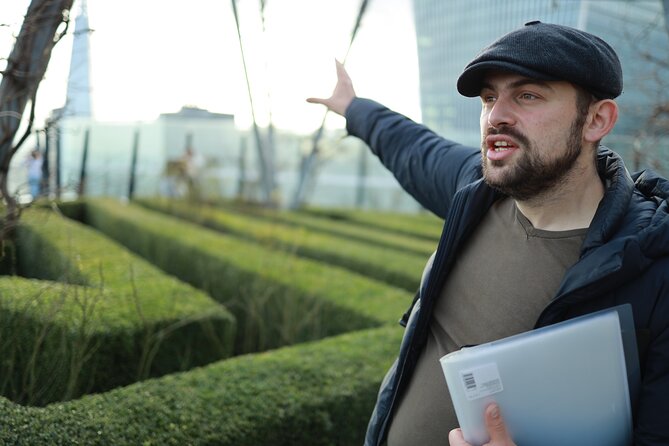
I also like that the guide role feels central, not just background noise. In one verified booking, the guide was Nick, and his obvious love for the tour made the stories land fast while still leaving a little mystery on the route. You’ll also get time at the viewing platform at 120 the Garden, which is a nice payoff after all the walking.
At $24 per person with entry included, the value can be strong if your timing works. It is wheelchair accessible, but it is not suitable for babies under 1 year or for people over 95 years.
In This Review
- Key highlights you’ll feel right away
- A 140-minute walk that makes the City readable
- St Paul’s Cathedral: the big focal point in the route
- The Monument to the Great Fire of London: a story you can track
- Bank of England: power, money, and city planning in one block of time
- Leadenhall Market: where the City feels human
- London Mithraem or the Guildhall: included entry that adds real value
- Tower of London: the landmark finish that feels final
- Timing, pace, and how to get the most from 140 minutes
- Who should book this City of London tour
- Price and value: why $24 can be a smart move
- Should you book this tour?
Key highlights you’ll feel right away
- A tight 140-minute route that connects Roman clues to headline landmarks
- St Paul’s Cathedral plus the Monument to the Great Fire of London as two major story markers
- Leadenhall Market for a more textured, street-level London moment
- Bank of England and the Tower of London to anchor the walk in the City’s power centers
- Included entry to London Mithraem or the Guildhall, so the ticket value is real
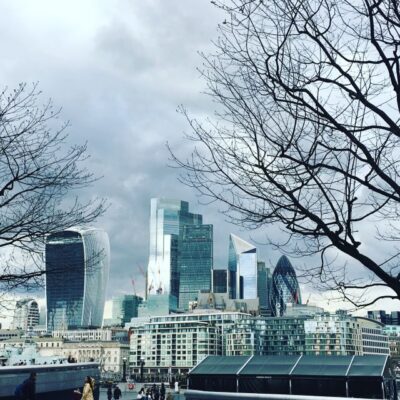
- 120 the Garden viewing platform time for a perspective shift before you wrap up
A 140-minute walk that makes the City readable
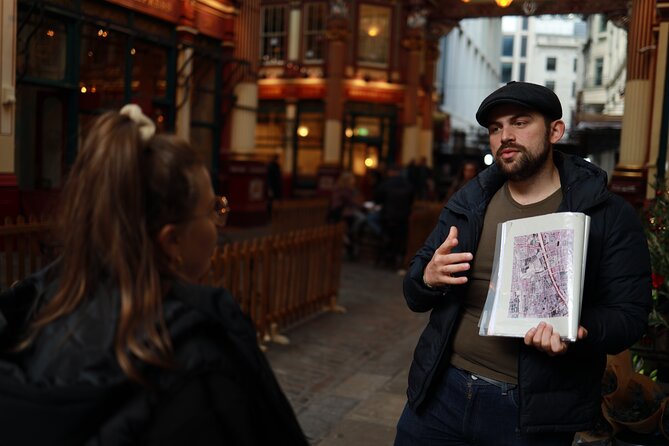
If London feels like a mix of eras thrown together, this tour gives you the reading method. In just 140 minutes, the guide sets up a storyline that moves from ancient Roman remains toward some of the most famous City landmarks. That matters because the City of London can look flat if you only rely on photos. With a plan, you start to see how the pieces connect.
I like tours that act as a compass. This one does. You get major sights on the route, but you also stop often enough that you don’t just collect stops like stickers. The pace is quick, which keeps momentum, but it also means you should come ready to walk and take in details without expecting long breaks at every stop.
Price-wise, $24 can pencil out well because the tour includes entries rather than treating them as optional extras. That’s a key value point for visitors who want more than a guided walk-and-guess exercise. Also, it’s run by Loudman Tours with a live English guide, so you’re not stuck with an audio app.
You can also read our reviews of more city tours in London



St Paul’s Cathedral: the big focal point in the route

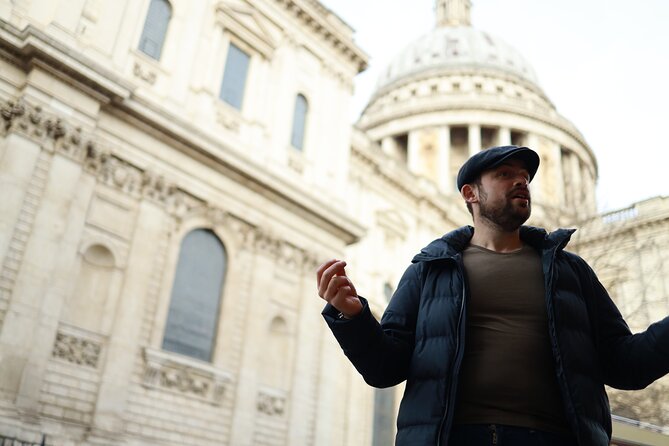
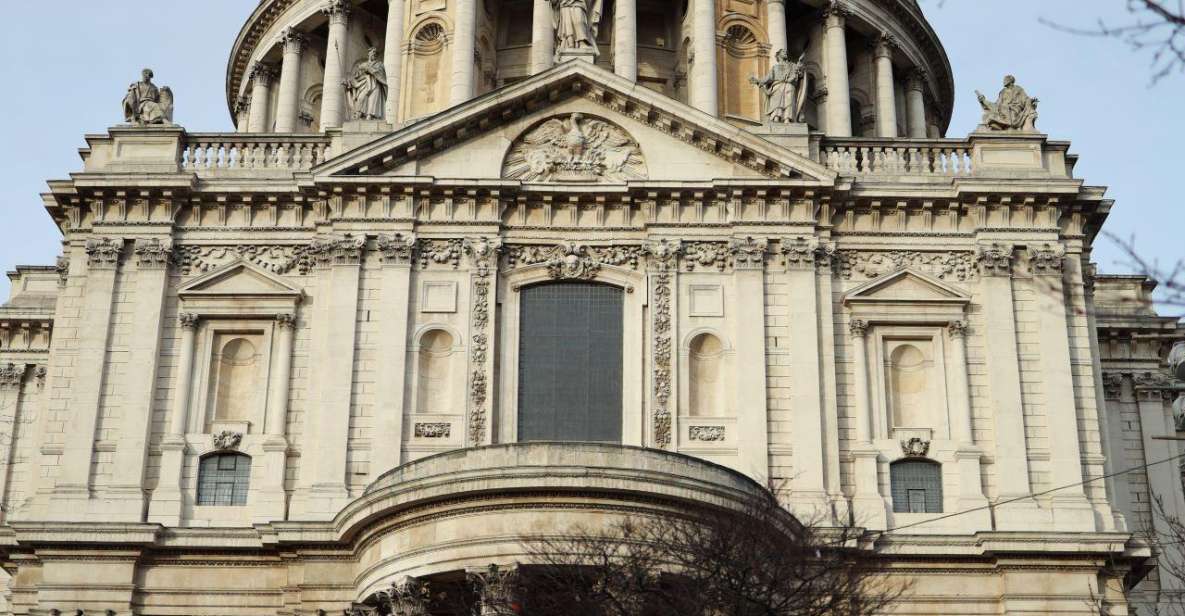
St Paul’s Cathedral is one of the anchors on this tour, and it does a useful job for you right at the start. Big landmarks can be distracting, but on a structured walk they become reference points. The guide uses it as a marker so you can understand what you’re looking at while you’re still fresh.
What I’d do with this stop: treat it like orientation time. Look around the building and then listen for how it fits into the City’s longer timeline. Tours like this work best when you let one stop set the framework for the next one. Even if you’ve seen St Paul’s from a distance, you’ll get a better sense of why it belongs in this particular route.
The tradeoff is simple: it’s on the schedule, not the entire vacation. If you want an in-depth visit, you may need extra time on your own after the tour. But if you want a guided framework that helps you make sense of the area fast, St Paul’s is a strong choice.
The Monument to the Great Fire of London: a story you can track
Next up is the Monument to the Great Fire of London, and it’s there for a reason. The Great Fire is one of those events that explains a surprising amount of what you see afterward, even when you don’t know the specifics in advance. This stop helps you place the City’s later landmarks in a broader cause-and-effect line.
The best way to use this moment is to pay attention to what the guide ties to it. You’ll hear the story in a way that connects back to the theme of the walk: older remains, then the City rebuilding into a new shape. That connection is what makes a monument feel more than just a photo opportunity.
If you’re the kind of person who likes facts, you’ll likely appreciate this stop because it gives a clear theme the guide can reference again and again as you move forward. If you’re not that person, no problem. The guide still keeps the route interesting by making the Monument a thread you can follow.
Bank of England: power, money, and city planning in one block of time
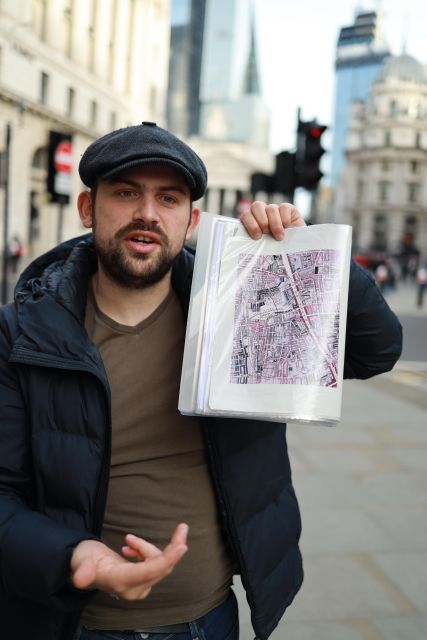
Bank of England is another highlight, and it changes the mood. After you’ve been thinking about ancient remains and a major city event, switching to the Bank’s setting makes the City feel real and current. It’s not just about romance or old stone; it’s also about how the modern City functions in the same space.
For you, this is useful because the walk becomes more than a sightseeing list. You start understanding the City as a working system. That makes the stops feel less random, especially once you compare the Bank with what comes next.
One consideration: this part of the tour is still part of the 140-minute run. If you want to spend extra time in that area, plan to continue afterward on your own. The tour will give you context, but it won’t replace a longer visit if you want to linger.
Leadenhall Market: where the City feels human
I always trust a tour that includes Leadenhall Market. It offers the change of scene you need during a short visit. Big monuments can dominate your attention, and indoor or street markets help you reset your focus and see the City at a closer scale.
This stop also helps you get a different kind of history. Instead of only focusing on one grand event or one towering landmark, you get a sense of everyday life in the built environment. Even if you don’t know the backstory, the guide’s explanation helps you notice what’s around you and why it’s worth pausing for.
From a practical standpoint, markets can be where you spot good photo angles and good walking landmarks for the rest of your day. So even if you only have a quick stop here, treat it as a useful break. It’s one of those locations that can turn a route into an experience.






London Mithraem or the Guildhall: included entry that adds real value
This is where the tour quietly gets strong for your wallet. The experience includes entry to London Mithraem or the Guildhall. That means you’re not just paying for time and a guide. You’re also getting ticketed access, and it helps justify the overall $24 price.
What I like about included entry is that it removes decision fatigue. You don’t have to research which nearby site to fit in. You just show up and go where the tour takes you, with a guide to help you make sense of what you’re seeing.
One practical note: because it’s either London Mithraem or the Guildhall, your exact stop may vary. If you have a strong preference between the two, you’ll want to confirm which one is part of your specific departure time.
Tower of London: the landmark finish that feels final
Tower of London rounds out the highlights list, and that ending choice makes sense. The Tower is a heavyweight name, the kind of landmark that makes you stop and look again even after a busy walk.
As a tour finisher, it does something important: it gives you closure. You’ve spent the earlier part of the route connecting themes like Roman remains and the Great Fire, then you land at a major City icon. That final stop helps your brain file the day under one clear label: this is what the City is about.
If you’re planning what comes next, don’t rush out immediately. Use the time to take in what the guide highlights and then decide if you want to keep exploring the Tower area independently after the tour ends. This tour will get you oriented, but your next step is yours.
Timing, pace, and how to get the most from 140 minutes

At 140 minutes, the tour is short enough to fit neatly into a London itinerary, but long enough to feel like more than a quick stroll. The key is mental prep. You’ll get the best result if you treat each stop as a chapter, not as a destination you fully explore.
Here’s how I’d approach it so you don’t feel rushed:
- Wear comfortable shoes. You’ll be walking through a concentrated stretch of the City.
- Bring a phone but keep it off your face for the first few minutes. You’ll want your attention for the guide’s route logic.
- If you’re the type who asks questions, this is a good format. In at least one verified booking, there was only a single participant, and a smaller group usually makes it easier to slow down for your own interests.
Also, double-check start times based on availability. The tour length is set, but the exact departure can vary.
Who should book this City of London tour
This is a good fit if you:
- Want a first-time-friendly walk through the City with clear anchors
- Like guided context more than self-guided wandering
- Prefer seeing a mix of famous landmarks and more local-feeling places like Leadenhall Market
- Want included entry points rather than paying separately
It may be less ideal if you:
- Plan to do heavy inside visits at every major sight
- Need very slow pacing with long, unhurried breaks
And quick age note: it is not suitable for babies under 1 year and not for people over 95 years.
Price and value: why $24 can be a smart move
Let’s talk straight value. $24 per person is low for a guided, ticketed experience, especially because it includes entry to London Mithraem or the Guildhall and entry to the viewing platform at 120 the Garden. That’s the part that matters most for you. You’re paying for a guide plus paid access points.
You also get live English commentary from a guide, not just a route. That changes how you experience landmarks like St Paul’s and the Monument. The difference between looking at something and understanding it is often one good explanation at the right moment.
If you’re already planning to visit one of the ticketed included stops, the tour price can feel even better. If you weren’t, you still get at least one included entry plus a packed lineup of major highlights.
Should you book this tour?
Yes, if you want a guided City of London route that hits the big names, keeps the story moving, and adds included entry stops. The best sign is how the guide experience shows up in real feedback: Nick’s passion and the way he makes the route keep you paying attention are exactly what you want in a short 140-minute window.
Book it when you want an efficient orientation day. Then, if you fall in love with one stop, you can always extend later on your own.