London’s best secrets are on the sidewalk. This City of London walk by Loudman Tours is built around quick hits of Roman traces, major civic buildings, and photo-friendly landmarks like St. Paul’s and the Tower area.
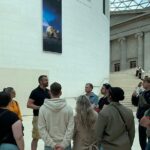
I especially like the way the route connects layers of time—Roman Londinium, medieval governance, and post–Great Fire rebuilding—without turning into a lecture marathon. My second big win is the small group size (up to 20) with guide Nick, whose energy helps you spot details most people walk past.
The main catch: two of the biggest stops require separate admission tickets (St. Paul’s Cathedral and the Tower of London), and each location gets a short visit, so this is best if you want a guided orientation, not hours inside.
In This Review
- Quick hits on this City of London walking route
- A 2-hour 20-minute stroll from Blackfriars to Tower Hill
- Stop 1: St. Paul’s Cathedral for first-class sightlines
- The City’s “oldest section” theme: Guildhall next
- London Mithraeum Bloomberg SPACE: Roman temple, free entry listed
- Bank of England, Mansion House, and the Royal Exchange: power in stone
- The Monument to the Great Fire: quick stop, big payoff views
- Leadenhall Market: architecture you can actually enjoy in 15 minutes
- 120 Garden: skyline perspective without the museum-stress
- All Hallows by the Tower: the church that survived the city’s chaos
- Tower of London finale: big history, and you’ll plan for your ticket
- Why this route is so good for first-timers and returnees
- Price and value: about $24.69 for a guided City orientation
- Who should book this City of London walk
- Should you book this tour?
- FAQ
- How long is the Hidden Gems Tour of the City of London?
- How much does the tour cost?
- Where does the tour start and end?
- What time does it start?
- Is it a walking tour?
- Is a mobile ticket provided?
- Are any admissions included?
- Is there a group size limit?
- Cancellation: a quick check
Quick hits on this City of London walking route
- Small-group feel (max 20) means more back-and-forth and fewer people blocking your photos.
- Roman London stop at the London Mithraeum Bloomberg SPACE, with entry listed as free.
- City governance icons: Guildhall and a chain of financial and civic power spots in one walk.
- Great Fire of 1666 reminder at the Monument, plus classic views from on high.
- Leadenhall Market gives you that glassy, covered “London atmosphere” break with no extra ticket listed.
- Finale near Tower Hill, which is handy if you want to keep exploring right after the walk.
A 2-hour 20-minute stroll from Blackfriars to Tower Hill
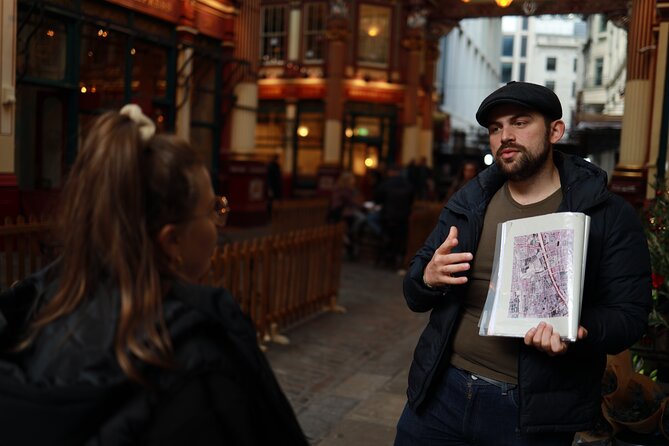
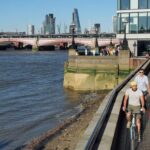
This is a guided walking tour lasting about 2 hours 20 minutes. You start at Blackfriar174, Queen Victoria Street (EC4V 4EG) at 1:30 pm, then finish at Tower Hill (EC3N). The whole point is getting you moving through Central London with enough structure to feel like you covered real ground, without it turning into a long hike.
Because it’s near public transportation, it’s easy to tack onto the rest of your day. Practically, plan your arrival so you’re not sprinting to the meeting point—London sidewalks are crowded, and the tour is paced to keep everyone together.
Footwear matters here. You’ll be doing a lot on foot, and the stops are short (mostly 15 to 20 minutes each), so comfortable shoes will keep you from turning history into a foot pain contest.
You can also read our reviews of more city tours in London



Stop 1: St. Paul’s Cathedral for first-class sightlines
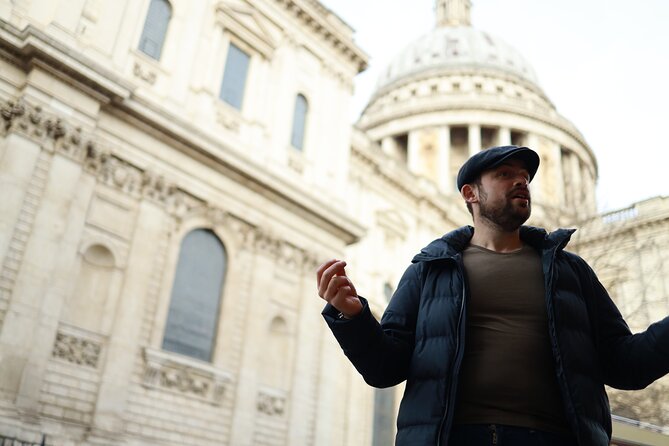
You begin with St. Paul’s Cathedral, and the tour gives you about 15 minutes at this landmark. This is the moment where the walk earns its “photo opportunity” reputation: St. Paul’s is a skyline anchor, and you’ll see it in the context of the City streets rather than as a standalone tourist target.
The big value for you: the guide frames what you’re looking at so the building isn’t just a pretty dome. If you’re a history lover, this is a strong opening because it sets the pattern—London keeps rebuilding itself, and your eyes start reading the city differently as the tour moves on.
One thing to plan for: St. Paul’s admission is not included, so if you want to go inside, you’ll need to add your own ticket time and budget.
The City’s “oldest section” theme: Guildhall next

After St. Paul’s, the tour shifts into the heart of London’s long-running civic power at Guildhall. You get roughly a short visit here (the schedule segment isn’t clearly timed, but it’s part of the tour’s quick-hit approach), with emphasis on its role as the ceremonial and administrative center of the City of London for over 800 years.
What I like about this stop is how it helps you understand why London feels different from other big cities. The City isn’t just a place where people work—it has its own historic governance rhythm. Even if you only stay for a few minutes, the guide’s context helps you connect buildings to the rules and ceremonies that shaped life here.
If you’re the type who loves “why is this building here?” answers, this is one of those moments that pays off.
London Mithraeum Bloomberg SPACE: Roman temple, free entry listed
Next is London Mithraeum Bloomberg SPACE, a Roman temple site connected to the city’s ancient past. The tour schedules 15 minutes here, and importantly, admission is listed as free.
This stop is valuable because Roman London can feel like a museum topic until you see something physical. The Mithraeum gives you a clearer sense of what people meant when they talked about Roman settlers and their world—this is not abstract history.
Practical tip: since time is limited, pick one or two areas to focus on rather than trying to read everything. The guide’s job here is to point you to what matters, and you can use that to make your quick visit feel complete.
Bank of England, Mansion House, and the Royal Exchange: power in stone
Then the walk becomes a neat chain of institutions that shaped London’s identity—Bank of England, Mansion House, and the Royal Exchange. Each one gets its own framed story during short segments.
- The Bank of England stop focuses on its neoclassical architecture and its role at the heart of the UK’s financial system for over 300 years.
- Mansion House is highlighted as the official residence of the Lord Mayor since the mid-18th century, with a focus on ceremonial and civic importance.
- The Royal Exchange connects commerce to a building that’s been rebuilt after the Great Fire and again in the 19th century, dating back to its founding in 1565 by Sir Thomas Gresham.
Why this matters for you: if you’ve only seen London from a “monuments and museums” angle, these stops show the machinery behind the city. You start to see architecture as communication—who the city serves, how power is displayed, and how commerce became part of the skyline.
Also, these are “see it even if you’re not a finance person” stops. You don’t need to understand banking to enjoy the symbolism and the way the guide explains what changed over time.





The Monument to the Great Fire: quick stop, big payoff views
The tour includes a stop at the Monument to the Great Fire of London. You’ll get a short visit, with emphasis on its role as a reminder of the 1666 fire that reshaped the City of London. The guide also notes that it was designed by Sir Christopher Wren and that it offers views from the summit.
Even if you don’t climb, the Monument is a strong visual anchor. It tells you this city’s story isn’t only gradual—it’s full of moments where everything reset, and then rebuilt with new plans.
For you, this stop is a good “pause button.” The tour is dense with named places, and the Monument gives you a landmark you can orient around—especially useful if you’re continuing exploration afterward.
Leadenhall Market: architecture you can actually enjoy in 15 minutes
At Leadenhall Market, you get about 15 minutes, and it’s listed as admission free. The tour highlights its architectural wonders, and I agree—this is the kind of London scene where you feel the city’s character without needing a ticket to enjoy it.
What you’re doing during this stop matters. Use it as a break from the big-institution vibe. Look upward and around. The roof structure and street-level design create a “London under glass” effect that makes photos come out better even if you’re not a professional.
If you want something practical: keep a snack or drink option in mind while you’re in this area. The tour gives you time, but not enough to linger all day—so treat this as a reset, then keep moving with your guide.
120 Garden: skyline perspective without the museum-stress
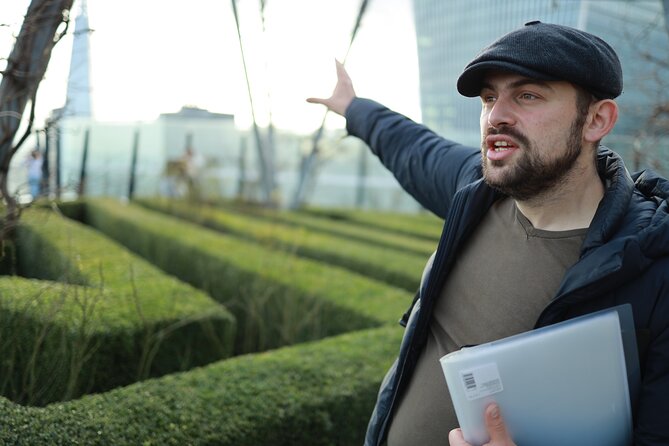
The tour then heads to the Garden at 120, where you’re scheduled for about 20 minutes. This stop is listed as free entry.
This is one of the best “contrast” moves of the whole itinerary. You get modern skyline views after a series of centuries-old buildings. For your brain, that transition helps you understand the city as something layered rather than frozen in the past.
Practical advice: bring your phone battery if you can. Views are the kind of thing you want to capture, and 20 minutes passes faster than you’d think—especially if you’re trying to line up landmarks.
All Hallows by the Tower: the church that survived the city’s chaos
One of the most satisfying stops is All Hallows by the Tower, described as the oldest church in the City of London and said to have stood for over 1,300 years. It’s near the Tower of London and is tied to events that shaped the city, including the Norman Conquest period and the Great Fire of 1666, which it narrowly survived.
The stop also mentions artifacts, including a Roman pavement, plus exhibits connected to its long past. That Roman connection is extra helpful because it ties the Roman thread from earlier stops to something you can see in a different setting.
For you, this is where the tour becomes more than sightseeing. It’s about continuity. You’re not only seeing famous buildings—you’re getting a feel for how ordinary spaces carried the city through major upheavals.
Tower of London finale: big history, and you’ll plan for your ticket
The walking tour ends at the Tower of London area, with about 20 minutes focused on the Tower’s historic significance. The highlight here is the mix of royal intrigue and the Tower’s role as a place of imprisonment and execution.
This stop is powerful on its own, but the schedule is brief. The big planning detail: Tower of London admission is not included, so decide early if you want to go in. If you do, you’ll want to allow enough time beyond this 20-minute segment to avoid feeling rushed.
Because the tour finishes at Tower Hill, you’re well-positioned to continue after the tour—especially if your goal is to see the exterior, then choose whether you want an extended look inside.
Why this route is so good for first-timers and returnees
This tour works because it’s not trying to cover everything. It’s aiming for a specific effect: you walk the city, you get the stories, and you learn how these places connect.
I also like how the pacing is built for attention. You’re not stuck in one museum room for hours. You’re moving, stopping, and changing your perspective—cathedral, civic buildings, Roman temple, Great Fire monument, then skyline views—so you stay mentally fresh.
And yes, guide Nick matters. The consistent theme from the guide’s style (from the way people describe the experience) is that he explains London with energy, points out small details, and makes the city feel personal. The small group size helps, too—there’s space for questions and a smoother flow.
Price and value: about $24.69 for a guided City orientation
At $24.69 per person, this is priced like an entry-level “London must-do” activity. The value comes from what’s included versus what’s on you.
Included:
- The tour itself with guided walking and site context
- Fees and taxes
Not included:
- St. Paul’s Cathedral admission
- Tower of London admission
- Lunch (not part of the plan)
Many of the other stops are listed as free (London Mithraeum Bloomberg SPACE, Leadenhall Market, and the Garden at 120). So your money mostly buys interpretation and access time for the rest of the route.
If you’re budget-conscious, this structure is smart. You can keep costs low by doing only the included free stops, and then decide later if you want to splurge on the two paid attractions.
If you’re the opposite type and you want full inside access at St. Paul’s and the Tower, budget for those tickets up front. The tour’s short visits work best as a guided orientation that sets you up for deeper exploration.
Who should book this City of London walk
This is a great fit if:
- you want a first-time London route that targets the City’s deeper layers
- you’re a history fan who likes Roman and medieval threads
- you prefer small-group tours where you can actually hear the guide
- you’re okay with short stops and want to keep moving
It might be less ideal if:
- you want long time inside big attractions without adding your own time later
- you dislike walking in central London crowds
For most people, though, it’s a very efficient way to learn how London’s “important buildings” relate to the bigger story.
Should you book this tour?
I’d say yes if your goal is to understand the City of London fast and do it in a way that feels grounded. The mix of St. Paul’s, the Roman Mithraeum, the Guildhall, and the Great Fire reminder at the Monument gives you a strong “read of the city” in a short time.
Book it if you’re also happy to handle St. Paul’s and the Tower tickets separately. That’s the trade-off for the low tour price and the tight, high-impact route.
If you want help making the call: choose this when you’d rather learn the city’s logic than just tick off landmarks.
FAQ
How long is the Hidden Gems Tour of the City of London?
It lasts about 2 hours 20 minutes.
How much does the tour cost?
The price is $24.69 per person.
Where does the tour start and end?
It starts at Blackfriar174, Queen Victoria St, London EC4V 4EG and ends at Tower Hill, London EC3N.
What time does it start?
The start time listed is 1:30 pm.
Is it a walking tour?
Yes. It’s a walking tour, and you’ll want comfortable shoes.
Is a mobile ticket provided?
Yes. The tour includes a mobile ticket.
Are any admissions included?
Some stops are listed as free (London Mithraeum Bloomberg SPACE, Leadenhall Market, and the Garden at 120). St. Paul’s Cathedral and the Tower of London are not included.
Is there a group size limit?
Yes, the tour has a maximum of 20 travelers.
Cancellation: a quick check
You can cancel for a full refund if you cancel at least 24 hours before the experience starts.