REVIEW · LONDON
London: British Museum Highlights Guided Small Group Tour
Book on GetYourGuide →Operated by Babylon Tours London · Bookable on GetYourGuide
London’s history hits fast at the British Museum. This 2 to 2.5 hour small-group tour strings together major artifacts so you leave feeling oriented, not overwhelmed, with Rosetta Stone and Assyrian lion hunt reliefs among the headline stops. I especially liked the way the guides keep things serious but fun, and the way they help you zoom in on a few world-famous objects instead of trying to tackle the whole museum. One consideration: with a highlights route, you will not see everything the museum has to offer, and some artworks can be unavailable if they are on loan or under restoration.
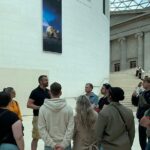
The group stays small (semi-private is capped at 8), which matters here. The galleries get crowded, and you want a guide who can steer you efficiently while still leaving time to look closely. If you hate any walking at all, keep in mind there is a small amount of walking involved during the tour.
In This Review
- Key Highlights Worth Planning Around
- 2 Hours, 5,000 Objects, One Clear Focus
- Group Size, Pace, and Why It Matters in Crowds
- Getting Oriented Fast at the British Museum
- Rosetta Stone: The Famous Rock in Your Hands (Not a Download)
- Assyrian Lion Hunt Reliefs: Power, Drama, and Detail
- Parthenon Sculpture: Seeing Greek Art Beyond the Outline
- Lewis Chessmen: A Surprise Intersection of Art and Play
- Oxus Treasure: When Craft Meets Long-Distance Trade
- Bonus Stops: Samurai Armour, Royal Game of Ur, and the Mummy of Katebet
- How the Guides Make the Museum Feel Manageable
- Price and Value: What $112 Buys in Real Museum Time
- Who This Tour Suits Best (And Who Should Rethink It)
- Should You Book the British Museum Highlights Small-Group Tour?
- FAQ
- How long is the London British Museum Highlights Guided Small Group Tour?
- What are the main highlights on the tour?
- Is this tour private or small group?
- Do I need hotel pickup or drop-off?
- What do I need to bring?
- Is luggage allowed?
- Is it wheelchair accessible?
- FAQ
- Is free cancellation available?
- Do I have to book a minimum number of people?
Key Highlights Worth Planning Around
- Rosetta Stone as an object, not a gimmick: it is the actual stone, right there in front of you
- Assyrian lion hunt reliefs: big, dramatic storytelling carved into stone
- Parthenon Sculpture: a chance to see Greek art as more than textbook images
- Lewis Chessmen: a serious artifact that also has real personality
- Oxus Treasure: museum-worthy craft from far-reaching trade routes
- Bonus stops that widen the scope: Samurai armour, Royal Game of Ur, and the Mummy of Katebet
2 Hours, 5,000 Objects, One Clear Focus
The British Museum is enormous. That is the problem. You walk in, your eyes glaze over a little, and you start doing museum math in your head: how much time do I really have versus how many galleries exist?
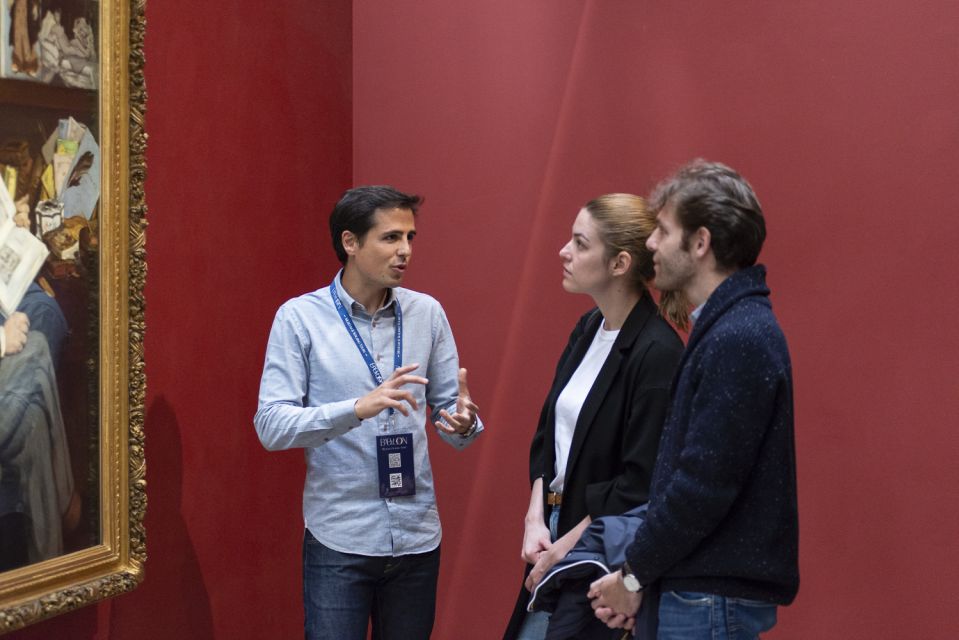
This tour solves that by treating the museum like a set of chapters. In about 2 to 2.5 hours, you get a tightly guided path through some of the most recognizable pieces, plus a few smart add-ons that broaden the “human story” beyond one region. The vibe is serious, but it stays enjoyable. Guides talk through themes like empires that fell out of memory and societies that mattered even when histories were not recorded the same way.
So yes, it is a highlights tour. But it is not just a photo stop parade. You are nudged to look, connect, and ask better questions while you are standing in front of the objects.
You can also read our reviews of more guided tours in London



Group Size, Pace, and Why It Matters in Crowds
This is built for small groups. Semi-private options run with a maximum of 8 guests, and private tours are available too. I like this setup because you do not feel swallowed by a big bus group, and the guide can keep track of who is following along.
The pace is designed for short attention spans and real museum logistics. You get a small amount of walking, and the route is compact enough that you are not spending half your time just crossing the building. Also, there is no hotel pickup or drop-off included, so you will want to plan to arrive at the meeting point on time.
One more practical note: large bags and luggage are not allowed. If you show up with a pile of gear, it can slow you down. Travel light and you will feel the tour start smoothly.
Getting Oriented Fast at the British Museum
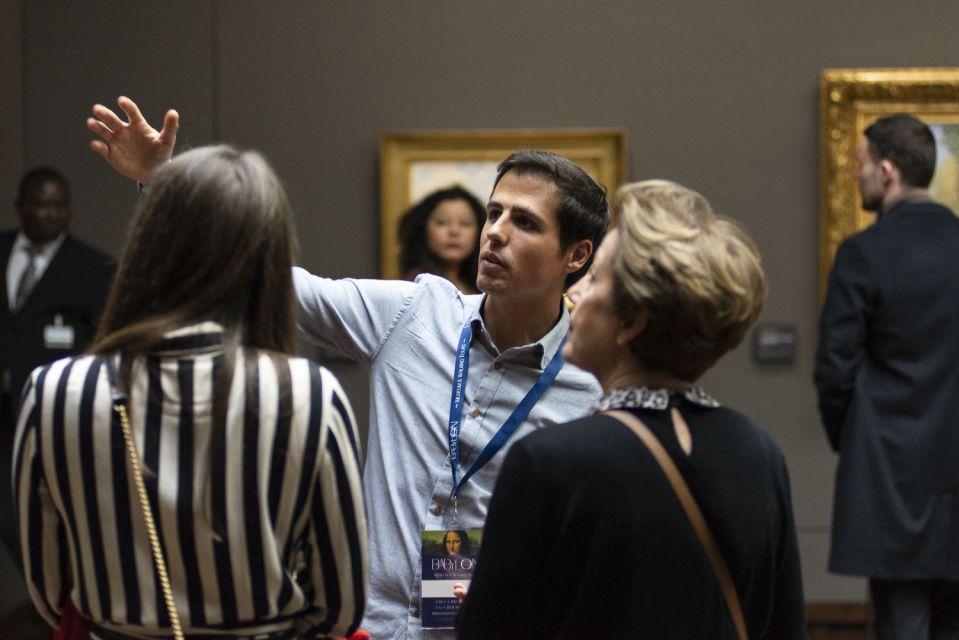
The best part of a good museum guide is not what they tell you. It is what they help you notice. In this tour, guides guide you through the galleries with a clear order, so you spend your limited time on pieces that carry maximum meaning.
You will hear context in plain language, including how museums connect cultures across time. The tour’s focus covers the museum’s big promise: 6,000 years of human history and artifacts reaching from every corner of the world. That sounds broad, but the route turns it into something you can actually process in one sitting.
And it helps that the guides vary by group. Names I have seen leading these tours include Andy, Jamie, Sheldon, Alex, Steph, and Evo. In real terms, that means you should expect more than a script—many guides bring their own storytelling style, including humor and group participation.
Rosetta Stone: The Famous Rock in Your Hands (Not a Download)
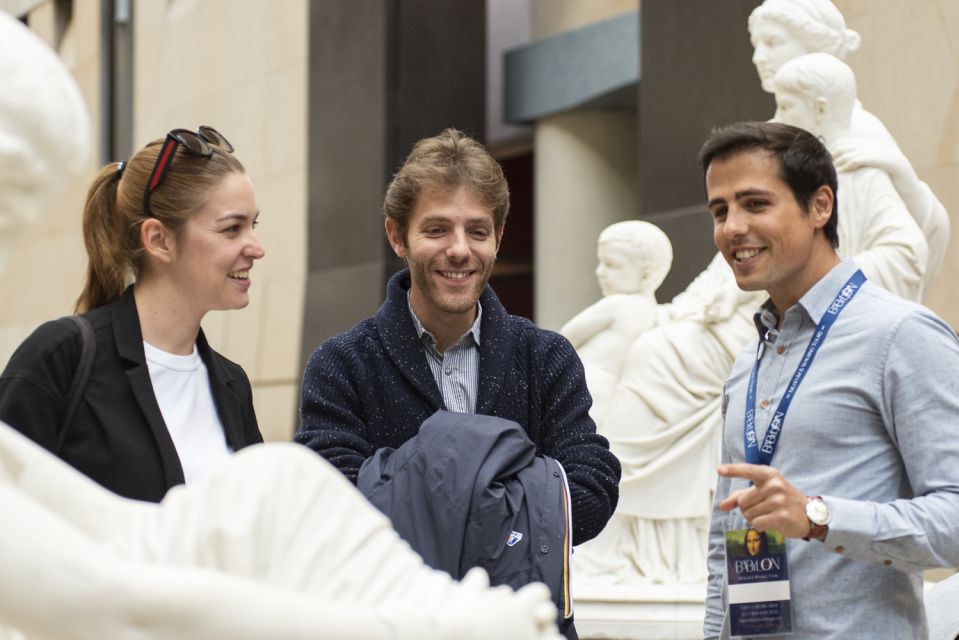
The Rosetta Stone stop is the kind of moment you usually only get in postcards. Here, you get to see the stone itself. The tour even flags a common mix-up: you are looking at the actual rock, not some language-learning product.
Why this stop is worth putting first in your plan: it gives you an anchor object. When you see a landmark artifact like this, everything else feels more grounded. You stop thinking, What is all this? and start thinking, This museum is a system of connections.
The guide’s job is to help you read the object through the lens of history and discovery—without turning it into a lecture you cannot carry. You will also appreciate the pacing, because the tour does not waste time asking you to care about something vague. It gets you to the star and then explains why it matters.
Assyrian Lion Hunt Reliefs: Power, Drama, and Detail
Next up are the Assyrian lion hunt reliefs. These pieces are memorable for one simple reason: they look like action scenes frozen in time. But they also work as a gateway to how empires projected strength and identity.
This is where you start to see the tour’s approach. Guides take themes like forgotten empires and bring them to life through specific artwork. You are not just looking at a carved surface. You are looking at a message that was meant to be seen.
What I like about this stop: even if you do not know Assyria from a menu, the guide can shape your viewing. You learn what to look for in the figures, the composition, and the storytelling style. That makes your museum experience feel sharper, not slower.
You can also read our reviews of more museum experiences in London




Parthenon Sculpture: Seeing Greek Art Beyond the Outline
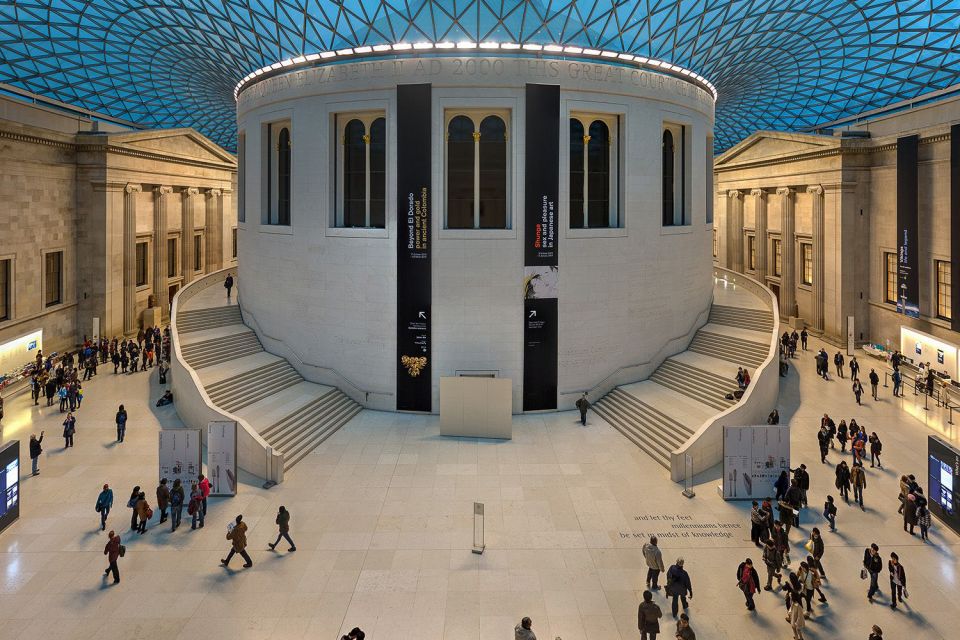
Then comes the Parthenon Sculpture. This is a stop that usually feels abstract before you see it in person. The tour helps because it treats the sculptures as objects with history and intent, not just famous names.
You get a chance to appreciate how art can carry narrative. The Parthenon sculptures are not small or shy, and being guided helps you pick out the features that matter, especially when the gallery gets busy.
One practical perk: this tour stays focused on a set of highlights, which means you actually get time in front of the sculpture instead of doing quick glances. In a museum this big, that time is the difference between seeing and truly looking.
Lewis Chessmen: A Surprise Intersection of Art and Play
The Lewis Chessmen are a clever pivot. Instead of staying in strictly royal or martial imagery, the tour includes something that connects history to everyday culture—play, strategy, and craft.
These are the kinds of objects people often recognize only in theory. The guided format helps you understand what you are looking at and why it has captured imagination for generations. If you like museums that include human moments—things people made and used for fun as well as for power—this stop delivers.
What makes it especially good for groups: you do not have to be a chess expert to enjoy it. The guide frames the chessmen in accessible ways, so they work for adults and younger visitors too.
Oxus Treasure: When Craft Meets Long-Distance Trade
The Oxus Treasure is another anchor highlight. You get to see objects associated with long-distance connections and high-quality craftsmanship. Even without getting lost in technical details, you can feel what the museum is showing: how ideas and materials traveled across regions.
This stop tends to hit a sweet spot. It is visually striking, and it also supports the tour’s larger goal: helping you understand what humans have achieved over time. The guides connect the dots between civilizations in a way that makes the museum feel less like random rooms and more like a timeline of human creativity.
If you care about art history, archaeology, or simply “why this is here,” this is one of the stops that justifies booking a guide instead of wandering.
Bonus Stops: Samurai Armour, Royal Game of Ur, and the Mummy of Katebet
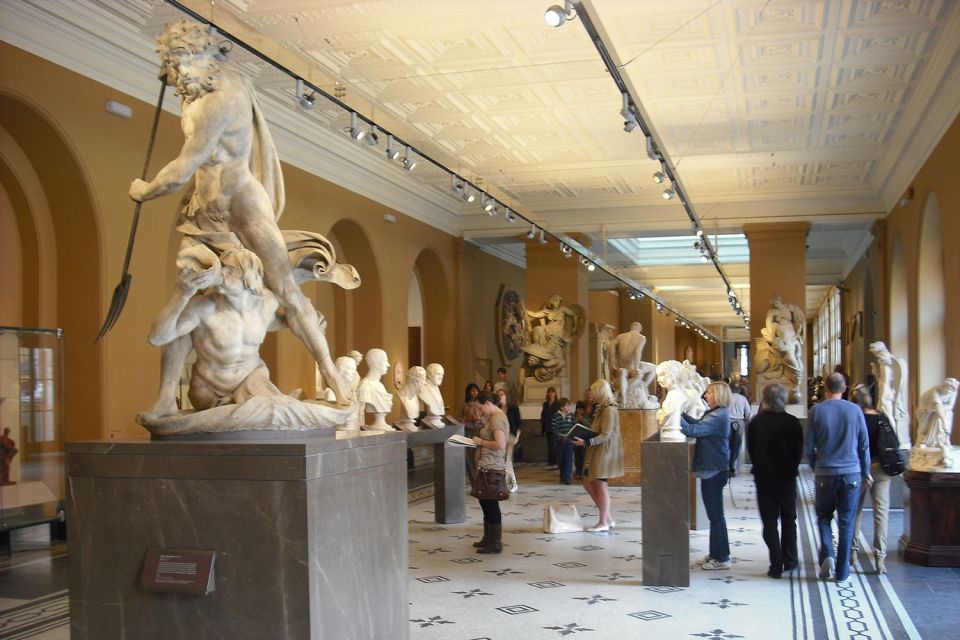
Depending on the day and what is available, the tour may include additional standout objects such as Samurai armour, the Royal Game of Ur, and the Mummy of Katebet. These add variety fast.
Here is why these bonus stops are valuable: they stop the museum from turning into only one kind of history. You get a wider view of human life—warriors, games, rituals, and the objects people used to express identity.
A practical caution: the tour’s headline pieces can sometimes be on loan or under restoration. The tour is designed around key objects, but you might see a closely matched replacement focus if something is not available that day.
How the Guides Make the Museum Feel Manageable
The strongest praise in this experience is consistent: guides bring stories to the objects, keep the group engaged, and manage the flow through crowded galleries.
Different guides have different strengths. I have seen past guides described as funny and friendly, as well as the kind of person who helps teens pay attention. One example from guide profiles: Andy is mentioned as having a PhD in history, which explains why the explanations can go deep while still staying clear.
You will notice a few patterns that tend to work:
- The guide explains what you are looking at before you get frustrated.
- They include the group in short discussion moments, instead of lecturing nonstop.
- They connect objects across cultures so the museum does not feel like disconnected storage.
Also, time management matters. Several comments highlight that the guide moves efficiently without rushing your viewing. That is the difference between a tour that feels like a sprint and one that feels like a guided conversation with world-class artifacts.
Price and Value: What $112 Buys in Real Museum Time
At about $112 per person for roughly 2 to 2.5 hours, you are paying for three things: expert navigation, focused access to top highlights, and context that makes objects “stick.”
If you go on your own, you might see some famous items—but you still face the museum’s biggest problem: you will not know what to prioritize in the moment. You will also waste energy asking, Am I looking at the right place or just the most visible crowd magnet?
This tour is a practical value if:
- you have limited time and want high-impact sights,
- you dislike museum wandering without direction,
- you want your visit to feel like learning, not just sightseeing.
Could you spend less and wander? Sure. But if your goal is to walk out with a clear sense of the museum’s story instead of a pile of random images, the guided format is the more efficient use of your London hours.
Who This Tour Suits Best (And Who Should Rethink It)
This is a solid fit for first-timers. It is also a great choice if you are traveling with teens or family members who need help staying engaged.
It is not ideal if you want everything. This is highlights, so it cannot cover the full museum in one go. It is also not suitable for wheelchair users as a small-group format. Wheelchair tours are offered only as private tours, and the small-group option cannot accommodate guests who need that access.
If you are on a tight itinerary, you will probably love this. If you want a slow, self-paced museum day, you might prefer unguided time—or add extra time after the tour to follow up on whatever grabbed you most.
Should You Book the British Museum Highlights Small-Group Tour?
I would book it if you want a focused, efficient introduction to the British Museum’s biggest hits. The tour’s design makes sense: small groups, a guided path through major artifacts like the Rosetta Stone, Assyrian lion hunt reliefs, Parthenon Sculpture, Lewis Chessmen, and Oxus Treasure, plus options like Samurai armour and the Mummy of Katebet when available.
I would hesitate only if you are determined to experience the museum completely on your own terms, or if you need a fully accessible arrangement that fits your mobility needs beyond what the tour offers in small-group mode.
If you want your museum visit to feel organized, story-driven, and actually memorable, this is one of the simplest ways to make limited time count.
FAQ
How long is the London British Museum Highlights Guided Small Group Tour?
The tour lasts 2 to 2.5 hours.
What are the main highlights on the tour?
Highlights generally include the Rosetta Stone, Assyrian lion hunt reliefs, Parthenon Sculpture, Lewis Chessmen, and Oxus Treasure. Other commonly included items may include Samurai armour, the Royal Game of Ur, and the Mummy of Katebet (availability can depend on what is on view).
Is this tour private or small group?
It is offered as either a private tour or a semi-private tour with a maximum of 8 guests.
Do I need hotel pickup or drop-off?
No. Hotel pickup and drop-off are not included.
What do I need to bring?
You should bring a passport or ID card.
Is luggage allowed?
Luggage or large bags are not allowed.
Is it wheelchair accessible?
This small-group option is not suitable for wheelchair users. Wheelchair tours are available only as private tours.
FAQ
Is free cancellation available?
Yes. You can cancel up to 24 hours in advance for a full refund.
Do I have to book a minimum number of people?
The tour has a minimum of 2 people per booking. For semi-private tours, at least 2 guests are required to run; if minimum numbers are not met, an alternative date or a full refund is offered.