REVIEW · LONDON
London: British Museum Guided Tour with Priority Entrance
Book on GetYourGuide →Operated by BEST TOURS LONDON LTD · Bookable on GetYourGuide
The British Museum can feel like a time-travel maze. This guided tour focuses your energy on the big-ticket highlights in 2 hours, with priority entry that keeps you moving instead of waiting in crowds. You’ll follow an expert guide through stops tied to Ancient Egypt, Greece, and early medieval England, plus quick storytelling that makes the objects easier to remember.
What I like most is the combination of priority tickets and a guided plan. I also like the small-group feel and the optional headsets, which matter in a busy museum where it’s easy to lose the thread mid-room. One thing to consider: this is a highlight tour, not a museum marathon, so you’ll still want extra time on your own after.
In This Review
- Key takeaways before you go
- Priority entrance and a tight 2-hour plan
- Meeting at 52 Great Russell St: where to start cleanly
- Entering the British Museum: why priority tickets matter
- The Great Court glass roof: the museum’s big moment
- Parthenon Sculptures (Elgin Marbles): seeing myths with context
- Ancient Egypt highlights: mummies, Rosetta Stone, and Ramesses II
- The Enlightenment Room: when science and ideas get their own space
- Asian collections: Chinese and Southeast Asia craftsmanship
- Anglo-Saxon England and Sutton Hoo: the highlight that surprises people
- Guides who keep you on track: Tony, Tara, James, Antonio, and Mira/Alex
- Headsets and small groups: the difference between hearing and guessing
- Photography rule: what you should plan for
- Who this tour fits best (and who should skip it)
- Price value: is $53.87 worth it?
- Quick FAQ
- FAQ
- How long is the British Museum guided tour with priority entrance?
- Where does the tour start?
- What does priority entrance include?
- Are headsets provided?
- What languages are the tours offered in?
- Can I take photos with flash?
- Is it suitable for wheelchair users or mobility impairments?
- Should you book this British Museum tour?
Key takeaways before you go
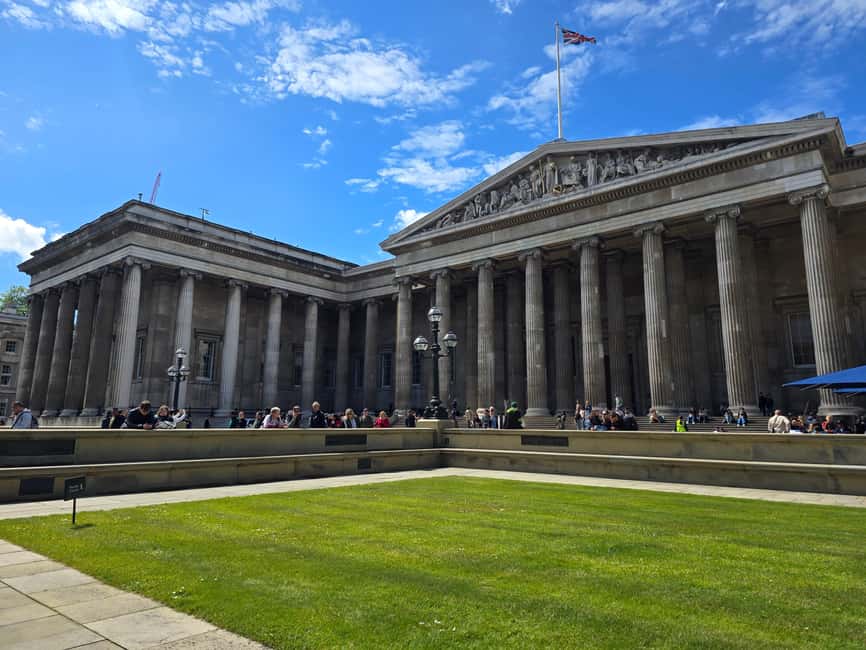
- Skip the main-entrance line with allocated timeslots and priority tickets
- 2 hours of guided highlights that actually cover major collections
- Headsets are available, so you can hear the guide clearly
- Great Court focus includes the glass roof and a memorable sense of scale
- Multiple languages: English, Italian, and Chinese
- Museum strategy: you’ll learn how to route yourself afterward
Priority entrance and a tight 2-hour plan
Let’s be honest: the British Museum is huge. You can wander for hours and still miss the items that most people come to see. This tour solves that with a structured 2-hour walkthrough plus priority entrance, so the day starts with momentum rather than logistics.
The priority piece is the practical win. With allocated timeslots and a separate entrance setup, you spend less time negotiating lines and more time inside, where you actually want to be. And because the group is kept small, you’re less likely to get separated in the crush of marble and crowd flow.
This format also helps your brain. Instead of trying to process 8 million artifacts (yes, that scale is real), you get a guided storyline that ties major objects across civilizations. You leave with the feeling that you understand what you saw, not just that you saw a lot.
You can also read our reviews of more guided tours in London



Meeting at 52 Great Russell St: where to start cleanly
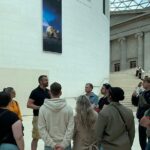
Your meeting point is 52 Great Russell St. The guide meets you inside the museum, waiting next to the information desk. That’s a big deal on a first visit because the British Museum has entrances, corridors, and crowd patterns that can make a simple meetup strangely hard without a clear anchor.
If you’re the kind of traveler who likes breathing room, arrive a few minutes early and let the guide find you. Once you’re inside, the headset option (if you choose it) helps you follow instructions and commentary even when you’re stopped among other sightseers.
Also note the language options. This tour runs in English/Italian (and it’s listed with live Chinese as well), so you should be able to pick the language that fits your comfort level best.
Entering the British Museum: why priority tickets matter
Priority tickets here aren’t just a convenience. They change the whole experience. When you walk in with a set timeslot, you reduce the stress of figuring out where to line up, which entrance is fastest, and whether you’re about to lose time.
You also get more museum time for the money. At $53.87 per person for a 2-hour guided experience that includes priority entrance, live guide commentary, and an option for headsets, the value comes from how efficiently it uses your visit. If you only have a day in London (or only a morning with museum stamina), you’re basically paying to buy back time and focus.
If you’re visiting with a group of friends and each of you has different interests, the guided format helps. You won’t all be stuck trying to agree on what to see first, because the tour route is designed to hit the most iconic pieces.
The Great Court glass roof: the museum’s big moment
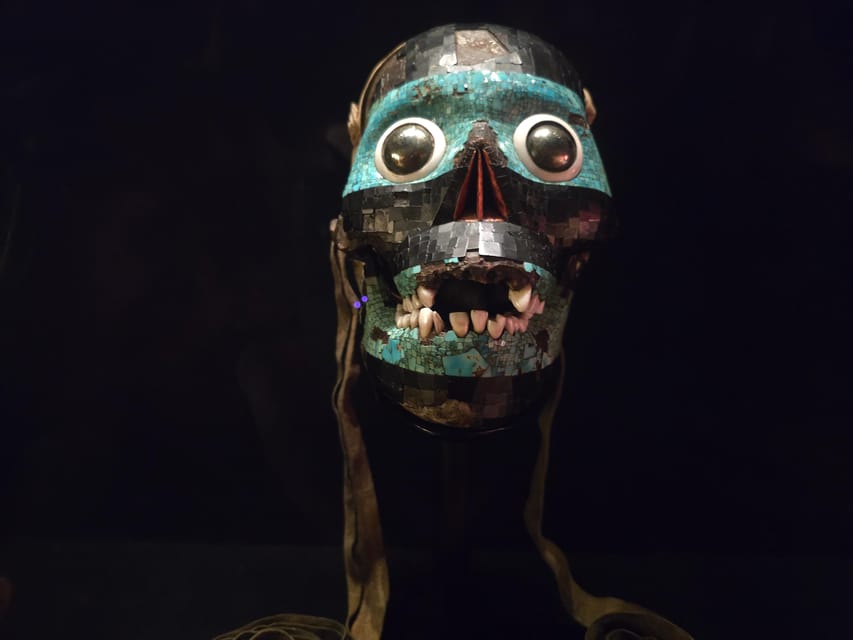
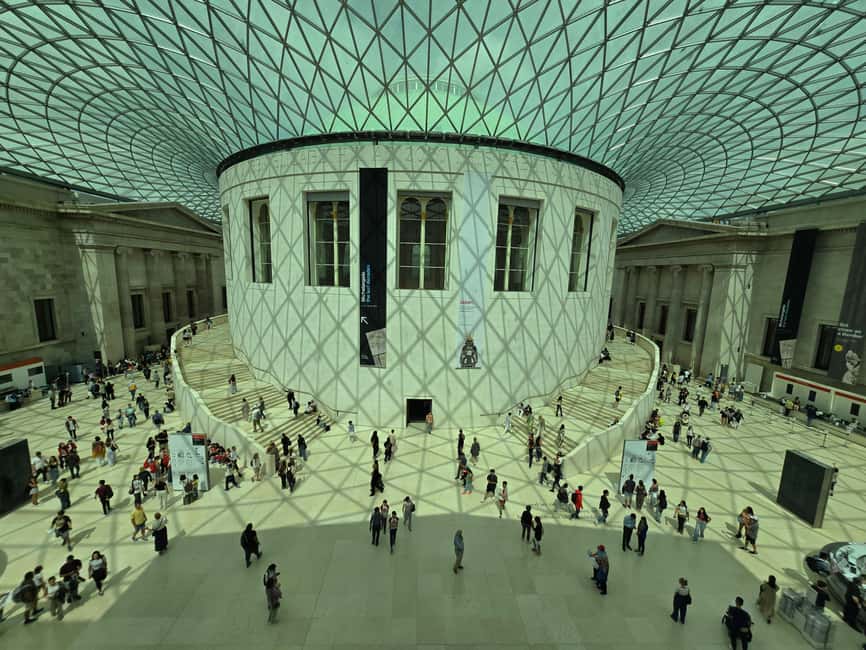
One of the tour’s early targets is the Great Court, including the dramatic glass roof. Even if you don’t know the museum’s collections yet, this space gives you instant context. It’s architecture you can feel in your chest: scale, height, and the sense that you’re in a central hub of the world’s collected stories.
This is also a smart starting choice because it orients you. After that first impressive view, you’re better able to understand why certain galleries matter and how the museum is laid out. It’s like getting your bearings fast.
The guides also tend to make the moment more memorable by connecting the roof and the surrounding setting to how the museum organizes its vast collections. If you like understanding the why behind the what, you’ll appreciate this.
Parthenon Sculptures (Elgin Marbles): seeing myths with context
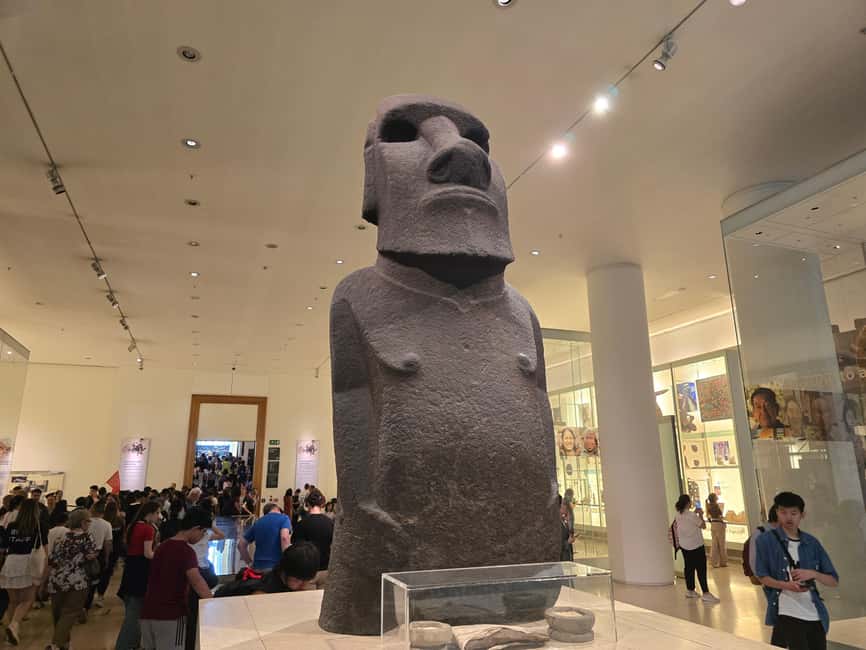
Next up is one of the most famous highlights for many visitors: the Parthenon Sculptures, often called the Elgin Marbles. These pieces are more than art objects you glance at and move on. A good guided explanation helps you see how the carvings fit into larger Greek stories and symbolism.
The payoff of a guide here is clarity. Without help, it can be easy to treat the sculptures like one more stop. With commentary, you start connecting themes—religion, civic life, myth, and artistic storytelling—so the sculptures feel like evidence of how people in ancient Greece thought and represented their world.
In a 2-hour tour, you won’t get the deep backstory you’d find in a semester. But you do get enough context to make the sculptures click, and that’s what helps you enjoy the next sections instead of feeling lost.
You can also read our reviews of more museum experiences in London





Ancient Egypt highlights: mummies, Rosetta Stone, and Ramesses II
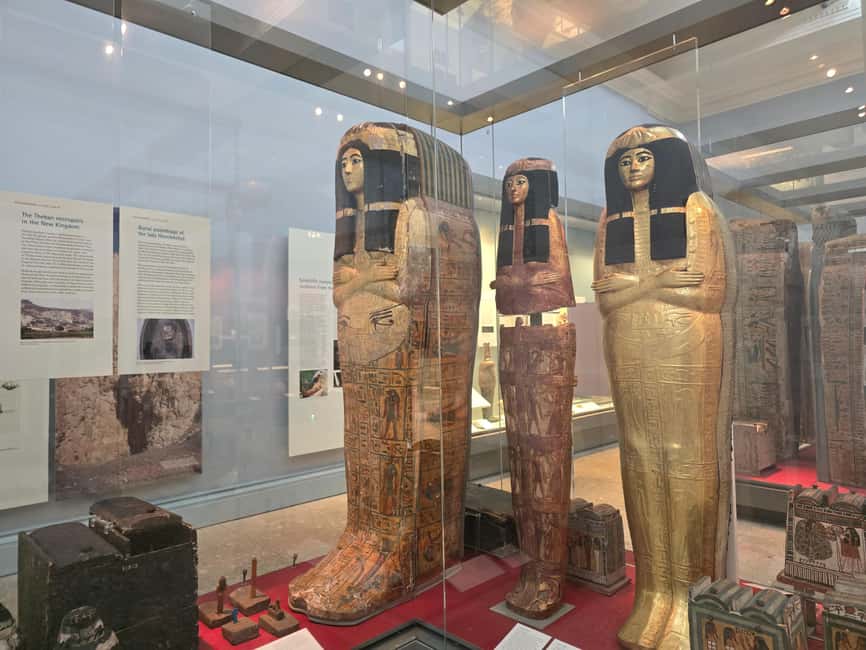
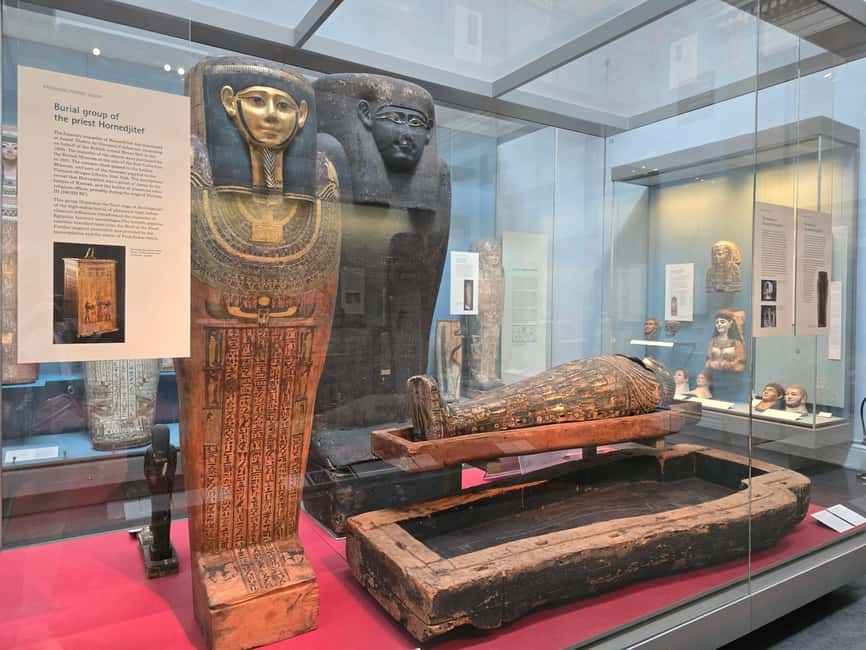
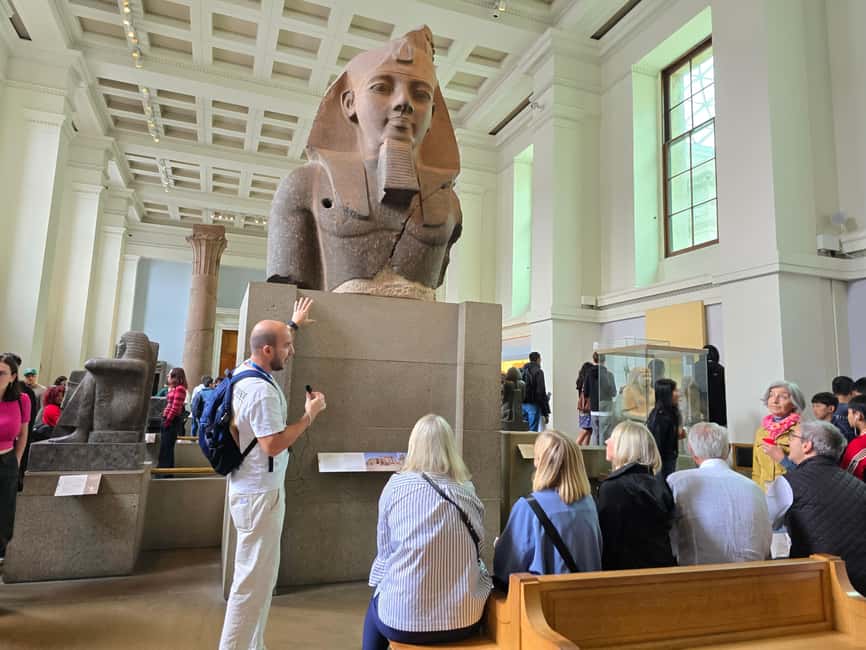
Egypt is usually a magnet, and this tour leans into it with several high-impact stops. You can expect coverage tied to Egyptian mummies, references to the Book of the Dead, the Rosetta Stone, and the bust of Ramesses II.
Here’s why I think this section is a strong match for a guided experience: Egyptian artifacts are dense with symbolism and ritual meaning. In a museum, that meaning can feel hidden unless someone gives you the hooks. A guide’s job is to translate what you’re looking at into something you can picture.
You’re also not just looking at one Egypt display. You’re moving across the themes that visitors usually want: writing, burial practices, and the idea of the afterlife. Even if you’ve read a bit about Egypt before, it’s the objects in the room that make the concepts feel real.
One practical tip: this is a lot of emotional intensity for a short time. If you’re sensitive to subject matter, it’s worth knowing that mummies are part of the highlight route.
The Enlightenment Room: when science and ideas get their own space
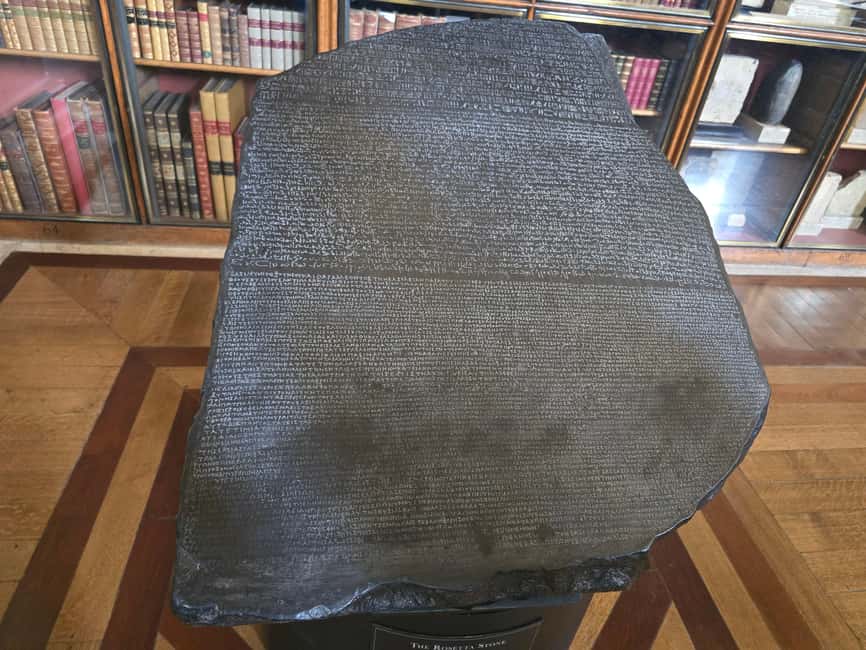
After the ancient highlights, the tour shifts gears to later intellectual culture with a stop described around the Enlightenment Room. This is where the British Museum reminds you it’s not only about far-away ancient worlds.
This section matters for two reasons. First, it balances the emotional weight of mummies and classical sculptures with a different kind of curiosity: books, knowledge, and scientific advancement. Second, it helps you place the museum itself in time, showing how collections and thinking evolved.
Even if you don’t spend long here on your own later, this stop gives your visit a smoother arc. It keeps the tour from feeling like a list of disconnected civilizations.
Asian collections: Chinese and Southeast Asia craftsmanship
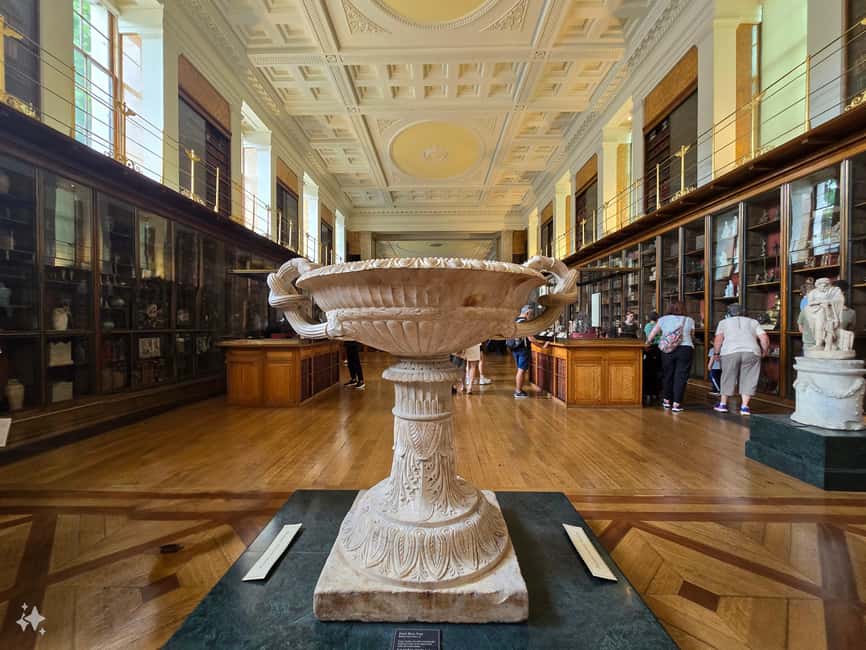
The tour also includes time for an exquisite Chinese collection and crafted works from Southeast Asia. The practical value of this part is variety. In two hours, you get a reminder that the British Museum’s story isn’t limited to a single region or era.
And because the commentary is guided, you’re more likely to notice details you might miss on your own: materials, design choices, and the cultural logic behind craftsmanship. You won’t walk out with a full art-history degree, but you should leave with better recognition of what you’re seeing.
If your group includes someone who worries that museums are boring, this section can help. It’s visually rewarding, and the narration connects it to human stories instead of treating objects like display items only.
Anglo-Saxon England and Sutton Hoo: the highlight that surprises people
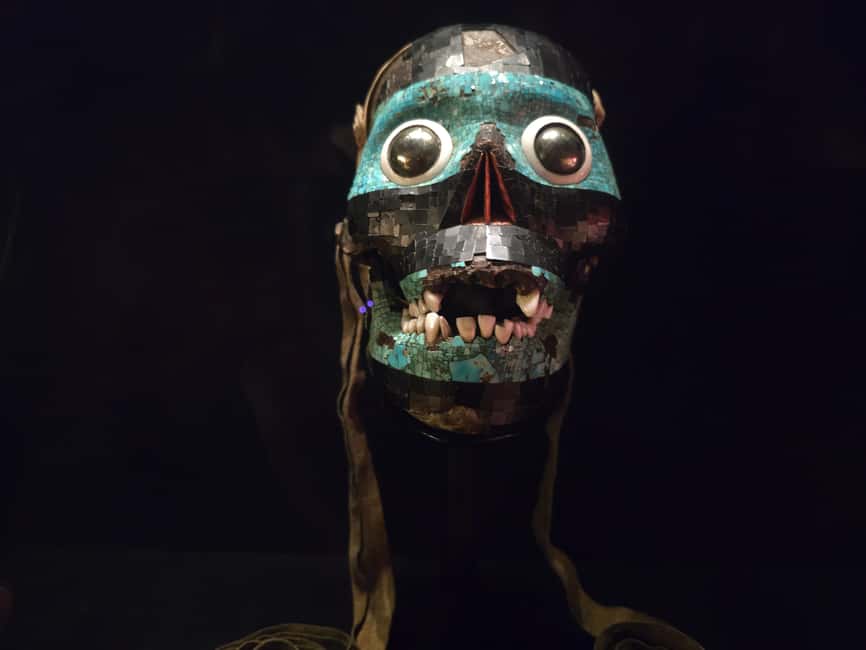
One of the most memorable stops on the route is the Sutton Hoo ship burial focus, including the intricately crafted helmet, shield, and related grave goods. This is a turning point because it’s early medieval England, and many visitors don’t expect the British Museum to make that era feel so immediate.
The helmet and gear are the kind of objects you can stand in front of for a long time because your brain keeps trying to answer questions: what did it look like in use, who wore it, and how did people in that era build identity through objects?
In a guided tour, you get the benefit of explanation without the need to research in advance. The tour provides the cultural and religious context behind burial practices, so Sutton Hoo feels like a doorway into belief and community, not just a dramatic find.
Guides who keep you on track: Tony, Tara, James, Antonio, and Mira/Alex
A big part of the tour’s success is the people leading it. You’ll see the tour repeatedly praised for smooth pacing and strong storytelling, and specific guide names show up in the experience details: Tony, Tara, James, Antonio, plus Mira and Alex.
A theme across those guides: they don’t just point. They help you move through the museum so you don’t get stuck in crowds or lose the route. They also focus on timing, and they tend to show you the must-sees first, then give you guidance for where to go next on your own.
If you’re the type who likes to ask questions, you should feel comfortable doing so. The tour is described as interactive, with guides open to questions, and some experiences even turn into a more conversational Q&A when group sizes allow it.
Headsets and small groups: the difference between hearing and guessing
Noise is real in London museums. Even when you’re standing close, it can be hard to follow a guide’s voice over crowd chatter. That’s why the optional headsets matter. With them, you can focus on the objects instead of playing museum audio detective.
Small-group setups also help with crowd navigation. You’re less likely to lose the tour leader, and you can keep up with stops without constantly checking back to see where the group ended up.
If you’re traveling with someone who gets distracted easily, headsets are especially useful. They reduce the mental load of monitoring both art and people.
Photography rule: what you should plan for
The tour notes that flash photography isn’t allowed. That means your phone camera use will need to be standard lighting only. If you’re trying to capture details, it’s worth remembering that you may not get the bright results you’d expect with flash—so consider focusing on a few key shots rather than taking everything.
Who this tour fits best (and who should skip it)
This is a great choice if you:
- want a guided overview that hits the British Museum highlights in 2 hours
- need help prioritizing, especially on a first visit
- prefer small-group pacing and easy audio follow-through
- care about seeing Egypt, Greek sculpture highlights, and Sutton Hoo without planning every stop yourself
You might skip this and go fully on your own if:
- you already know exactly which galleries you want and you’re ready to spend longer than 2 hours
- you need full mobility access (this tour is not suitable for wheelchair users and is listed as not suitable for people with mobility impairments)
- you need accommodations not listed for hearing-impaired visitors
Price value: is $53.87 worth it?
For $53.87 per person, you’re paying for three big things: priority entrance, a live guide with commentary, and a guided route that saves you time in a crowded museum.
If you were to enter on your own and just wander, you’d likely spend time deciding where to go and might miss the strongest objects for a first visit. For many travelers, the guide’s “what to see first” logic is the real value. You’re essentially buying a fast museum orientation plus context you’d otherwise have to read or search for separately.
It’s not the cheapest way to see the British Museum. But for a limited window in London, this can be one of the best time-to-value choices.
Quick FAQ
FAQ
How long is the British Museum guided tour with priority entrance?
The tour duration is 2 hours.
Where does the tour start?
The starting location is 52 Great Russell St, and the guide waits inside the museum next to the information desk.
What does priority entrance include?
It includes priority tickets for the main entrance with allocated timeslots, plus skip-the-line entry via a separate entrance.
Are headsets provided?
Headsets are listed as an option (available).
What languages are the tours offered in?
The guide commentary is available in English, Italian, and Chinese.
Can I take photos with flash?
Flash photography isn’t allowed.
Is it suitable for wheelchair users or mobility impairments?
No. The tour is listed as not suitable for wheelchair users and not suitable for people with mobility impairments.
Should you book this British Museum tour?
I’d book it if you want the British Museum’s greatest hits without turning your day into a maze of indecision. The priority entrance plus a guided route is the smart combo, especially if you only have a small block of time.
I’d think twice if you’re relying on accessibility support not covered by the listing, or if you plan to spend the whole day in the museum and prefer to choose every gallery yourself. For most first-timers and time-crunched visitors, this tour is a solid, efficient way to see the core artifacts and leave with a clear sense of what to explore next.