REVIEW · LONDON
Food & Drink walking tours In London. Discover the East End of London.
Book on Viator →Operated by Walk Eat Talk Eat · Bookable on Viator
East End flavor, served with real street history. I love how this tour mixes East London food with the stories behind it, and I love the small-group feel (max five) that keeps the guide’s attention on you. One possible drawback: because everything is included and portions are generous, you may want an easy dinner plan after the 3-hour walk.
You’ll start near Old Street at Butchies Shoreditch (22 Rivington St) and end in Spitalfields Market (65 Brushfield St). For $103.50 per person, you’re getting a full afternoon of tastings—plus alcohol—without needing to figure out where to eat on your own. With strong demand (booked about 53 days ahead on average), it’s smart to lock in your date early.
In This Review
- Key things I’d plan around
- Why the East End tastes different when you hear the stories
- Price and tastings: what $103.50 really covers
- Getting your bearings: Old Street to Rivington Street (and the Truman storyline)
- Shoreditch’s hidden Victorian pocket (and what it means for the neighborhood)
- Brick Lane: where street art, street food, and big-city noise meet
- Old Truman Brewery: from worker clocks to the skyline chimney
- Fournier Street: Huguenots and the darker edge of legend
- Christ Church Spitalfields: architecture you can actually see from the street
- Markets: Spitalfields and the Brick Lane market rhythm
- Where small-group size changes the experience
- Who this tour suits best (and who might want something else)
- A simple game plan before you go
- Should you book this East End food walk?
- FAQ
- How long is the London East End food walking tour?
- What does the tour price include?
- How big is the group?
- What areas does the tour cover?
- Where does the tour start and end?
- Can I get a full refund if I cancel?
Key things I’d plan around
- Max 5 participants keeps the pace friendly and the questions coming.
- Food + drinks included, including craft beer tastings and other alcoholic samples.
- Spitalfields Market time to see how an old market hall became a modern hangout.
- Truman Brewery history tied to what the area did for 500 years.
- Brick Lane street energy with food stops, street art views, and musician moments.
- Two guide styles show up on this tour: Eddie’s story-telling and Alexis’s acting flair.
Why the East End tastes different when you hear the stories

The East End has always been London’s “people first” part of town. New arrivals, older communities, workers, traders, and artists have layered over one another for centuries. What makes this tour work is that it doesn’t treat food as a side quest. You’re tasting while the guide explains how the neighborhood got the way it is—through industry, migration, and everyday life.
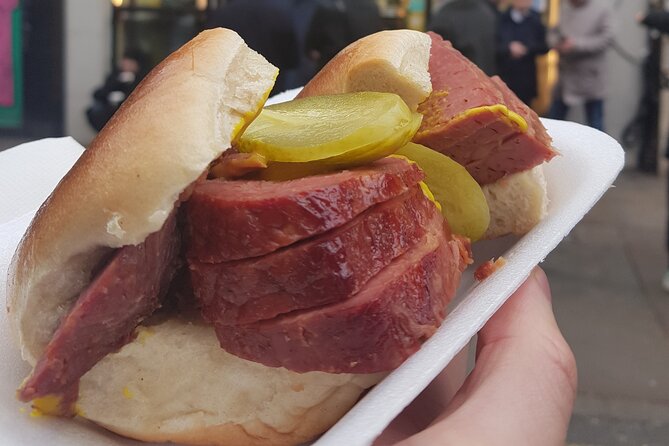
I like that the tour keeps your attention on cause and effect. A bagel stop isn’t just a bagel stop. It’s tied to the kinds of communities that built their food lives here. A brewery stop isn’t just nostalgia. You see (and walk through the idea of) how production shaped the streets and the rhythm of workers’ lives.
This is also one of those London experiences where your senses get a workout. You’ll walk through spots where you can see street art on brick, smell food cooking, and hear music spilling out onto the lane. If you’re the type who gets restless standing still at museums, a walking food tour like this is a satisfying way to see a neighborhood and actually enjoy it.
You can also read our reviews of more walking tours in London



Price and tastings: what $103.50 really covers
At $103.50 per person for about 3 hours, you’re paying for guidance, a tight route, and a lot of included food. The big value point is that the tour doesn’t rely on you buying snacks between stops. All food is included, and alcohol tastings are included too—no extra charge.
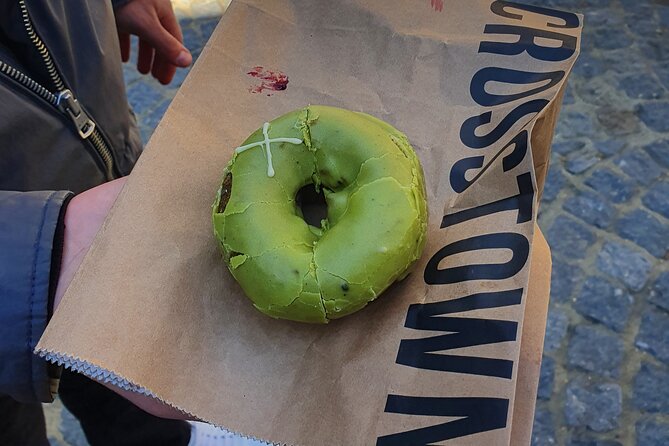
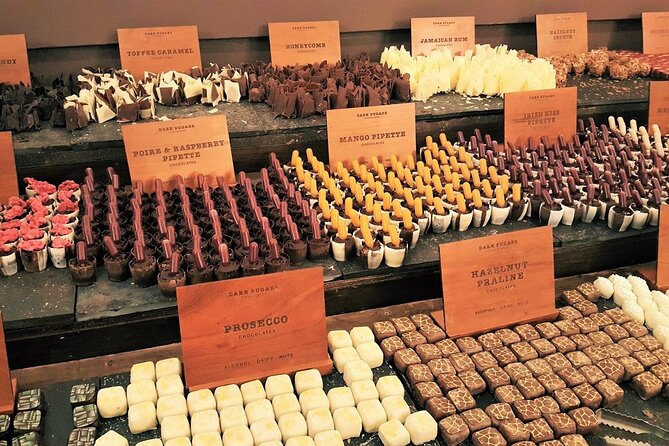
That matters because East London can be a food maze. You’ll likely pass places that look tempting but don’t always deliver the kind of local choices you want on day one. Here, the tour’s job is to get you into the right lane: craft beer, kosher bagels, artisan doughnuts, and a mix of hearty and lighter snacks.
You should also go in with the right mindset. Since you’ll be eating through multiple stops, try to start the morning or lunch window with only a light bite beforehand. You’ll feel better at the markets, and you’ll enjoy the history stops more when you’re not rushing to recover from hunger.
Getting your bearings: Old Street to Rivington Street (and the Truman storyline)

The tour starts near Old Street Station, meeting at Butchies Shoreditch on Rivington Street. From the beginning, the route sets up the East End contrast: Victorian-era layers beside brand-new street life.
Rivington Street is where you’ll get that blend of old and new. You’ll hear about parts of Victorian London that have remained untouched in a way that’s rare in fast-moving cities. Then the guide brings you into the more current mood as Brick Lane starts pulling in the story.
Food starts early here, and that’s a practical plus. Before you settle into markets and history sites, you’ll begin with craft beer and sweet treats from an artisan doughnutry. It’s a good warm-up: you’ll taste something familiar enough to judge quickly, then you’ll move toward more specific East End staples.
This is also where Truman’s Brewery becomes a thread. The tour frames it as more than a famous building; it was once one of the world’s biggest breweries, dating back to the mid-1600s. The guide points out how that industrial footprint turned the area into a working landscape long before it became a food-and-culture destination.
Shoreditch’s hidden Victorian pocket (and what it means for the neighborhood)
After Rivington Street, you’ll head into Shoreditch, for a stop that’s set up as a Victorian-era secret. The guide doesn’t keep it vague—you’ll learn that this area was tied to an important turning-point movement in London, and that its influence spread beyond the city.
Even without inventing details, you can still feel why this stop matters. Shoreditch today is known for art, design, and nightlife, but the tour makes the point that those creative vibes didn’t appear out of nowhere. They’re connected to earlier energy—people forming ideas, challenging norms, and spreading those ideas across the UK.
This is a solid moment in the walk because it breaks up the nonstop eating. You get a breather, a change in pace, and a clearer mental map of why the East End feels so “made by people” instead of simply “visited by tourists.”
Brick Lane: where street art, street food, and big-city noise meet
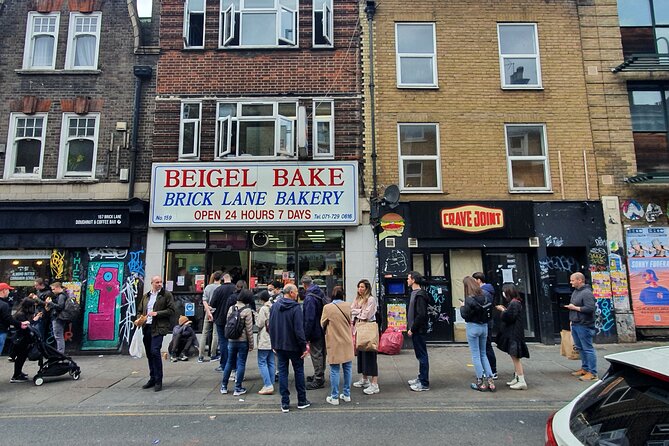
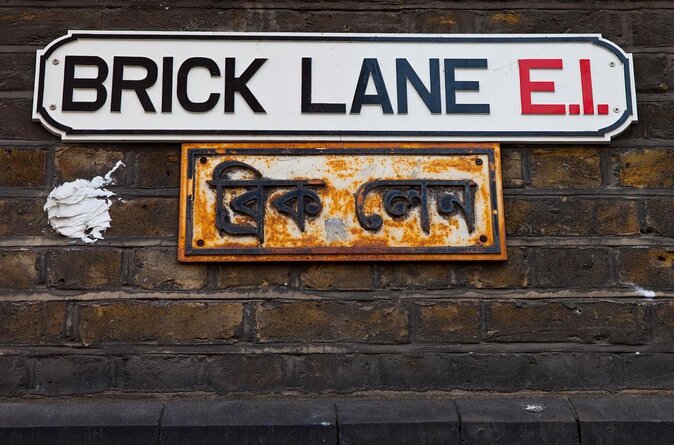
Brick Lane is the emotional centerpiece of the East End for many visitors, and the tour doesn’t treat it like a photo stop. You’ll walk down the lane and experience the atmosphere: street art, street food, and musicians working the sidewalks.
At about one hour for this stretch, it’s enough time to slow down, notice details, and actually eat without feeling rushed. The guide also connects the neighborhood’s recent bohemian energy with earlier waves of cultural mixing. That helps the area feel understandable, not just trendy.
You’ll also get to sample Bangladeshi snacks here, which is a key authenticity marker. Brick Lane is often described as multicultural in a generic way, but you’ll taste what that means at ground level—quick, flavorful bites that fit into the street’s rhythm.
If you’re someone who likes tasting menus, you might find this portion a bit more “walk-and-snack” than formal dining. That’s not a downside. It’s exactly the point: you’re seeing the East End the way it’s lived, with food that works outdoors and on the move.
You can also read our reviews of more food & drink experiences in London






Old Truman Brewery: from worker clocks to the skyline chimney
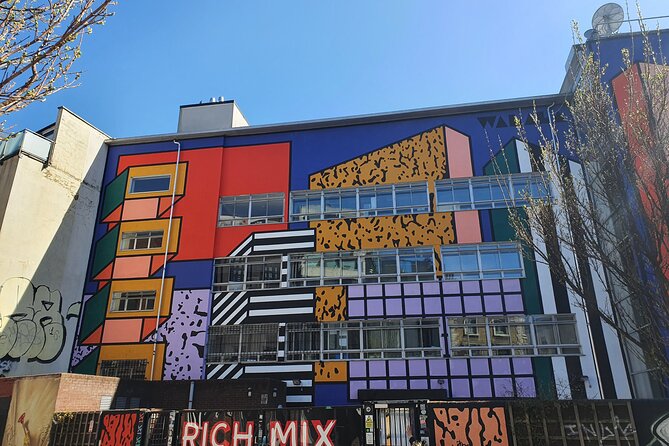
One of the tour’s standout sections is the Old Truman Brewery stop. Truman’s history goes back to the mid-1600s, and the guide explains that at the time it was the largest brewery in the world. So you’re not just visiting a landmark. You’re stepping into the idea of how massive production used to shape the city.
The tour focuses on what the building meant for workers. You’ll talk about what it was like for brewery staff—specifically how workers clocked in and out—then you’ll hear about the industrial mix that lined the area for centuries. That includes breweries, factories, tanneries, distilleries, and brick kilns.
The brick chimney is the visual anchor here. It dominates the skyline and serves as a reminder of the neighborhood’s industrial identity even as the area changes into a food-and-events hub.
A practical note: this portion is shorter than some of the other walking segments. It’s still packed, so it’s worth keeping your phone put away for a moment and just listen. The most valuable part isn’t the photos. It’s the story that makes the building look different than it would on your own.
Fournier Street: Huguenots and the darker edge of legend
As you continue, you’ll walk down Fournier Street and learn about French Huguenots who settled there after being exiled from France in the 1600s. The guide points out that their houses remain intact—right there in the streetscape.
Then the story shifts to something moodier: Jack the Ripper. The guide frames this area as connected to his old stomping grounds, and you’ll explore that aspect as part of the neighborhood’s layered reputation.
This stop works well if you like your history grounded and local. You’re not just hearing the headline. You’re walking past the kind of architecture that helps stories feel real.
Christ Church Spitalfields: architecture you can actually see from the street
You’ll also spend time near Christ Church Spitalfields, built in 1714 and designed by Nicholas Hawksmoor, who was Christopher Wren’s apprentice. The guide explains that the church’s design was mocked when it was built, but it’s now admired for its beauty.
You’ll mostly take this in from just outside the church, and you’ll look around for vantage points that help you spot other landmarks nearby. That matters because it turns a single building into a wider view of the area.
If you’re tired of “look at this façade” sightseeing, this is a nice middle ground. You don’t need to rush inside anywhere. You just get the design context plus a view that helps you understand where you are in Spitalfields.
Markets: Spitalfields and the Brick Lane market rhythm
Spitalfields Market is where the East End energy becomes easy to navigate. You’ll explore its older roots—from fruit and veg beginnings to the modern version where everything from coffee to quick grooming is part of the scene.
The building itself is a highlight. The guide describes it as a cathedral-like space with steel beams and a vast interior you can easily get lost in. That’s exactly how it feels when you step inside: it’s airy, wide, and full of corners.
You also get an extra market moment: Brick Lane Market. The tour frames it as the younger sibling of Spitalfields Market, and it’s only open on weekends, sometimes also on Friday. If your day lines up, you’ll go inside and have time to explore.
Here’s the practical value: you’ll learn when to spend your energy. If the day’s market is open, you get more local flavor and browsing time. If it isn’t, you still leave knowing where to look on your own next time.
Where small-group size changes the experience
A five-person cap might sound like a detail, but it changes the feel of the tour. You’ll have time to ask questions without competing for attention, and it’s easier for the guide to adjust the pace if people need a slower moment near a busy street or while you’re finishing tastings.
It also seems to influence the tone of the storytelling. In this kind of setting, guides like Eddie are described as funny, informative, and good story-tellers, while Alexis is noted for acting skills that help certain parts of the history land with more punch. You don’t need a theatre degree to enjoy that style, but it helps the walk move quickly while still feeling like learning.
Who this tour suits best (and who might want something else)
This is ideal for you if:
- You want a guided East End walk that includes lots of eating, not just a couple of bites.
- You like food plus context—history tied to what people actually ate and built.
- You prefer smaller groups so you can hear explanations and ask questions.
It might be less ideal if:
- You’re the type who hates alcohol tastings or doesn’t want to drink at all. The tour includes alcoholic beverage tastings, though you might still be able to pace yourself.
- You want a purely cultural landmark day. This is primarily a food-and-neighborhood story tour, with history woven in rather than a museum-style schedule.
A simple game plan before you go
If you want to enjoy the tour without feeling stuffed, aim for a light breakfast or early lunch. Wear comfortable shoes. East London sidewalks add up, especially when you’re weaving in and out of market entrances and street corners.
Also, think ahead about dietary needs. The tour says that if you have serious dietary requirements, you should email in advance so the team can search for a delicious substitute. If your needs are specific, don’t wait until the day of the tour.
Should you book this East End food walk?
Yes—if your goal is to understand London’s East End through food, drink, and street-level history, this is one of the more efficient ways to do it in a short afternoon. The value is strong because you’re getting a full set of included tastings (including craft beer and alcohol) plus time in Spitalfields Market and a proper stop at the Old Truman Brewery.
I’d especially recommend booking if you like neighborhoods with personality—places where history isn’t behind ropes and where the streets still feel like they’re working.
If you’re unsure, check your appetite and your comfort with alcohol tastings. As long as you’re ready for a very food-forward walk, you’ll leave with a better mental map of the East End—and a few new favorites you can chase again later on your own.
FAQ
How long is the London East End food walking tour?
It runs for about 3 hours.
What does the tour price include?
Food is included in the price, and alcoholic beverage tastings are included as well.
How big is the group?
The tour is capped at a maximum of 5 travelers.
What areas does the tour cover?
You’ll walk through parts of Shoreditch and Brick Lane, visit Spitalfields Market, and stop at places tied to historic Truman Brewery and nearby landmarks.
Where does the tour start and end?
It starts at Butchies Shoreditch, 22 Rivington St, London EC2A 3DY and ends at Spitalfields Market, 65 Brushfield St, London E1 6AA.
Can I get a full refund if I cancel?
You can cancel for a full refund up to 24 hours before the experience starts.