REVIEW · LONDON
Burnings, Butchery & Black Death: A Walking Tour of London’s Bloody Past
Book on Viator →Operated by Historic London Tours · Bookable on Viator
London’s dark timeline walks right past you. This 2-hour, small-group walk strings together London’s bloody past in a tight route, spanning the Middle Ages to Victorian times. You get a city feel that’s much grimmer—and more interesting—than the usual postcard tour.
I especially like the small group cap (max 15), which keeps the tour conversational and easy to hear. I also like how the stops are set up to stay value-focused: many sights are listed as free entry, and one major church stop has admission included.
One thing to consider: the themes are heavy. You’ll cover a lot of plague, death, and grim urban history in a short time, so wear shoes for outdoor walking and go in with the right mood.
In This Review
- Key things I’d book for
- London’s Bloody Past in Two Hours
- Meeting at Aldersgate and Finishing Near Farringdon
- Charterhouse: plague-era monastery and an actual plague pit
- Smithfield Market: a 1,000-year meat market connection to everyday life
- St John’s Gate and Cloth Fair: where medieval institutions and alley life collide
- William Wallace Memorial: a Braveheart name, and why it belongs here
- St Bartholomew the Great and Pye Corner: oldest parish church and Great Fire aftermath
- Holborn Viaduct and the River Fleet: Victorian London’s largest open-air sewer
- Ye Olde Mitre and the Hospital Museum finish: comfort, then the city’s oldest hospital
- Price, pace, and value of $27.73
- Should you book this dark history walking tour?
- FAQ
- How long is the tour?
- How much does it cost?
- What language is the tour offered in?
- Where does the tour start?
- Where does the tour end?
- How big are the groups?
- Do I get a mobile ticket?
- Are entry tickets included?
- What if the weather is bad or I need to cancel?
Key things I’d book for
- Small group (up to 15) keeps the pace human and the stories clear
- 2 hours is tight by design, so you see a lot without a half-day commitment
- Plague, markets, and hospitals connect everyday life to survival and fear
- Most stops are free entry, helping you keep the cost down
- You’ll walk through the City of London area, not just the shiny museum corridors
- A pub stop (Ye Olde Mitre) gives you a breather before the final historic sites
London’s Bloody Past in Two Hours
This tour is built around one idea: London has been through cycles of illness, violence, crowd life, and rebuilding for centuries. In a short window, you’re guided through places tied to plague, the meat trade, medieval institutions, the Great Fire aftermath, and even Victorian sanitation.
What makes it work is the focus on location. Instead of telling stories in the abstract, you stand near the settings—old religious sites, market streets, and “what’s under your feet” urban infrastructure—so the timeline clicks together fast.
You should also know it’s not a one-note horror walk. It leans into the grim details, but the overall vibe stays like learning street-level history: who lived here, what people did for food and work, and how cities handled fear.
You can also read our reviews of more walking tours in London



Meeting at Aldersgate and Finishing Near Farringdon
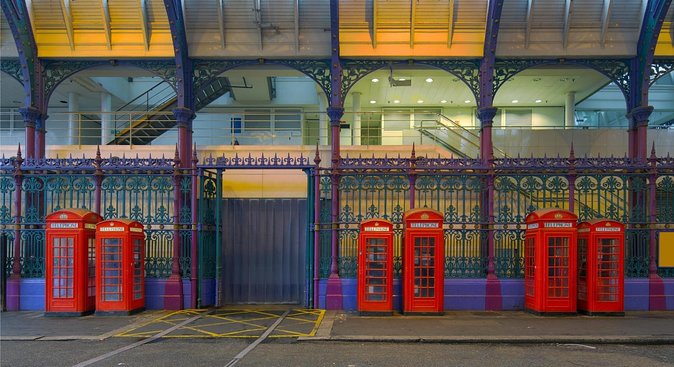
The tour starts at Underground Ltd, Aldersgate St, Barbican (EC1A 4JA). You end on Ely Place (EC1N), around the corner from Farringdon Station—a handy finish if you plan to hop on the next leg of your day.
Because the group size is limited to 15 travelers max, you get fewer “lost in the crowd” moments than on larger busier walks. It also helps if you like asking questions, since the guide has room to respond instead of rushing everyone along.
It’s also offered in English, runs on a mobile ticket, and confirmation comes at booking. That makes it straightforward to manage, especially if you’re juggling a tight itinerary.
Charterhouse: plague-era monastery and an actual plague pit
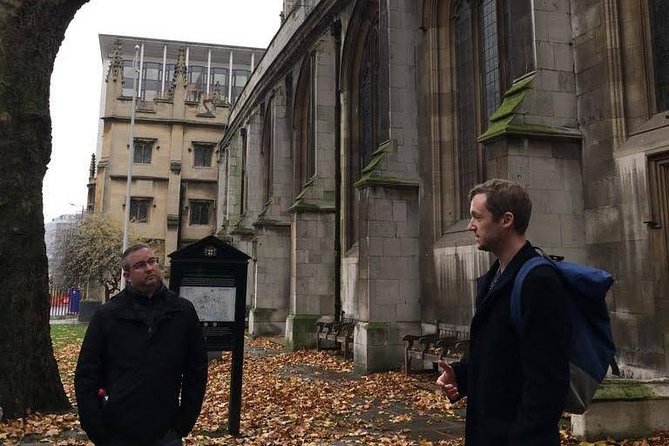
Your walk begins at The Charterhouse, described as a 14th-century monastery and plague pit site. This is a strong opening stop because it frames what’s coming next: London wasn’t only building cathedrals and markets—it was also managing outbreaks, overcrowding, and the fear that followed.
The practical upside here is that you get a big concept early. You’re not just hearing that plague happened—you’re shown a setting tied to it, so later references to burial practices, sanitation changes, and crowd life make more sense.
Admission at this stop is listed as free, so you’re not forced into extra spending immediately. The tradeoff is that plague themes can be emotionally intense. If you’re visiting with kids or you’re sensitive to death-related topics, consider whether this opening angle is right for you.
Smithfield Market: a 1,000-year meat market connection to everyday life
Next comes Smithfield Market, noted as a one thousand year old meat market. This stop shifts the story from disease to routine. Food markets were essential, but they also attracted crowds and created conditions where sickness could spread—especially when hygiene standards were not what we expect today.
This is one of the stops where the tour’s format feels smart. Standing near a long-running market site helps you understand how daily choices—where meat is handled, how people gather—can shape public health outcomes.
Admission is listed as free here too. That keeps the walk from feeling like a sequence of paid entrances, which matters when the total price is $27.73 per person for about 2 hours.
St John’s Gate and Cloth Fair: where medieval institutions and alley life collide
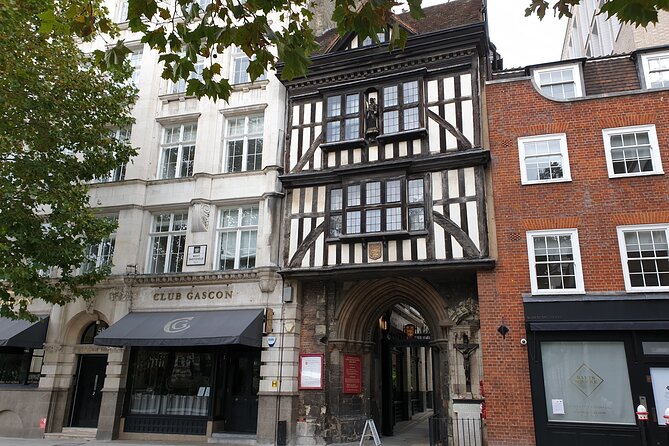
You’ll then reach St John’s Gate, described as the home of the medieval Knights Hospitallers. This adds a different kind of power to the tour: not royal power, but institutional power—organizations tied to care, defense, and how cities structured life beyond the market.
After that, you head through Cloth Fair, a quiet alley with a noisy history. This is the kind of stop that makes London feel like a living puzzle. The street is calm now, but the guide’s job is to show you what the space likely supported when trade, bargaining, and conflict were part of the daily rhythm.
At these stops, admission is listed as free. The limitation is that some alley and gate areas are tight, so you’ll want to keep your pace steady and avoid stopping in ways that block the group.





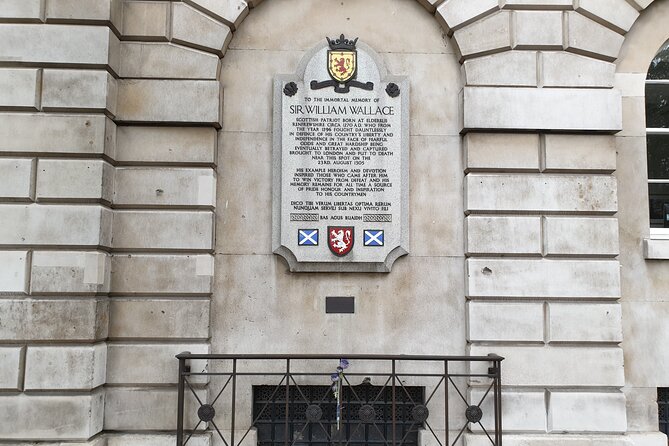
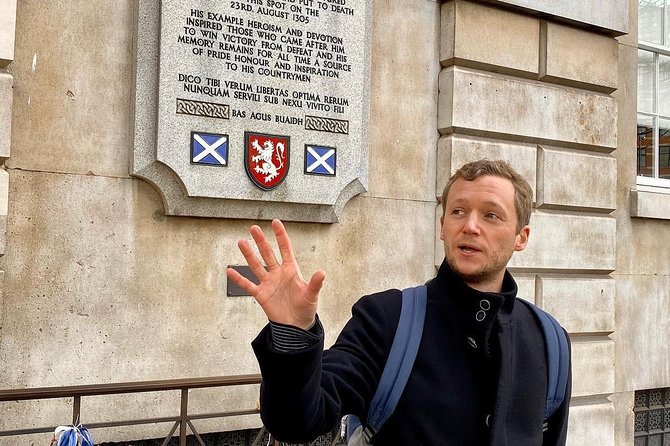
William Wallace Memorial: a Braveheart name, and why it belongs here
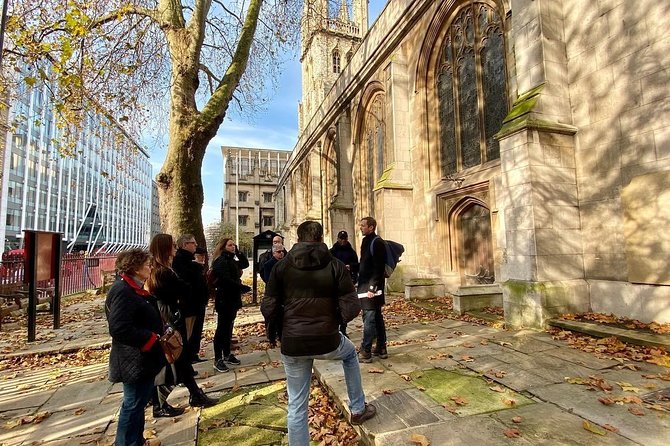
The tour includes the William Wallace Memorial, identified here as a memorial to William Wallace—better known through Braveheart. This adds a surprising angle: not just local London history, but the ways famous figures are remembered and placed in the city’s story.
In a tour full of plague, markets, and institutions, this stop works like a mental palate cleanser. It gives you a change of pace while still keeping the theme of memory and myth in the same frame.
Admission is listed as free. Since this stop is short, don’t expect a lecture-length pause—think of it as a quick, focused historical waypoint.
St Bartholomew the Great and Pye Corner: oldest parish church and Great Fire aftermath
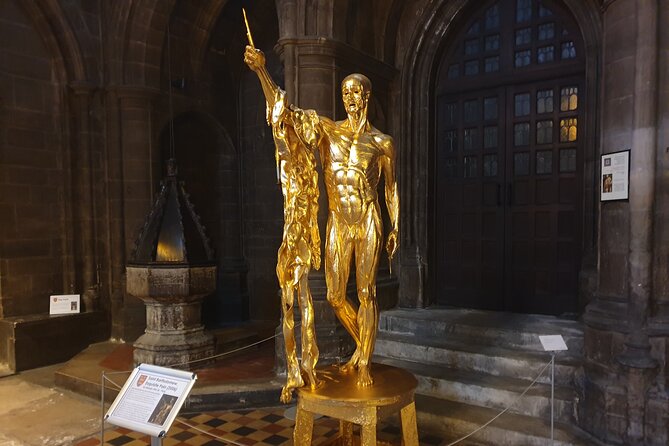
One of the major culture anchors on the route is Church of St. Bartholomew the Great, described as London’s oldest surviving parish church. Admission for this stop is listed as included, which is a real value point: you’re getting at least one paid-entry element wrapped into the overall tour price.
This church stop matters because it ties the city’s survival to continuity. Even as institutions shifted and outbreaks hit, parish life helped anchor communities. That contrast—old structures lasting through repeated crises—is a big part of why this walk feels like more than doom and gloom.
Later, you reach Golden Boy of Pye Corner, described as the site where the Great Fire of 1666 died out, plus an 18th-century wave of ghost hysteria. That pairing is clever. It’s not only about the fire. It’s about how people processed disaster and fear afterward—how rumors, stories, and the supernatural filled in gaps when facts weren’t clear.
Admission at this stop is listed as free, which keeps the walk flowing without extra costs midstream.
Holborn Viaduct and the River Fleet: Victorian London’s largest open-air sewer
The tour then moves to Holborn Viaduct, tied to the River Fleet and described as Victorian London’s largest open-air sewer. This is where you get the city’s “modern” problem-solving era. The story shifts from medieval survival to industrial-era engineering, policy, and the uncomfortable truth of how cities handled waste before modern systems.
It’s a strong stop if you like urban history that connects directly to what you’d notice today. Even without seeing anything underground, the idea of a large open-air sewer reframes the rest of the walk—plague and sickness suddenly become less random and more tied to infrastructure.
Admission is listed as free, and the stop is brief. Don’t expect a museum-style explanation here; it’s more of a sharp historical signpost.
Ye Olde Mitre and the Hospital Museum finish: comfort, then the city’s oldest hospital
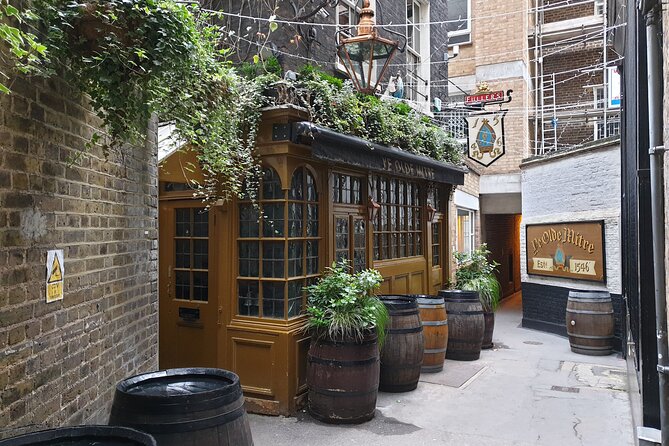
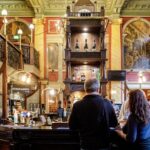
Just before the final site, you stop at Ye Olde Mitre, described as a pub down an alleyway. The reviews emphasize the pub vibe and food favorites like cheese toasties and pork pies, which makes sense for a tour that otherwise stays grim. This is the “human reset” part of the walk, and it helps you keep your energy for what comes next.
Finally, you reach Saint Bartholomew’s Hospital Museum, described as the oldest surviving hospital in the country. This stop gives the tour a closing argument: cities didn’t only suffer and panic. Over time, they also built systems to treat the sick and institutionalize care.
Admission is listed as free here. So your final moments keep the value tight: you’re ending with a major historical institution without a late-stage paywall.
Price, pace, and value of $27.73
For $27.73 per person and about 2 hours, this tour sits in a reasonable range for London, especially because many stops are listed with free admission tickets and one key church admission is included. You’re paying for guiding, connections between sites, and the time-saving benefit of someone pointing out what matters.
The walk is also limited to max 15 travelers, which is often where the value improves. Smaller groups mean you’re less likely to lose the story while catching up with the group, and it’s easier to hear the guide’s explanation.
Pace-wise, expect a steady walking rhythm. It’s short enough that most people can manage, and the tour notes that most travelers can participate. Still, you’ll be outdoors, so plan for weather—this experience is described as requiring good weather.
Should you book this dark history walking tour?
Book it if you like London that feels lived-in and real—markets, institutions, alleyways, and the infrastructure that shaped daily survival. This is also a great choice if you’re tired of the same “London horror” loops and prefer something that covers plague-era life, Victorian sanitation, and hospital history without a single-story focus.
Skip it if you want only light, scenic sightseeing. The subject matter is unavoidably grim, and the tour packs a lot of heavy themes into a short time. If that sounds like too much, save it for a trip day when you’re mentally ready for darker history.
If you do book, wear comfortable shoes, bring a water bottle, and plan your schedule so you can enjoy the final pub area or the easy transport connection afterward.
FAQ
How long is the tour?
The walking tour lasts about 2 hours.
How much does it cost?
It costs $27.73 per person.
What language is the tour offered in?
The tour is offered in English.
Where does the tour start?
It starts at Underground Ltd, Aldersgate St, Barbican, London EC1A 4JA.
Where does the tour end?
It ends on Ely Place, around the corner from Farringdon Station.
How big are the groups?
The tour has a maximum of 15 travelers.
Do I get a mobile ticket?
Yes. The tour includes a mobile ticket.
Are entry tickets included?
Most stops list admission as free. Admission for the Church of St. Bartholomew The Great is listed as included.
What if the weather is bad or I need to cancel?
The tour requires good weather; if it’s canceled due to poor weather, you’ll be offered a different date or a full refund. You can cancel for a full refund up to 24 hours in advance.