REVIEW · LONDON
London: British Museum Archaeology Course and Guided Tour
Book on GetYourGuide →Operated by Spirit of Discovery Tours · Bookable on GetYourGuide
A museum can feel like chaos. This one turns it into a guided archaeology story with real explanations. You’ll walk through the British Museum’s biggest ancient highlights while Rossa connects them to how archaeologists actually work, from artifacts to dating and deciphering writing systems. I love the archaeology-first approach and the way you learn the human story in order, not as random rooms of objects. I also love the hands-on moment with the Royal Game of Ur, which makes ancient Mesopotamia feel suddenly close. One thing to consider: it’s a fast-paced 5.5 hours, so you won’t see every corner of the museum at a relaxed pace.
The best part is that the tour doesn’t just point at famous items. It explains how we know what we know, and why some ancient mysteries still resist simple answers. If you’re the type who wants captions and context at the same time, this fits.
In This Review
- Key takeaways before you go
- Russell Square meeting point and getting inside fast
- A true archaeology course inside the British Museum
- The route through time: from earliest origins to major empires
- Deciphering writing: hieroglyphs, cuneiform, and the real work of translation
- The Royal Game of Ur: where fun turns into context
- Timing, breaks, and what to do about standing
- Price and value: $81 for a guided archaeology lens
- Who should book this British Museum archaeology tour
- Should you book?
- FAQ
- How long is the British Museum archaeology course and guided tour?
- Where do I meet the guide?
- Is the British Museum ticket included?
- Is lunch included?
- Who leads the tour?
- What should I bring?
- Is the tour wheelchair accessible?
- Are large bags or luggage allowed?
- What’s included in the price?
- Can I cancel for a refund?
Key takeaways before you go
- Archaeologist-led tour that focuses on how discoveries become evidence
- Skip-the-line access through a separate entrance, so you lose less time standing around
- Chronological human story from early human origins through major ancient empires
- Deciphering writing systems like Egyptian hieroglyphs and Sumerian cuneiform
- Royal Game of Ur playtime, using rules linked to British Museum scholarship
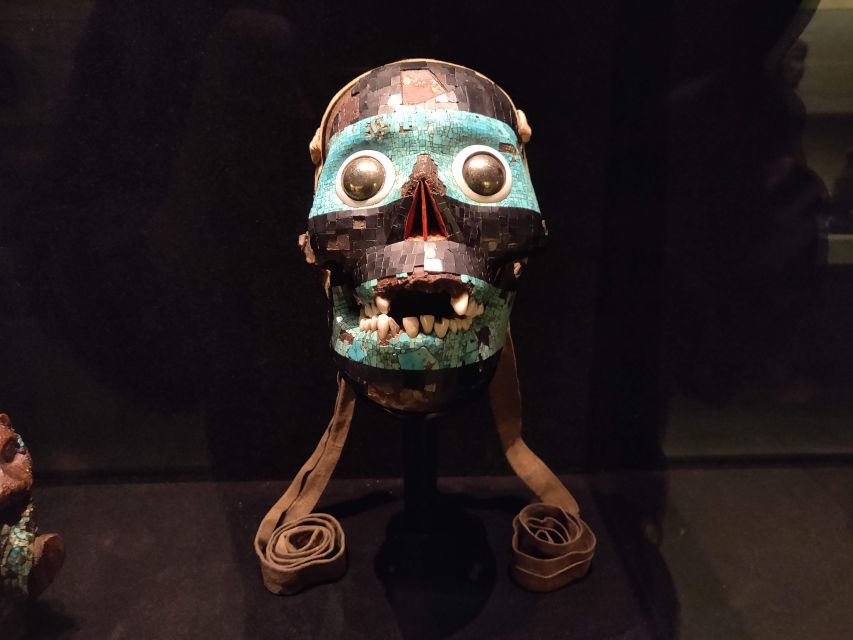
- Guided highlights across many galleries, including Ancient Egypt, Greece/Rome, Vikings, and the Aztecs
Russell Square meeting point and getting inside fast
This tour starts at Russell Square Station, and I like how clear the meeting is. You meet your guide outside the station while they hold an iPad with the local partner name on it. Arrive about 10 minutes early so you’re not rushing while everyone else is collecting their bearings.
From there, you head on foot to the British Museum. The timing matters because this is a 5.5-hour experience inside one of the world’s busiest major museums. The good news: the tour includes entrance access that skips the main line, via a separate entrance. That’s a big deal at the British Museum, where waiting can eat up half your morning if you’re not careful.
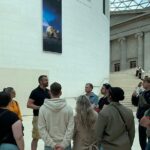
Once inside, you’re not left to wander alone. You stay with Rossa as he moves you through key galleries, steering you toward the objects that best illustrate the story of archaeology and the development of civilizations. The pacing feels like a guided course: you get breaks, you regroup, and you keep moving without feeling like you’re being dragged.
One practical note: this isn’t a bring-everything day. You shouldn’t bring luggage or large bags. Comfortable shoes really matter. The museum is big, and even when the route is guided, you’ll still be standing and walking in different rooms.
You can also read our reviews of more guided tours in London



A true archaeology course inside the British Museum
What makes this experience different is the framing. Instead of only doing the museum’s “greatest hits,” it teaches you how archaeology turns buried leftovers into history.
Rossa walks you through questions like:
- How do ancient objects end up where we find them?
- How do archaeologists decide an age for something?
- Why do written records matter so much?
- What happens when the evidence is incomplete?
That science-and-method focus is where the value lives. You end up looking at famous objects—like the Rosetta Stone type of breakthroughs—and understanding the bigger process behind them: decipherment, context, and interpretation.
I also appreciate that the tour is structured in a way that works for different interests. You’ll get plenty of narrative about Egypt, Assyria, Greece, and Rome. But you also get the “how we know” layer that most casual museum tours skip. It’s the difference between seeing artifacts and learning how archaeologists build arguments from artifacts.
And yes, it stays fun. There’s a point where you learn and play an ancient board game, which sounds small until you realize it forces your brain to treat history as lived experience, not distant textbook content.
The route through time: from earliest origins to major empires
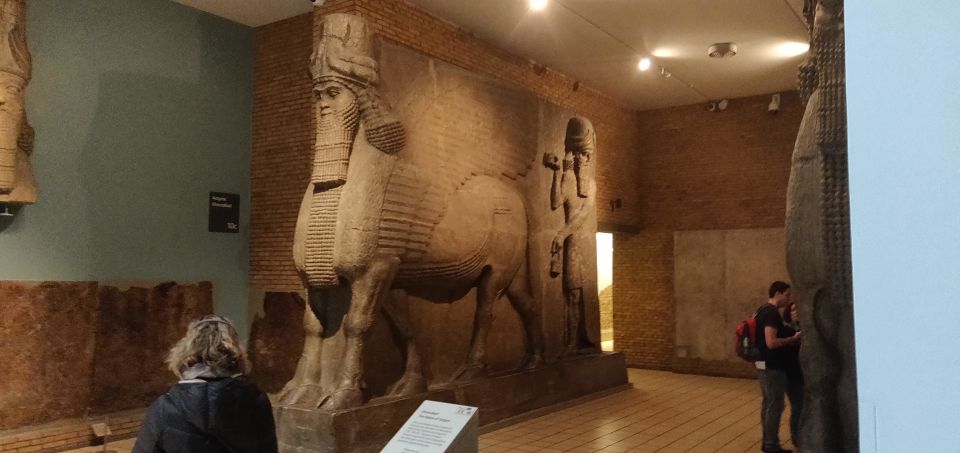
A big strength of the tour is the sense of sequence. You start with early human origins in Africa and move forward toward the first civilizations and cities in Mesopotamia. Then you build from there into major empires—Egypt, Assyria, Greece, and Rome—plus the “what happened after they collapsed” thread that helps you understand why later cultures inherit, revise, or replace earlier ones.
This chronological approach matters because the British Museum can be overwhelming. One room is Egypt, the next is Greece, then suddenly you’re seeing objects from far across the world. Without a storyline, it’s easy to treat everything as separate exhibits. With Rossa, you’re given a path. The artifacts don’t feel like a random collection; they feel like chapters.
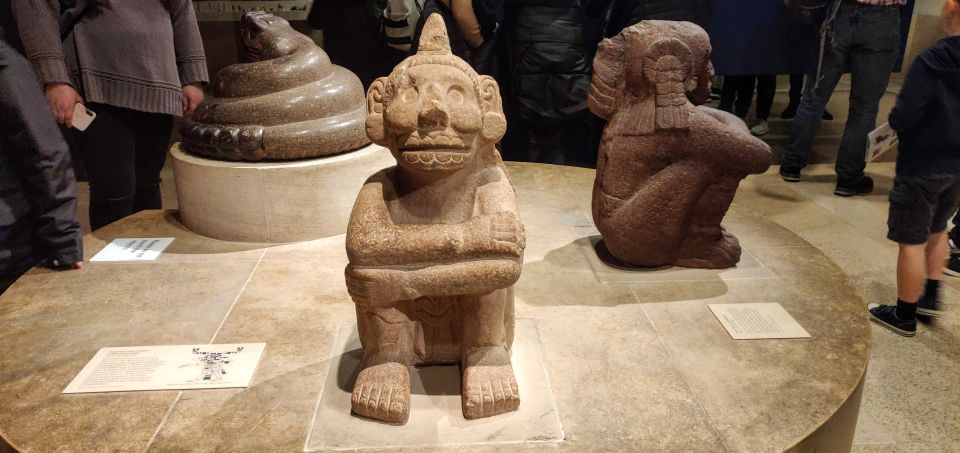
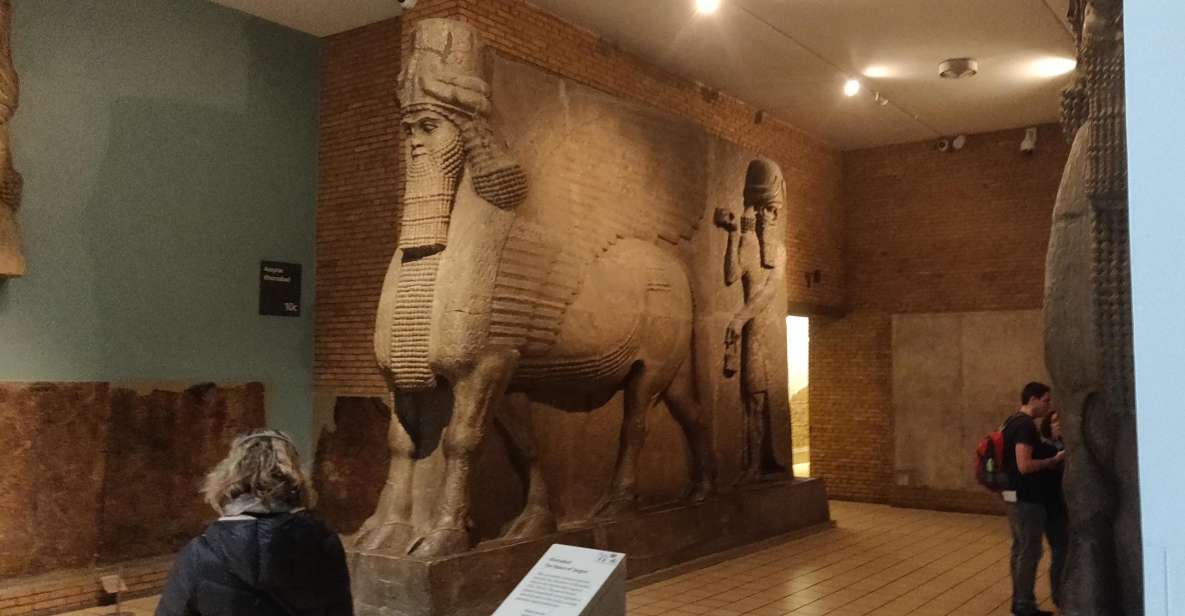
Along the way, you’ll tour key galleries such as Ancient Egypt and Assyria, Ancient Greece and Rome, and also stops connected to the Vikings and the Aztecs. That wider sweep is one reason families and first-timers tend to like this. You’re not locked into one civilization; you’re learning how human civilization trends emerge across different regions.
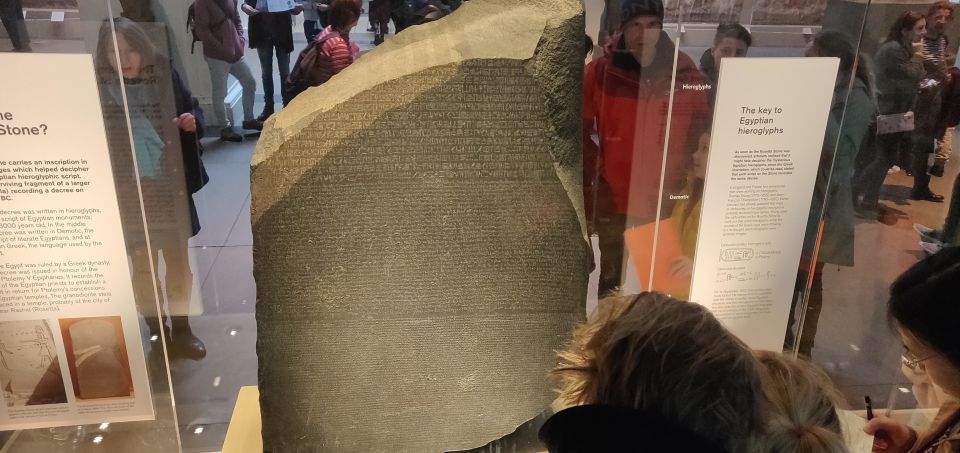
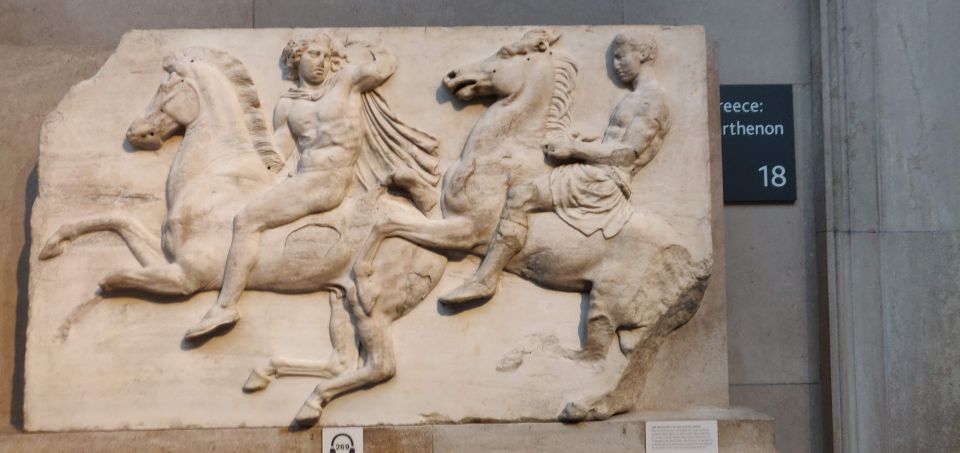
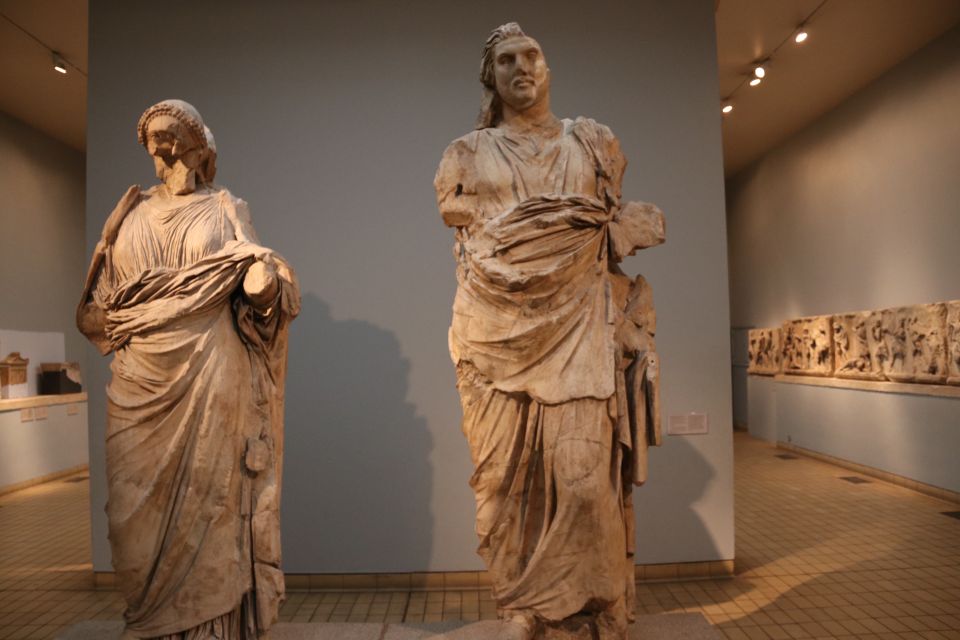
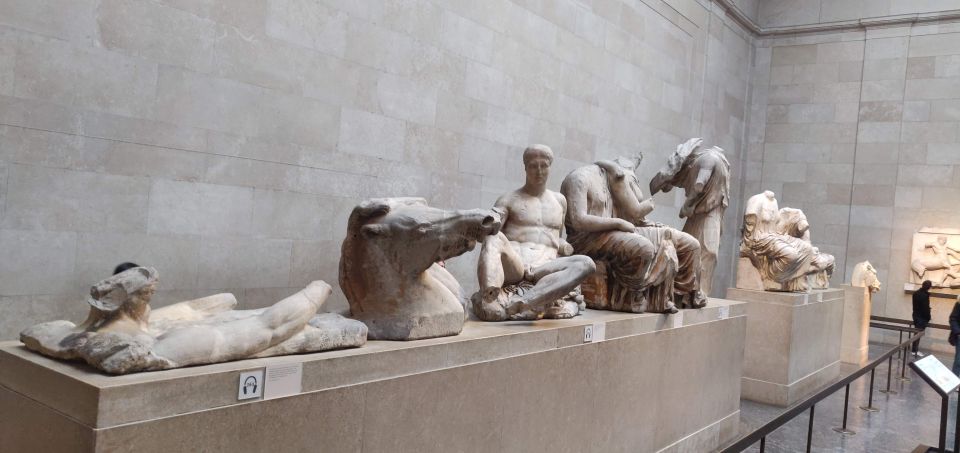
And you’ll hear about major famous items, including the Parthenon Marbles, the Sutton Hoo Helmet, and the Lewis Chessmen—plus connections to major breakthroughs like the Rosetta Stone. The objects become anchors for larger ideas: conquest and empire, trade and technology, and the way writing changes everything.
Deciphering writing: hieroglyphs, cuneiform, and the real work of translation
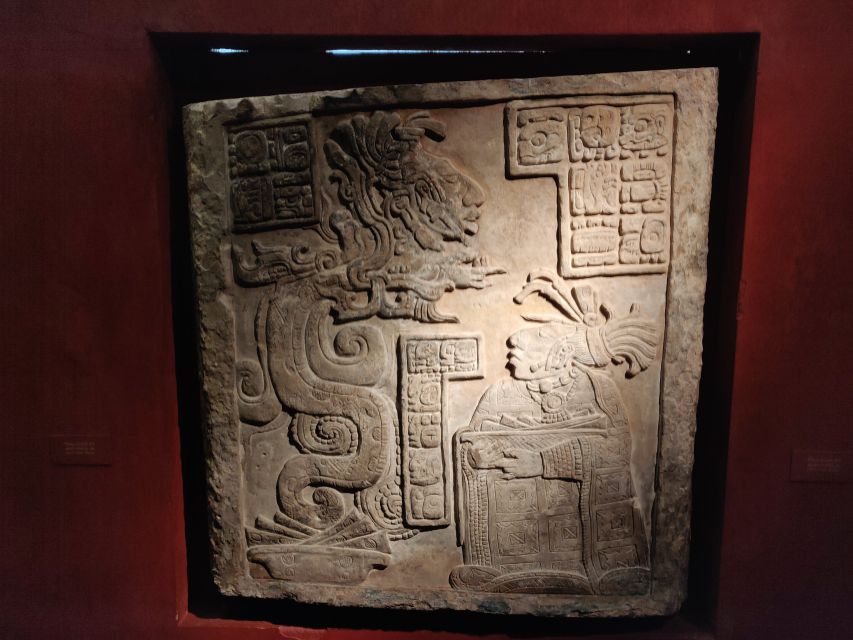
One of the standout parts is the focus on written language as an archaeological superpower. You learn about Egyptian hieroglyphs and Sumerian cuneiform, and why decipherment is such a big deal in world history.
This isn’t taught as magic. It’s taught as method: scholars decode patterns, compare evidence, and work out meanings by matching repeated symbols to known historical contexts. When you understand that process, ancient inscriptions stop looking like decorative symbols and start looking like data.
That shift in how you see writing is worth it on its own, especially if you’ve ever wondered why museums care so much about inscriptions and tablets. The tour makes it clear that writing is one of the fastest ways to move from guessing toward understanding: it records rules, names, transactions, stories, and power.
You also learn how archaeology itself uses science. Dating is explained in the practical sense—how relics connect to time through evidence and context, and how ancient sites become buried. Even if you don’t walk out as a new archaeology grad, you’ll leave with a mental toolkit for understanding museum labels and for asking better questions in any museum.
The Royal Game of Ur: where fun turns into context
The British Museum isn’t only about looking. This tour adds a moment where you handle history in a playful way. You get to play the Royal Game of Ur, one of the world’s oldest board games.
What I like here is the connection to scholarship. The rules you use are tied to how British Museum scholars deciphered the evidence. So while you’re concentrating on the mechanics of the game, you’re also indirectly learning about decipherment and interpretation—again, the same archaeology method, just in a more human way.
It’s also a great reset in the middle of a longer day. The tour runs for 5.5 hours, and the best tours build in moments that keep energy up. This one does: you sit, you listen, and then you play. People who normally get restless in museums often perk up during this section.
If you’re going with kids or teens, this part can be the difference between a “long museum visit” and a day they actually talk about later.
You can also read our reviews of more museum experiences in London




Timing, breaks, and what to do about standing
Five and a half hours sounds long, but the tour avoids the typical museum-tour problem where you just stand in one spot and hope you can hear. Rossa paces the experience with stops and breaks, and you get a steady rhythm of explanation and moving to the next gallery.
There are also practical comfort tips worth taking seriously. One helpful approach is to plan your seating. At the British Museum entrance area, portable stools are available, and some visitors find it smart to grab one when you can. Since the day involves standing, having that option changes the comfort level.
If you’re bringing a packed lunch, you’ll likely want to think about where and when you can eat, since lunch is not included. And even if you buy something inside, budget a bit of time and money so you’re not hurried. A water bottle is also a smart move, especially if you arrive early or the museum is busy.
The pacing can feel intense in a good way—like a focused class rather than an aimless stroll. Just remember: you’re seeing essentials. If you want to linger over every object, you’ll probably want to add your own museum time after the tour.
Price and value: $81 for a guided archaeology lens
At $81 per person for a 5.5-hour experience, this isn’t the cheapest museum tour in London. But it’s also not trying to be. The value comes from what’s included and what you get for your time.
You’re paying for:
- A qualified archaeologist guide (Rossa)
- A guided route through major galleries
- Entrance included (the British Museum entry is free, and the tour provides the guided access)
- Skip-the-line entry via a separate entrance
For me, the best value signal is the guide role. When the tour is taught as archaeology—dating, burial processes, deciphering languages, and building history from evidence—you’re not just paying for movement through rooms. You’re paying for interpretation.
Also, the tour includes a guided interaction with the Royal Game of Ur. That’s not a standard “sit and listen” format, and it’s a memorable anchor for understanding ancient Mesopotamia.
Drawback on value: you won’t cover everything. That’s not a scam; it’s physics. The museum is massive, and no 5.5-hour route can do it all. You’re getting the essentials plus the method that helps you explore the rest afterward.
Who should book this British Museum archaeology tour
This is a strong fit if you’re:
- A history buff who likes context, not just highlights
- A first-time British Museum visitor who wants help picking what matters
- A family traveling with kids or teens who can handle a structured activity
- Someone who enjoys the “how we know” side of history—science, translation, and dating
It also works well if you have limited mobility. The tour is described as wheelchair accessible, and the experience is said to be suitable for people with limited mobility. If you have special requirements, it’s worth contacting the operator ahead of time.
If you’re a minimalist who only wants a quick, casual walk through the most famous rooms, you might find the archaeology focus a bit intense. But if you’re the type who gets satisfaction from explanations, this is exactly the kind of day that changes how you see a museum.
Should you book?
Yes, I think you should book this if you want more than a highlight reel. The pairing of a structured archaeology storyline with major artifact stops makes the British Museum feel understandable instead of overwhelming. Add in Rossa’s pacing and the Royal Game of Ur moment, and you get a tour that’s both educational and genuinely engaging.
I’d only hesitate if you’re hoping for maximum free time to roam on your own, or if you want a shorter museum visit. This is a course. Plan your shoes, think about lunch, and accept that you’re seeing the essentials on purpose.
FAQ
How long is the British Museum archaeology course and guided tour?
It lasts 5.5 hours.
Where do I meet the guide?
Meet outside Russell Square Station. The guide will hold an iPad showing the local partner name.
Is the British Museum ticket included?
Yes. Entrance is included, and the tour uses a separate entrance for skip-the-line access.
Is lunch included?
No. Lunch is not included.
Who leads the tour?
A qualified archaeologist guide leads the experience, and the tour is delivered in English.
What should I bring?
Wear comfortable shoes. If you plan to eat, consider bringing a packed lunch or budget time to buy food inside.
Is the tour wheelchair accessible?
Yes, the tour is wheelchair accessible, and it’s described as suitable for people with limited mobility.
Are large bags or luggage allowed?
No. Luggage or large bags are not allowed.
What’s included in the price?
A qualified archaeologist guide, entrance, and a guided tour are included.
Can I cancel for a refund?
Yes, free cancellation is available up to 24 hours in advance for a full refund.