REVIEW · LONDON
Shakespeare in the City Walk – In Shakespeare’s footsteps North of the Thames
Book on Viator →Operated by City Secrets Walks · Bookable on Viator
Shakespeare, minus the museum labels. This is a walking tour with a twist, taking you through the Blackfriars and City of London lanes where plays, money, religion, and family all seem to show up in stone and street signs. You follow the Bard’s footsteps across spots most people rush past, with stops that include public monuments plus church secrets and odd little clues that feel made for a plot.
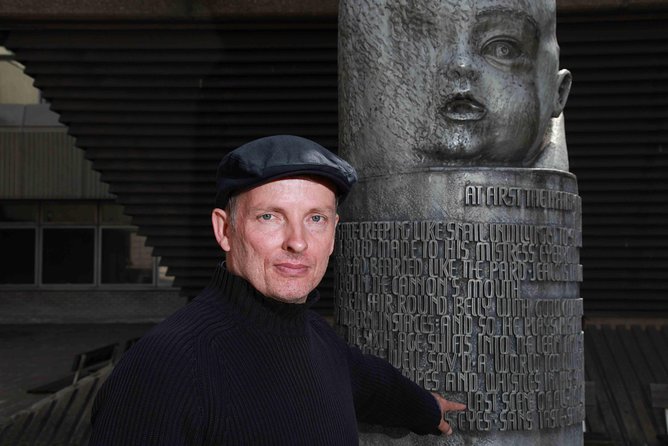
I especially like how Declan brings it to life. This is not a lecture: he’s a former professional actor, and at one point on Queen Victoria Street he performs a full Shakespeare speech from a strange totem-style monument. I also love the way the route mixes famous landmarks with the kind of quiet side-streets you’d never find on a map, including a Shakespeare statue people commonly miss and several locations tied to the Blackfriars Theatre and nearby monastery remains.
One possible drawback: this is still a walking tour. Expect about 2 hours outdoors (it runs in all weather) and a moderate walking pace, so wear decent shoes and be ready for London sidewalk time. If you’re hoping for long indoor stops, note that the tour includes major sights like St Paul’s Cathedral but you don’t go inside.
In This Review
- Key highlights before you walk
- Getting started: finding the right Blackfriars stop and why it matters
- Stop-by-stop: Blackfriars, theatres, monasteries, and the real money behind the plays
- Quiet lanes and St Andrew’s Hill: where houses, sermons, and writing might connect
- Queen Victoria Street to St Paul’s: speeches, heraldry, and the Bard’s cosmic side
- Cheapside and Love Lane: vocabulary, religion, and why not every cute street name is romantic
- London Wall and St Giles Cripplegate: marriage regrets, actor worlds, and a goodbye speech
- Price and value: a small-group Shakespeare experience for $20.83
- Logistics, pace, and who it suits best
- Should you book this Shakespeare in the City Walk?
- FAQ
- FAQ
- Where is the meeting point?
- Where does the tour end?
- How long is the walk?
- What time does it start?
- What language is the tour offered in?
- How much does it cost?
- Is the tour suitable for children?
- What fitness level do I need?
- Does the tour run in bad weather?
- What if I need to cancel?
Key highlights before you walk
- Declan’s actor delivery: he performs an entire Shakespeare speech on Queen Victoria Street.
- The Blackfriars Theatre connection: you stop at the original Blackfriars Theatre location and hear why it was tied to money and status.
- Church surprises near St Andrew’s Hill: there’s a hidden Shakespeare sculpture (praying) plus an important document tied to the area.
- Totems, plaques, and coat-of-arms talk: you’ll see a totem pole made from a famous Shakespeare speech and learn what the College of Arms and family coat-of-arms meant.
- A route built for street-level storytelling: the walk links Shakespeare to King James and to the next-door religious and theatrical world.
Getting started: finding the right Blackfriars stop and why it matters

You meet at Underground Ltd on Blackfriars Road, right by Blackfriars Underground Station. This matters because there’s also a Blackfriars Overground stop, and the tour specifically says to avoid going south of the river to the overground station. The practical point: follow the Underground instructions closely so you land at the correct spot and don’t waste time.
When you arrive, look for Declan standing near the station exit with a sign on his rucksack featuring Shakespeare’s face. There’s only one exit, which makes the start easier than it sounds, especially if you’re arriving a few minutes early.
The whole opening sets the tone: you’re not just sightseeing. You’re starting at a real London node tied to Shakespeare’s north-of-the-river world, and you’ll feel that you’re heading into places that connect together like scenes.
You can also read our reviews of more walking tours in London



Stop-by-stop: Blackfriars, theatres, monasteries, and the real money behind the plays
The first stretch of the walk leans into Blackfriars as a neighborhood idea, not just a name. You’ll begin by learning about a Shakespeare statue most people miss—one of those quick stops that only takes a few minutes but reorients how you’ll look at the rest of the route. It’s a small warm-up: once you’ve noticed one Shakespeare reference you didn’t know existed, the rest of the tour starts to click.
Next comes a bigger subject: the original Blackfriars Theatre location, and the way theatre culture worked when Shakespeare was building his reputation. The tour frames it around the idea that to attend these productions you often had to be rich—so the theatre wasn’t just entertainment. It was social proof.
Then you pause at Ireland Yard, where there’s a remaining fragment of the Blackfriars Monastery. This is the kind of stop that makes the neighborhood feel older than the usual tourist London view. You hear how Shakespeare’s thematic obsessions connect to the mix of religious life, politics, and moral questions that shaped the era’s storytelling.
These early points are valuable because they shift Shakespeare from a distant writer to a person moving through a layered city—where faith, wealth, and public performance were tangled together.
Quiet lanes and St Andrew’s Hill: where houses, sermons, and writing might connect
After the monastery fragment, you move into calmer streets that feel like they’re hiding in plain sight. At Carter Lane, the tour points you toward a link between Shakespeare and King James. Even without dramatic action on the street itself, the story turns the lane into a timeline: this isn’t only where Shakespeare lived in legend, it’s where his world intersected with power.
St Andrew’s Hill is one of the longer and more intriguing stops. The tour discusses the site of a Shakespeare house in London, plus its fate. There’s also a specific creative angle: the play is said to have likely been written in this area. Even if you treat that as a careful best-guess rather than a hard fact, the point is how place and process come together.
Inside a church stop on this section, you get a pair of details that feel made for people who enjoy the odd corners of London:
- a hidden sculpture of Shakespeare praying
- an important document tied to the location
The tour also includes a reference to a researcher who made Americans proud, which you’ll understand in context once Declan explains the local thread. It’s one of those moments where the tour links London to a broader story beyond the immediate street.
Queen Victoria Street to St Paul’s: speeches, heraldry, and the Bard’s cosmic side
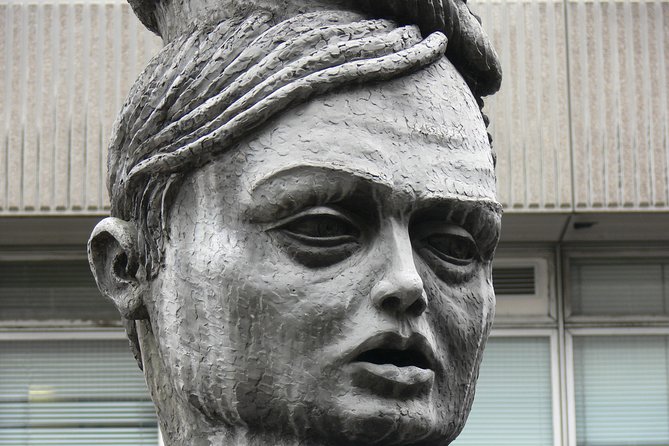
Then the route turns theatrical again. On Queen Victoria Street, you’ll see an extraordinary totem pole made from a famous Shakespeare speech. Declan doesn’t just describe it—he delivers the speech fully. This is where the small-group nature helps: you can actually hear and follow the performance without the usual group chaos.
From there, you shift into heraldry and status at the College of Arms and the Shakespeare family coat of arms. You’ll learn why an honor arrived late and how Ben Jonson joked at Shakespeare’s expense. The tour also covers Shakespeare’s children, which adds emotional weight to what could otherwise be a purely “facts and dates” segment.
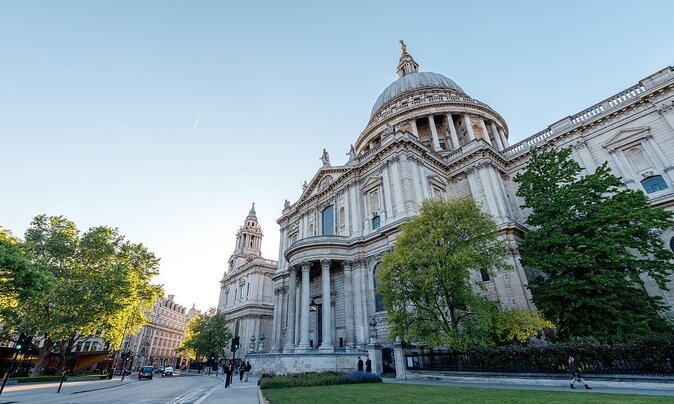
You keep moving toward St Paul’s Cathedral for a major sight moment. The tour delivers a revelation about the cathedral, while also connecting it to Shakespeare’s work—his sonnets and a reasonable interpretation of his sexuality. The key practical note: you don’t go inside. This is a pause for viewing and interpretation, not a timed-entry attraction.
Declan’s favorite four-word Shakespeare line also appears here, shared as a kind of cosmic closer. You don’t need to know the phrase in advance—just stay alert because the tour uses it like a punchline for the theme of the day.
If you’re the type who likes your literature tied to atmosphere, this is a strong stretch. If you want only biographical facts, you might still enjoy it, because the guide balances meaning with story.
Cheapside and Love Lane: vocabulary, religion, and why not every cute street name is romantic
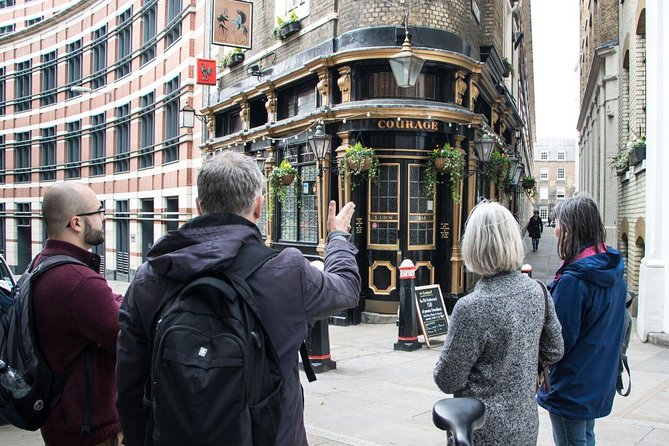
The Cheapside section shifts gears into language. You’ll hear about Shakespeare’s vocabulary and the idea that it wasn’t enough on its own—meaning his skill wasn’t only word choice, but the way he shaped thought and character. The tour also points out the location of a pub he drank in and connects it to who else drank there, which keeps the Bard grounded as a person in everyday London.
Religion enters too, with the tour discussing why Shakespeare was lonely and reclusive. It’s not presented as a one-note tragedy. Instead, it ties the theme back to what he wrote and why those themes landed on audiences.
Then you move to Love Lane. You’ll get a bust of Shakespeare and learn about the men who honored him—plus why some plays might not exist without the people who supported or shaped that work. You also get revelations about writing style, which is where the tour becomes satisfying even if Shakespeare isn’t your favorite author today.
Still, the tour does warn you not to get starry-eyed about Love Lane. That’s smart. A charming name can trick you into thinking the story is only sentimental. Here, the meaning is more complicated: remembrance, admiration, and mythology all get mixed together.
You can also read our reviews of more city tours in London






London Wall and St Giles Cripplegate: marriage regrets, actor worlds, and a goodbye speech
London Wall is where the route touches a second Shakespeare house. The talk includes why Shakespeare ended up in that area and the full story of how a marriage happened and then later felt regrettable. This is one of those segments that makes the tour feel personal without turning it into gossip. The street becomes a reminder that famous works often grow from messy real life.
At St Giles Cripplegate, you slow down again with a church Shakespeare knew. The tour covers the case of Shakespeare’s brother Edmund, described as a sad story tied to the area. It also mentions the church’s connection to the two best-known actors of Shakespeare’s age. Again, no museum-style display—just names, context, and the way performance culture lived in religious spaces.
The closing moment is powerful if you like theatre pacing. Declan finishes with another complete and haunting speech from Shakespeare’s last play. It’s about saying goodbye, and the tour frames it as Shakespeare turning cosmic at the end—like the writing didn’t get smaller with age. It’s a strong way to end a walk, because you leave with a sound in your head, not just photos in your phone.
After that, you can walk with Declan to Barbican Underground Station to connect with the train lines. It’s a practical finish and helps you avoid the awkward shuffle that sometimes happens when tours end in the middle of a transit maze.
Price and value: a small-group Shakespeare experience for $20.83
At $20.83 per person for about 2 hours, this sits in the sweet spot for value in London. You’re not paying for a big-ticket attraction. You’re paying for an expert guide, live performance, and time spent in locations that are otherwise hard to connect into a single story.
A few things make the price feel fair:
- You get a professional guide and live entertainment, not just narration.
- The group stays small, with a maximum of 15 people per booking, which helps keep the performance audible.
- Many stops are structured as short “scene changes,” so you feel you used your time rather than drifting between random plaques.
If you want to compare, think of this as buying a guided storytelling pass through multiple neighborhoods, with a guide who knows how to make Shakespeare’s London feel present.
Logistics, pace, and who it suits best
This walk is described as having a moderate physical fitness level. That doesn’t mean it’s extreme, but it does mean you’ll benefit from comfortable shoes and a plan for normal walking time between stops.
It operates in all weather, so you should dress for rain or wind, even if the morning looks fine. The route also includes church stops and street corners, so plan for uneven sidewalks.
Age-wise, it’s recommended for kids 10 and above, and children must be accompanied by an adult. This is usually a good age range for a guided literature story that stays visual and location-based.
Who will like it most:
- People who enjoy Shakespeare but don’t want only biographies and dates
- Readers who like hearing how language, theatre, and daily life connect
- Anyone who loves walking tours that feel specific rather than generic
Should you book this Shakespeare in the City Walk?
If your ideal London day includes short stops, clear context, and a guide who performs, this is an easy yes. I’d book it if you want Shakespeare tied to real streets north of the Thames, with Declan’s acting-style storytelling and a route that makes you look twice at monuments and churches.
I’d think twice only if you strongly prefer indoor attractions, or if you hate walking for two hours in changing weather. Otherwise, this is a smart way to start (or refresh) your Shakespeare focus—and it’s the kind of tour that leaves you with lines and places connected in your mind.
FAQ
FAQ
Where is the meeting point?
You meet outside Blackfriars Underground Station at Underground Ltd, Blackfriars Rd, London EC4R 2BB. The guide stands near the station exit with a Shakespeare-face sign on their rucksack.
Where does the tour end?
The tour ends at Barbican Underground Station, right at the station on the Circle, Metropolitan, and Hammersmith & City lines (London EC1A 4JA).
How long is the walk?
The tour lasts about 2 hours.
What time does it start?
The start time is 11:00 am.
What language is the tour offered in?
The tour is offered in English.
How much does it cost?
It costs $20.83 per person.
Is the tour suitable for children?
Children must be accompanied by an adult, and the recommended age is 10 years and above.
What fitness level do I need?
You should have a moderate physical fitness level, since it’s a walking route.
Does the tour run in bad weather?
Yes, it operates in all weather conditions, so dress appropriately.
What if I need to cancel?
You can cancel for a full refund up to 24 hours in advance of the experience start time.