REVIEW · LONDON
History of London Photography Tour
Book on Viator →Operated by Westland Place Studios · Bookable on Viator
London looks different through a lens.
This 2-hour London photography tour pairs a walking route through the City of London with a professional photographer guide who helps you frame shots beyond the usual postcard angles. I like that it mixes working camera advice with “look here” moments at real landmarks, from St Mary Woolnoth to St Paul’s. You get a lot of visual variety in a short time, plus context that makes the stone-and-steel details feel more meaningful.
Two things I especially like: first, the guide’s hands-on help with composition and lighting, not just sightseeing talk. Second, you end at Tate Modern, so your last photos aren’t just churches and banks—they’re modern art housed in a former power station. One possible drawback is that this route leans toward big, famous City sights and iconic views; if you’re chasing only obscure backstreet scenes, you might feel like you wanted more off-the-grid hunting.
In This Review
- Key Highlights You’ll Feel Right Away
- Why This 2-Hour London Photo Tour Works
- From St Mary Woolnoth to the City’s Deep Roots
- Royal Exchange Building: Turning a Business Icon Into Art
- Bank of England: The Kind of Facade You Can Shoot a Dozen Ways
- Guildhall Gothic: Getting Those Big Lines Without Getting Lost
- St Mary Le Bow Bells and St Paul’s Cathedral Stories
- Firefighters Memorial and the Millennium Bridge for Emotion + Motion
- Tower Bridge Panoramas and Tate Modern’s Power-Station Look
- What the Photographer Guide Helps You Actually Do
- Who Should Book This London Photography Tour
- Price and Practical Stuff That Affects Your Photos
- Should You Book This London Photography Tour?
- FAQ
- FAQ
- How long is the London photography tour?
- How much does the tour cost?
- Where does the tour start and end?
- Do I need a camera?
- Are admissions required for the stops?
- What is the minimum age?
- How many people are in the group?
- Is the tour dependent on weather?
- Is the tour refundable if I cancel?
Key Highlights You’ll Feel Right Away
- Pro-led camera coaching: you’ll get practical tips on how to shoot what you see, not just where to stand
- City of London focus: St Mary Woolnoth, the Royal Exchange area, Bank of England, Guildhall, and more
- Architecture at multiple scales: interiors aren’t the point; you’re shooting façades, angles, and lines outdoors
- Memorial + bridge drama: the Firefighters Memorial and Millennium Bridge add emotion and motion to your set
- Easy, well-timed route: about 2 hours with roughly 10–20 minutes per stop, ending at Tate Modern
- Free admission at each stop: no paid entry surprises during the photo sessions
Why This 2-Hour London Photo Tour Works
For me, the sweet spot here is time. Two hours is short enough that you can fit it into a busy day, yet it’s long enough for a guide to nudge your camera habits and get you a small, usable photo “portfolio” worth keeping. With a maximum of 18 people and a mobile ticket, it also feels manageable.
Value matters, too. The tour costs $71.63 per person, and each of the listed stops has free admission. That means you’re paying mainly for the guide, photography advice, and route planning—not for entry fees.
There’s also a practical reality check: you’ll want a camera (or at least a camera phone). The whole point is shooting and being coached while you do it, so arriving without one will blunt the experience.
You can also read our reviews of more historical tours in London
From St Mary Woolnoth to the City’s Deep Roots
You start at IMPRINT Church London: St Mary Woolnoth on Lombard Street. This isn’t just a pretty church exterior. It’s been a worship site for at least 2,000 years, and traces of Roman and pagan religious buildings were reportedly found under the present church foundations. The current building was rebuilt in 1727 and commissioned from Nicholas Hawksmoor.
What I like for photography is the mix of “old layer” storytelling with crisp, workable architectural shapes. You can treat this stop like your warm-up: find a strong angle, then adjust framing based on what the guide suggests for composition and light. Even if you’re not chasing ultra-wide shots, there’s enough texture here for close-ups and details that don’t look like every other London church photo.
Royal Exchange Building: Turning a Business Icon Into Art
Next up is the Royal Exchange Building. In the City, this area often gets photographed straight-on from the main pedestrian paths, but the tour is about making you think in angles and viewpoint shifts. You’ll get direction for how to photograph it so the building looks intentional, not accidental.
For your photo set, this stop helps you do two things quickly:
- build a “strong lines” habit (straight edges, symmetry, or converging perspective)
- learn how to include people or street elements without letting them ruin the frame
You’ll only have about 10 minutes here, so it’s the kind of stop where the guide’s quick feedback pays off most.
Bank of England: The Kind of Facade You Can Shoot a Dozen Ways
The Bank of England is packed with history and architecture, which is exactly why it’s a great teaching location. You’ll get help finding angles that make the building feel monumental rather than flat.
If you’re tired of auto mode, this is where you’ll likely start experimenting. The guide’s role is to help you connect the technical side—like how you expose a bright façade or balance shadows—with what you’re actually trying to capture. You’ll get around 15 minutes at this stop, so use it to test a couple of framing styles, then refine.
Guildhall Gothic: Getting Those Big Lines Without Getting Lost
At Guildhall, you’re looking at Gothic splendour from a building reportedly around 800 years old. Gothic architecture can be tricky on camera because there’s so much detail that it’s easy to either overstuff the frame or lose the “main idea.”
This is a strong stop for:
- vertical lines that emphasize height
- repeating shapes and stonework patterns
- compositions that give the viewer a clear focal point
You’ll have about 15 minutes, which is enough time to try one wide establishing shot and one tighter detail shot without feeling rushed.
You can also read our reviews of more photography tours in London

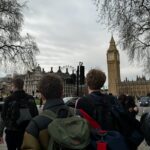
St Mary Le Bow Bells and St Paul’s Cathedral Stories
St Mary Le Bow Church is next, and the tour leans into London’s living folklore: true Cockneys are said to be born within earshot of the bells of St Mary-le-Bow. That detail matters for photography because it gives you a reason to think about the church in the context of people and sound—even if you’re photographing the stone.
Then comes the big finale of the classic London skyline: St Paul’s Cathedral. This is the nation’s church and it’s also a timeline of major events. The tour highlights moments like:
- the marriage of Catherine of Aragon to Prince Arthur in 1501
- Queen Elizabeth I visiting after the defeat of the Spanish Armada in 1588
- the execution of Guy Fawkes and his co-conspirators in 1606 for an attempt to blow up Parliament
The guide helps you take memorable photos of this iconic building, which usually means you’ll spend time adjusting viewpoint and framing choices so your images feel deliberate. With about 20 minutes at St Paul’s, it’s one of the best stops to slow down a touch and shoot with intention.
Firefighters Memorial and the Millennium Bridge for Emotion + Motion
After St Paul’s, you’ll visit the National Firefighters Memorial, created by sculptor John Mills. It commemorates firefighters who helped London survive the Blitz, including both men and women. The tour frames them as the heroes with grimy faces Winston Churchill referenced.
For photos, memorials are about mood. You’ll get direction for making your images dramatic, with the statue set among London’s major landmarks. Even in daylight, memorial photography rewards stronger contrast and a cleaner composition so the subject reads clearly.
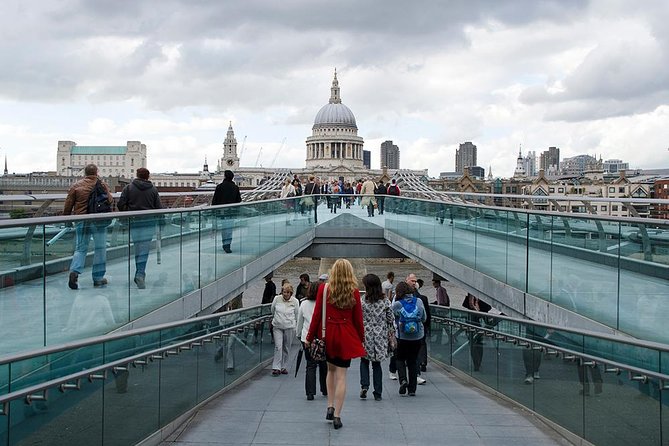
Then you move to the Millennium Bridge. This is the 325m long London Millennium Footbridge, linking Tate Modern with the City of London and St Paul’s. You’ll get guidance from the guide, and you’ll likely find this stop is where motion and framing choices come into play—especially if you experiment with how the bridge aligns with the skyline behind it. You’ll have about 10 minutes.
Tower Bridge Panoramas and Tate Modern’s Power-Station Look
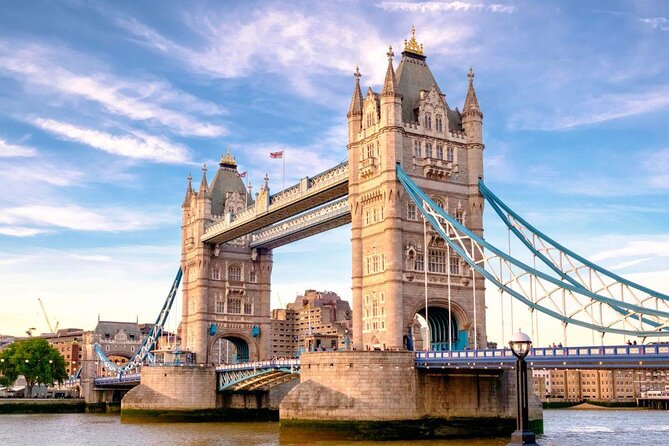
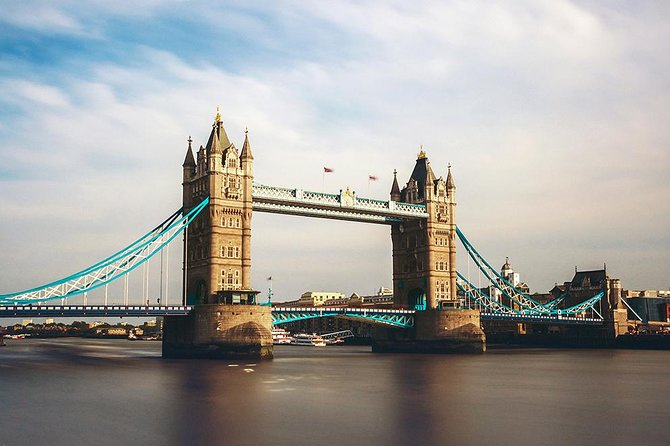
You’ll get a prime change of pace at Tower Bridge with panoramic views of the River Thames and the bridge itself. This is a quick 10-minute stop, so your best move is to pre-decide what you want: a wide panorama feel, a tighter composition, or a shot that shows the bridge with river context.
The tour ends at Tate Modern. The building is looming brick architecture that dominates the South Bank, originally the Bankside Power Station designed by Sir Giles Gilbert Scott (the architect also tied to Battersea Power Station). Tate Modern is Britain’s national gallery of international modern art, and it’s a fitting end point because it shifts your images from historic stone to modern institutional lines.
With about 10 minutes at the final stop, the goal is to grab a few strong frames you can build a personal set around: one establishing image, and maybe one tighter shot that highlights texture or geometry.
What the Photographer Guide Helps You Actually Do
This isn’t a lecture. It’s a guided walk with real shooting moments. The best part is that you’re learning the why behind your camera choices while you’re standing in front of the scene.
Across the experience, the guide’s feedback centers on:
- composition: how to place buildings, lines, and details inside the frame
- lighting: how to handle brightness, shadows, and contrast while you shoot
- camera technique prompts that get you off auto mode and into decision-making
One recurring theme from past participants is that the leader actively supports people who aren’t fully dialed in. For example, a guide named Richard was praised for helping participants who needed to catch up on camera settings before the walking route began. That kind of start matters because it gives you confidence from the first stop, instead of making the tour feel like a test you missed.
The vibe also seems intentionally relaxed. If you’re rusty or you’ve been leaning on automatic settings for too long, this gives you a reason to experiment without the pressure of a private lesson.
Who Should Book This London Photography Tour
This is a good fit for:
- tourists who want more than generic sightseeing photos
- locals who know the landmarks but want fresh angles and a better eye for light
- people with any camera skill level who want hands-on prompts and a clear route
It also works well if you’re somewhere in the middle: not a brand-new photographer, but not trying to run a full-on workshop either. The group is capped at 18, and the tour is structured around short, manageable photo blocks.
One detail to note: the minimum age is 18. If you’re traveling with younger kids, this probably isn’t the right match.
Price and Practical Stuff That Affects Your Photos
At $71.63 per person for about 2 hours, the value comes from the combination of:
- a professional photographer guide
- a planned route with major City landmarks
- practical shooting advice during the walk
- free admission at each stop listed on the route
You’ll get the most out of it if you bring a camera or camera phone you already understand. The tour explicitly says you need one to get the most from it, which makes sense—because you can’t apply composition or exposure tips without shooting.
Also keep weather in mind. The experience requires good weather, and if it’s canceled due to poor weather you’ll be offered a different date or a full refund. Since the tour is walking and outdoors by design, this is one of those London plans where the sky matters.
Should You Book This London Photography Tour?
I’d book it if your goal is simple: get a guided, camera-focused walk through the City of London and the St Paul’s area, with a pro guiding your framing and helping you see familiar landmarks in a new way. The route ends at Tate Modern, so you also get a modern-art power-station photo finish rather than stopping at the last church.
I’d hesitate if you only want tiny, obscure backstreets or you’re expecting a route that skips recognizable icons entirely. This is still a “see the sights” photo tour—just with technique coaching and a more artistic approach.
If you’re the type who likes learning while you walk and you want a short photo project you can actually use later, this is a strong choice.
FAQ
FAQ
How long is the London photography tour?
The tour lasts about 2 hours.
How much does the tour cost?
The price is $71.63 per person.
Where does the tour start and end?
It starts at IMPRINT Church London: St Mary Woolnoth, 10–13 Lombard St, London EC3V 9AN, and ends at Tate Modern, Bankside, London SE1 9TG.
Do I need a camera?
Yes. You’ll need a camera or a camera phone to get the most out of the tour.
Are admissions required for the stops?
Each listed stop on the route notes admission is free.
What is the minimum age?
The minimum age is 18.
How many people are in the group?
The tour has a maximum of 18 travelers.
Is the tour dependent on weather?
Yes. The experience requires good weather, and if it’s canceled due to poor weather you’ll be offered a different date or a full refund.
Is the tour refundable if I cancel?
The experience is non-refundable and cannot be changed for any reason.