REVIEW · LONDON
London: 2-Hour Guided Tour of the British Museum
Book on GetYourGuide →Operated by My tour London · Bookable on GetYourGuide
The British Museum can swallow your day. This 2-hour guided tour helps you grab the best anchors of human culture, starting with ancient Egypt and quickly moving through Greece and Rome. I like that you get a licensed guide who can turn crowded galleries into a clear story, not a maze. I also like the focus on real turning points, especially the Rosetta Stone and the ideas tied to it. One watch-out: if your group includes mixed languages, explanations can feel split, so you may want to confirm the language setup.
Logistically, this tour is built for momentum. You meet your guide right after security at the British Museum portals (on the stairs near the pillars), and you’ll get museum tickets delivered about 1 hour before on WhatsApp. The express security check is a practical win. Still, keep your expectations tight: at 2 hours, you’re seeing remarkable highlights, not every masterpiece.
In This Review
- Key highlights to look forward to
- Entering The British Museum Portals Without Losing Time
- Egypt First: Rosetta Stone, Pharaonic Relics, and Hieroglyphics
- Greece Highlights: Parthenon Sculptures and Western Thought
- Ancient Rome: Emperors, Engineering, Mosaics, and Gods
- Sutton Hoo: Anglo-Saxon Treasures and Early England Clues
- Easter Island Through Hoa Hakananai’a: Spiritual Art at Museum Scale
- The Global Finale: How the Museum Builds One Human Story
- Price and Value: Does $64 Make Sense for 2 Hours?
- Who This Tour Is Perfect For
- Should You Book This British Museum Tour?
- FAQ
- Where do I meet my guide for the British Museum tour?
- How do I get my tickets?
- Is the entry ticket included?
- Does this tour help me skip security lines?
- How long is the tour?
- What languages are available?
- Is the tour wheelchair accessible?
- What should I bring?
- Is free cancellation available?
- Can I reserve first and pay later?
- If you want, tell me your travel dates and which language you’ll join, and I can help you pick the most sensible starting time for your day at the museum.
Key highlights to look forward to
- Licensed guidance that ties objects together instead of listing dates
- Rosetta Stone + Egyptian hieroglyphics explained with a clear takeaway
- Parthenon sculptures (including the Elgin Marbles) with context and controversy noted
- Ancient Rome finds like art, mosaics, and statuary themes
- Sutton Hoo treasures for a grounded look at early England
- Hoa Hakananai’a Moai from Easter Island, a spiritual art moment at museum scale
Entering The British Museum Portals Without Losing Time
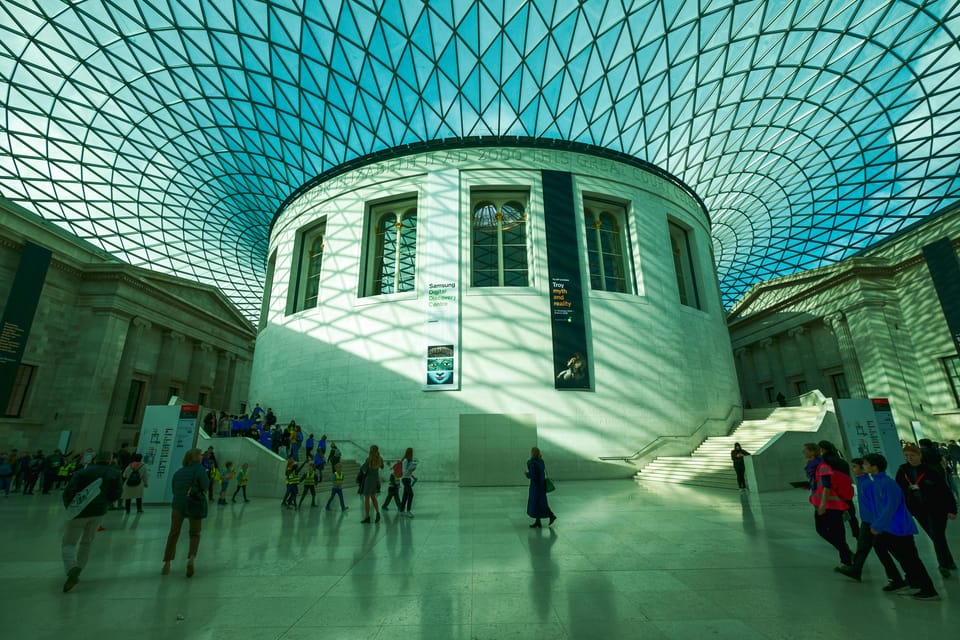
If you’ve ever tried to see the British Museum on your own, you already know the problem: it’s too big, and the best pieces are scattered. This tour gives you a “start here” path, so you don’t waste your prime energy wandering.
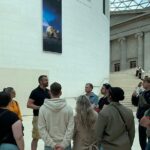
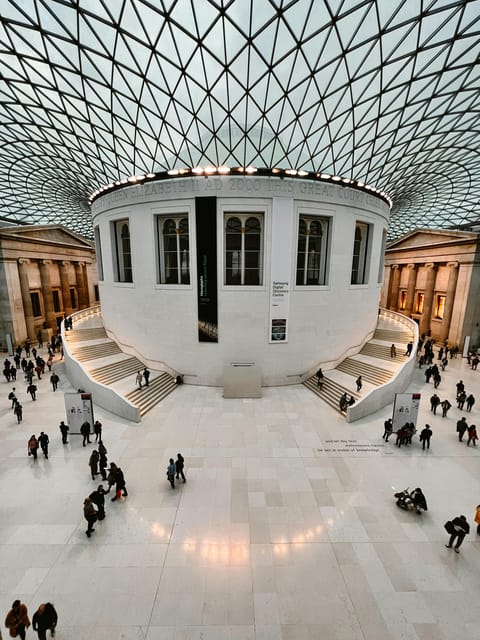
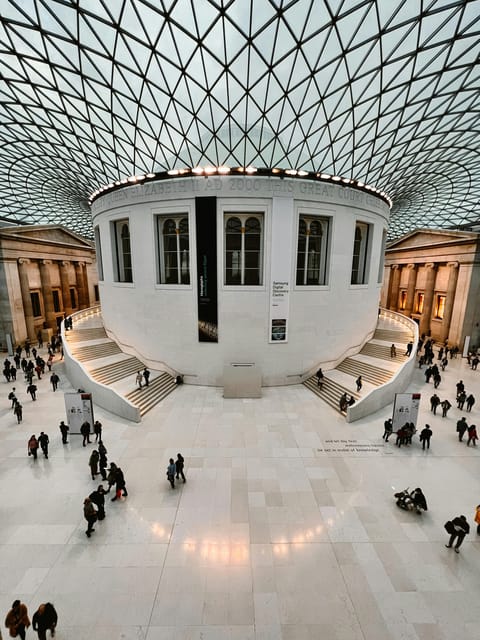
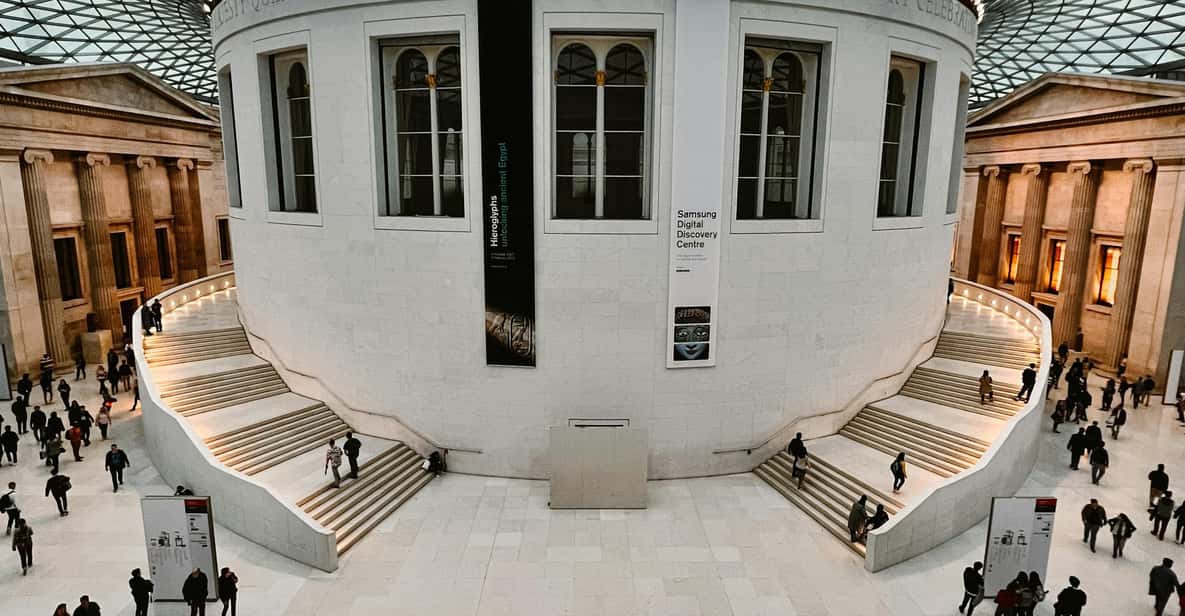
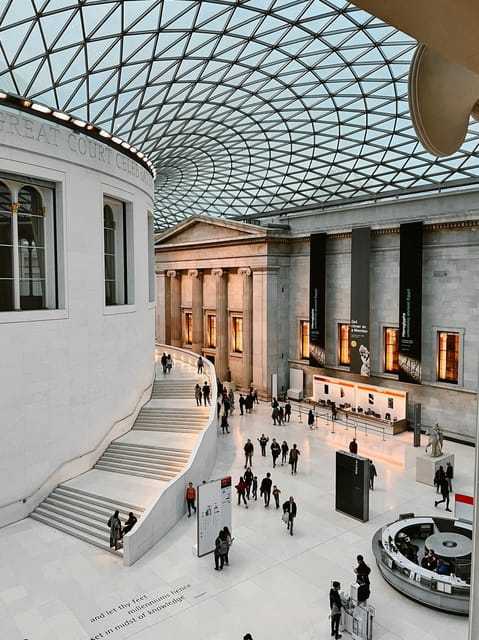
You meet your guide in front of the British Museum portals, on the stairs near the pillars, after you pass security. That detail matters. If you meet outside the gates, you’ll likely miss the exact handoff, and the tour itself moves fast.
A practical plus: the tour includes an express security check. That’s not glamour, but it’s what keeps your 2 hours feeling like 2 hours instead of a quarter-day of line-watching. And you’ll receive entry tickets about 1 hour before the tour via WhatsApp. If you don’t use WhatsApp, you’ll need to contact the provider by email so they can send the entry tickets another way.
For this kind of museum sprint, comfortable shoes are non-negotiable. You’ll be moving between major galleries and you’ll want your feet to cooperate.
You can also read our reviews of more guided tours in London



Egypt First: Rosetta Stone, Pharaonic Relics, and Hieroglyphics
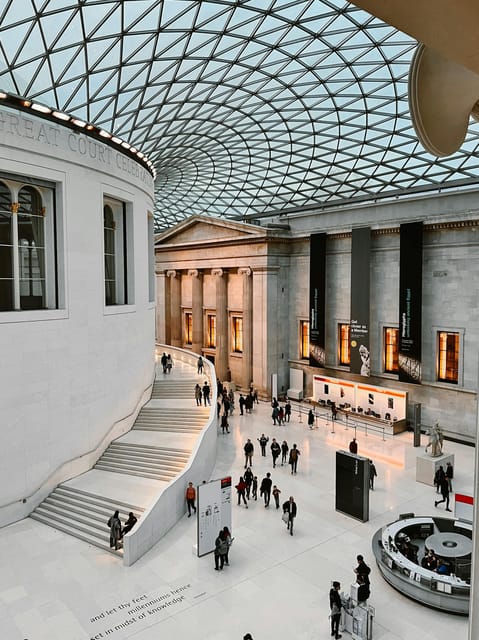
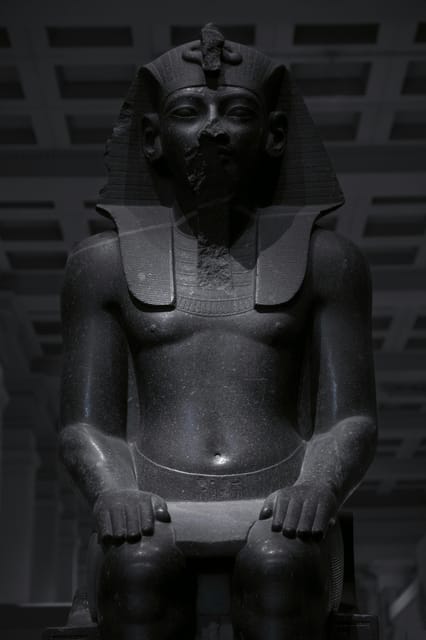
Your tour’s anchor is ancient Egypt, and it’s a smart choice. Egypt gives you a “how do we read the past?” theme right away. Instead of treating artifacts as isolated trophies, the guide connects them through language and symbols—starting with the Rosetta Stone.
The Rosetta Stone is positioned as the key to deciphering Egyptian hieroglyphics. That’s a great first lesson because it changes how you look at inscriptions. Even if you can’t read hieroglyphs instantly, you’ll understand why scholars can connect symbols to meaning. That kind of context is worth more than another quick glance at stone walls.
You’ll also spend time on relics of pharaohs, which helps the tour feel grounded in people and power, not just texts. The big win here is pacing: Egypt is your setup act. By the time the tour moves to Greece and Rome, you’re already using the same mental tool—what does this object tell us, and how do we know?
One thing to keep in mind: Egypt in the British Museum can feel overwhelming because there’s so much. A guided route prevents the common mistake of seeing only what’s closest to the entrance and missing the most teachable highlights.
Greece Highlights: Parthenon Sculptures and Western Thought
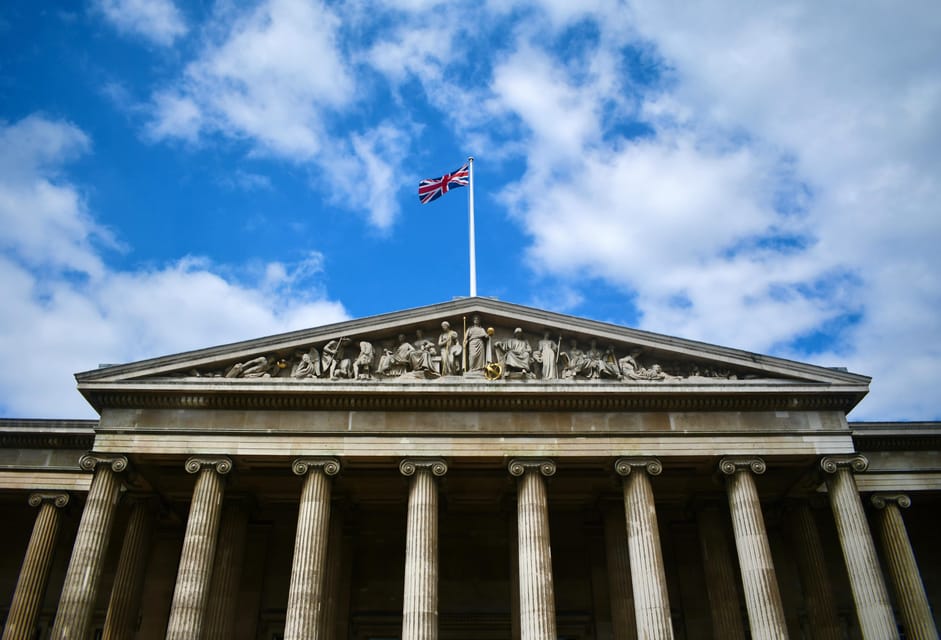
After Egypt, you move to ancient Greece, where art and ideas took shape in ways that still echo today. This is where the tour’s storytelling starts to feel broader than one civilization.
You’ll see iconic sculptures tied to the Parthenon. And yes, you’ll also encounter the controversial Elgin Marbles. The tour isn’t shy about naming the controversy. That’s helpful because it keeps you from treating the museum display as a neutral window. You get to think about how objects travel and what that means for interpretation.
The tour also nudges you toward philosophy. You’ll be encouraged to ponder marble inscriptions that relate to Western thought. Even if you only catch fragments of the meaning, the guide’s job is to connect the objects to big ideas, like how people argued, wrote, and imagined the world.
Here’s why this stop is valuable for you: Greece is where many visitors start collecting random facts, then leave with a blur. With a guide, Greece becomes a set of themes—art, civic identity, and ideas carved in stone.
If you’re sensitive to mixed-language groups, pay attention here. The Greece sections are likely some of the most “concept heavy,” and if your guide repeats explanations in multiple languages, it can slow the pace. It’s not a deal-breaker, but it’s the main reason you might feel you saw slightly less than you hoped.
Ancient Rome: Emperors, Engineering, Mosaics, and Gods
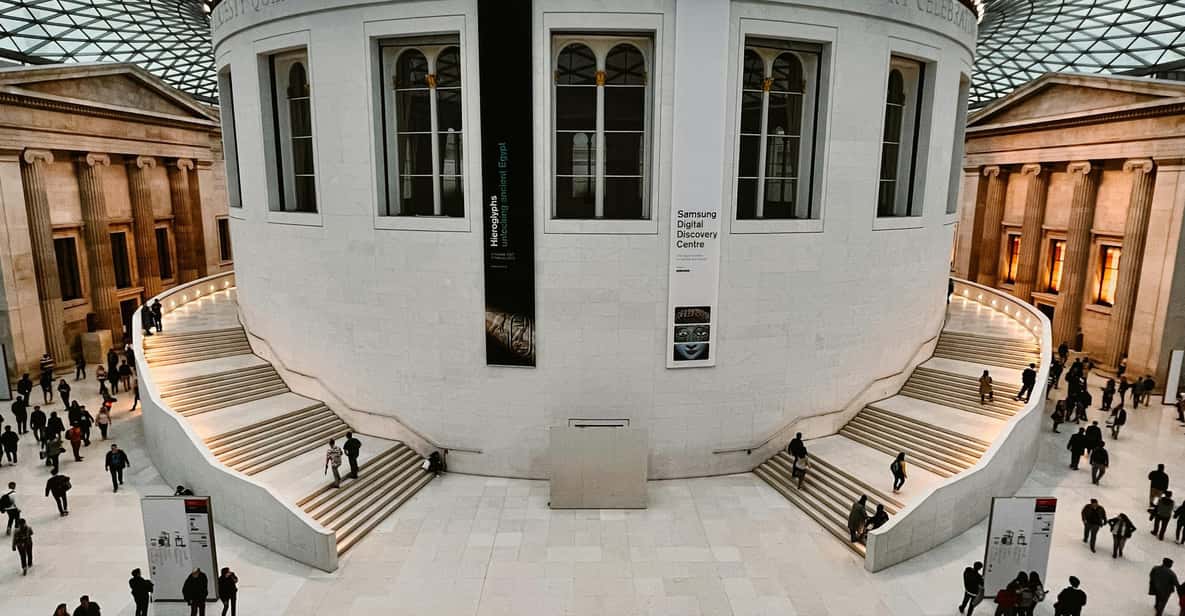
Rome is the tour’s momentum shift. Greece is about philosophy and form; Rome pushes into power and public life. You’ll walk through galleries that represent emperors ruling and the engineering feats that shaped everyday life.
The highlights you’ll get here include mosaics and statues that portray gods and heroes. That combination is a smart way to understand Roman culture. It’s not only about political leaders; it’s also about how people expressed beliefs through art and stories.
Mosaics are a particularly good museum “teacher” because they show craftsmanship and scale. You can often spot how materials, patterns, and figures were meant to impress. And when a guide connects them to the rest of the tour, you start seeing the museum as a conversation between civilizations, not just a warehouse of famous names.
One practical consideration: Rome can be a visually busy zone. If you’re the type who likes to stop and read everything, you’ll have to choose. In a 2-hour tour, the guide’s route is the priority. Let them steer you, then take a second look later if anything really grabs you.
Sutton Hoo: Anglo-Saxon Treasures and Early England Clues
This is one of the more surprising pivots, and I like it. Most people expect Egypt, Greece, and Rome. Sutton Hoo gives you early England and a different kind of historical evidence.
You’ll discover the mysteries of Sutton Hoo through Anglo-Saxon treasures. What you should take away is not just that it’s famous, but that it helps you understand a time when England was still forming its identity. The museum can feel like it jumps across eras, but Sutton Hoo brings the tour closer to home in a meaningful way.
Treasures like these also change the “tone” of your museum experience. Earlier stops can feel like high art and monumental tradition. Sutton Hoo often feels more intimate—like objects that survived, and that carry clues about people, status, and belief.
If you’re visiting the British Museum for the full sweep of world history, this stop is a strong reminder that the story doesn’t only center on the Mediterranean world. It includes Britain’s own deep timeline too.
You can also read our reviews of more museum experiences in London




Easter Island Through Hoa Hakananai’a: Spiritual Art at Museum Scale
Then the tour takes you far—Easter Island, via the Moai Hoa Hakananai’a. This is a powerful reminder that “human culture” is not only about the ancient capitals of Europe and the Middle East.
The guide frames Hoa Hakananai’a as embodying the spiritual essence of a distant civilization. That wording matters because it nudges you to look beyond aesthetics. You’re asked to consider why an object was made, what it meant to the community, and how belief shows up in form.
This stop works well after Sutton Hoo for a simple reason: it keeps expanding your lens. You move from early England to island spirituality, and suddenly the idea of global cultural comparison stops being abstract. You’re seeing different answers to the same basic human questions: identity, meaning, and the sacred.
One realistic note: because it’s a 2-hour tour, you’ll see this as a highlight stop rather than a long, slow sit-down. Still, getting the right frame here can make your later self-guided wandering more rewarding.
The Global Finale: How the Museum Builds One Human Story
After the headline civilizations, the tour ends by widening out to artifacts around the globe. This part is valuable because it prevents you from leaving with only the “top 20” famous names.
You’ll get unique insights into the diversity of human culture, which helps you connect the tour’s earlier themes—power, belief, art, language—across distance and time. That’s the tour’s quiet strength. It doesn’t just show you objects. It teaches you how to think about objects.
Also, the tour is described as tailor-made for the most remarkable parts of the public museum. That means your route is designed for the big learning moments, not whatever looks good on a random map. In a museum this size, that’s the whole game.
If you want to continue after the tour, you’ll be better equipped. You’ll know what themes you like and what questions you want to answer with extra reading on your own.
Price and Value: Does $64 Make Sense for 2 Hours?
At about $64 per person for a 2-hour guided experience, the value comes down to what you’re really buying.
You’re paying for:
- a licensed guide who connects objects into a story you can remember
- a route through major highlights so you don’t lose time
- express security and included entry setup that keeps the clock on your side
- a structured museum experience in English, French, or Italian, based on availability
If you’re the kind of visitor who gets overwhelmed in big museums, this price often feels fair because you’re buying a shortcut to understanding. Two hours is also the right scale for the British Museum. You’ll see enough to feel oriented, and you’ll still have energy left for any self-guided follow-ups.
If you prefer reading everything slowly and you enjoy building your own path, you might get similar value by planning a free self-guided route. But if your main goal is to get the best of the museum without getting lost, the guided format is the point.
The guide name Filomena comes up in the booking feedback, which suggests the tour can deliver real clarity, not just crowd-control. And the best guides tend to do one thing well: they help you look. Not just at what’s there, but at what it means.
Who This Tour Is Perfect For
This tour fits best if you want:
- a fast, focused overview of Egypt, Greece, and Rome plus standout stops like Sutton Hoo and Hoa Hakananai’a
- a guide to explain big concepts like hieroglyphics and why certain displays are controversial
- a structured plan that reduces the guesswork in a massive museum
It’s also a good choice for first-timers who feel intimidated by the museum’s size. You’ll start with the most teachable artifacts and learn how to “read” what you’re seeing.
If you speak only one language and you’re traveling with mixed-language companions, do a quick check on how the language setup works for your departure. One booking note mentioned a French option that became bilingual, which led to less time for some explanations. It doesn’t mean you’ll have the same issue, but it’s worth staying alert so you don’t feel disappointed by pacing.
Should You Book This British Museum Tour?
I’d book it if you want a smart, time-efficient way to experience the British Museum’s biggest learning moments. The guide-led approach is especially worth it when you care about context—Rosetta Stone meaning, Parthenon highlights, Roman art themes, Sutton Hoo clues, and Hoa Hakananai’a’s spiritual framing.
Skip it only if you’re determined to wander slowly with full control of your pace, or if you need a very strict language experience with no possibility of bilingual handling. Otherwise, for a short visit to London—or even a first day in the museum—this tour is a practical way to get your bearings fast and leave with ideas, not just photos.
FAQ
Where do I meet my guide for the British Museum tour?
Meet your guide in front of the British Museum portals on the stairs near the pillars after you pass the security check. It is specifically not outside of the gates.
How do I get my tickets?
Your entry tickets are provided about 1 hour before the tour via WhatsApp. If you don’t have WhatsApp, contact the provider by email so they can send the entry tickets another way.
Is the entry ticket included?
Yes. The tour setup includes entry tickets, and you’ll receive them in the process before your tour.
Does this tour help me skip security lines?
Yes. It includes an express security check.
How long is the tour?
The tour duration is 2 hours.
What languages are available?
The live tour guide is available in English, French, and Italian.
Is the tour wheelchair accessible?
Yes, the museum and this activity are described as wheelchair accessible.
What should I bring?
Wear comfortable shoes. That’s the main practical item listed for the tour.
Is free cancellation available?
Yes. You can cancel up to 24 hours in advance for a full refund.
Can I reserve first and pay later?
Yes. The listing offers reserve now & pay later.