REVIEW · LONDON
Lights, Camera, London: The Movie Locations Walking Tour
Book on Viator →Operated by Where Now Tours · Bookable on Viator
London turns into a movie set in two hours. Lights, Camera, London is a tight, fun walking tour that connects famous films to real street corners, starting in the Piccadilly Circus glare and ending near Borough Market. I like how it keeps you moving while still giving enough story behind each location to make the city feel like a set.
My favorite part is the guide’s use of a tablet to show clips as you stand where the scenes happened. Ryan, in particular, brings the details to life with film context and quick London pointers you can use after the tour, and the small size (max 15) makes it easy to ask questions.
One thing to consider: this is not a sit-down, museum-style experience. Many stops are quick exterior/photo moments, so if you want lots of indoor time or long explanations at each landmark, you may wish it ran longer.
In This Review
- Key things to know before you go
- From Piccadilly Circus to Borough Market: how this tour really works
- Piccadilly Circus: the movie-loud start and the permission backstory
- Leicester Square and Cecil Court: premieres, alleyways, and early film dreams
- Goodwin’s Court to Trafalgar Square: eerie lanes and the big-screen throne room
- Metropolitan Police and Corinthia London: power, policing, and polished celebrity corners
- The Blackfriar pub and St Paul’s Cathedral: war stories, gothic corridors, and cinematic staircases
- Millennium Bridge and Tate Modern: modern London on camera
- The Anchor, The Globe Tavern, and Borough Market: ending with food and film comfort
- Price, pacing, and who this tour fits best
- A quick sanity check: what you’ll remember afterward
- Should you book Lights, Camera, London?
- FAQ
- How long is the Lights, Camera, London: The Movie Locations Walking Tour?
- How much does the tour cost?
- Is the tour guided in English?
- How many people are on the tour?
- Where does the tour start and end?
- What’s included in the ticket price?
- Is London Underground fare included?
- Is a mobile ticket provided?
- Are service animals allowed?
- What if I cancel last minute?
Key things to know before you go
- Small group pace: up to 15 people, so questions don’t get lost
- Tablet clips on the street: you see movie moments matched to the real location
- Central sights, easy mix of genres: from action and sci-fi to rom-com vibes
- Short stops add up: expect frequent photo opportunities rather than long waits
- Ends at Borough Market: great food plan right after the walk
- English guide: convenient for visitors who want film stories without translation friction
From Piccadilly Circus to Borough Market: how this tour really works
This tour is built for people who love the feeling of spotting a scene in real life. You start at Piccadilly Circus (WIJ 9HP) and finish at 18 Stoney St, London SE1 9AD, right by Borough Market. It’s about 2 hours, and that time is used on purpose: you cover a lot of recognizable London without turning the day into a marathon.
You’ll get an English guide and a tablet. That tablet matters more than you might expect. Instead of just hearing plot-adjacent trivia, you get short clips matched to the street in front of you—so your brain makes the connection fast. That also helps if you’re a casual movie fan. You don’t have to know every title to understand why a location was chosen.
The group size (maximum 15 travelers) keeps things conversational. It’s the difference between standing in a crowd and actually chatting with someone who’s ready with follow-up info. And because each stop is timed, you’re not stuck in one place waiting for others to catch up.
Practical note: you won’t ride the Underground during the walk with the tour included, so plan to start near transit and be ready for walking. Shoes you trust for London pavement are a smart call.
You can also read our reviews of more walking tours in London



Piccadilly Circus: the movie-loud start and the permission backstory
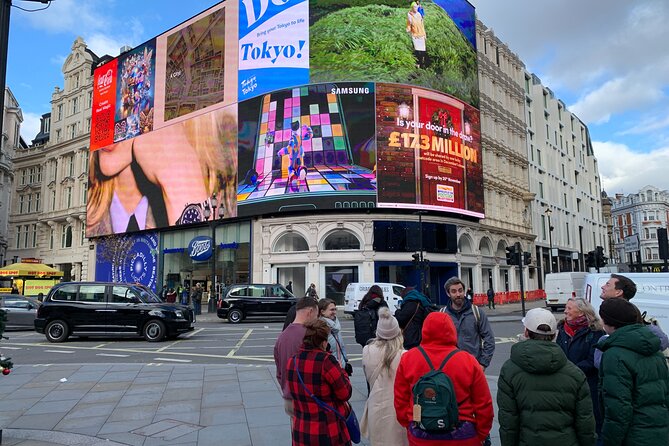
You’ll begin at Piccadilly Circus, the classic crowd-and-neon hub people compare to London’s answer to Times Square. This stop isn’t just about the view. The guide connects the area to films that were famously difficult to film in because of permissions and the reality of busy city streets.
That context is what makes the first ten to fifteen minutes click. You’re not only looking at a famous junction—you’re hearing why it’s hard to reproduce on film and how filmmakers still managed to make the city look cinematic. You’ll get a chance to snap photos right in the thick of it, which is handy because this is one of those London scenes that always looks good on camera.
If you arrive early, take a quick moment to orient yourself. Piccadilly Circus is busy, and starting strong with good photos means you’ll enjoy the rest of the walk more—less “where do I stand?” energy later.
Leicester Square and Cecil Court: premieres, alleyways, and early film dreams
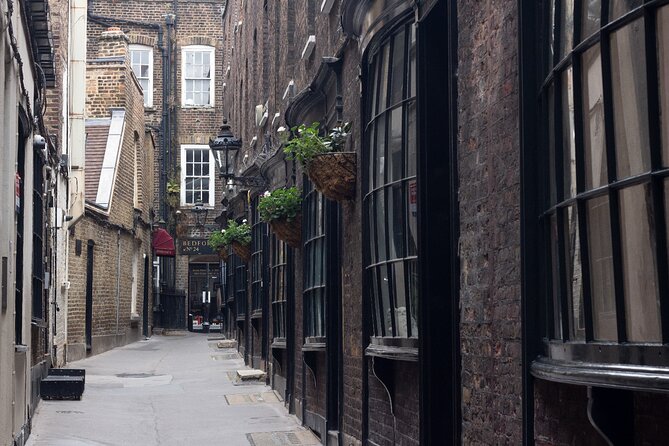
Next comes Leicester Square, London’s cinema district. It’s tied to big premieres and screen culture across decades, so it’s a natural stop for movie lovers. The atmosphere here is the point: you can feel how central London turns into a red-carpet machine when cameras roll.
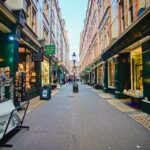
From there, you step into a very different mood at Cecil Court. This Victorian alley is where stories get more specific and more surprising. You’ll hear about music legends and also about an occult reputation—because London’s film history isn’t just about neat, official facts. You also learn about the birthplace of the British film industry, including early ideas around projection and camera technology, plus an added layer of conspiracy that makes the stop memorable even if you’re not a hardcore film-history person.
This pair of stops works well because it shows two sides of movies in London:
- the big public face (premieres, crowds, recognition)
- the smaller, stranger lanes where the industry and imagination grew
Goodwin’s Court to Trafalgar Square: eerie lanes and the big-screen throne room
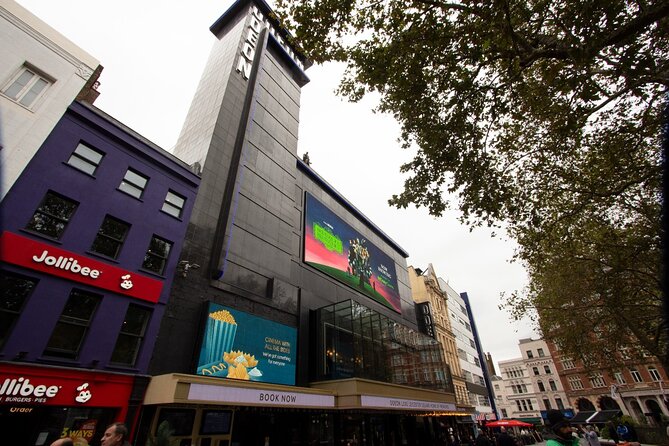
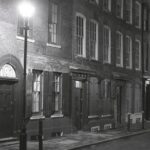
After the energy of the main sights, you get a breather at Goodwin’s Court. This is described as an eerie little street, and the practical value is that it feels like you’ve found a side path off the main London script. It also appears in films and has inspired set design, so it’s the kind of stop where the guide can help you look at architecture like a filmmaker would—angles, shadows, and that “could this pass for something else?” feeling.
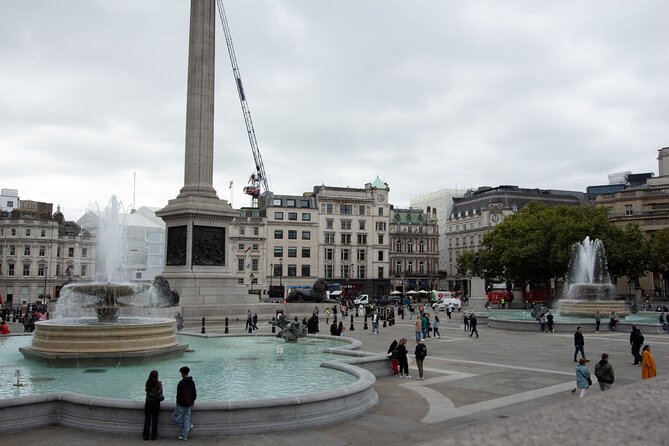
Then you shift to the scale of Trafalgar Square, a London landmark that works for everything from action to fantasy to sci-fi. This stop becomes a quick reality check: London can look instantly cinematic just by you placing your camera correctly. It’s also connected here to a first live-action Disney remake, which is a nice reminder that movie locations aren’t only for classics or serious dramas.
One drawback to this part of the walk is that Trafalgar Square attracts people and activity. It can be loud and busy, so if you want calm photos, time your shots while the group is moving through rather than trying to freeze in the center. The tour keeps it moving for a reason.
Metropolitan Police and Corinthia London: power, policing, and polished celebrity corners
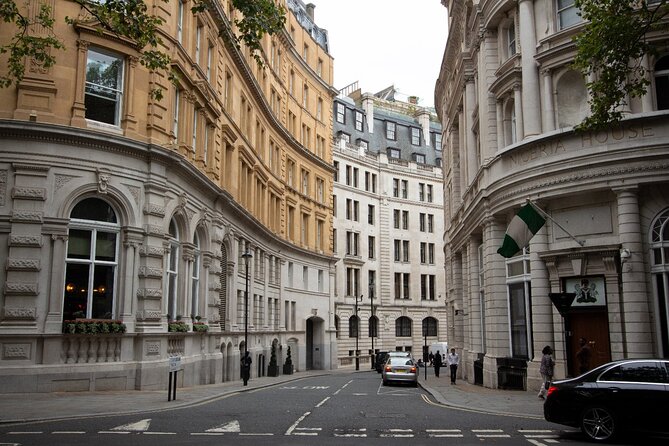
At Metropolitan Police, you’re near the historic Scotland Yard building. This location is tucked in and not always the first thing people think to photograph, which makes it fun on a walking tour: you see London’s “official” face from a film-friendly angle.
The guide connects the building to blockbusters, including Harry Potter. That matters because it shows how filmmakers borrow real authority and atmosphere. You’re not just learning where a spell or chase happened—you’re seeing why a real institution’s look reads as believable on screen.
Then you move to Corinthia London, a fancy hotel that works well for celebrity scenes. The idea here is straightforward: the architecture and presence fit what movies want when the story needs glamour. Being near premiere-area energy also helps explain why so many productions want locations close to where people gather.
This stretch is great if you like films that rely on setting—stories where the location is part of the character. If you only care about iconic monuments, you might find it a little more “behind-the-scenes” than you expected. But for movie-location fans, it’s a highlight.

The Blackfriar pub and St Paul’s Cathedral: war stories, gothic corridors, and cinematic staircases
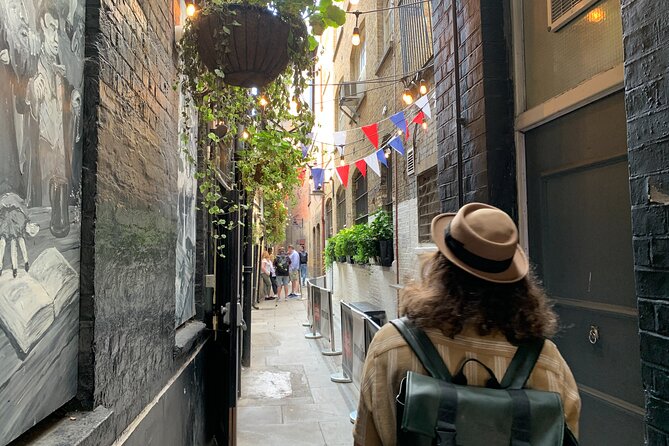
A fun turning point comes at The Blackfriar, a quirky pub that survived war and later redevelopment. The tour frames it with a hint of mystery—possibly connected to an otherworldly secret agency theme. Even if you don’t take the supernatural framing literally, the takeaway is clear: this is a place that feels like it belongs in a story, not just on a postcard.
Then you head to St. Paul’s Cathedral, one of London’s most recognizable buildings. What makes this stop film-friendly is the inside look you can imagine: narrow corridors, gothic interior styling, and winding staircases. Even when you’re outside, you’re learning to “see” how a production could use the building’s structure for tension, pursuit, or drama.
This is also a good moment to regroup. The walk has been moving through streets and squares; St Paul’s gives you a clear visual anchor. If you’re trying to remember everything later, your brain will keep returning to this landmark.
Millennium Bridge and Tate Modern: modern London on camera
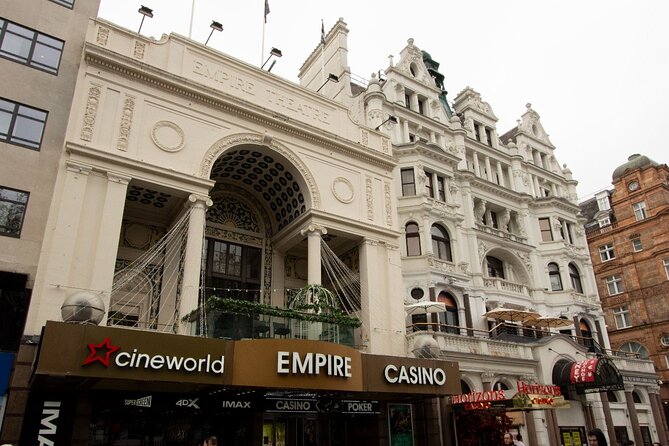
Next is Millennium Bridge, famous enough that many people already know it from movies and photos. There’s also a local angle: some locals disliked it, but that’s exactly why it’s useful on screen. It gives filmmakers a modern London look, and the tour points out how it has been used to show that changing city feeling.
Then you reach Tate Modern, just outside the former power station, where a Hollywood movie moment is referenced: Tom Cruise pursuing Henry Cavill across the top of Blackfriars bridge. Even without focusing on the full plot, this stop helps you understand how productions use London’s mix of historic and industrial shapes. It’s not just about famous buildings; it’s about how London’s forms create motion and scale when framed by a camera.
This section is best for people who enjoy “I see it” moments—when you suddenly spot how a bridge line or industrial facade creates a cinematic frame. If you’re more into classic landmarks than modern film references, you may find it slightly less iconic than Trafalgar or St Paul’s. Still, it’s a clever pairing that expands your sense of what London can look like on screen.
The Anchor, The Globe Tavern, and Borough Market: ending with food and film comfort
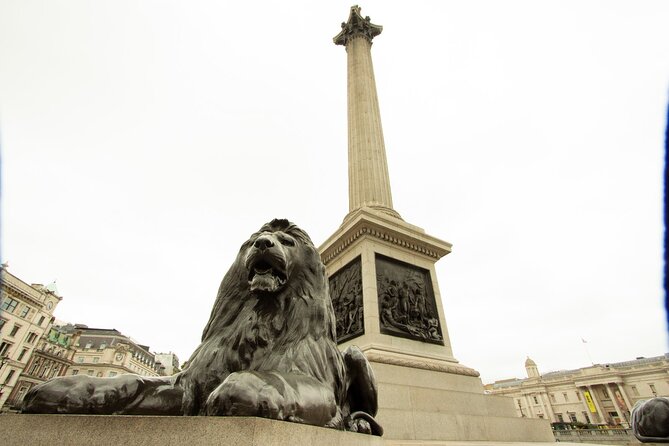
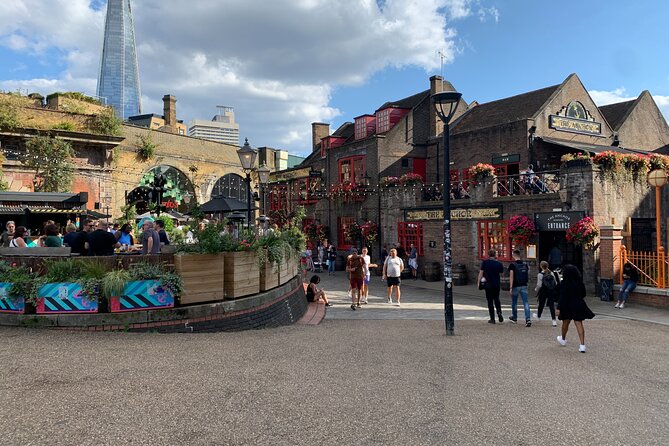
You’ll close out with two more pub stops before landing at Borough Market. First is The Anchor, an old pub tied to the first Mission: Impossible film. Pub locations are a great choice for movie storytelling because they naturally support quick meetings, tense conversations, and the kind of grounded realism audiences trust.
Then you go to The Globe Tavern near Borough Market, tied to the big rom-com character Bridget Jones. This stop is where the tour leans into the fun side of London movie culture—light, social, and very “this could be a normal day in the city,” even if the plot is anything but normal.
Finally, you end at Borough Market, one of London’s oldest food markets. This is a smart landing spot. You finish with something real and practical: food stalls, restaurants, and historic pub energy nearby. You can turn the end of the tour into a proper meal instead of rushing back to transport.
The guide also hints at a magical pub connection around this area. It’s the kind of closing detail that makes the walk feel like it has a narrative arc rather than a list of unrelated stops.
Price, pacing, and who this tour fits best
At $18.67 per person, this tour is priced like a value play in central London. You’re paying for three things:
- a small-group guide who ties locations to specific screen references
- a tablet that makes the “where is that from?” moment instant
- a quick, structured route that saves you time compared to DIY wandering
It’s also a good length. Two hours is long enough to enjoy several movie beats, but short enough to fit into a normal sightseeing day. That matters in London, where you can easily burn half a day “just walking.”
You’ll want moderate physical fitness because it’s a walking tour with frequent movement. And since you’re doing photo stops and moving through crowded areas, it helps to be comfortable standing for short chunks at a time.
Who should book?
- Movie buffs who want the joy of matching scenes to real streets
- Casual film fans who like the clips-and-stops approach without doing homework first
- People who like questions and conversation, not silent lines
Who might skip?
- Travelers who want mainly indoor visits or deep museum-style time at landmarks
- Anyone who hates crowds, since Piccadilly and Trafalgar can be busy (though the tour’s pacing helps)
A quick sanity check: what you’ll remember afterward
If you like London for more than just the skyline, this tour has a strong payoff. You’ll likely remember the way the guide ties filming difficulty to real street chaos at Piccadilly Circus, how Cecil Court adds a film-industry origin story with a darker, weirder edge, and how the walk balances large icons like Trafalgar Square with smaller corners like Goodwin’s Court.
And because Ryan’s approach includes showing clips while you’re standing there, the tour gives you a “mental highlight reel.” That helps even after the credits roll.
Should you book Lights, Camera, London?
If you’re excited by the idea of London as a filmed backdrop, I’d book it. The price is reasonable for central London, the group size keeps it personal, and the tablet clips turn “movie trivia” into something you can actually see. The ending at Borough Market is also the kind of finish that makes the day feel complete.
Skip it only if your ideal tour is long, quiet, and indoor. This walk is about motion, recognition, and conversation while you match film moments to real streets.
FAQ
How long is the Lights, Camera, London: The Movie Locations Walking Tour?
It runs for about 2 hours.
How much does the tour cost?
The price is listed as $18.67 per person.
Is the tour guided in English?
Yes, the tour is offered in English.
How many people are on the tour?
The tour has a maximum of 15 travelers.
Where does the tour start and end?
It starts at Piccadilly Circus, London WIJ 9HP, UK and ends at 18 Stoney St, London SE1 9AD, UK, near Borough Market.
What’s included in the ticket price?
The tour includes a tablet and an English guide.
Is London Underground fare included?
No, London Underground fare is not included.
Is a mobile ticket provided?
Yes, the tour uses a mobile ticket.
Are service animals allowed?
Yes, service animals are allowed.
What if I cancel last minute?
Free cancellation is available up to 24 hours in advance for a full refund.