REVIEW · LONDON
London Charles Dickens Puzzle Questo and Self-Guided Tour
Book on Viator →Operated by Questo · Bookable on Viator
London has a way of turning sidewalks into stories. This Charles Dickens Puzzle Questo is a self-guided, phone-based walk that sends you hunting for answers at key literary addresses. I like the mix of Dickens places with a game-like format, because it keeps you looking up instead of just passing by.
I love the full flexibility: start whenever you want and take breaks without rushing. And I also like that it works offline, so you’re not stuck rationing data just to keep moving through the City.
One possible drawback: this experience has no physical guide, so you won’t get that live, interpretive storytelling you might want at the more famous stops.
In This Review
- Key things I’d note before you go
- How the Charles Dickens Puzzle Questo game actually feels
- Starting on Doughty Street: Charles Dickens Museum to set the tone
- Vine Street and the Man in the Moon Passage: old London under your feet
- The Three Cripples (and Bill Sykes): when a pub becomes a plot point
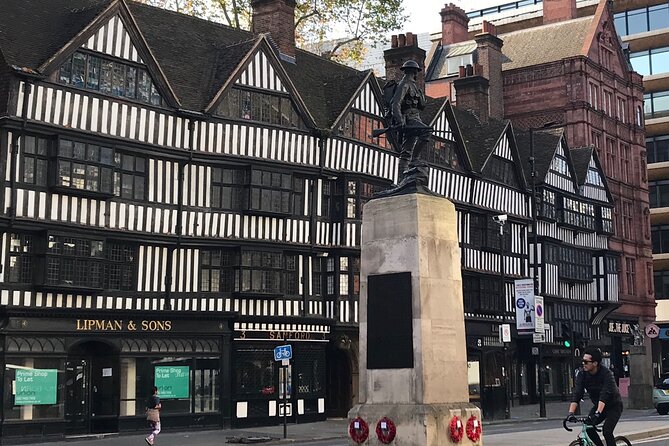
- Staple Inn: surviving the Great Fire and wartime bombing
- Lincoln’s Inn Fields Theatre: from tennis courts to theatre history
- The Maughan Library: Pennethorne-era architecture in modern form
- Dr Johnson’s House: Samuel Johnson’s rented London base
- Ye Olde Cheshire Cheese: built in the 1500s, rebuilt after the fire
- St Peter of all Nations: a basilica-style church with wartime connections
- The Royal College of Surgeons: medicine, status, and professional history
- St Dunstan-in-the-West: Romanian Orthodox presence and an iconostasis with a backstory
- The pace, route length, and what “about one hour” really means
- Price and value: why $8.33 can feel like a steal
- When this Dickens Puzzle tour is a great fit
- Should you book this Charles Dickens Puzzle Questo? (My honest take)
- FAQ
- How long does the London Charles Dickens Puzzle Questo tour take?
- Can I start the tour at any time?
- Do I need an internet connection to play?
- Is there a physical guide on this tour?
- Where does the tour start and end?
- What does it cost?
- Is free cancellation available?
Key things I’d note before you go
- Start anytime, pause anytime so you can match it to your day, not the other way around
- Offline play on your phone means fewer hassles once you’re out walking
- Private, no human contact keeps it quiet and avoids the crowd-energy of group tours
- A route through real Dickens-era addresses from Holborn to Fleet Street
- Puzzle challenges at each stop mean you’re actively “reading” the streets
- About 1 hour as a baseline with room to extend if you enjoy stopping for a pint
How the Charles Dickens Puzzle Questo game actually feels
This is not a traditional guided tour where someone talks at you for an hour. It’s a self-guided city game where you use your mobile ticket to play, then follow a sequence of stops. At each location, you’ll look around and solve a challenge to move on to the next part of the route.
The big advantage is control. You can start at any time (the experience runs 24/7), and you can pause and resume whenever it suits you. That matters in London, where you might get stuck in a queue, detour for coffee, or decide you want extra time at a pub. Since this is set up as private, it’s just your group—no waiting for anyone else’s pace.
Also, you don’t need an internet connection to play. That’s a real quality-of-life benefit on foot in central London, where reception can be patchy and you don’t want to treat data like it’s bottled.
Finally, the format is designed to avoid crowds. With no human interaction, there’s less “tour group traffic,” which can make famous streets feel calmer.
You can also read our reviews of more guided tours in London



Starting on Doughty Street: Charles Dickens Museum to set the tone
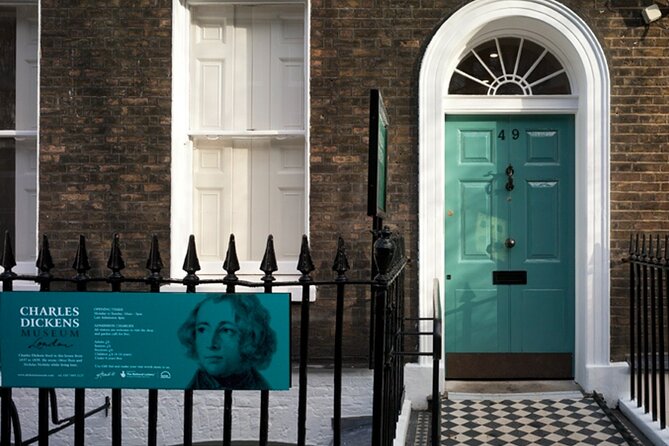
Your route begins at 47 Doughty St, London WC1N 2LW, at the Charles Dickens Museum. This is the author’s house museum in a typical Georgian terraced home, and Dickens lived here from 25 March 1837 to December 1839. That time window is one of the reasons the start feels smart: you’re not starting in a random “Dickens-themed” spot. You’re starting at a real address connected to his life.
Here, your first move is simple in concept but fun in practice: you look around for the answer to the challenge that unlocks the next location. Instead of passively reading plaques, you’re scanning and noticing details you might miss on a casual walk-by.
Practical tip: give yourself a minute to slow down right at the start. Once you’re moving, it’s easy to speed through because you’re excited to “get to the next clue.” Starting thoughtfully helps the rest of the route click.
Vine Street and the Man in the Moon Passage: old London under your feet
Next you’ll work your way to a spot connected to Vine Street and the Man in the Moon Passage area. The game points to roots that go back to around 1686, and it notes that the street originally ran farther—ideas you can picture when you think of how London has been rebuilt, renamed, and reshaped over centuries.
It also brings in two specific historical anchors:
- John Rocque’s Map of London (1746) shows Vine Street extending from Piccadilly northeast to Warwick Street.
- In 1720, the main properties included a brewery and a carpenter’s yard.
This stop is valuable because it shows you Dickens’s world wasn’t just grand buildings and literary fame. It was also the mix of trade, industry, and everyday work—places where cities actually ran. Your challenge here works the same way: you look around and solve the puzzle to continue.
What to watch for: you may find this stop feels more “street-research” than “big landmark.” If you like solving location-based clues, that’s exactly the point.
The Three Cripples (and Bill Sykes): when a pub becomes a plot point
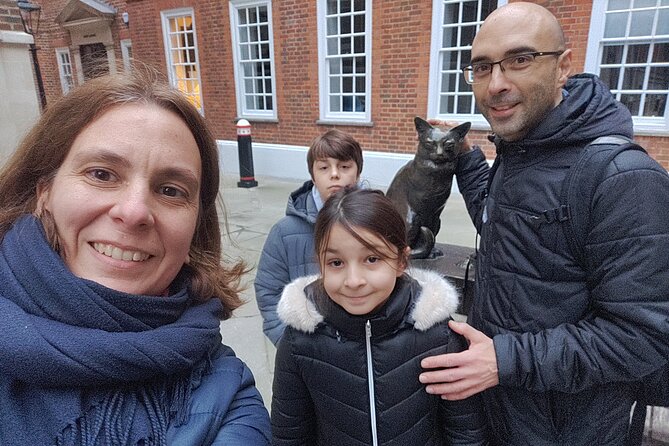
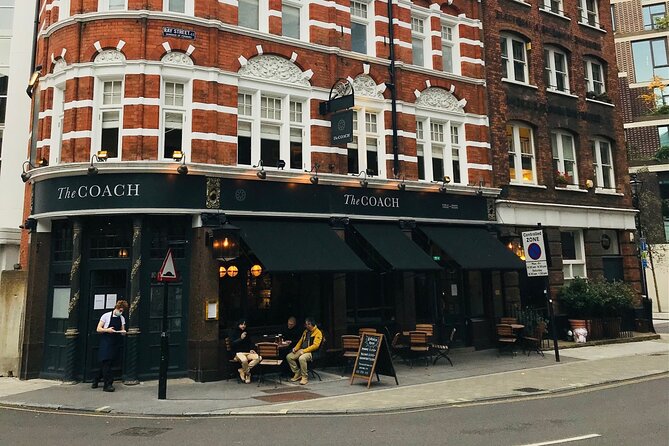
One of the most fun parts of the route is the shift into Dickens’s underworld storytelling. Your game stop highlights a stylish inn dating to 1759, but its moment of fame came in 1838 when Charles Dickens changed its name to the Three Cripples. In Oliver Twist, it became Bill Sykes’ watering hole of choice.
This is where the experience can feel extra satisfying, because you’re stepping toward an actual place that’s been rewritten by literature. Instead of thinking of Dickens as distant history, you see how authors repurpose settings—and how those settings still show up in the city.
And yes, this route is set up so you can build in real-life pauses. The format encourages you to slow down, which means it’s easy to combine your puzzle progress with a stop where you want to sit for a bit.
Staple Inn: surviving the Great Fire and wartime bombing
Next up is Staple Inn, dating from 1585. The building was once the wool staple, where wool was weighed and taxed. That’s a detail worth keeping in your head: this wasn’t just a picturesque old building. It was part of the system that handled trade and money.
Staple Inn also has a rare survival story. It survived the Great Fire of London, and it was later extensively damaged by a Nazi German Luftwaffe aerial bomb in 1944—then restored afterward. That combination of commerce, disaster, and recovery turns this stop into something more than a backdrop.
Your challenge asks you to look around and find the answer to move on. The result is that you’re not only taking in architecture; you’re practicing the exact kind of attention that makes older London feel alive.
Consideration: since the route is a puzzle hunt, you might spend extra time here reading surfaces and edges. If you prefer a quick “see it, move on” type of sightseeing, consider setting a personal time limit for this stop.
You can also read our reviews of more tours and experiences in London




Lincoln’s Inn Fields Theatre: from tennis courts to theatre history
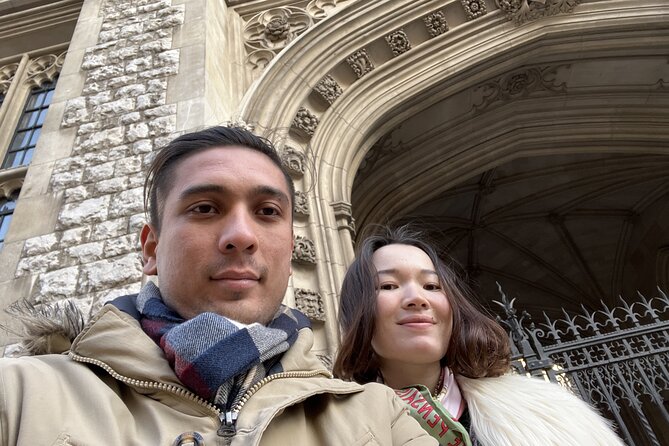
After Staple Inn, you’ll head to the area linked with Lincoln’s Inn Fields Theatre—located in the Fields from 1661 to 1848, when it was demolished. The stop also explains that it was originally called the Duke’s Theatre.
Another specific detail matters here: it was created by converting Lisle’s Tennis Court in 1695. That’s the sort of fact I love in London, because the city often keeps changing uses—sometimes in ways you’d never guess just by looking at a street.
Again, you’re solving a clue to proceed. But even without doing anything fancy, this kind of “how did this become that?” history is a great reminder to keep your mind switched on while you walk.
The Maughan Library: Pennethorne-era architecture in modern form
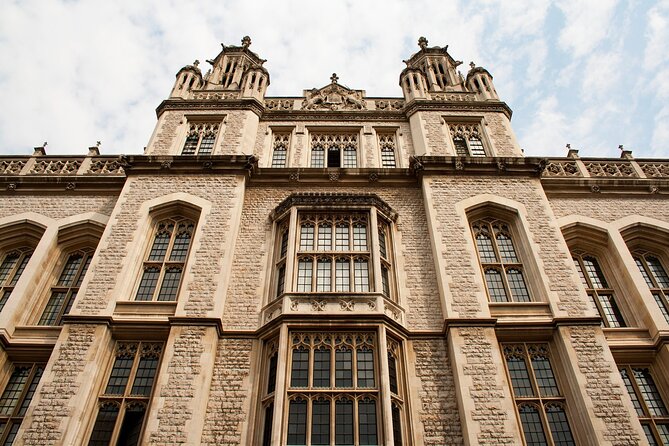
One of the more surprising stops is the Maughan library. The game notes a £35m renovation by Gaunt Francis Architects, and it calls the building the largest new university library in the UK since World War II.
The core structure connects to the Victorian period: designed by Sir James Pennethorne and constructed in 1851, with extensions between 1868 and 1900. It’s also listed as Grade II.
This is a great stop for a puzzle tour because it gives you visual variety. Instead of only “old” London, you get the feeling of layers: older design, later additions, and then a modern renovation that keeps the building in active use.
Your challenge here still centers on looking around for the answer. It’s a simple format, but it keeps you from treating the site as just a pretty exterior.
Dr Johnson’s House: Samuel Johnson’s rented London base
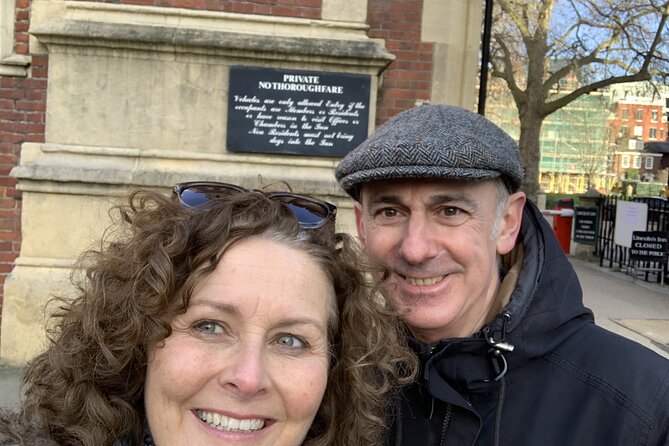
Next, the route moves to the house now known as Dr Johnson’s House. The information provided suggests it was probably originally built for a City merchant, and the famous resident is Samuel Johnson.
Johnson rented it from 1748 to 1759, which makes this stop feel grounded and specific. It’s one thing to know Johnson is a key figure in English literature. It’s another to picture him living there during those years.
As with other stops, the mechanics are the same: you look around for the challenge answer and move to the next location. The benefit of keeping this structure throughout is that you train yourself to notice details consistently, even as the sites change.
If you’re a Johnson fan: this stop is a nice “pause and think” moment. Even if the game is driving you, you can still spend a minute soaking in what it means that a literary giant rented a house in a working part of town.
Ye Olde Cheshire Cheese: built in the 1500s, rebuilt after the fire
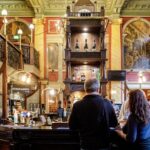
If you enjoy pub stops built into your sightseeing, this part of the route is friendly. The game references Ye Olde Cheshire Cheese, originally built in the 1530s. The original pub was lost in the Great Fire of London in 1666. The current pub dates from 1667, described as one of the first London buildings reconstructed after the fire.
That makes it a strong “London continuity” stop. It’s not just an old pub—it’s old London that literally came back after disaster.
The puzzle here asks you to look around for the clue answer. The practical takeaway is that this is a great moment to slow down. If you want to stretch the one-hour game into something longer, this is the kind of spot where it feels natural.
St Peter of all Nations: a basilica-style church with wartime connections
The route then includes The Church of St Peter of all Nations, consecrated on 16 April 1863. The info highlights that at the time of consecration it was the only basilica-style church in the UK.
The game also points you to the organ, built in 1886 by a Belgian maker named Anneesen. And then it adds a wartime detail: during World War II, when Italian immigrants were interned, Irish Pallottines made use of the church.
This stop adds depth to the walk because it’s not only about Dickens and literature. You’re seeing how buildings served different communities through time, including difficult periods.
You’ll solve the clue here too, so you’re looking for answers rather than only reading a plaque.
The Royal College of Surgeons: medicine, status, and professional history
Another history-forward stop is the Royal College of Surgeons. The information provided traces its origins to the 1540s, when the Company of Barbers and the Fellowship of Surgeons joined to form the Company of Barber-Surgeons.
Then it brings in a later shift: in the 1700s, medicine became an academic discipline, and surgeons pushed for more recognition of their expertise.
Even though this isn’t a Dickens plot location, it fits the overall theme of London as a city of institutions—places where professional life evolved. In a puzzle tour format, this kind of stop can feel like a fun left turn from literary sightseeing into the city’s other engines.
You’ll still follow the same challenge format: look around, answer, continue.
St Dunstan-in-the-West: Romanian Orthodox presence and an iconostasis with a backstory
Your route includes Romanian Orthodox chapel St Dunstan-in-the-West, which shares its building with the Romanian Orthodox community linked to St George. The route notes that the chapel on the left of the main altar is closed off by an iconostasis. This iconostasis is described as coming from Antim Monastery in Bucharest and dedicated in 1966.
For me, the value of this stop is how it shows London as a living city of changing communities. The route keeps you focused—your job is still to answer the puzzle—but the content helps you see the city’s layers.
If you’re the kind of visitor who likes architecture with a human story attached, this is worth paying attention to rather than rushing.
The pace, route length, and what “about one hour” really means
The listed duration is about 1 hour, but this is a self-guided game with full flexibility. In practice, that often means your time depends on two things: how quickly you solve the clues and how often you pause.
Since you can take breaks at any time and resume later, it’s easy to treat the route like a “core walk” that you can expand into a larger afternoon plan. The route also runs from Holborn/Camden area down toward Fleet Street, so it naturally connects with other central London sightseeing.
Also, because it’s private and designed to avoid crowds, you won’t have the typical group-tour timing pressure. You can stop, think, and move on without feeling like you’re holding anyone up.
Price and value: why $8.33 can feel like a steal
At $8.33 per person, this tour is one of those London deals that makes you wonder why you’d ever join a full-price guided group just to walk the same streets. The value comes from a few specific things you get for that money:
- Private experience: your group only, no human guide, no crowd dynamics
- Offline puzzle play: you’re not paying extra for app data or needing tech support
- Flexibility: start any time, pause, resume later
- Game structure: you see more than you would on a normal stroll because you’re searching for answers
You do give up one thing: a physical guide. If you prefer a guided lecture format, the $8.33 price might not justify the trade-off. But if you’re happy learning through looking and reading what you find, it’s a strong bargain.
When this Dickens Puzzle tour is a great fit
This experience is best for:
- People who like self-guided walking and solving puzzles
- Visitors who want to keep the day flexible without booking strict times
- Anyone who enjoys mixing literature with the physical city—especially Holborn to Fleet Street
- Small groups who want privacy and a calmer alternative to standard group tours
And it’s less ideal if:
- You strongly prefer a live guide to explain everything
- You get frustrated when tasks require close reading and searching
- You want a very “sit-down” tour with minimal walking
Should you book this Charles Dickens Puzzle Questo? (My honest take)
If you want Dickens in a way that feels active—less like listening, more like noticing—this is an easy yes. The low price, offline play, and start-when-you-like* flexibility make it an uncomplicated way to get a meaningful route through central London.
I’d book it if you’re the type who enjoys little quests, historic details, and moments where a street corner suddenly makes sense. I’d skip or switch to a guided tour if you want a person standing next to you explaining context at every stop—because that part isn’t included here.
FAQ
How long does the London Charles Dickens Puzzle Questo tour take?
It’s listed as about 1 hour.
Can I start the tour at any time?
Yes. You can start at any hour, and the experience is available 24/7 every day of the week.
Do I need an internet connection to play?
No. You can play offline and you do not need internet to use the game.
Is there a physical guide on this tour?
No. This tour does not include a physical guide, and it’s set up for private play with no human contact.
Where does the tour start and end?
It starts at 47 Doughty St, London WC1N 2LW, UK and ends at 145 Fleet St, London EC4A 2BU, UK.
What does it cost?
The price is $8.33 per person.
Is free cancellation available?
Yes. You can cancel up to 24 hours in advance for a full refund.
If you want, tell me what day you’re going and what time of day you prefer, and I can suggest a simple way to pair this Dickens route with nearby stops along Fleet Street and Holborn.