REVIEW · LONDON
City of London History Tour: The Square Mile that Rose to Empire
Book on Viator →Bookable on Viator
Roman London grows more interesting fast. This tour strings together the Square Mile’s survival story, from wall-building centuries to today’s finance power, with practical stops you can actually see. I like that it’s built for London newcomers and history buffs alike, and I especially like the off-the-main-path feel, with stops in gardens, courtyards, and older churchyards.
Two things I love here: you get a clear sense of how trade and governance evolved right alongside defense, and you also get a “how do we know” angle through the physical remains. One possible drawback: it packs a lot into 2.5 hours, so if you prefer long sit-down museum time, you’ll want a good break plan after.
In This Review
- Key points to know before you go
- Entering the Square Mile’s long story (Roman walls to empire)
- Price and logistics: when to book and what to expect on the day
- Start at St. Alphage and Stare at London’s earliest layers
- Roman city wall to Cripplegate: protection and faith side by side
- The livery company trail: trade, governance, and sacrifice
- St. Lawrence Jewry to City governance: the places where stories repeat
- Guildhall mythology, Minotaur links, and the Royal Exchange’s little details
- Mansion House and the Bank of England: power past and present
- The guide matters: what to look for during your walk
- Who this tour is best for (and who should think twice)
- Should you book the City of London History Tour?
- FAQ
- How long is the City of London History Tour?
- How much does the tour cost?
- Is the tour offered in English?
- What group size should I expect?
- Where does the tour start and end?
- Do I need an admission ticket for the stops?
- Is there a mobile ticket?
- Is the tour wheelchair and stroller accessible?
Key points to know before you go
- Small group size (max 8): you get room for questions without a rushed herd feeling
- Free entry at the stops: many locations are admission ticket free, which helps the value
- A route focused on the Roman-to-Empire timeline: you’ll see the connective tissue, not random landmarks
- Livery halls and ward churches: trade and local governance show up repeatedly in the story
- Wheelchair and stroller accessible: the experience is designed to be workable for more people
Entering the Square Mile’s long story (Roman walls to empire)
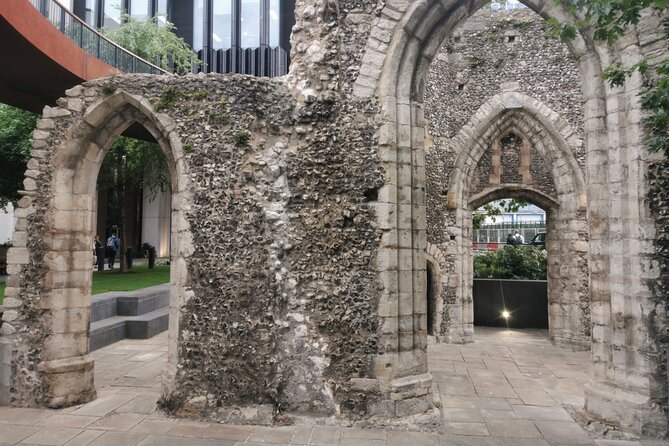
The City of London can feel like a place made of money and office towers, especially if you’re visiting for a day and moving fast. This tour slows that down and gives you a reason to look closer, because the story isn’t just about kings and queens. It’s about how a tiny area protected itself, organized itself, and kept functioning through repeated waves of change.
What makes the premise work is the way the route treats the ground itself like evidence. You start at spots that relate to the earliest layers of settlement, then you follow the logic forward—fortifications, churches, governance, and the institutions that later powered empire and global trade. I like that it keeps the timeline grounded in what you can see: walls, ruins, courtyards, and buildings tied to civic life.
Price is also easier to swallow when you factor in the stop format. You’re paying about $30.69 per person for a guided walk, and many of the listed locations have admission ticket free access, so your money mostly goes toward interpretation, not entry fees. With a duration around 2 hours 30 minutes, it’s also a manageable chunk of time in an intense city like London.
You can also read our reviews of more city tours in London



Price and logistics: when to book and what to expect on the day

This is priced at $30.69 per person, offered in English, and designed for an intimate group of up to 8. That smaller cap matters in London, where many “history walks” quietly turn into a line of people who can’t hear. Here, you should feel more able to ask follow-ups and keep your pace without getting left behind.
You’ll also use a mobile ticket, so have your phone handy at check-in. The tour is near public transportation, which is helpful because you’re walking across the City’s older core where streets can be a maze if you’re on foot alone.
Timing-wise, plan for a steady pace rather than a “wander and browse” experience. The stop list is short per location—often around five to fifteen minutes each—so the guide’s job is to connect each place to the bigger story. If you like learning through brief stops with frequent resets, you’ll probably love this style.
Start at St. Alphage and Stare at London’s earliest layers
You begin at Barbie Green, London Wall Pl (Barbican, EC2Y 5AU), and that first walk segment sets the tone: this is a history tour where the ground floor matters. The opening stop is St. Alphage London Wall, where the Salters garden is the stage for how different peoples’ stories overlap—from Roman to Norman eras.
Even if you don’t know London’s early geography, the guide’s framing helps you understand why this area mattered: it sits on the edge of the City’s ancient defenses, and that defense shaped everything that came after. The stop is quick—about 15 minutes—but it gives you a mental map for what you’ll keep seeing later: fortification lines, civic continuity, and the way religion and governance clustered near power.
Right after, you hit the older core evidence: the Roman city wall stop. This is described as the oldest part of the wall you’ll see on the route, and it’s the kind of place where you can almost feel how “protection” becomes “identity.” For me, this is the moment the tour earns its promise, because it turns the Square Mile into a place with physical roots rather than just a modern skyline.
Roman city wall to Cripplegate: protection and faith side by side
After the wall, you move to St. Giles Cripplegate, one of the oldest medieval churches in the City since Norman time, with a site that once held an older Saxon church. That layering is the point: London’s religious sites often re-used sacred ground, which makes the story feel continuous even when political power changed.
This stop is about 10 minutes, and it’s short enough that you won’t feel like you’re ticking boxes. Instead, it’s a chance to connect faith to daily life inside a defended perimeter. In the City, churchyards and civic spaces acted like anchors; people relied on them for community memory and local order.
Then the route shifts again, placing you back in a garden space: Salter’s Hall Garden. Here, the tour links the Roman wall to long-term fortification and brings in the mention of Celtic people—described as indigenous inhabitants of these lands—and why the Romans fortified Londinium. This stop works well because it explains the “why” behind the wall, not just the “what.”
The livery company trail: trade, governance, and sacrifice
If you’ve ever wondered how London’s merchant culture became institutional power, this tour gives you a clear path. The next stops center on livery companies, the civic guild-style organizations that helped shape business standards, governance roles, and public identity.
At Salter’s Hall Garden, the tour highlights the Salters as ranked 9th among 12 of the most important livery companies. That ranking clue is useful because it tells you this wasn’t just neighborhood hobby history—these groups were woven into the City’s official structure. It’s also a reminder that empire didn’t only run on ships; it ran on rules, contracts, and institutions that kept trade moving even when politics shifted.
Next comes Brewers’ Hall, described with a funny and memorable line: the livery company that set the standard for booze. In a city full of grand monuments, this kind of concrete industry anchor helps the past feel real. A quick 10-minute stop can still land, because it reframes “history” as everyday products, regulations, and community influence.
Then you move to St Mary Aldermanbury Garden, where the tour uses the ruins to connect the name to an old court or bery of aldermen, now held at the Guildhall. This is where you start seeing how “governance” didn’t live only in one building—it spread into churches, gardens, and nearby public spaces.
You can also read our reviews of more historical tours in London




St. Lawrence Jewry to City governance: the places where stories repeat
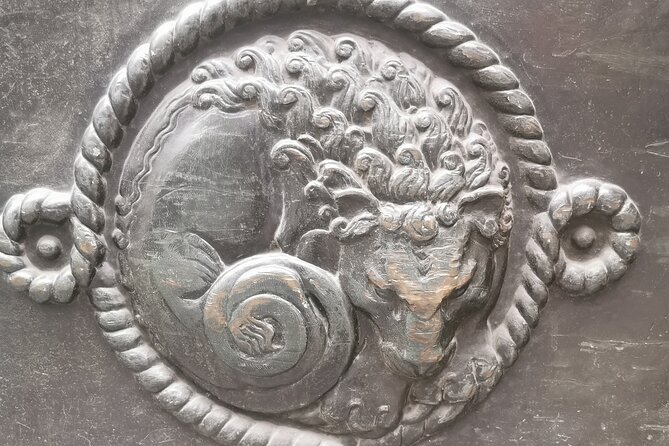
You’ll also pass through St. Lawrence Jewry, described as the official church connected to the City of London Corporation. The focus here is on a saint tied to the growth of Christianity through a sacrifice characterized as unforgettably cruel. I like this kind of stop because it shows how religious memory often carried political weight, especially in places with dense civic networks.
From there, the tour turns outward to the broader governing geography with a brief stop at the City of London itself—framed as the municipal governing body and historic centre of London. Even though this is just about 5 minutes, it’s a good pause to mentally re-ground yourself: you’re not just walking between monuments; you’re moving inside a distinct governing space with its own story.
Then comes a particularly good payoff for people who enjoy seeing art and archaeology together. At the Guildhall Art Gallery, you’re told the location is linked to a Roman Amphitheatre. The stop runs about 25 minutes, which is a longer block than most on this route, giving you time to slow down and absorb the layers instead of sprinting to the next photo spot.
Guildhall mythology, Minotaur links, and the Royal Exchange’s little details
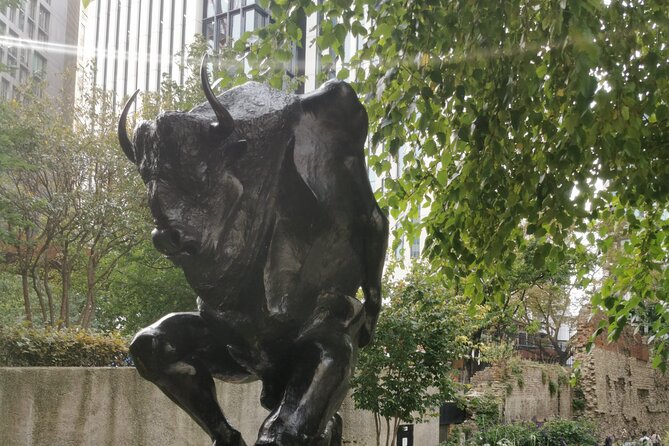
The Guildhall stop is about 15 minutes, and it’s pitched as the City’s town hall with a presence on its current site since at least the 13th century. What I find useful is the way the tour frames mythology and influence across eras, from Greek through Roman, Saxon, and Norman influences. It gives you permission to watch for symbols and stories, not only dates.
After that you’ll hit St. Margaret Lothbury Church, described as representing two wards of the City of London, with attention to how livery companies came by their naming as worshipful companies. That’s the kind of “small explanation” that can make later parts of the route easier to understand, because suddenly the guide isn’t just naming halls—you’re also learning why those halls had status.
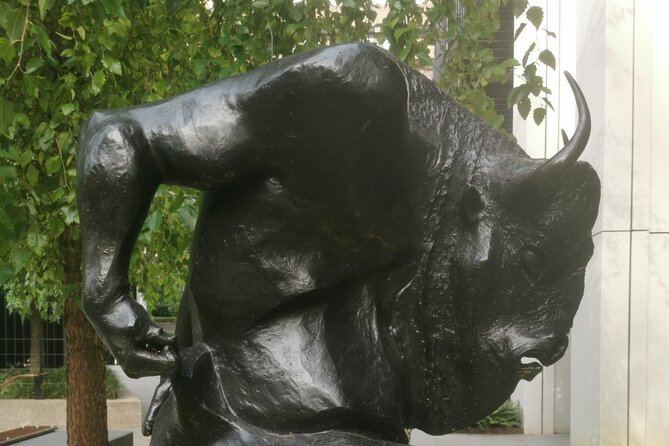
Then comes The Royal Exchange, about 5 minutes. It’s described as built by legend for adventurers to meet, and the tour connects those kinds of meetings to shaping the new world. One detail worth watching for is the golden grasshopper on top—tiny, yes, but it’s the exact sort of thing a history walk should point out so you feel like you saw something you couldn’t have noticed alone.
Mansion House and the Bank of England: power past and present
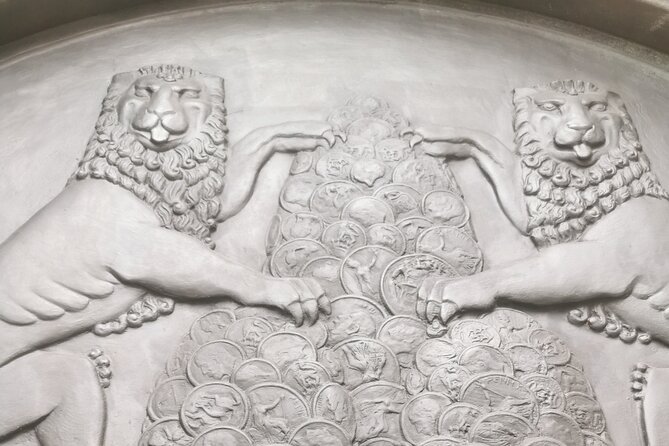
The tour continues to Mansion House of the City of London, roughly 5 minutes, which is presented as the home of the Lord Mayor of the City of London. The tour also frames the Lord Mayor as an international ambassador for the UK’s financial and professional services sector, which ties this stop directly to the modern “why” behind the City’s global reputation.
Then you arrive at the London Troops War Memorial area, about 10 minutes. Here, the tour describes a circle with 12 dragon lamposts representing the 12 great livery companies, linking back to the Minotaur story that’s been referenced as a thread through the walk. Even if you don’t know the myth at first, the visuals make the meaning easier to grasp: civic identity gets sculpted into public space.
Finally, you end at the Bank of England, described as influential yet traditional while still moving forward. The highlight is the golden statue on top, said to tell an interesting story. This ending works well because it doesn’t pretend modern finance appeared out of nowhere—you get the sense of continuity from older governance systems to today’s major institutions.
The guide matters: what to look for during your walk
A big reason this tour scores well is the way the guide turns quick stops into connected understanding. In one review, the guide name Argun stood out for being both informative and strongly focused on off-the-beaten-path sights and not-so-typical stops. When a guide is that focused, you feel the difference right away: you’re not just collecting photos, you’re learning the City’s logic.
To get the most from your guide, come with one or two curiosity questions. For example: how did livery companies gain influence, or why did Roman fortifications end up shaping later civic planning? With only about 2 hours 30 minutes, your questions help steer the moments that matter to you.
Who this tour is best for (and who should think twice)
This is a great fit if you’re a history buff who also wants a manageable pace. It’s also ideal for London newcomers because it teaches you how to read the City instead of only listing famous buildings. I also think it’s a good “first history walk” choice because the route builds a timeline you can reuse later while you explore on your own.
If you’re the type who wants one huge museum experience, this might feel too outward and walk-heavy. Many stops are brief, and the tour’s main goal is interpretation more than prolonged viewing. For people who love long indoor collections, you’d likely need to pair it with a separate museum or church visit after.
Should you book the City of London History Tour?
Book it if you want an efficient route that connects Roman defenses, medieval churches, livery-company power, and modern institutions in one coherent story. At around $30.69, the value improves because many of the stops are admission ticket free, so you’re mainly paying for the guide’s ability to connect the dots.
Skip it only if you prefer slower touring with long pauses, or if your ideal London day is mostly indoor, quiet time. If you’re happy walking, asking questions, and learning how the City’s identity formed, this is the kind of tour that gives you a much better London map in your head.
FAQ
How long is the City of London History Tour?
It lasts about 2 hours 30 minutes.
How much does the tour cost?
The price is listed as $30.69 per person.
Is the tour offered in English?
Yes, the tour is offered in English.
What group size should I expect?
The tour has a maximum of 8 travelers.
Where does the tour start and end?
It starts at Barbie Green2 London Wall Pl, Barbican, London EC2Y 5AU, UK, and ends at London Troops War Memorial1 Cornhill, London EC3V 3LN, UK.
Do I need an admission ticket for the stops?
The listed stops show admission ticket free for each location on the route.
Is there a mobile ticket?
Yes, the tour includes a mobile ticket.
Is the tour wheelchair and stroller accessible?
Yes, it’s described as wheelchair and stroller accessible.