REVIEW · LONDON
London: Churchill and World War 2 Walking Tour in London
Book on GetYourGuide →Operated by See The Sights Tours · Bookable on GetYourGuide
Churchill’s London feels personal. This Churchill and World War 2 walking tour strings together the political nerve center of wartime Britain with unforgettable landmarks, so Downing Street and the Battle of Britain memorial land in your mind as real stories, not just names.
I also like that you finish with a clear sense of how wartime strategy worked, including a stop at the Churchill War Rooms area (entry not included). The 150-minute format is long enough to make it coherent, but short enough to keep your feet happy.
One thing to consider: it’s a straightforward walking route with a lot of pavement time. If you want a tightly scripted, museum-style schedule, you might find the pace a little more conversation-driven, and you should expect it to be hard on low fitness days.
In This Review
- Key highlights you’ll actually remember
- Westminster in one walking thread: how 150 minutes works
- Downing Street, Ministry of Defence, and the Cabinet Office: where wartime leadership lived
- The Cenotaph and Women of World War II memorial: remembrance with a purpose
- The Battle of Britain memorial and Churchill’s statue by Big Ben
- St Margaret’s Church: a quieter angle on Churchill the person
- Churchill War Rooms finish: exterior only, but the payoff is the next step
- Price and value: $18 for a guided walk that hits the core sites
- Who this walk is best for (and who should skip it)
- The small guide details that change the whole experience
- Should you book the Churchill and World War II walking tour?
- FAQ
- How long is the Churchill and World War 2 walking tour in London?
- Where does the tour start?
- Who will I meet at the start, and how do I recognize the guide?
- Is the Churchill War Rooms entrance included?
- What landmarks are included on the route?
- What is the price per person?
- Is this tour offered in English?
- Are luggage or large bags allowed?
- Is the tour suitable for wheelchair users or people with mobility impairments?
- What is the cancellation policy?
Key highlights you’ll actually remember
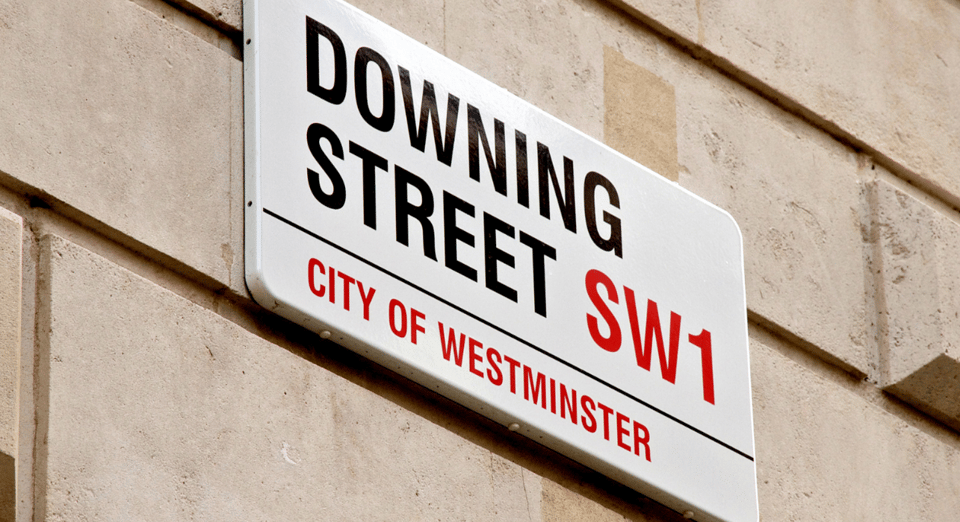
- Downing Street and the wartime decision-makers around Westminster: you’ll see where government leadership operated during the war.
- Ministry of Defence and Cabinet Office stops: ideal for understanding how military and political planning stayed close.
- Cenotaph and Women of World War II memorial: public remembrance, with attention to women’s roles.
- Battle of Britain memorial plus Churchill’s statue near the Houses of Parliament and Big Ben: courage in the sky, leadership on the ground.
- St Margaret’s Church: Churchill’s wedding site, adding a human layer to the WWII story.
- Churchill War Rooms exterior finish: you’ll leave with a strong reason to consider seeing the underground bunker later.
Westminster in one walking thread: how 150 minutes works
This tour is set up for people who like their history tied to place. In about 150 minutes, you move through central Westminster and see a concentrated set of key WWII-related sites, all on foot. The walk starts at Embankment Station, at the Embankment Pier Exit, and your guide meets you holding a yellow umbrella—a simple detail, but it saves time when you’re juggling crowds and signage.
I’d plan on wearing shoes you can trust. This isn’t a sit-and-watch show. You’ll be outside for the whole experience, so check the weather, bring a hat or layer, and keep your phone battery in mind if you’re photo-happy. Also note a practical rule: no luggage or large bags, so pack light.
If you care about context more than facts-on-a-page, you’ll like the way the guide connects Churchill’s world to the war’s turning points around these buildings. One guide named Adam has been praised for connecting Churchill’s life story to the events leading up to World War II and making the streets feel alive as you pass them.
You can also read our reviews of more walking tours in London



Downing Street, Ministry of Defence, and the Cabinet Office: where wartime leadership lived
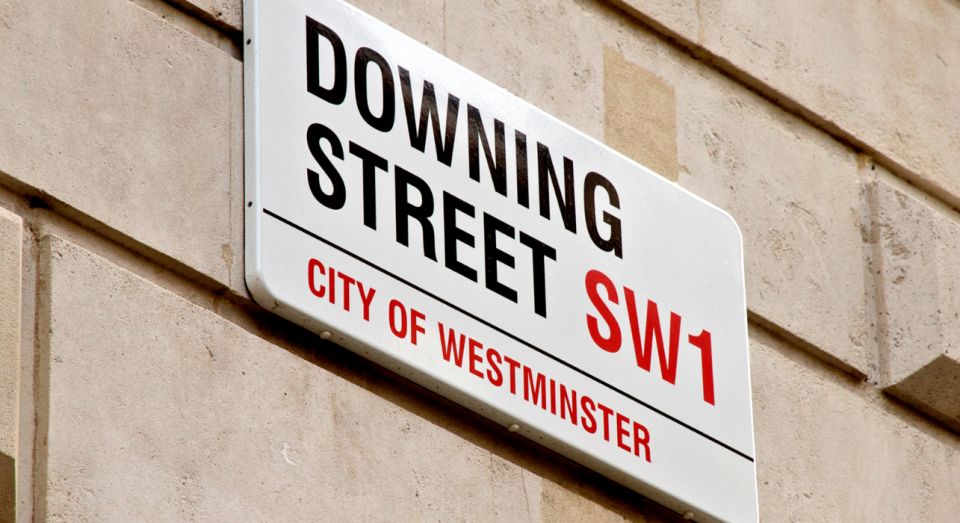
The tour begins by grounding you in the political core of Britain. The first big “stop-and-stare” moment is 10 Downing Street, the symbol of British political power. From street level, it’s easy to think of it as just an address. On this walk, it’s treated as a command center—because that’s what it became for Churchill’s wartime leadership.
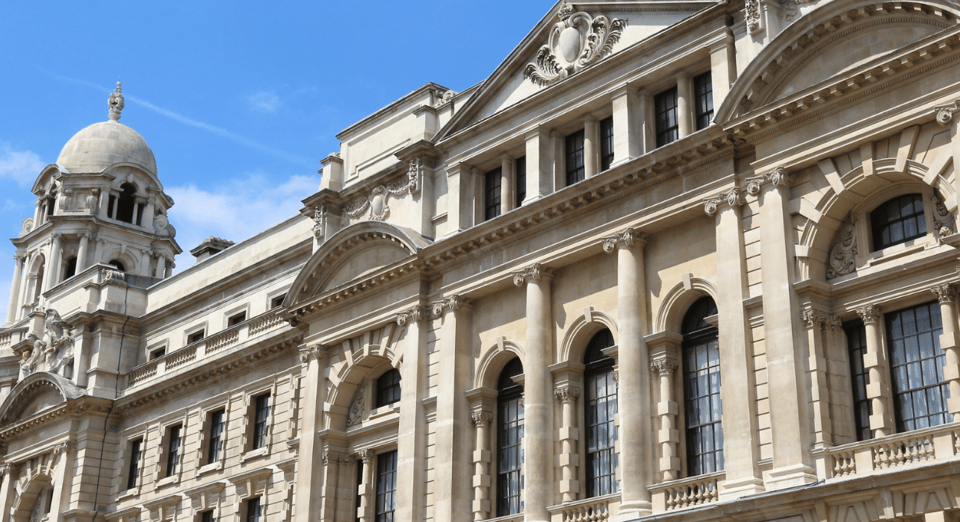
From there you continue to the Ministry of Defence and then the Cabinet Office. These aren’t just impressive government buildings; they’re the setting for how decisions shaped the war. Even if you already know Churchill’s reputation, watching the tour route connect political authority to military planning gives you a better sense of how tightly these worlds were linked.
A practical tip: at major landmarks, sidewalks can get crowded and photo angles vary. Keep your expectations realistic. You’re not touring inside these buildings—you’re reading them like you would a street map. Look up, notice the scale, and try to imagine the conversations happening behind the doors as the guide explains the role each place played.
The Cenotaph and Women of World War II memorial: remembrance with a purpose
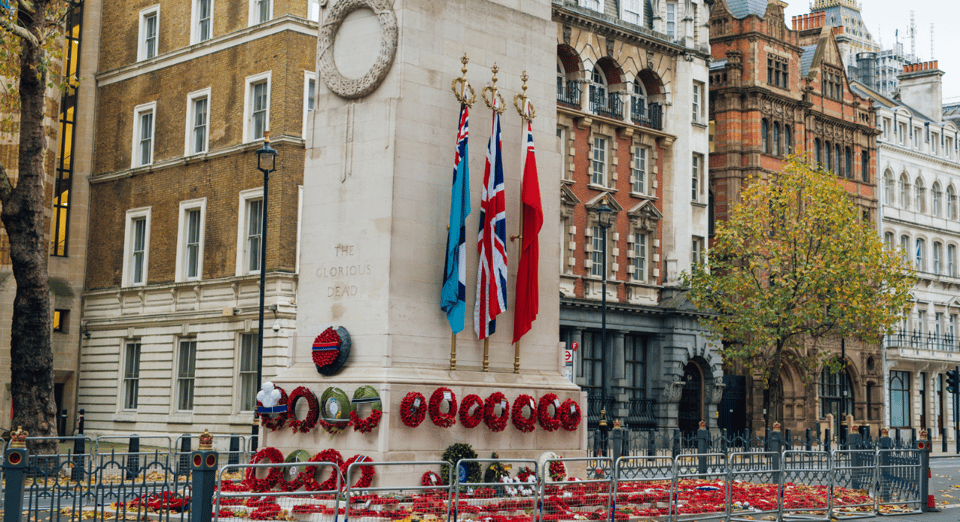
Next comes a part of the route that slows the whole experience down: the Cenotaph. This is the country’s most important war memorial, and it’s the kind of stop where the guide’s role matters. A good walking tour can turn a monument into something you understand, and here you’re prompted to think about collective loss across the World Wars.
Right after that, you’ll see the Women of World War II memorial. This matters for a simple reason: WWII stories often get told through battles and uniforms, but the war was also run through labor, logistics, support roles, and skills that kept the country moving. This memorial gives those contributions a visible place in the same remembrance space where the Cenotaph anchors the solemn tone.
You’ll also pass Her Majesty’s Treasury along the way, which adds an extra layer that many WWII walks skip. Money and resources were not background details—they were part of the war machine. Seeing Treasury in the same sequence as memorials helps you hold two truths at once: war demands sacrifice and war depends on systems.
The Battle of Britain memorial and Churchill’s statue by Big Ben
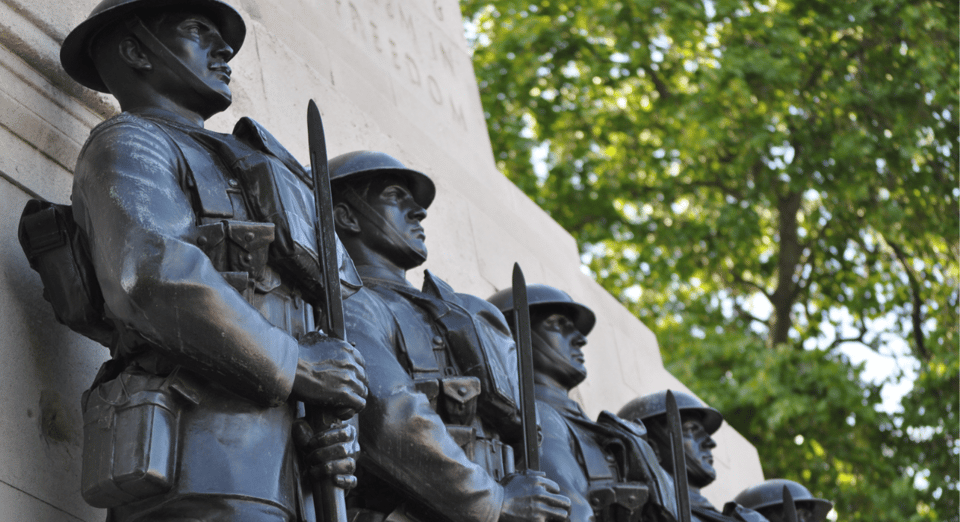
Then the tour shifts from remembrance to courage. The Battle of Britain memorial is a tribute to the pilots who defended Britain from invasion. If you’ve ever wondered why Churchill’s speeches still feel powerful, it helps to connect the rhetoric to the real-world defenders behind it—people risking everything in the air while the world watched from the ground.
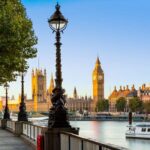
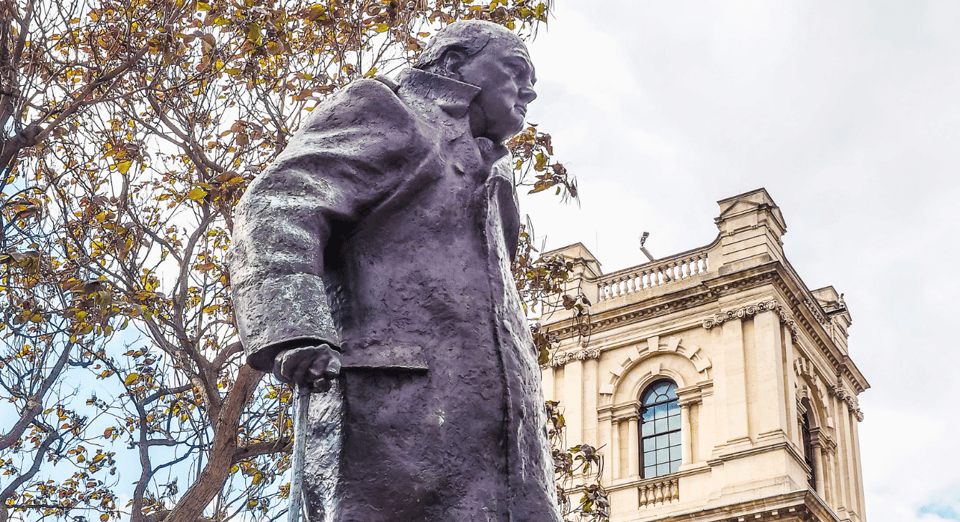
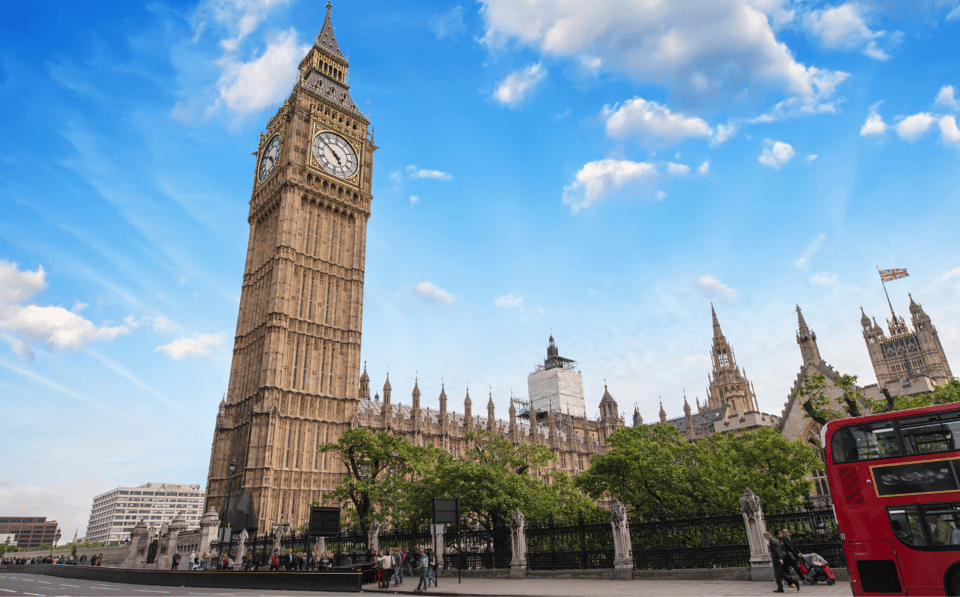
After that, you’ll reach Churchill’s statue, positioned in a classic Westminster view. The statue looks over the Houses of Parliament and Big Ben, tying Churchill’s presence directly to the symbols of the state. It’s a strong visual pairing: the political theater of Parliament, the famous timepiece, and the man presented here as wartime leadership embodied.
This is also one of the better photo zones, but work with the space you’re given. Big Ben and the Parliament buildings attract constant foot traffic, so you may not get a perfect shot without waiting your turn. Still, the visual impact is worth it: the guide’s narration makes the view feel intentional rather than just scenic.
St Margaret’s Church: a quieter angle on Churchill the person
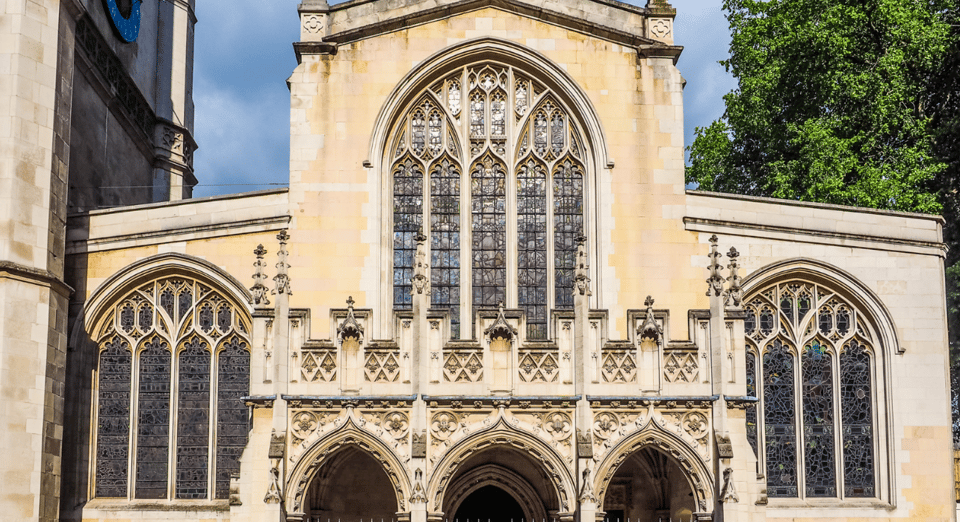
The route continues to St Margaret’s Church, a different kind of stop. Here, the story turns personal. This is where Winston Churchill married Clementine Hozier. That detail changes the mood of the walk. WWII often gets packaged as national drama, but this church gives you a reminder that Churchill’s life included love, family, and major milestones long before the world edged into war.
Practically, church stops are often about respecting space and tone. Dress like you’re in a serious place, keep your voice down, and give yourself a moment to reset. If you’re the type of traveler who likes connecting big events to small human realities, this will be one of your favorite moments on the tour.





Churchill War Rooms finish: exterior only, but the payoff is the next step
The tour ends at the Churchill War Rooms, where you’ll see the exterior. Entry tickets are not included, so you’ll be looking from the outside rather than going underground. Still, the end point is well chosen. By the time you get here, you’ve already moved through the political and memorial parts of the story, plus the symbols around Parliament and Big Ben. Now you reach the idea of strategy made tangible: the underground bunker space where wartime planning was built.
If you want more than the exterior view, this is a clean trigger to add the interior later. On your own time, you can book tickets and see how the war leadership operated in the real spaces designed for it. The tour ends with a natural question in your head: how did people physically run the war from a bunker like that? The walk has set you up to want the answer.
Price and value: $18 for a guided walk that hits the core sites
At $18 per person, this tour is one of the easier history decisions in central London. You’re paying for a guided route that covers major landmarks and major themes in WWII—government leadership, military defense, public remembrance, and Churchill’s personal story. For a walking experience that lasts 150 minutes, the value comes from focus: you’re not wandering alone, and you’re not cherry-picking stops at random.
Here’s how I think about value for this kind of tour:
- You get a professional guide doing the connecting work—turning separate sites into one storyline.
- You cover multiple high-profile Westminster landmarks in one go, so you’re saving time compared to building your own route.
- Even if you already know Churchill, the balance of political power, defense, remembrance, and the Women of WWII memorial makes it hard to label as one-note.
One caution on value: this price makes it tempting to assume it covers everything inside the major sites. It doesn’t. The Churchill War Rooms entrance isn’t included, so if you want that, plan to add it separately.
Who this walk is best for (and who should skip it)
This tour is best for you if you want WWII history with a strong sense of place. If you care about how Britain’s leadership, defense planning, and public memory all intersected, you’ll enjoy the sequencing. It also suits people who like outdoor walking and can handle city streets without needing special accommodations.
It’s not suitable for:
- people with mobility impairments
- wheelchair users
- people with low level of fitness
It also doesn’t work well if you’re traveling with luggage or large bags, since those aren’t allowed.
If your ideal London day includes a guided story and a clear route through landmarks, this is a strong fit.
The small guide details that change the whole experience
This is where a good WWII guide earns their keep. The tour’s core sites are famous, but the details are what make them meaningful. One guide, Adam, has been noted for a deep command of Churchill and the events leading up to WWII, plus the ability to connect Churchill’s life story to what you see around you. That kind of narration is what turns a statue and a plaque into something you can actually talk about afterward.
That said, one potential drawback is that the flow can feel a bit random rather than tightly scripted. My advice: treat it as a conversation-forward walk. Show up ready to listen, and you’ll get more out of it. If you want a strictly timed checklist, you may feel less satisfied.
Should you book the Churchill and World War II walking tour?
Book it if you want a short, focused London walk that links Churchill to the real Westminster landmarks tied to WWII. The best reason is the combination: Downing Street, defense-related sites, memorials (including the Women of World War II memorial), and a personal stop at St Margaret’s Church, ending at the War Rooms exterior.
Skip it if you can’t do sustained walking, need wheelchair access, or you require entry into the War Rooms as part of the package. Also skip if you hate outside walking in the elements.
If you’re deciding between this and just “doing Westminster on your own,” choose the tour. The route is compact, and the guide’s job is to give the connections you’d otherwise miss.
FAQ
How long is the Churchill and World War 2 walking tour in London?
The tour lasts 150 minutes.
Where does the tour start?
It starts at Embankment Station, specifically the Embankment Pier Exit.
Who will I meet at the start, and how do I recognize the guide?
Your guide will be holding a yellow umbrella.
Is the Churchill War Rooms entrance included?
No. You’ll see the Churchill War Rooms (exterior only), and entry tickets are not included.
What landmarks are included on the route?
The included sights are Downing Street, Ministry of Defence, Cabinet Office, Cenotaph, Women of World War II Memorial, HM Treasury, Churchill statue, Houses of Parliament, Big Ben, St Margaret’s Church, and the Churchill War Rooms exterior.
What is the price per person?
The price is $18 per person.
Is this tour offered in English?
Yes, the live tour guide language is English.
Are luggage or large bags allowed?
No. Luggage or large bags are not allowed.
Is the tour suitable for wheelchair users or people with mobility impairments?
No. It is not suitable for people with mobility impairments or wheelchair users.
What is the cancellation policy?
You can cancel up to 24 hours in advance for a full refund.