REVIEW · LONDON
London: Churchill & World War 2 Walking Tour
Book on Viator →Operated by See The Sights Tours · Bookable on Viator
Churchill’s Britain is on every corner. This 2–3 hour themed walk pairs Winston Churchill with key World War II sites across central London, from Downing Street to the Cenotaph. I love how fast it turns big names and dates into street-level context. I also like that the route mixes politics and commemoration, so you get both government and the human cost. One catch: Churchill War Rooms entry tickets are not included, so you’ll only see the complex from outside.
You’ll meet at Embankment station and finish in front of Churchill War Rooms on King Charles Street. It’s a small group (max 25), in English, with a mobile ticket and a professional guide—nice for asking questions without feeling herded. If you’re traveling with mobility limits or a stroller, plan carefully: this one isn’t set up for wheelchairs or prams.
In This Review
- Key things to know before you go
- Quick practical rundown: timing, price, and what you’re really buying
- Meeting Churchill at street level: Embankment to Churchill War Rooms
- Stop 1: Churchill War Rooms (exterior) and why it’s not optional
- Downing Street: leadership as a physical place
- Parliament Square: Churchill statue and the message in bronze
- Houses of Parliament: resilience after raids
- Battle of Britain Memorial: the air war you can read in bronze
- Women of World War II Memorial: the workforce behind the fighting
- The Cenotaph: Remembrance Day and the long echo of loss
- Ministry of Defence: the wartime mindset still in the building
- St Margaret’s Church on Parliament Square: Churchill’s wedding site
- HM Treasury: money, planning, and the emergency basement
- Who this tour fits best (and who should skip it)
- Price and value: how to decide if this is worth $19.01
- Should you book this Churchill & World War II London walk?
- FAQ
- How long is the Churchill & World War 2 walking tour?
- How much does the tour cost?
- Where do I meet the guide, and where does the tour end?
- What time does the tour start?
- Is the Churchill War Rooms entrance ticket included?
- What stops are included on the walking route?
- What language is the tour offered in?
- Is there a group size limit?
- Is the tour suitable for wheelchairs or strollers?
- Are service animals allowed?
Key things to know before you go
- Churchill War Rooms are exterior-only: entry tickets aren’t part of the tour price.
- You’ll cover both power and remembrance: Downing Street, Parliament, plus memorials for airmen and civilians.
- Short stops, steady walking: most locations are just a few minutes, so wear good shoes.
- Churchill connects to more than speeches: you’ll also hit the church tied to his 1908 wedding.
- Easy to fit into a London day: it starts at 1:30 pm and ends near the War Rooms entrance.
- Small group feel: up to 25 people, guided, with service animals allowed.
Quick practical rundown: timing, price, and what you’re really buying
This tour costs about $19.01 per person and runs roughly 2 to 3 hours. That price is a bargain if you’re happy with the tour as a guided walk that tees you up to explore on your own afterward. The big item not included is Churchill War Rooms admission—which matters, because that’s usually the main draw for people who want the underground bunker experience.
You’ll start at Embankment station (Embankment Pl, WC2N 6NS) and end in front of Churchill War Rooms (King Charles St, SW1A 2AQ). The listed start time is 1:30 pm. Expect mostly outdoor walking in central London and brief time at each stop—this isn’t a slow museum crawl, it’s a guided route designed to give you a clear story arc.
Group size is capped at 25, and you get a professional guide. The tour is offered in English and uses a mobile ticket. Service animals are allowed. One more “read this twice” note: it’s not suitable for walking or mobility difficulties and it’s not suitable for prams/strollers.
If you like your sightseeing with a point of view, this one is built for you. It doesn’t just point at buildings; it explains why they mattered during wartime and how Churchill’s leadership showed up in real places—not just history books.
You can also read our reviews of more walking tours in London



Meeting Churchill at street level: Embankment to Churchill War Rooms
You’re dropped into the story right away near Embankment station. From there, the walking route threads together some of the most “government-sounding” names in London—Downing Street, Parliament, the Ministry of Defence, HM Treasury—then balances that with memorial sites that keep the wartime human side in view.
The finish is right where the Churchill War Rooms are: outside, on King Charles Street. Even though the interior isn’t included, the ending location is handy. It means you can decide on the spot whether you want to buy War Rooms tickets separately and go deeper.
This tour works best when you treat it like a guided orientation. I’d do it early enough (or at least at a time when you still have energy) so the rest of your day in London can make more sense. After you see the government buildings and memorials together, the city stops feeling like random famous addresses and starts feeling like a map of wartime decision-making.
Stop 1: Churchill War Rooms (exterior) and why it’s not optional
Churchill War Rooms were the underground nerve centre for British operations during World War II. The bunker is where Churchill and key staff ran the day-to-day crisis management while London faced bombings overhead. The concept alone is intense: a wartime brain-trust hidden under the city.
Here, though, you’re only seeing the complex from the outside. There’s a separate note that admission tickets are not included, and one of the best practical tips is to think of the tour as giving you the context you’ll need before you pay for the interior.
If you’re the type who hates arriving somewhere and discovering you can’t go in, plan ahead. If the Churchill War Rooms are your top priority, consider adding an extra visit either before or after the walk. The tour’s job is to connect the War Rooms to the rest of the London story you’re walking through.
Downing Street: leadership as a physical place
Next up is Downing Street. It’s described as the hub of government—home to the Prime Minister at 10 Downing Street and the Chancellor at No. 11, and a seat of leadership since the 18th century.
On a regular sightseeing day, you might glance at the gate, get a quick photo, and move on. With a Churchill-and-war lens, you start seeing it as a command center in human terms: this is where leadership decisions turned into wartime policy, rationing priorities, and public messaging that shaped morale.
The stop is brief (about 10 minutes), so don’t expect a long Q&A or a deep look at the building itself. Do expect your guide to frame how Churchill’s role connects to the places you’ll hit next—especially Parliament.
Parliament Square: Churchill statue and the message in bronze
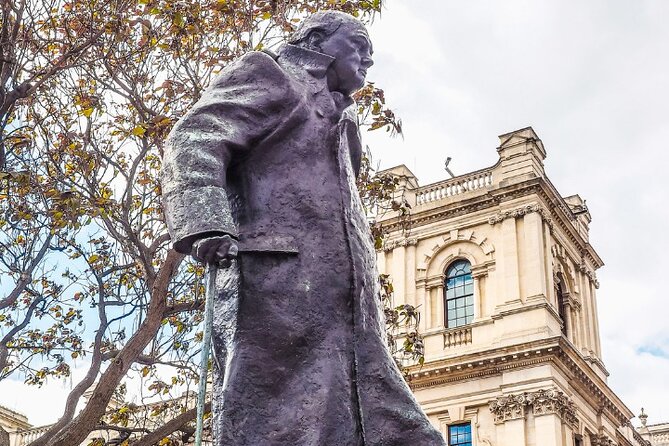
Parliament Square gives you the Churchill statue. The bronze figure shows Churchill in a determined pose, wearing a military overcoat and leaning on his cane, near the Houses of Parliament.
This is one of those stops where you can take your time. The statue isn’t just a likeness. It’s an interpretation of leadership: firmness, persistence, and the idea of defending democracy when everything felt unstable.
If you’ve ever felt like WWII history in London gets stuck in “names and dates,” this statue helps shift you into attitude and symbolism. It sets the tone for what you’ll see at the Houses of Parliament and nearby memorials.



Houses of Parliament: resilience after raids
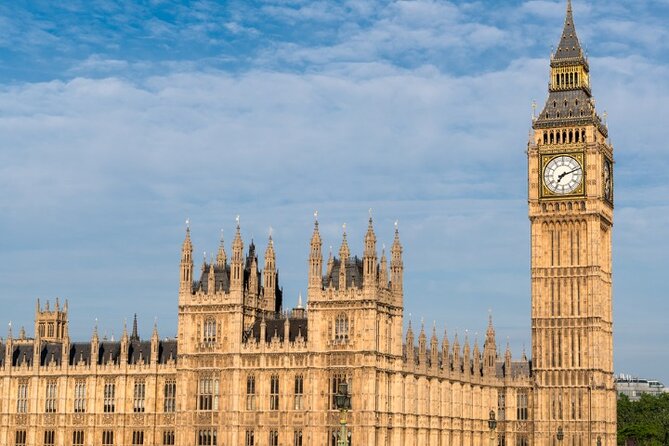
The tour then heads to the Houses of Parliament. During World War II, the buildings were targeted in air raids, including significant damage to the Commons chamber in 1941. Yet parliamentary sessions continued—an important detail, because it links the war not just to air power and battlefields, but to continuity of governance.
Churchill delivered some of his most iconic wartime speeches here. So the stop isn’t just architectural. It’s political theatre with real stakes: keeping national resolve steady while London was under threat.
You get about 10 minutes here, with no mention of interior access. That means the value is in the guide’s explanation: why it mattered that Parliament functioned, and how speeches helped stitch together public confidence.
If you want a deeper look on your own, you’ll likely need separate plans. But for a 2–3 hour walk, this stop gives you the essential connection between leadership, resilience, and the places where that leadership played out.
Battle of Britain Memorial: the air war you can read in bronze
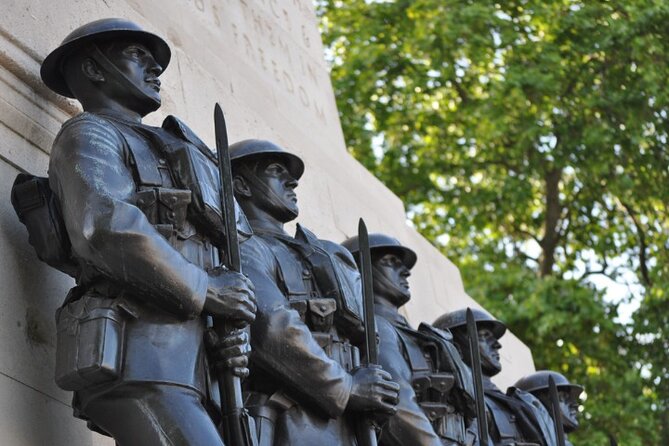
Then comes the Battle of Britain Memorial, a bronze monument dedicated to Royal Air Force pilots who defended Britain during the pivotal air campaign. The frieze includes scenes from the battle, plus the names of airmen who served.
This stop changes the emotional temperature. It’s not about politicians in chambers; it’s about pilots, sacrifice, and the scale of courage required to keep air space from collapsing.
It’s also a good reminder that WWII in London wasn’t only about bomb shelters and speeches. It was about defending the skies, and the memorial is the city’s way of making that visible.
Expect about 5 minutes. Use it to look closely. If you’re the kind of person who likes reading memorial names, this is the moment to slow down even if the group keeps moving.
Women of World War II Memorial: the workforce behind the fighting
Next is the Women of World War II Memorial, honoring British women’s contributions during the war. It points to roles in civil defense, military services, and wartime industries—work that often gets less attention than combat stories.
The memorial features a bronze statue of a woman in overalls, representing the essential jobs that kept Britain functioning. This is the kind of stop that adds balance fast. The guide’s narration usually helps tie the symbolism to the real-world meaning: women weren’t side characters; they were part of the machinery of survival and victory.
It’s a short stop (about 5 minutes), but it’s one of the most important. If you only know WWII from battlefront scenes, this memorial gives you a different angle—work, responsibility, and the ability to carry a whole society forward under pressure.
The Cenotaph: Remembrance Day and the long echo of loss
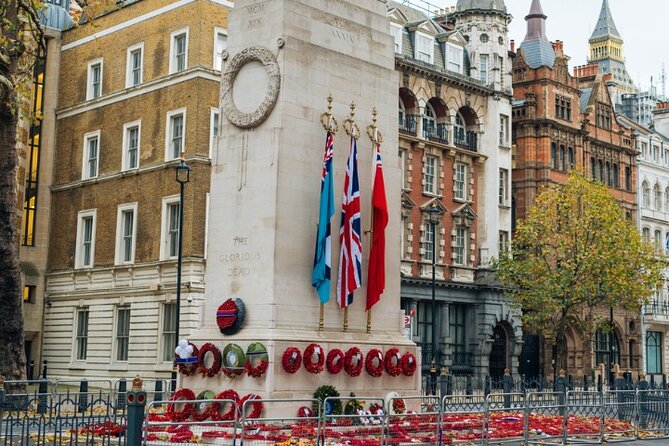
The Cenotaph is a solemn memorial for British and Commonwealth soldiers who died in both World Wars and later conflicts. Every year, the Remembrance Day ceremony on November 11 honors fallen soldiers, making it a steady national symbol of sacrifice.
This stop is brief (about 5 minutes), but it has weight. The Cenotaph works as a reset button for the tour: you move from symbolic leadership and specific wartime campaigns back to loss, mourning, and collective memory.
If you’re visiting around Remembrance Day, you might find the mood different, but even on a normal day, the place has gravity. I’d treat this stop as a quiet moment, not a photo sprint.
Ministry of Defence: the wartime mindset still in the building
The Ministry of Defence (MOD) headquarters is the British government department responsible for national defense and military affairs. The tour notes that it oversees the armed forces, coordinates defense policy, and ensures UK security.
Here, you’re looking at continuity. WWII leadership structures and today’s defense bureaucracy are separated by decades, but the core theme—planning for threats—threads through both.
The tour describes the MOD main building as historic, which matters because it grounds the story in physical space. You get about 5 minutes at this stop, more of a “framing point” than a detailed sightseeing moment.
If you like to connect past and present, this is a good place to ask yourself: how do wartime lessons get turned into institutional habits?
St Margaret’s Church on Parliament Square: Churchill’s wedding site
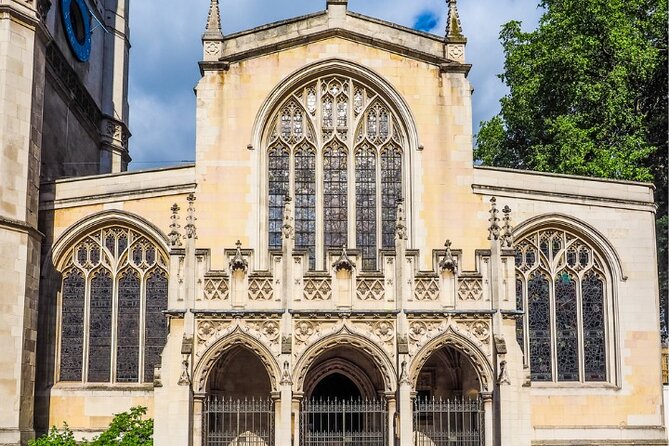
Next is St Margaret’s Church on Parliament Square. This church has a special connection to Winston Churchill because it’s the site of his 1908 wedding to Clementine Hozier. It’s also associated with parliamentary figures, and the church dates back to the 12th century.
The tour also notes the nickname: the Church of the House of Commons. That detail shifts the story again. You’re no longer only tracking Churchill as a wartime spokesman. You’re reminded that he lived a public political life and a private personal life that intersected with the institutions around him.
This stop is about 10 minutes, so it gives you a little time to slow down and absorb the change in tone—from public duty back to human scale.
HM Treasury: money, planning, and the emergency basement
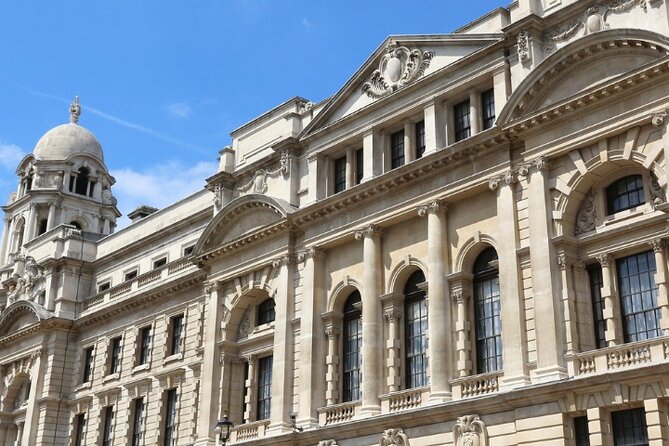
HM Treasury is next. During World War II, it housed key government departments that coordinated the war economy. It’s described as important for managing wartime finances and strategy, and the basement served as an emergency hub during air raids.
This stop is one of my favorites for a simple reason: most WWII tours focus on battles and speeches. Treasury is the “how did a whole nation keep functioning” part of the story. Money isn’t glamorous, but without it, everything else breaks.
You get about 10 minutes. Expect your guide to connect wartime finance to day-to-day survival and long-term planning—how resources got allocated and how government had to keep running even when the city was under threat.
By the time you reach the end of the tour, you’ll likely feel like you’ve mapped the invisible parts of war: decision-making, coordination, and staying organized when bombs are falling.
Who this tour fits best (and who should skip it)
This walking tour is a good match if you want:
- A guided route through major Churchill and WWII landmarks in central London
- A story that connects leadership, government function, and memorial meaning
- A budget-friendly start to WWII history, with the option to add Churchill War Rooms separately
It’s not a great match if you:
- Need accessibility accommodations or use a mobility device (it’s not suitable for walking or mobility difficulties)
- Use a stroller/pram (it’s also not suitable for those)
- Want a full ticket-included museum experience at the War Rooms (you’ll need separate entry tickets)
Also, plan for weather. You’ll be outside most of the time, with multiple stops and short durations. London can change fast.
Price and value: how to decide if this is worth $19.01
At $19.01 per person, you’re paying for a guided walk that hits a lot of major names in one go. The value is in efficiency and in the guide’s ability to connect the dots: Churchill, Parliament, defense institutions, and memorials all in one route.
The main reason some people feel surprised is the War Rooms interior. If you expected to go underground as part of the included price, you’ll have to buy admission separately. If you’re okay with exterior-only and want the guided framing first, it’s still a smart buy.
My practical take: if you already planned to see Churchill War Rooms at some point, do this tour for the context. If you only want the bunker exhibit, you might decide to skip the walk and buy the War Rooms ticket alone.
Should you book this Churchill & World War II London walk?
Book it if you like your WWII history grounded in real locations—government addresses, memorials, and the places that shaped public resolve. This route is a fast way to understand how Churchill’s leadership fit into the physical map of London.
Skip it if you’re mainly chasing indoor museum time, or if accessibility needs make a walking route difficult. Also, double-check your plan for Churchill War Rooms tickets: the tour ends in front of the entrance, but entry is separate.
If you want a guided story you can build on, this is the kind of tour that makes the rest of London feel more intentional.
FAQ
How long is the Churchill & World War 2 walking tour?
It runs about 2 to 3 hours.
How much does the tour cost?
The price is listed as $19.01 per person.
Where do I meet the guide, and where does the tour end?
You start at Embankment station, Embankment Pl, London WC2N 6NS, UK. The tour ends in front of Churchill War Rooms at King Charles St, London SW1A 2AQ, UK.
What time does the tour start?
The start time is 1:30 pm.
Is the Churchill War Rooms entrance ticket included?
No. Churchill War Rooms tickets are not included, and the tour lists Churchill War Rooms as exterior only.
What stops are included on the walking route?
Stops listed include Downing Street, the Winston Churchill statue, the Battle of Britain Memorial, Houses of Parliament, the Women of World War II Memorial, the Cenotaph, the Ministry of Defence, Saint Margaret’s Church, and HM Treasury, plus Churchill War Rooms (exterior).
What language is the tour offered in?
The tour is offered in English.
Is there a group size limit?
Yes. The tour has a maximum of 25 travelers.
Is the tour suitable for wheelchairs or strollers?
No. The tour is not suitable for guests with walking or mobility difficulties and it’s not suitable for prams, buggys, or strollers.
Are service animals allowed?
Yes, service animals are allowed.