REVIEW · LONDON
London: Guided Agatha Christie Walking Tour
Book on GetYourGuide →Operated by Brit Icon Tours · Bookable on GetYourGuide
London turns into a murder mystery map on foot. I love how this Agatha Christie walking tour connects real streets to her plots, and I love the small-group pace that lets you ask questions. In two hours, you get that A to Z feeling for how her London life became fiction.
The biggest win here is the storytelling. Guides like Rory and Jonathan (who has performed in multiple adaptations of Christie stories) make the names and dates feel practical, not academic. One possible drawback: it’s only two hours, so if you want wall-to-wall detail at every stop, you may find it a bit light.
In This Review
- Key points before you go
- Why this Christie walk feels like finding clues on real streets
- Meeting at Euston Square, not Euston Mainline
- The route’s big idea: institutions, neighborhoods, and people
- Garrick Club, British Museum, and University of London: where ideas took shape
- Mayfair, Bloomsbury, Chinatown, and Theatreland: London’s mood, in sections
- Christie at work and in life: the hospital dispensary and Max Mallowen
- Arthur Conan Doyle and the writers she admired
- Outside the Mousetrap at St Martin’s: the theatre stop that hits
- Guides make or break the experience: Rory and Jonathan
- Price and value: is $22 worth it for two hours?
- Who should book this tour, and who might skip it
- A quick reality check: one possible drawback to know ahead
- Should you book this London Agatha Christie walking tour?
- FAQ
- What is the duration of the London Agatha Christie walking tour?
- How much does the tour cost?
- How many people are in the group?
- Where does the tour meet?
- What’s included in the tour?
- Is the tour conducted in English?
- What should I bring?
- Is there free cancellation?
- Does it offer reserve now and pay later?
- Is this tour suitable for wheelchair users or limited mobility?
Key points before you go
- 10+ inspiration locations linked to Christie’s life and works, not just one famous photo stop
- Expert, live guide in English, with guides including Rory and Jonathan
- Mayfair, Bloomsbury, Chinatown, and Theatreland along the route, so the city itself becomes the lesson
- Stops at major institutions like the British Museum, University of London, and Garrick Club
- A key highlight: the outdoor moment outside the Mousetrap, tied to the theatre world
Why this Christie walk feels like finding clues on real streets
This isn’t the kind of tour where you stand still and read plaques. You move, you look around, and you start noticing how London can look different depending on what you’re trying to understand. That’s exactly what I like about an Agatha Christie-focused walk: the city feels like part of the plot, not just a backdrop.
You’ll cover areas that Christie fans usually recognize from descriptions in her books, but you’ll also see the settings behind the scenes—the institutions and the social spaces that shaped how people talked, worked, and moved. The result is a tour that helps you read the stories differently. Instead of only picturing fictional scenes, you get a stronger sense of where the mood came from: the rhythms of the neighborhoods, the presence of theatres, and the role of major London institutions.
And because the group is limited to 10 people, the tour stays conversational. You’re not shouting over a crowd, and you can actually catch the meaning behind what the guide points out.
You can also read our reviews of more walking tours in London



Meeting at Euston Square, not Euston Mainline
Start at Euston Square Underground Station, outside the exit of the Metropolitan and Circle Lines on Gower Street. It’s easy to mix it up with Euston Mainline Station, even though they’re close. If you’re arriving by train, take an extra minute to confirm you’re at the right station name before you set off.
Once you’re there, the walk starts promptly and stays focused. This matters because the tour is only 2 hours, so you’ll want to be on time and ready for a true walking pace—not a wandering stroll.
The route’s big idea: institutions, neighborhoods, and people
The way this tour is built makes the connections simple. Christie’s London wasn’t just a series of pretty streets. It was a web of places where she encountered systems (hospitals, clubs, universities), social life (neighborhoods like Mayfair and Bloomsbury), and theatre culture (Theatreland and St Martin’s Theatre).
You’ll see over 10 inspirational locations during the walk, and the guide ties them back to her life and writing. Some stops are tied to specific chapters of her story. Others are there to show you how London’s institutions shaped the kinds of characters and situations she wrote.
Garrick Club, British Museum, and University of London: where ideas took shape
One of my favorite parts of this tour is how it uses famous institutions without turning the day into a lecture hall. You’ll visit or pass by major stops including the Garrick Club, the British Museum, and the University of London. Even if you’ve walked past these places before, the guide frames them in a new way.
Here’s why it works for you: Christie wasn’t writing in a vacuum. She was writing from a London that ran on organizations—clubs, libraries, universities—where people gathered, exchanged ideas, and learned how status worked. When you stand near a place like the Garrick Club, it’s easier to grasp the social tension and class codes that show up again and again in her mysteries.
At the British Museum, the atmosphere alone helps. You’re surrounded by the idea of research, archives, and curiosity. That’s a useful lens for reading Christie, because her plotting often depends on details and on how information moves.
And at the University of London area, the focus shifts toward education and public life. The guide helps you see how these institutions could influence the way Christie viewed knowledge—who has it, who uses it, and what happens when someone with the wrong information decides to act anyway.
Mayfair, Bloomsbury, Chinatown, and Theatreland: London’s mood, in sections
This tour doesn’t treat the city as one flat background. It moves through distinct neighborhoods, and each area brings a different kind of energy.
Mayfair gives you that sense of polished society and sharper edges. Bloomsbury adds a different flavor—more literary and intellectual by association. Chinatown brings the feeling of London’s layered communities and fast-paced city life. And Theatreland ties everything back to performance, audiences, and the way a stage can teach you about secrets, roles, and timing.
What I like is that the guide doesn’t just point and move on. You’ll learn how these locations influenced Christie’s settings and how people in and around these places could become the seeds for characters. If you’re a fan who loves atmosphere, this section is where the tour starts to feel like story-building.
You can also read our reviews of more guided tours in London






Christie at work and in life: the hospital dispensary and Max Mallowen
You’ll also hear about Christie’s personal timeline in a way that feels connected to her writing. A major thread is her work in a hospital dispensary, which the guide uses to explain how her experiences could shape what she later put into her plots—especially when it comes to discipline, observation, and the human stakes behind everyday life.
Another key part is her marriage to Max Mallowen. That personal context matters because it helps you understand Christie as a person moving through London, not just a name attached to books. When you know the life background, her fictional decisions start to make more sense: how she built relationships, how she understood interruptions and stress, and how she treated character motivations.
This isn’t presented as a dry biography. The guide connects it back to themes you can spot in her mysteries, so you leave with more than dates—you leave with a clearer understanding of how her world fed her imagination.
Arthur Conan Doyle and the writers she admired
A nice bonus on this tour is that you’ll also hear about writers Christie admired, including Sir Arthur Conan Doyle. That comparison helps you see Christie’s influences without turning this into a history class.
Why it’s useful for you: if you love detective fiction, it’s fun to learn how one major genre voice shaped another. Even if you’re mainly here for Poirot, this context gives you a sense of the wider detective world Christie was writing within—and what she might have borrowed in style, structure, or pacing.
Outside the Mousetrap at St Martin’s: the theatre stop that hits
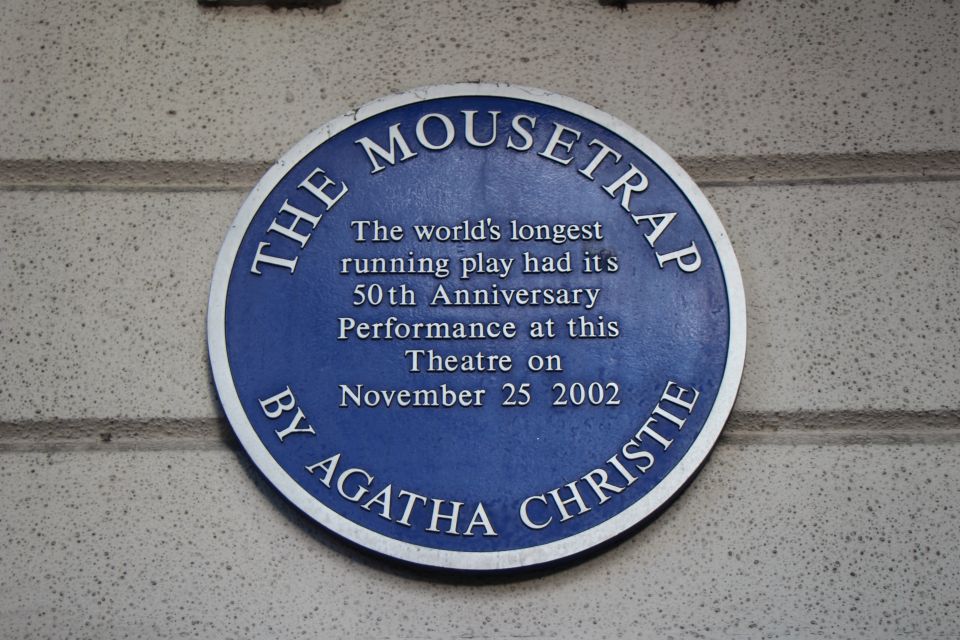
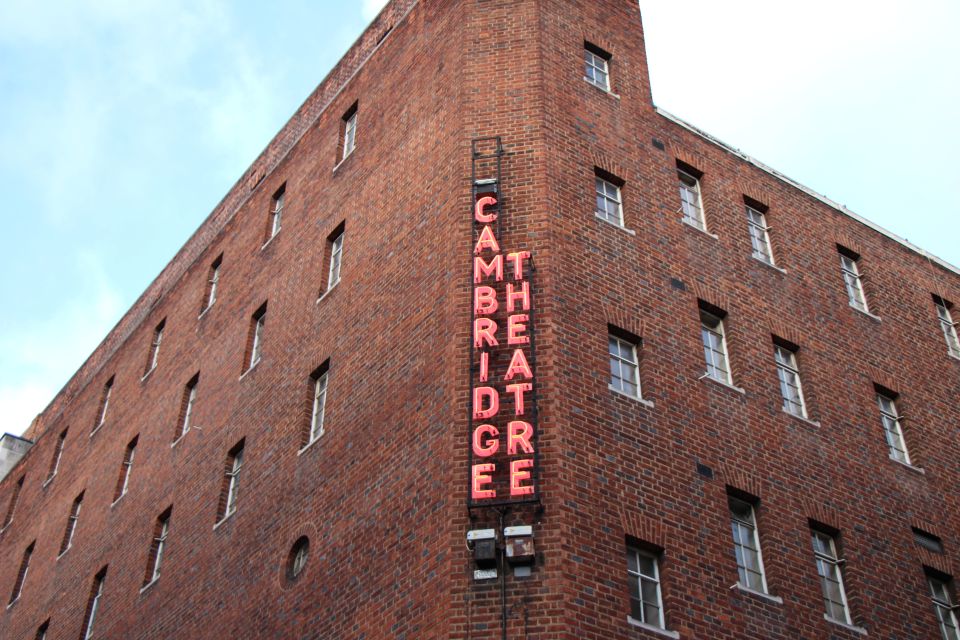
The tour’s standout moment for many fans is the stop outside the Mousetrap, located at St Martin’s Theatre. You’ll learn that this iconic murder mystery has a surprisingly royal origin, which is exactly the kind of detail that doesn’t show up in the usual quick summaries.
You’ll also discover which famous faces from the British acting elite have tread the boards of St Martin’s Theatre. That’s a smart stop, because it connects Christie’s fictional success to the real-world machine of theatre—actors, audiences, and long-running public appetite for mystery.
One practical note: theatres often mean you’re near crowds and traffic around the area. The guide keeps the group moving, but you’ll want to be mentally ready for a slightly busier street moment compared to quieter academic corners of London.
Guides make or break the experience: Rory and Jonathan
This is where the tour really pays off. With guides like Rory and Jonathan, you get a sense that the tour is built around performance, not just facts.
Jonathan is especially interesting if you like adaptations. Knowing he has performed in multiple adaptations of stories written by Christie means his explanations come with an actor’s understanding of timing and suspense. Rory, meanwhile, is praised for doing a great job and making the tour a weekend highlight—so the delivery style clearly lands with Christie fans.
If you’re sensitive to dead-air or overly formal guiding, you’ll probably appreciate the tone here. It’s friendly, focused, and built for people who actually want to connect the city to the books.
Price and value: is $22 worth it for two hours?
At about $22 per person for a 2-hour small-group walk, the value comes from three things.
First, you’re not just paying for “a few sights.” You’re paying for a pro guide making connections between many locations and Christie’s life. The walk includes major institutions and multiple neighborhoods, which would cost you more time if you tried to replicate it on your own.
Second, the group size is capped at 10. That means the tour has enough attention per person to stay engaging, which is often what you’re really paying for on any walking tour.
Third, the theatre stop outside the Mousetrap gives you a specific, fan-friendly moment. It’s not generic “mystery London.” It’s Christie-specific, and that uniqueness is what justifies the price for most fans.
If you only care about one or two famous sights, you might question the value. But if you want the full Christie-meets-London picture in a short window, this price-to-time ratio is hard to beat.
Who should book this tour, and who might skip it
This tour is a great fit if you love Christie, Poirot, and the idea of detective fiction rooted in real places. You’ll also like it if you enjoy theatre culture and want to understand why London’s stage scene matters to stories like the Mousetrap.
It’s also a good choice for a short visit. Two hours is enough time to learn meaningful connections without burning a whole day.
The main limitation is mobility. This tour is not recommended for people with limited mobility, and it’s not suitable for wheelchair users. Since it’s a walking tour with outdoor sections, I’d treat this as a firm heads-up rather than something to “hope for.”
A quick reality check: one possible drawback to know ahead
Even with a talented guide, a two-hour walking format can’t cover everything. If you’re the type who wants lots of extra detail at every single stop, you may wish there were more time or deeper expansion.
On the flip side, if you like a guided overview that focuses on the most meaningful connections, the tight timing is a strength. It keeps the tour from turning into a slow crawl through trivia.
Should you book this London Agatha Christie walking tour?
If you want a compact, fan-focused way to see Christie’s London through institutions, neighborhoods, and theatre, I’d book it. The combination of over 10 inspiration locations, an expert English-speaking guide, and the standout stop outside the Mousetrap makes it feel purpose-built for Christie lovers.
Skip it only if mobility is a concern for you, or if you strongly prefer deep, chapter-by-chapter discussion instead of a fast, connected walk through key places. For most people—especially first-timers in London—it’s a satisfying way to turn the city into a clue trail.
FAQ
What is the duration of the London Agatha Christie walking tour?
It lasts 2 hours.
How much does the tour cost?
The price is $22 per person.
How many people are in the group?
It’s a small group limited to 10 participants.
Where does the tour meet?
You meet outside the exit of Euston Square Underground Station (Metropolitan and Circle Lines) on Gower Street. Make sure you use Euston Square, not Euston Mainline Station.
What’s included in the tour?
A professional guide is included.
Is the tour conducted in English?
Yes, the live guide is in English.
What should I bring?
Bring weather-appropriate clothing.
Is there free cancellation?
Yes, you can cancel up to 24 hours in advance for a full refund.
Does it offer reserve now and pay later?
Yes, you can reserve your spot and pay nothing today.
Is this tour suitable for wheelchair users or limited mobility?
No. It is not recommended for people with limited mobility and is not suitable for wheelchair users.