REVIEW · LONDON
London: Modern Architecture & Building Guided Walking Tour
Book on GetYourGuide →Operated by Ridge Trips Ltd · Bookable on GetYourGuide
London’s skyline has a secret engineering story. This guided walk turns famous towers like The Shard and the Walkie-Talkie into real-world buildings with clear, human-scale stories, and I especially like how Sam connects architecture to construction thinking. My other favorite part is the mix of big names (Gherkin, Lloyd’s, Barbican) with less obvious details you’d miss on your own. The one drawback: it’s a walking tour with no building entry, and you’ll be outdoors in weather.
You also get a smart finish at NLA (The London Centre), where entry is free and you can browse skyline scale models at your leisure. Plan on about 2 hours for the walk, plus 15–30 minutes to make the most of NLA if it’s open that day.
In This Review
- Key highlights worth planning around
- Sugar Quay Jetty start: the river-to-city transition
- City Hall and the Thames: where the skyline meets infrastructure
- The Shard, Walkie-Talkie, and Lloyd’s: street-level explanations that stick
- St Mary Axe pair: the Gherkin and the Can of Ham
- Liverpool Street Station and Barbican: modern London isn’t only glass
- NLA at The London Centre: free models that make the skyline click
- No entry into buildings: what you still get for the money
- Timing and pacing: 2 hours outside plus optional NLA time
- Who should book this modern architecture walk
- Who should skip or adjust expectations
- Book it or skip it: my practical take
- FAQ
- Is the tour duration about 2 hours?
- Where does the tour start?
- Where does the tour end?
- Do we enter the buildings we see?
- When can I enter NLA (The London Centre)?
- What language is the tour in?
- What should I bring?
- Is the tour suitable for wheelchair users?
Key highlights worth planning around
- Sam’s construction-management angle makes the modern buildings feel practical, not just photogenic.
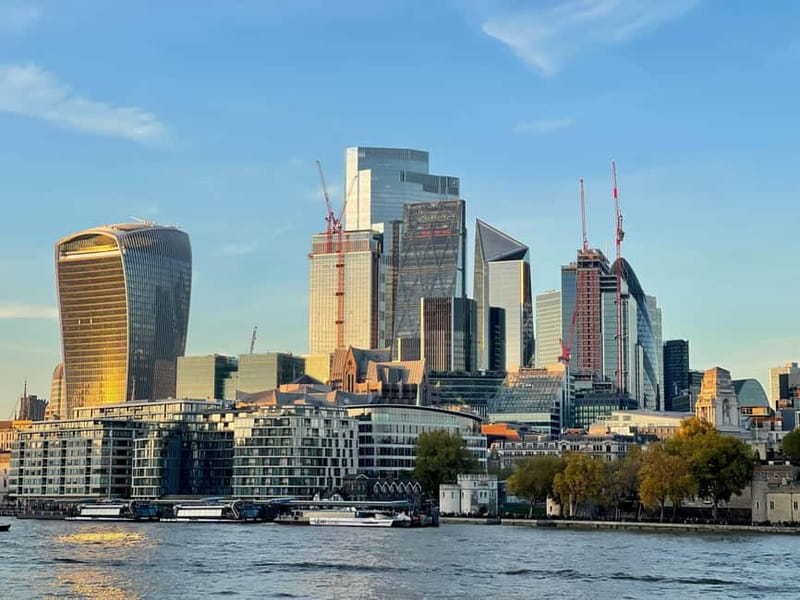
- Up-close City of London icons: Shard, Walkie-Talkie (Fenchurch Building), Gherkin, Lloyd’s Building, Leadenhall Building, City Hall.
- What lies beneath London: stories about engineering projects that shaped streets and foundations.
- Future building developments across the City of London, explained in plain language.
- NLA scale models at The London Centre, a free end-stop to help the skyline click into place.
Sugar Quay Jetty start: the river-to-city transition
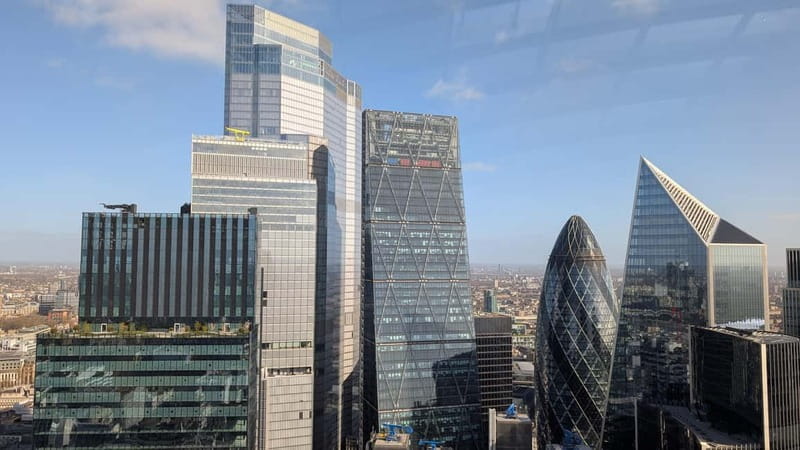
The tour starts near the Tower of London at Sugar Quay Jetty. It’s a good place to begin because you’re already near the Thames, so the first views set up the contrast: old London energy on one side of the river, modern towers aiming upward in the City.
From the start, you’re not doing random sightseeing. You’re walking with a guide who understands how buildings get made, which changes what you notice. You’ll start seeing things like massing, angles, and why particular shapes became the choices they did.
You can also read our reviews of more walking tours in London



City Hall and the Thames: where the skyline meets infrastructure
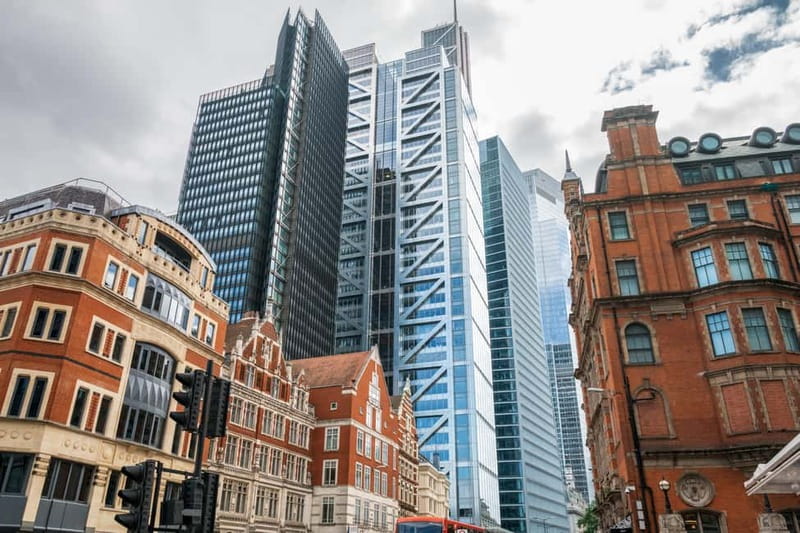
One of the smartest stops is City Hall. You get a chance to talk about how modern London isn’t just about towers in the air—it’s also about the systems that move people and services around the river and through the City.
Then you shift into Thames views. Even without going far, that river stretch helps you read the skyline: where the cluster of modern buildings is tight, where sightlines open up, and why some designs look better from certain angles. It’s the kind of background context that makes later photos turn out more meaningful.
The Shard, Walkie-Talkie, and Lloyd’s: street-level explanations that stick
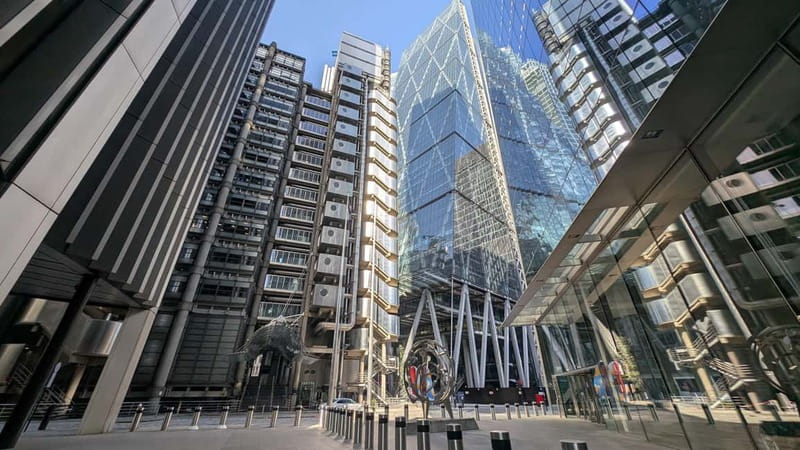
At The Shard, you get the iconic close-up, but the real value is the story behind it—how major design and construction decisions translate into something you can see from street level. Towers like this can feel like they belong only to postcards, yet the guide keeps bringing it back to building reality.
Next comes the Walkie-Talkie, officially the Fenchurch Building. This is one of those buildings people recognize instantly, and the guide uses that familiarity to explain what makes it notable. You’ll look at the form and talk about what that shape means in practice.
Lloyd’s of London is another highlight. It’s the kind of building you’ve probably seen in skyline photos, but the tour helps you notice the details you’d normally gloss over. And if you enjoy the technical side, this is where Sam’s construction-management background becomes a real advantage.
St Mary Axe pair: the Gherkin and the Can of Ham
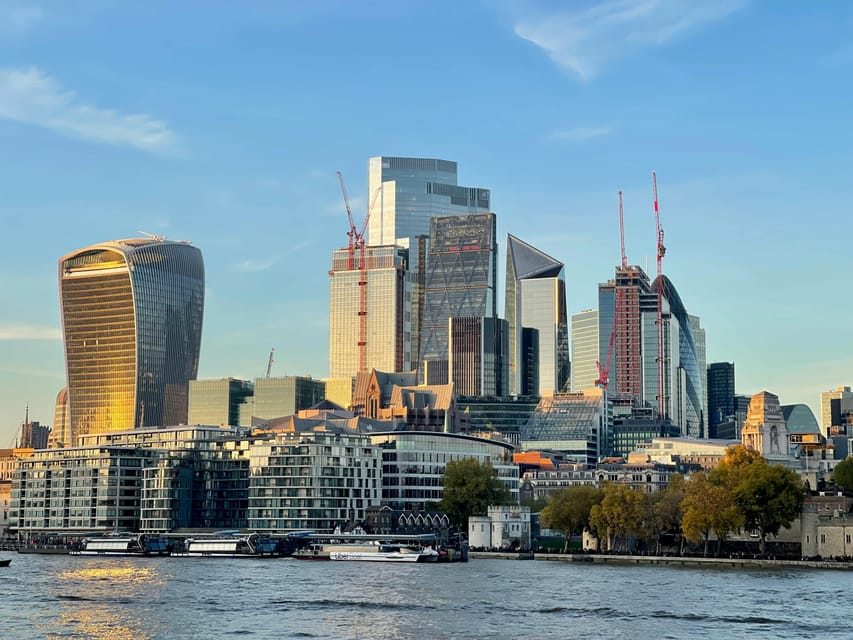
The tour hits the 30 St Mary Axe area, better known as the Gherkin. From the right street angles, the building’s silhouette reads clearly—and you’ll get explanations for why the structure’s character became part of London’s modern identity. You also get those useful small “wait, look again” moments that make the buildings feel less like wallpaper.
Then you move to 70 St Mary Axe, often called the Can of Ham. It’s a different design language from the Gherkin, and the contrast is the point. Seeing them close together helps you understand that London’s modern skyline isn’t one style—it’s multiple ideas competing and collaborating across decades.
If you like architecture that feels engineering-driven rather than purely decorative, this section is where you’ll feel most at home.
Liverpool Street Station and Barbican: modern London isn’t only glass

After the concentrated cluster of skyscrapers, the tour shifts toward other corners of the City. Liverpool Street Station is an important stop because it reminds you that London’s modern growth isn’t just vertical. Transport nodes shape where buildings go up and how people actually use them day-to-day.
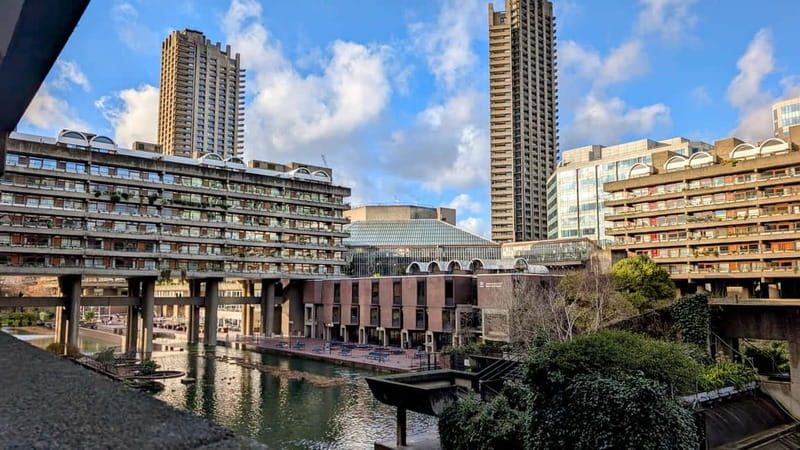
Then the walk brings you to the Barbican. This stop is useful because it broadens the modern-architecture story beyond the sharpest, newest names. You’ll see a different kind of modernism—one that feels planned, heavy, and designed for city life rather than just skyline impact.
This is also a good reminder that London’s “now” is layered. The city isn’t replacing everything old; it’s remixing and repurposing space.
You can also read our reviews of more guided tours in London






NLA at The London Centre: free models that make the skyline click
The tour finishes at NLA (The London Centre). The big perk here is simple: entry is free, and you can read information and view scale models of London’s skyline at your own pace.
It’s also a good place to reset if you want more time with photos. At street level, you see parts of buildings. At NLA, you can step back and understand how those parts fit together across the broader City.
One practical note: NLA is open Tuesday to Saturday until 17:00. That matters because Sunday and Monday (and evening tours) won’t be able to enter. If you’re planning a weekend visit, this is the difference between a “great walk” and a “great walk plus extra skyline context.”
Even when you do enter, don’t rush. I’d plan 15–30 minutes after the walk so the models actually help your understanding.
No entry into buildings: what you still get for the money

Let’s address the elephant in the street: you do not go inside the buildings you see. This is not a “tour + elevator + lobby” experience.
So what are you paying for? You’re paying for a guide who can explain what’s happening in design and construction, not just point at the façade. Sam’s background and the way he explains makes it easier to connect the dots between architecture, engineering, and London’s ongoing development. If you’re the type who likes to understand why something was built that way, that’s the real value.
The price is $52.53 per person for about 2 hours. For London, that’s reasonable for a focused small-group walking format—especially since you also end at NLA where the models are free to view (when open).
If you only want interior access and sweeping luxury spaces, this won’t match that expectation. But if you want street-level insight and skyline context, it’s a strong deal.
Timing and pacing: 2 hours outside plus optional NLA time
The walking part runs about 2 hours, and the route is paced for a guided experience rather than a sprint. You’ll stop often, look around, and listen long enough for details to make sense.
Because it’s outdoors, you’ll want comfortable shoes and weather-appropriate clothing. Bring water and a camera, but also keep room for noticing things without always lifting the phone. That’s how the architecture stories actually land.
Who should book this modern architecture walk

This tour fits best if you:
- like modern London architecture, even if you’re more interested in how it works than how it looks
- want a guided explanation rather than trying to self-explain from guidebooks
- enjoy asking questions and getting more technical answers in plain language
It’s also great for couples with mixed interests. One of the benefits here is that the guide can keep things engaging even if architecture isn’t your top hobby. The construction framing helps the buildings feel approachable.
Who should skip or adjust expectations
Avoid this tour if:
- you have mobility impairments or need wheelchair-friendly access (it’s not suitable for wheelchair users and not suitable for people with mobility impairments)
- you’re expecting entry into the buildings (you won’t go inside)
- you can’t handle weather and outdoor walking, since the tour proceeds unless conditions are extreme
If your timing depends on NLA access, pick your day carefully. Tuesday to Saturday is your best bet if you want that free models stop.
Book it or skip it: my practical take
I think this is a smart way to spend a short slice of London time if you want more than photos. Sam brings a construction-management mindset that makes modern buildings feel like solved problems instead of mysterious sculptures. You’ll also come away with a clearer view of how today’s skyline connects to what’s planned for the future—and what’s been built (and built under) London over time.
If your main goal is to go inside famous buildings, look elsewhere. If your goal is to understand the modern skyline from the street, this is a strong yes.
FAQ
Is the tour duration about 2 hours?
Yes. The walk is about 2 hours long. I also recommend adding extra time at the end for NLA.
Where does the tour start?
The meeting point is Sugar Quay Jetty near the Tower of London.
Where does the tour end?
The tour finishes at NLA (The London Centre).
Do we enter the buildings we see?
No. The tour includes guided viewing, but entry into the buildings is not included.
When can I enter NLA (The London Centre)?
NLA is open Tuesday to Saturday until 17:00. Sunday, Monday, and evening tours will not be able to enter.
What language is the tour in?
The tour is in English.
What should I bring?
Bring comfortable shoes, a camera, water, and weather-appropriate clothing.
Is the tour suitable for wheelchair users?
No. It is not suitable for wheelchair users and not suitable for people with mobility impairments.