REVIEW · LONDON
London Private Jack The Ripper Tour
Book on Viator →Operated by Tours Of The UK · Bookable on Viator
Whitechapel still feels close to the story. This private Jack the Ripper tour takes you from Whitechapel to Spitalfields with a live guide who explains the cases at each stop, step by step. It ends at Liverpool Street Station, so you can wrap up near a major transport hub without guessing your way back.
I especially like the private group size (up to 15), because it makes the conversation feel real, not rushed. And when your guide is someone like Michael, who was praised as very knowledgeable and genuinely good with solo women, you get the kind of pacing that lets you ask your own questions as you go.
One thing to consider: this is still a walking trail for about 2 hours 30 minutes, so wear comfortable shoes and plan for moderate walking, with short stops outdoors.
In This Review
- Key things to know before you go
- Private Jack the Ripper Tour: why this feels worth the money
- Getting oriented: start at Whitechapel Road, finish by Liverpool Street
- Stop 1: Whitechapel and Polly Nichols, the first canonical victim
- Stop 2: outside the Working Lads Institute and the inquest system
- Stop 3: 29 Hanbury Street and Annie Chapman’s media panic
- Stop 4: Henriques Street (formerly Berner Street) and Liz Stride’s “true victim” debate
- Stop 5: Mitre Square and the double event that helped create the Jack the Ripper name
- Stop 6: Goulston Street and the vital clue
- Stop 7: Gunthorpe Street and the possible first murder with modern forensics
- Stop 8: Old Spitalfields Market and Mary Kelly’s last canonical stop
- The guide experience: what you gain with private attention
- Price and value: $246.91 for up to 15
- Who should book this tour (and who might not love it)
- Should you book it? My decision guide
- FAQ
- How long is the London Private Jack The Ripper Tour?
- Where does the tour start and end?
- Is this tour private?
- How much does it cost?
- What language is the tour offered in?
- Do I need admission tickets for the stops?
- Is a live guide included?
- Is public transportation nearby?
- Is Underground travel between Whitechapel and Aldgate included?
- Is there a fitness requirement?
Key things to know before you go

- Private, up-to-15 group means more attention and room for questions
- A stop-by-stop case timeline from Whitechapel Station to Old Spitalfields Market
- Inquest context, not just street drama
- The “double event” night and how communications helped shape the Jack the Ripper name
- Comfortable shoes matter, since the tour is a proper walking route
Private Jack the Ripper Tour: why this feels worth the money
If you care about true crime history, this tour hits a sweet spot: it is structured like a guided trail, but the tone stays human. You are not stuck with a large crowd. You are also not stuck listening to a prerecorded script. With a live guide, the story changes shape depending on what you ask.
The private format matters more than you might expect. Up to 15 people is still a group, but it is small enough that your guide can slow down when something gets interesting for you. In one review, the tour was praised specifically for feeling like your own group rather than a larger, harder-to-hear crowd. That translates to a practical benefit: you actually get time to process what you just learned instead of racing to the next photo spot.
It also helps that the tour includes real interpretation, not only the scary parts. Your guide explains what happened, how things were discovered, and why certain details stuck in public memory. That is a big reason people book this kind of trail in the first place: you want the context that turns names and streets into a timeline.
You can also read our reviews of more private tours in London

Getting oriented: start at Whitechapel Road, finish by Liverpool Street
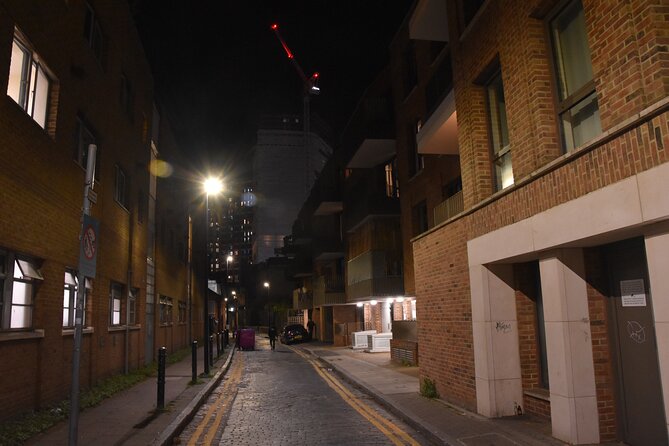
The tour begins at 277 Whitechapel Rd, London E1 1BY, near the Whitechapel area, and ends at Liverpool Street Station (London EC2M 7QA). Expect the experience to run about 2 hours 30 minutes total, including the time at stops and the walking between them.
A mobile ticket is included, and the tour is offered in English. It is also described as near public transportation, which is useful because London can be messy when you are trying to connect lines while timing a tour. Your ending point at Liverpool Street is a major station, so you should be able to continue your day without a long detour.
One practical note: the information you were given says London Underground travel between Whitechapel and Aldgate is not included. So if you plan to hop underground mid-day, plan it yourself. Many people just stay above ground for this one because the story route is meant to be walked.
Stop 1: Whitechapel and Polly Nichols, the first canonical victim
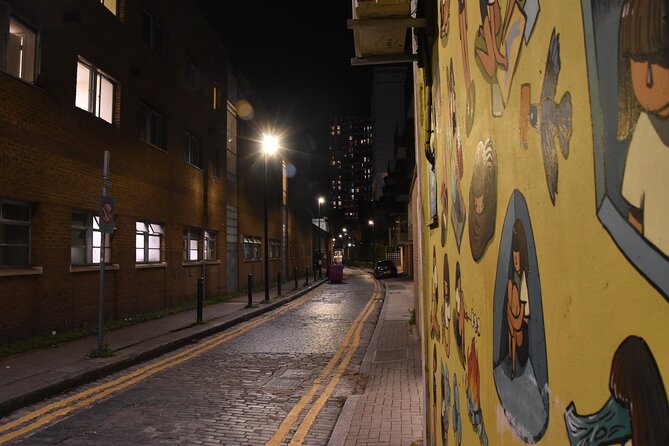
Your first stop is in the Whitechapel area, starting with a short walk from Whitechapel Station. This is where your guide anchors the tour around the first canonical murder, focusing on Polly Nichols.
This part is a good warm-up. You are not thrown into chaos right away—you get a baseline. Your guide will explain:
- what happened to Polly Nichols
- how she was discovered
- why she is considered the first canonical victim
That last point matters, because the word canonical implies there is an accepted list, not just rumors floating around. When you understand what “official” means in the way Victorian authorities and later historians framed the case, the rest of the tour makes more sense.
What to watch for: how the guide connects the victim’s identity and discovery to the investigative atmosphere of the time. If you like stories with cause-and-effect, this is where the tour starts doing that.
Stop 2: outside the Working Lads Institute and the inquest system
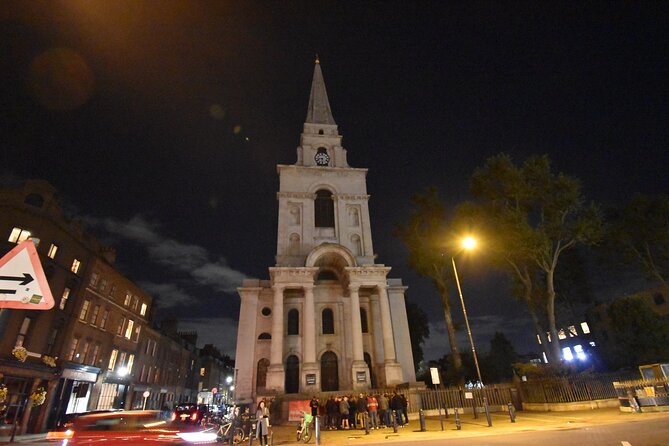
Next you head to the area outside the former Working Lads Institute, where inquests into the murders were held.
This stop is one of the most useful parts of the whole experience, because it shifts the focus from the street to the courtroom process. Your guide explains how inquests worked in the Victorian period, including:
- how the inquests were held
- how each inquest progressed
- who was called as witnesses
- what the outcomes were
Even if you already know the street names, this gives you a different lens. You start to see how evidence was presented, what witnesses could realistically say, and how decisions were made with the tools available at the time.
Possible drawback: if you want only location-based storytelling with minimal “procedure talk,” this stop may feel a little heavier than the others. Still, it pays off later when your guide connects public fear, press attention, and investigation pressure.
Stop 3: 29 Hanbury Street and Annie Chapman’s media panic
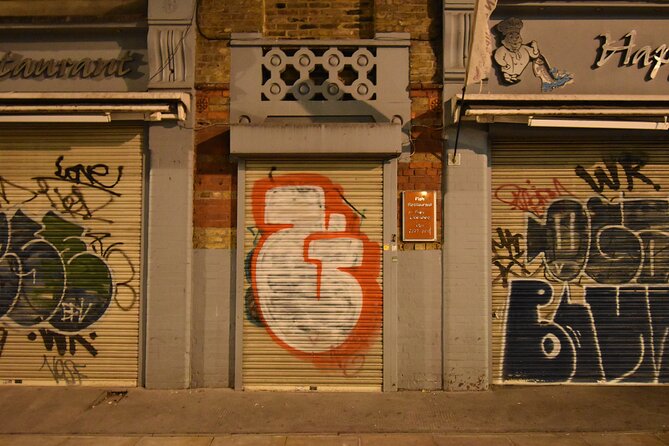
Then you move to Hanbury Street, specifically 29 Hanbury Street, where the second victim Annie Chapman was found.
This is where the tour turns from investigation mechanics into public reaction. Your guide covers how Annie Chapman’s death created public and media panic, and how that pressure fed the myth that the papers were calling the Whitechapel Murderer.
There is a reason this stop is memorable. It shows how a case can become a story—fast. Newspapers, public fear, and police expectations start to form a loop. Once that happens, myths can spread even when facts are still uncertain.
What you can do as you listen: pay attention to the language—your guide is set up to explain how press panic helped shape public belief. It makes the later “Jack the Ripper” naming feel less random and more like a predictable consequence of attention.




Stop 4: Henriques Street (formerly Berner Street) and Liz Stride’s “true victim” debate
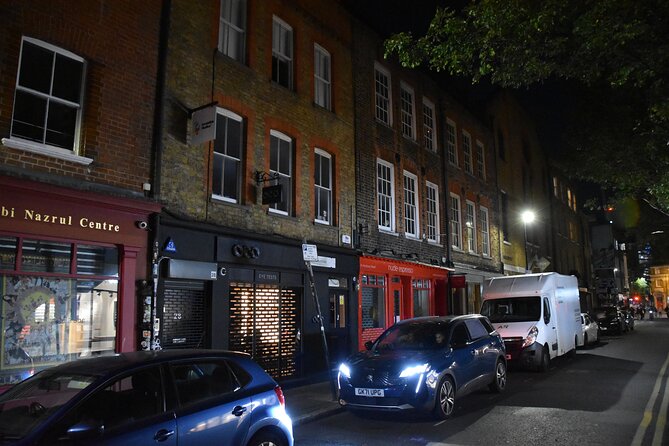
Your fourth stop is Henriques Street, formerly Berner Street, where the third victim Liz Stride was found dead.
Here the tour tackles the question that always sparks debate: Liz was not mutilated after her murder, and that detail led some people to believe she was not a “true” victim of the Ripper.
Your guide uses this contradiction to explain why there is so much conjecture about who was murdered. In other words, the tour does not treat the case as a closed box. It shows you the cracks—because those cracks are where speculation thrives.
Why this matters for you: if you are the type who gets frustrated when true crime stories pretend everything was certain, you will probably appreciate this approach. It keeps the story grounded in why people argued then and why arguments persist now.
Stop 5: Mitre Square and the double event that helped create the Jack the Ripper name
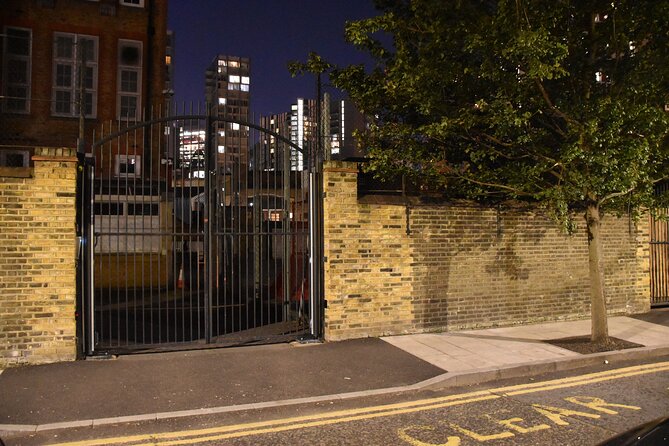
Next is Mitre Square, the site of the murder of Catherine Eddowes. This is also linked to the murders of Liz Stride, which are referred to as the double event—the only time Jack the Ripper killed two women in one night (as presented in the tour narrative).
Your guide also covers something that is easy to miss if you only hear spooky legends: communications sent to the Central News Agency in London helped shape the name Jack the Ripper. This stop is built to explain how the name changed as the story spread.
This is one of those “turning points” stops. Once you connect the murders to media messaging, the name stops feeling like a costume and starts feeling like branding—created and reinforced by the systems that amplified public fear.
If you like facts with a storyline: this is a strong stop. It is where the tour shows you the path from crime to cultural phenomenon.
Stop 6: Goulston Street and the vital clue
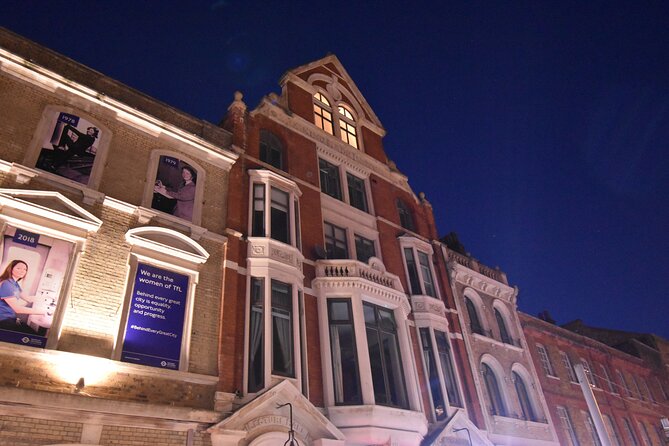
At Goulston Street, your guide points out a vital clue from the investigation into one of the UK’s most notorious serial killers.
You are not given every technical detail in the tour description you shared, so the best way to think about this stop is as a guided explanation of why that clue mattered. Your guide will connect it to the wider investigation story, rather than leaving you with a random “look at this spot” moment.
What to keep in mind: this kind of clue stop tends to work best if you stay open-minded and let the guide do the connecting. The value here is interpretation—why it was meaningful at the time, and how it fits into what people later tried to reconstruct.
Stop 7: Gunthorpe Street and the possible first murder with modern forensics
Your seventh stop is Gunthorpe Street, described as the site of an earlier possible murder.
Here your guide explains how this murder may have been the Ripper’s first, and how modern policing techniques and forensic science have been applied to modern investigations into the Ripper murders. This stop also tackles the emotional side of the case: why Victorian-era murders still grab attention now.
This is where the tour gives you a useful balance. It does not pretend we can rewind history with today’s tools. But it does show you what investigators and researchers try to do when they apply newer methods to older evidence.
Practical tip: if the forensics angle is why you booked this, ask a question. A private group format is the one setting where you can usually get a clearer answer than you would in a busier group.
Stop 8: Old Spitalfields Market and Mary Kelly’s last canonical stop
The final stop takes you to Old Spitalfields Market, tied to the fifth and final canonical murder of Mary Kelly.
Closing the tour here helps because it lands you in a place that feels connected to everyday life, not just Victorian paperwork and fear. That contrast can make the story hit harder: the murders happened in real neighborhoods, not sealed-off museum rooms.
Your guide will frame Mary Kelly’s case as the final canonical one in the narrative trail, bringing the timeline toward the finish line as you head for Liverpool Street.
The guide experience: what you gain with private attention
A Jack the Ripper walking tour can easily become a blur of names and streets. The reason this one is rated so well is that the guide’s job is not only to recite facts—it is to help you understand them in order.
In the reviews you shared, Michael stood out for being very knowledgeable and a very good tour guide. One person also said that as a woman touring alone, she felt nervous at first, but ended up feeling comfortable with Michael, with no red flags. The tour experience included the kind of practical care that makes a difference: Michael even walked her to the tube station after the tour.
You should not assume every guide will do exactly that, but it signals the style you can hope for: attentive, steady, and aware of your comfort as the tour ends.
What to do before you start: pick one or two questions you want answered. Maybe you care about the term canonical, the role of the press, or why conjecture persists. Then ask as you go. This tour is built for that back-and-forth.
Price and value: $246.91 for up to 15
The price is listed at $246.91 per group for up to 15 people, and the tour lasts about 2 hours 30 minutes. For a private tour, that is the key math: the cost is group-based, so your per-person price drops as your group fills out.
If you are a solo traveler, the private setup can still be worth it if you want a guide who can tailor pace and answer questions without fighting through a crowd. If you are traveling with a few friends, this is where it becomes easier to justify—private attention, same route, and no one forced to stand quietly while strangers steer the conversation.
Also notice what is included:
- all guiding fees
- a live guide
And at each stop, the description states admission ticket free.
What is not included: Underground travel between Whitechapel and Aldgate. That is not a huge deal if you plan to stay on foot, but it is still worth thinking about so you are not scrambling for a last-minute transit decision.
Finally, this tour is commonly booked around 45 days in advance on average. So if your dates are firm, do not wait until the last week.
Who should book this tour (and who might not love it)
This is a strong fit if you:
- like true crime, but also want context and explanation
- prefer a private walking experience over a large group
- want your guide to answer questions as you go
- are visiting London and want a focused, story-led route instead of a broad sightseeing day
It may be less ideal if you:
- dislike walking for extended stretches
- want a mostly indoor museum style experience
- want only light storytelling with no discussion of inquests and public procedure
Also, the tour’s tone is built around murders and the aftermath. If you are easily upset by graphic themes, consider that before booking.
Should you book it? My decision guide
I would book this tour if you want the Jack the Ripper story presented as a timeline you can follow in the streets, with explanations at each key location and the ability to ask your own questions. The private format is the big differentiator, especially if you care about hearing every detail clearly.
Book it especially if you plan to pair it with other East London days. Starting in Whitechapel and ending at Liverpool Street means you can keep moving after the tour instead of getting stuck far from transit.
If you are the type who likes to understand why the myths formed—names, press panic, public pressure, inquests, and the double event details—this tour should feel satisfying rather than just spooky.
FAQ
How long is the London Private Jack The Ripper Tour?
It runs for about 2 hours 30 minutes.
Where does the tour start and end?
The tour starts at 277 Whitechapel Rd, London E1 1BY, and ends at Liverpool Street Station, London EC2M 7QA.
Is this tour private?
Yes. It is a private tour/activity, and only your group participates.
How much does it cost?
The price is $246.91 per group (up to 15 people).
What language is the tour offered in?
The tour is offered in English.
Do I need admission tickets for the stops?
The stop descriptions you provided list admission as free at each location.
Is a live guide included?
Yes. Live guiding fees are included, and the tour includes a live guide.
Is public transportation nearby?
Yes, the tour is described as near public transportation. The meeting point and finish are both in central transport areas.
Is Underground travel between Whitechapel and Aldgate included?
No. Travel on the London Underground between Whitechapel and Aldgate is not included.
Is there a fitness requirement?
The tour asks for a moderate physical fitness level. Comfortable shoes are important because it is a walking route with multiple stops.