REVIEW · LONDON
London: Royal Museums Greenwich Day Pass
Book on GetYourGuide →Operated by Royal Museums Greenwich · Bookable on GetYourGuide
Time tells a story in Greenwich.
This London day pass strings together the best science-and-sea stops at Royal Observatory Greenwich and then follows with the ship-true experience of Cutty Sark. I especially like the Prime Meridian moment (one foot east, one foot west) because it gives you context instantly, then I like how Cutty Sark’s conservation lets you see the ship from a truly rare angle.
One watch-out: you’ll cover real distance between sites, and the walking can feel like more than a casual stroll. Lots of walking is part of the deal in Greenwich, so wear good shoes and plan a calm pace.
In This Review
- Key things to know before you go
- Royal Observatory Greenwich: Prime Meridian, Time Ball, and Wren interiors
- Harrison clocks, the Shepherd Gate Clock, and the Great Equatorial Telescope
- Walking from the Observatory to Cutty Sark: views, pace, and shoes
- Cutty Sark on the main deck: rigging, helm views, and a rare perspective
- Queen’s House and the National Maritime Museum: what you gain (and what to skip if short on time)
- Price and time strategy for a 6-hour day pass
- Who should book this Greenwich day pass
- Should you book the London Royal Museums Greenwich Day Pass?
- FAQ
- What’s included with the London Royal Museums Greenwich Day Pass?
- Are The Queen’s House and The National Maritime Museum included in the ticket?
- What time do the attractions open and when is the last entry?
- How long should I plan for this experience?
- Which languages are available for the audio guide?
- Is the pass wheelchair accessible?
- Is food or drink included?
- Can I pay later and cancel if plans change?
Key things to know before you go

- Prime Meridian photo stop: Stand on the line that marks the home of GMT, with the east/west foot pose built in.
- Timekeeping inside and outside: Harrison’s clocks, the Shepherd Gate Clock, and the Time Ball signal all make time feel physical.
- Wren-designed Octagon Room: A seriously well-preserved interior tied to early scientific work.
- Cutty Sark’s ship hull viewpoint: A major conservation project lets you stand underneath the ship and look up at her lines.
- Big views of the Thames area: From the Observatory grounds and from aboard the ship at the helm.
- Plan your order for Cutty Sark: If you linger too long at the first sites, you can run late for timed entry windows for a full ship visit.
Royal Observatory Greenwich: Prime Meridian, Time Ball, and Wren interiors
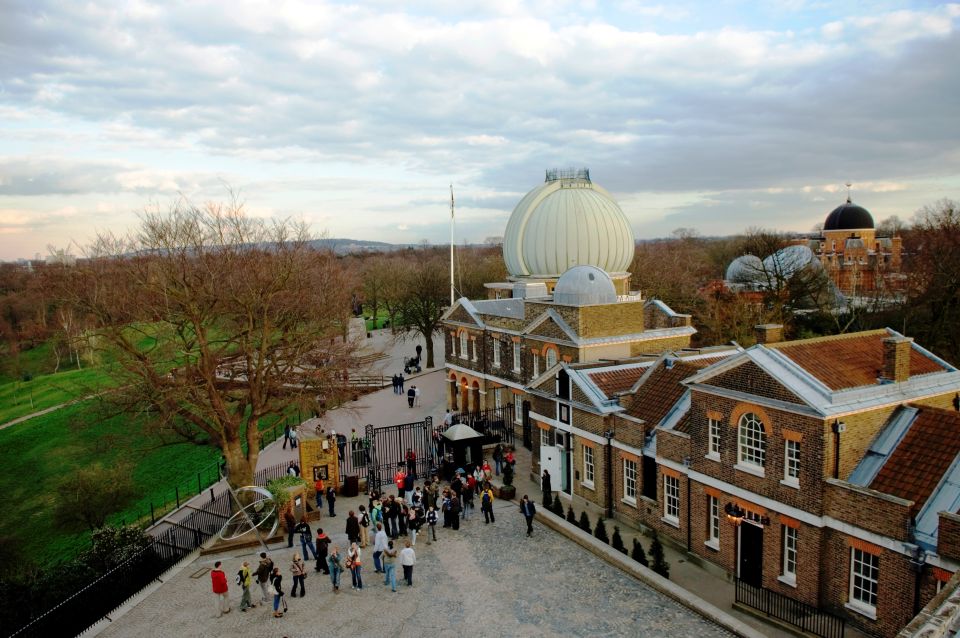
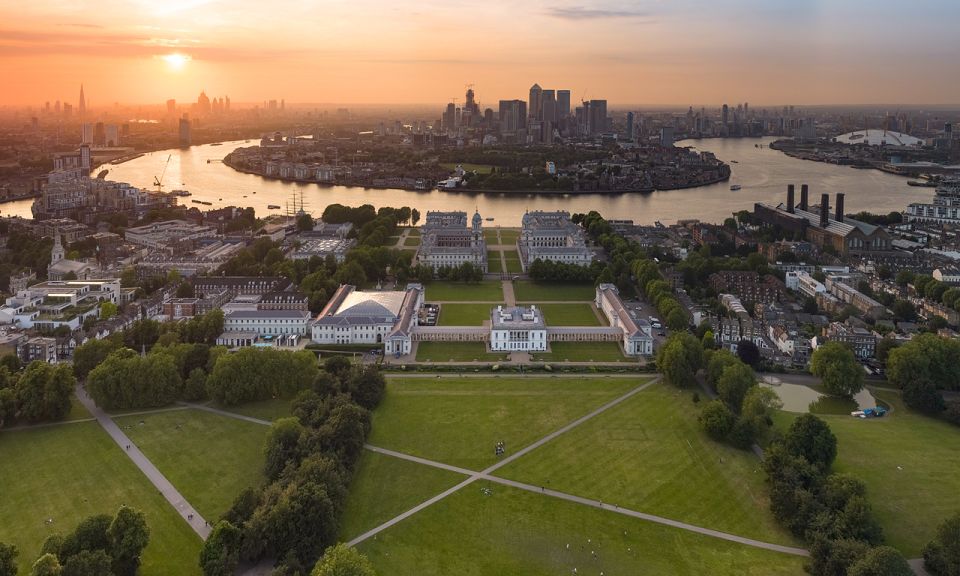
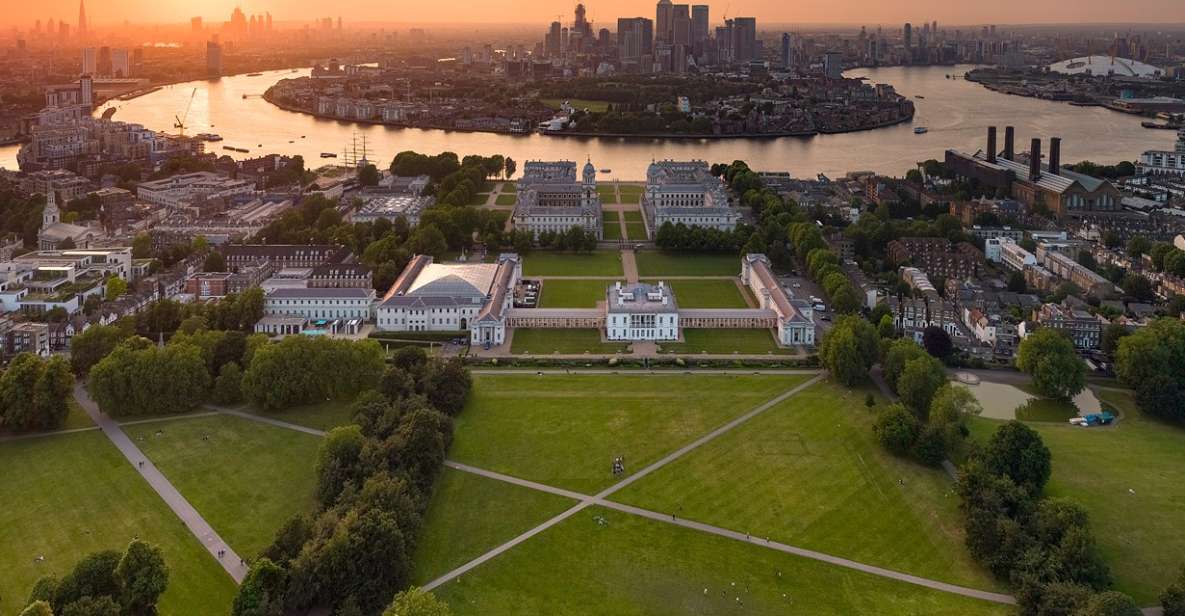
Start at the Royal Observatory Greenwich, inside Greenwich Royal Park. Even before you get to the buildings, the location is doing work for you: you get wide views over London, including the City and the River Thames direction.
Once you’re inside, you’ll begin in the Meridian Courtyard. This is the centerpiece for a reason: you can stand astride the Prime Meridian Line with one foot in the east and the other in the west, at the home of Greenwich Mean Time (GMT). It’s one of those simple “your body becomes the fact” moments that makes the whole Greenwich story click.
From there, the visit moves through major historic spaces. Flamsteed House is part of the route, and it’s where you’ll walk in the footsteps of the Astronomers Royal. The Octagon Room—designed by Sir Christopher Wren—is one of the best preserved Wren interiors in London, and it’s a nice change of pace if you’re more into rooms and architecture than gadgets.
If you want a structured feel, plan to spend time here rather than rushing. The Observatory does a good job linking the human side of science—people making instruments, testing ideas—with the objects you’ll see next. That connection is what keeps the visit from feeling like a checklist.
You can also read our reviews of more museum experiences in London



Harrison clocks, the Shepherd Gate Clock, and the Great Equatorial Telescope
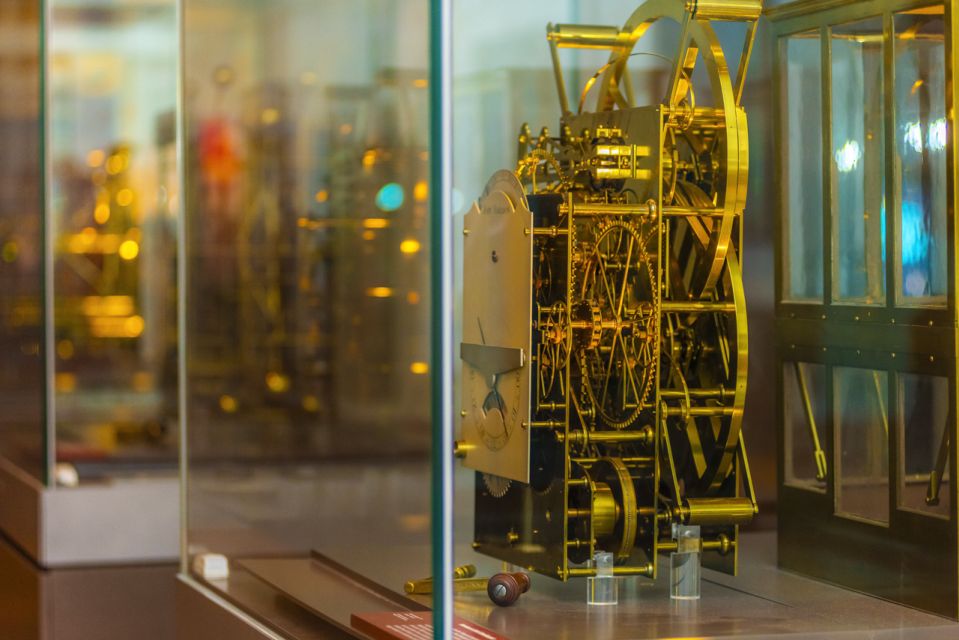
The heart of the science portion is timekeeping and viewing. You’ll see Harrison’s clocks and learn how the inventions associated with them changed the world—especially in an era when getting the right time could make or break navigation.
Then look beyond the clocks. Outside the Observatory grounds, there’s the Shepherd Gate Clock, mounted outside, and it’s described as the first clock to show Greenwich Mean Time to the public. It’s a small detail compared to the big rooms, but it helps you understand Greenwich didn’t just influence science labs. It influenced everyday time.
Up on Flamsteed House, don’t miss the bright red Time Ball. It’s described as one of the world’s earliest public time signals, first used in 1833, and it still operates today. Even if you’re not a “time person,” that’s a strong reason to pause—because it shows how an idea became a public tool.
If you’re the type who likes your science visual, save your energy for the Great Equatorial Telescope in the huge iconic onion dome. It’s the kind of instrument you can’t fully appreciate from a quick glance. Give yourself space to look at the scale and how it shaped what astronomers could see over 100 years ago.
A helpful route tip: use the included audio guide as a guide, not as homework. You can’t read every label and see every room at full speed. I’d rather you pick a few threads—timekeeping, public signals, big telescopes—and let those connect the rooms as you go.
Walking from the Observatory to Cutty Sark: views, pace, and shoes
After the Observatory, you’ll head down the hill toward Cutty Sark. This is when Greenwich shifts from “museum on a hill” to “ship and river” fast.
I like this transition because the views change what you’re imagining. The River Thames direction becomes more than a background blur. You’ll also feel how the geography fits the theme—science and sea history linked by location, not by a lecture alone.
Now the practical side: the walking is real. One of the clearest considerations from day-pass experiences is that you’re moving between sites and the route can feel demanding, especially if you slow down to enjoy viewpoints or stop for photos. If you’re planning to do everything, build in extra time so you don’t feel rushed during the Cutty Sark portion.
Also note that your day is time-sensitive. All sites open at 10 AM and close at 5 PM, with last entry at 4 PM. So even if the pass lists a 6-hour duration, you’ll want to start early to keep your options open.
Cutty Sark on the main deck: rigging, helm views, and a rare perspective
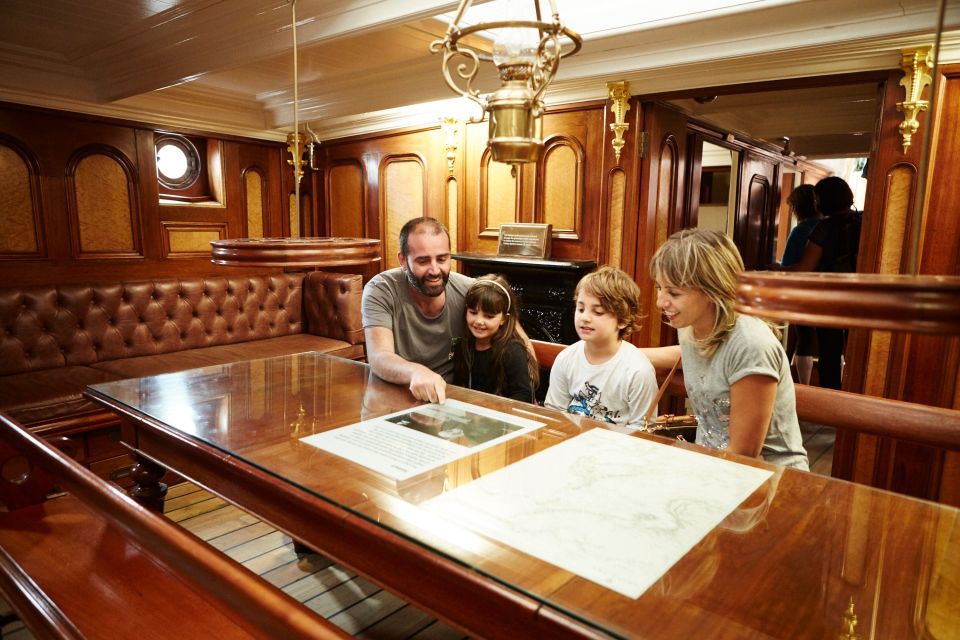
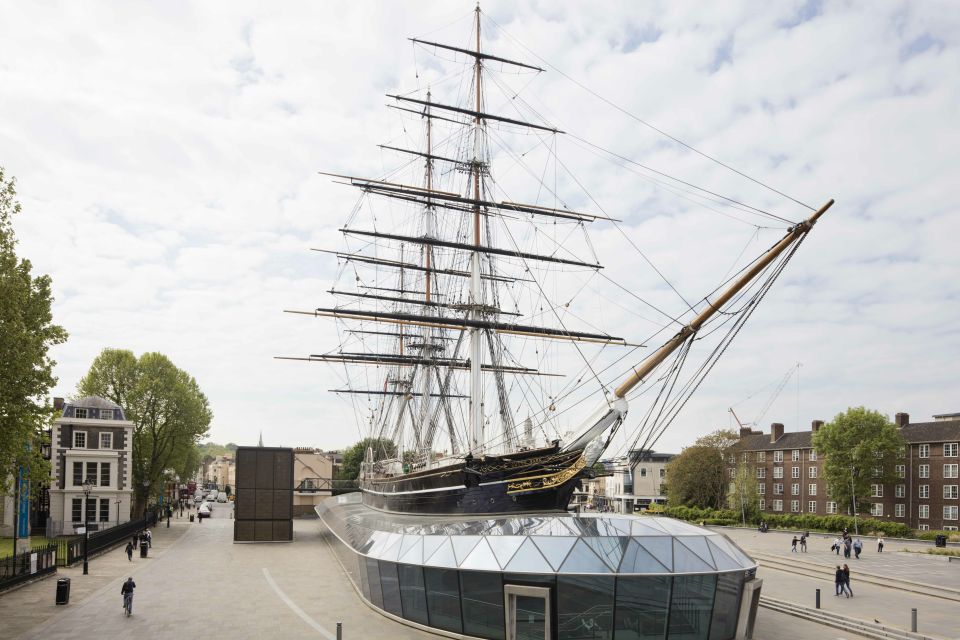
Cutty Sark is the reason many people end up loving this day pass. It’s the world’s sole surviving tea clipper, and it’s celebrated for record-breaking passages around the globe.
The ship itself is a museum in layers. Initially built for the China tea trade and launched in 1869, her original wooden planks and iron frames have been meticulously conserved. Then comes the standout conservation detail: as part of a six-year conservation project, the ship was raised over three meters. That means you can stand directly underneath and see her elegant lines and ground-breaking design.
That’s a big deal. A ship like this usually means looking at her from outside, behind barriers, and guessing at structure. Here, you get a more literal read on how she was built and how that build connects to the way she sailed.
Your included entrance gives you time to explore the full ship experience. Don’t rush the interior spaces. You can see the sailors’ quarters, and it’s one of the more grounding moments because it shifts the story from “big ship” to “people on board.”
The helm section is another payoff. You can take the helm at the ship’s wheel and enjoy fabulous views of the River Thames. It’s also a natural photo spot because it gives you a framing you can’t fake.
On the main deck, you’ll see the towering masts and 11 miles of rigging. The rigging number is one of those stats that sounds like a gimmick until you’re standing there. It helps you understand why these ships were engineering projects as much as they were transport.
Family note: the ship is hands-on in the sense that it’s physical and visible, but it’s still a ship museum, not a “kids-only play area” attraction. If you’re visiting with young children, you might want to plan extra breaks and keep expectations realistic about how much is interactive.
Queen’s House and the National Maritime Museum: what you gain (and what to skip if short on time)

Your pass also gives access to The Queen’s House and The National Maritime Museum. The key detail here is that standard entry is free for both, except for special exhibitions or guided tours. That means the day pass value isn’t just about paying once for everything—it’s about making sure the two main ticketed anchors (Observatory and Cutty Sark) are covered while you can add the rest.
The Queen’s House is designed by Inigo Jones and is described as a pioneering piece of 17th-century architecture. It works best if you like architecture and art side-by-side. You’ll view art, architecture, and history in this royal villa-style setting.
If you’re more into ships and science than galleries, you may want to keep your Queen’s House time tighter. It can feel like a calmer detour compared to the Observatory’s instruments and Cutty Sark’s ship scale. Still, it’s on the route experience, so even a shorter visit can make the day feel complete.
Then there’s The National Maritime Museum. It’s described as the largest museum of its type in the world, and it’s centered on epic stories of exploration and endeavour that helped shape the world. If you have an extra hour, this is where you can expand the theme from one ship and one set of instruments to wider maritime history.
A practical way to decide: if your day is tight, prioritize Cutty Sark before you get pulled into long art stops. Once you’ve committed time to the first ticketed sites, you want your ship visit to be unhurried.





Price and time strategy for a 6-hour day pass
The pass costs $40 per person and is built around a simple idea: pay for the two ticketed anchors, then use included access to stretch your day across major institutions. Specifically, it includes entrance fee to the Royal Observatory and Cutty Sark, plus downloadable multilingual interactive guides at both attractions.
That matters for value because Queen’s House and the National Maritime Museum have free standard entry. So you’re effectively buying the “hard tickets” and getting flexible add-ons for the rest. You’re not stuck in a single museum ecosystem either—you’re jumping between science and seafaring.
About timing: all sites open at 10 AM and close at 5 PM, last entry at 4 PM. If you treat this like a 6-hour sprint, you’ll probably feel it. If you treat it like a full day with a few planned stops, you’ll enjoy it more.
Here’s a realistic approach if you want everything without stress:
- Start early at the Observatory so you can take your time with the Meridian Courtyard and the instrument galleries.
- Then head down toward Cutty Sark before you get too tired or too sidetracked.
- Use the free museum access (Queen’s House and Maritime Museum) as fill time—good for when you have energy, skip if you’re running behind.
Also keep in mind what you’re not paying for: food and drink aren’t included, and special exhibitions or guided tours at Queen’s House and the Maritime Museum aren’t included either. So if you want a snack break, plan for it ahead.
Finally, audio and interactive guidance can help a lot. The audio guide is included, and it’s offered in English, Spanish, Chinese, French, German, Italian, Portuguese, and Korean. Use it to set pace—stop for a detail, then move on.
Who should book this Greenwich day pass
Book it if you want a day that mixes GMT science with a real surviving ship. This is strong for:
- People who like history that’s tied to real instruments and real places.
- Ship fans who want scale, rigging detail, and the rare underneath perspective.
- Photo lovers who want both the Prime Meridian “stand astride” moment and Thames-river views from the helm.
- Families who can handle walking and don’t need only hands-on kid stations.
You might plan differently if:
- You’re short on time and know you only want Cutty Sark. It can be the fastest “big hit” if you arrive with priority.
- You prefer art galleries less than science and ships. Queen’s House can be slower if you’re not in the mood for painting-and-architecture time.
- You need lots of kid-specific interactive tasks. The experience is educational and physical, but it isn’t described as a kids-workstation playground.
One more real-world consideration: the walking between areas and the hill route can feel like a hike. Build in buffer time and don’t schedule this as your only activity if you’re already tired from other London walking days.
Should you book the London Royal Museums Greenwich Day Pass?
Yes—if you want maximum value from a single Greenwich day. The best reason to book is the combination: the Observatory gives you the “how time works” story through clocks, telescopes, and public time signals, and Cutty Sark delivers the “how ships worked” story through preserved ship structure and views from the wheel.
I’d skip it or modify your plan only if you already know you won’t enjoy either science instruments or ship museums, or if you’re not up for the walking and hill-to-river movement.
If you’re deciding between doing one major attraction and calling it a day, this pass is the better move. You’re paying for the two big-ticket stops and using included access to round out the Greenwich story.
FAQ
What’s included with the London Royal Museums Greenwich Day Pass?
The pass includes the entrance fee to the Royal Observatory and Cutty Sark, downloadable multilingual interactive guides at both attractions, and access to The National Maritime Museum and The Queen’s House.
Are The Queen’s House and The National Maritime Museum included in the ticket?
You get access to both. Standard entry is free of charge, except for special exhibitions and guided tours.
What time do the attractions open and when is the last entry?
All sites open at 10 AM and close at 5 PM, with last entry at 4 PM.
How long should I plan for this experience?
The day pass duration is listed as 6 hours. Since sites run until 5 PM with last entry at 4 PM, starting at 10 AM helps you fit everything in.
Which languages are available for the audio guide?
The audio guide is included in English, Spanish, Chinese, French, German, Italian, Portuguese, and Korean.
Is the pass wheelchair accessible?
Yes, it’s listed as wheelchair accessible.
Is food or drink included?
No. Food and drink aren’t included.
Can I pay later and cancel if plans change?
Yes. You can reserve now & pay later, and you can cancel up to 24 hours in advance for a full refund.